 ProMapRanker
Best Banking Services for SaaS in 2026

Key takeaways
- SaaS banking is about features, not a single best bank: recurring billing, subscription metrics, treasury and spend controls matter more than a branch.
- Most SaaS teams pair a primary operating account with a treasury or savings layer once cash balances grow.
- Integrations with accounting, billing and payroll tools save more time than a slightly higher interest rate on operating cash.
- This article describes banking features and services for SaaS companies. It is not a ranking of banks and does not use invented bank ratings.
Quick comparison
| Pick | Great for | Pricing starts at | Free tier | |
|---|---|---|---|---|
 Mercury | SaaS startups wanting clean banking and APIs | Free | Yes | Visit |
 Brex | SaaS teams wanting cards, spend and treasury together | Free | Yes | Visit |
 Rho | Funded SaaS teams consolidating finance operations | Free | Yes | Visit |
 Relay | SaaS teams organising cash by purpose | Free | Yes | Visit |
 Bluevine | SaaS companies wanting interest on operating cash | Free | Yes | Visit |
 Ramp | SaaS teams controlling subscription and vendor spend | Free | Yes | Visit |
 Grasshopper Bank | Digital-first SaaS banking with savings options | Free | Yes | Visit |
 Chase for Business | SaaS companies wanting branches and lending access | $15 per month, waivable | No | Visit |
 Novo | Very small SaaS teams and solo founders | Free | Yes | Visit |
The best banking services for SaaS
A SaaS company has a different cash pattern from a shop or a consultancy. Revenue arrives as recurring subscriptions, costs include hosting, payroll and software vendors, and cash can swing sharply after a funding round or a large annual prepayment. The services below are compared on features that fit that pattern, such as sub-accounts, treasury, cards, integrations and cash controls, rather than on a single score.
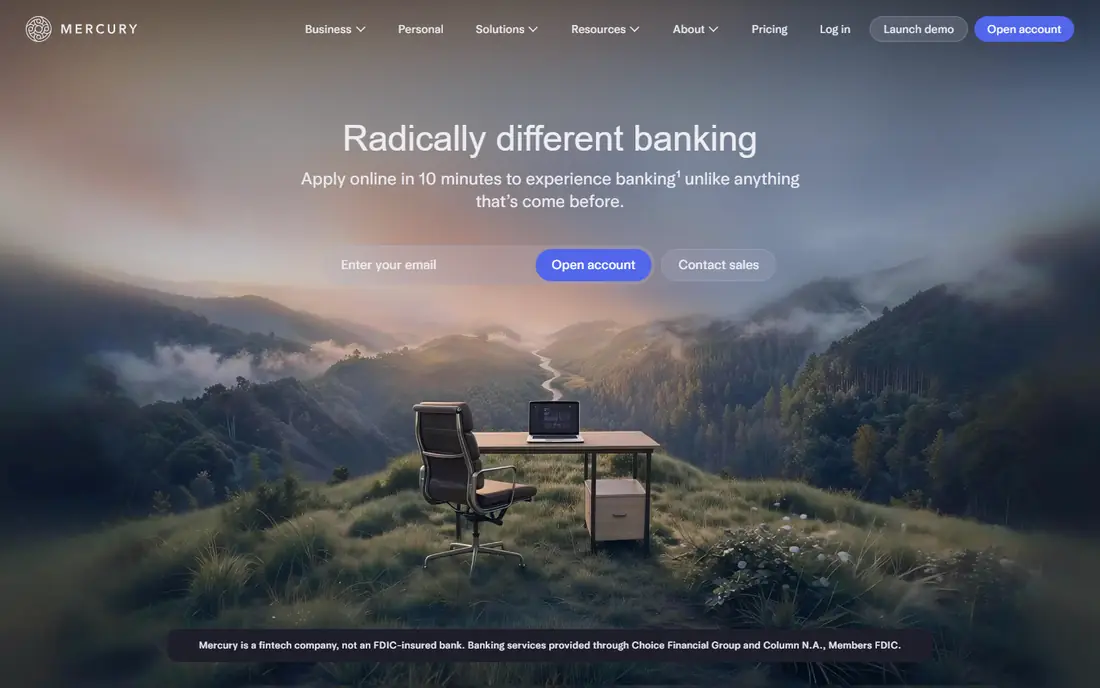
Mercury suits SaaS founders who want a clear dashboard for operating cash, with sub-accounts for taxes, payroll or runway. Its integrations with accounting tools help reconcile subscription revenue and vendor payments, and its API access appeals to technical teams that want to automate finance workflows. Wires, cards and bill pay cover most day-to-day needs.
The limits are familiar for a digital platform. There are no branches for cash deposits, and some treasury or support features sit behind paid tiers. For a SaaS startup that runs online and values a clean interface, Mercury is a strong primary account, often paired with a separate treasury layer as balances grow.
- Free basic checking
- Sub-accounts for separating funds
- Accounting integrations and APIs
- Treasury and live support can require higher tiers or balances
- No branches
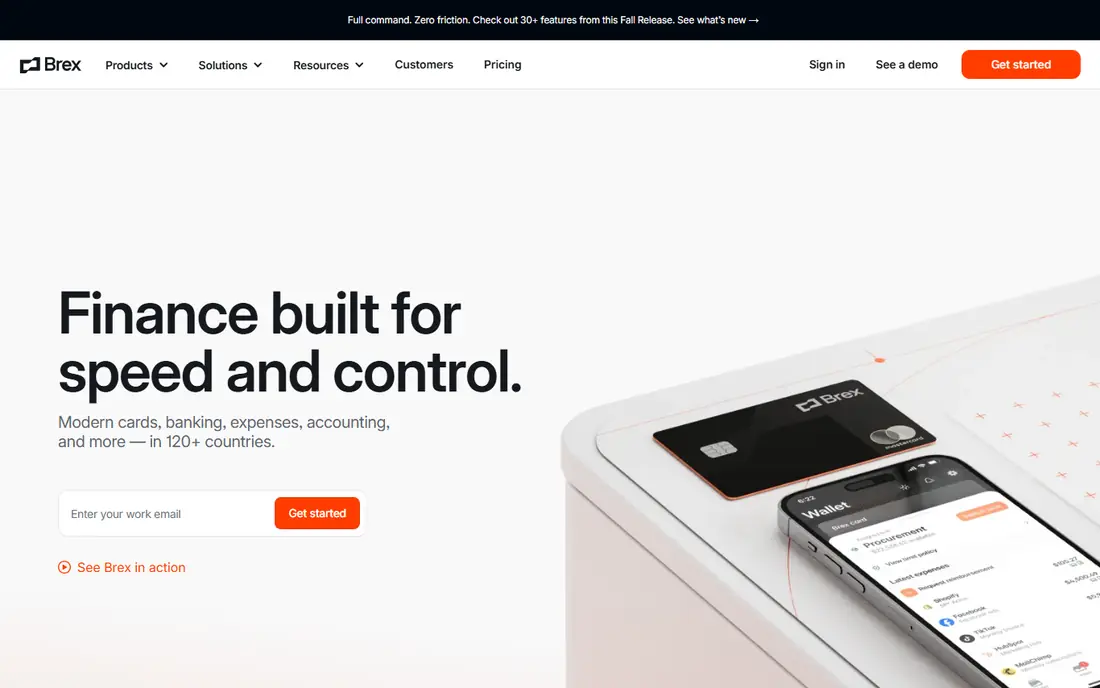
Brex combines a business account with corporate cards, expense management and treasury, which fits SaaS teams that spend heavily on software, advertising and travel. Cards can carry controls by team, vendor or category, and spending data flows into accounting systems with less manual work. Treasury accounts can put idle cash to work, subject to the product terms.
Eligibility and card limits still depend on funding and cash position, so very early bootstrapped teams may get less generous terms. Brex is now part of Capital One, which may affect future product direction, so check current terms before committing. For a funded SaaS team that wants cards and banking in one place, Brex is a practical choice.
- Corporate cards with spend controls
- Treasury options
- Integrations with accounting systems
- Card limits and eligibility favour funded companies
- Paid tiers add cost as features grow
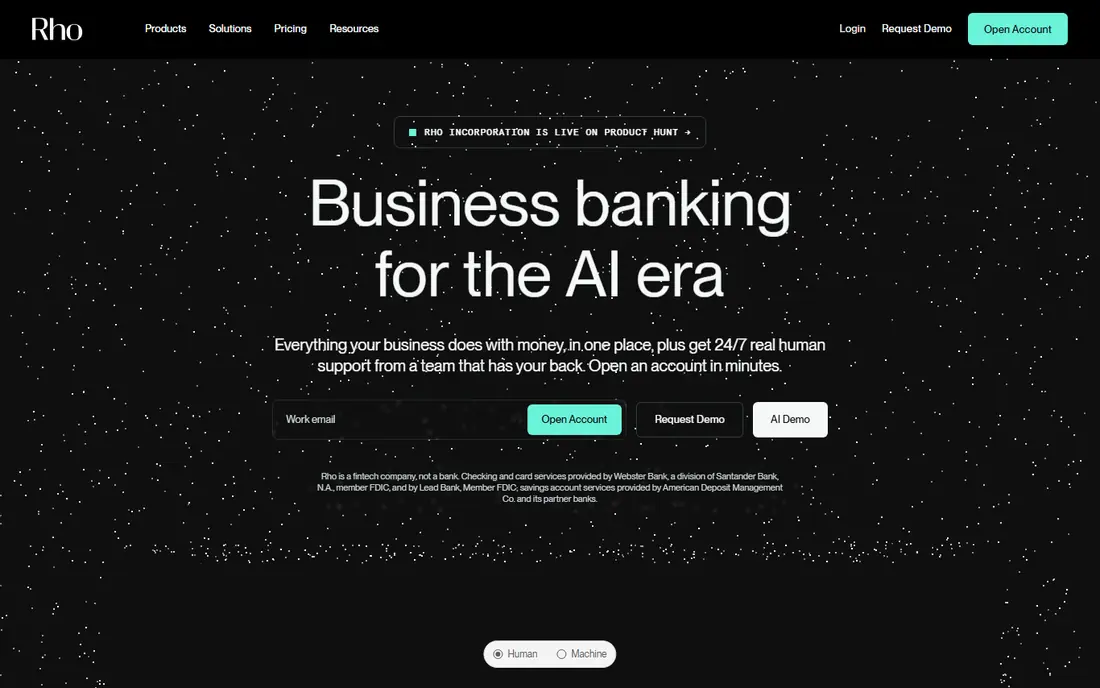
Rho positions itself as a finance platform for venture-backed companies, combining checking, cards, bill pay, expenses and treasury. For a SaaS team, that consolidation matters: subscription revenue, payroll, vendor bills and card spend can be managed with shared controls and reporting. Treasury features help larger balances earn yield, subject to product terms and minimums.
Smaller or bootstrapped SaaS teams may find some treasury features out of reach until balances grow. Rho also works through partner banks, so deposit arrangements should be checked. For a funded SaaS company that wants to replace several tools with one finance system, Rho is a strong candidate.
- Banking, cards, bill pay and treasury in one platform
- Strong cash controls
- Accounting integrations
- Treasury minimums can apply
- Service is aimed at funded companies rather than solo founders
Relay helps SaaS teams organise cash by purpose, with multiple checking accounts that can be labelled for taxes, payroll, hosting or growth spending. Automated transfer rules move money between accounts when revenue arrives, which makes cash discipline easier without spreadsheets. Team permissions let staff spend within limits while owners keep control.
Relay is less focused on treasury yield than Brex or Rho, so teams with large idle balances may pair it with a separate treasury product. Its strength is organisation and control, especially for teams that want to see runway, tax reserves and operating cash separately. For a SaaS business that struggles with cash allocation, Relay offers a clear and practical system.
- Multiple checking accounts for cash allocation
- Team permissions
- Automated transfers
- Interest and treasury features are less central than at some rivals
- Lending options are limited
Bluevine offers business checking with interest options, bill pay and, for qualifying businesses, a line of credit. For a SaaS company holding operating cash between payroll cycles, interest on checking can be a useful extra, provided the qualifications and tiers are understood. Its dashboard also supports payments and basic cash management without a complex setup.
The catch is that headline interest rates often depend on activity or balance conditions, so the rate a team actually earns may differ. Credit is also subject to approval and is not part of the basic account. Bluevine suits SaaS teams that want a straightforward account that also rewards operating balances, without moving to a full treasury platform.
- Interest-bearing business checking options
- Bill pay
- Line of credit options for qualifying firms
- Higher interest tiers require meeting qualifications
- Credit approval is separate from account opening
Ramp is best known for corporate cards and spend management, and it now also offers a business account and treasury options. For SaaS teams, its strength is visibility into the many subscriptions and vendors that otherwise quietly drain cash. Cards, approvals, receipts and accounting data sit in one workflow, which helps finance teams catch duplicate tools and unused seats.
As a primary bank, Ramp is newer than Mercury or Brex, so founders should check deposit arrangements, payment features and support coverage. Many teams use Ramp for cards and spend while keeping a separate primary account. For a SaaS company whose main pain is uncontrolled software spending, Ramp is hard to beat on controls alone.
- Strong card and spend controls
- Expense automation
- Vendor and subscription visibility
- Newer as a primary banking account
- Best value when used mainly for cards and spend
Grasshopper Bank offers digital business checking and savings aimed at startups, including SaaS and innovation companies. Its savings options can hold reserves separately from operating cash, and its startup focus includes venture lending and founder community links in its public materials. Online onboarding suits remote SaaS teams.
The bank is smaller than Chase or JPMorgan, so companies needing global treasury, complex lending or branch access should pair it with a larger bank. For a SaaS startup that wants a digital-first account with savings options and startup-focused service, Grasshopper is a credible primary or secondary account.
- Digital startup checking and savings
- Venture community links
- Interest options on savings
- Smaller bank with fewer branches
- Lending and treasury depth are narrower than large banks
Chase for Business suits SaaS companies that want a traditional bank relationship alongside a digital account. Branches help with cash deposits, in-person service and lending conversations, and Chase offers SBA loans, business credit cards and merchant services that digital-only platforms often do not. That breadth matters as a SaaS company grows and needs credit or local support.
Operating cash interest is low, and the monthly fee is only waived when conditions are met, so Chase is rarely the best sole account for a cash-rich SaaS startup. Many teams use Chase as a secondary bank for lending, branches and redundancy, while keeping day-to-day banking on a digital platform. That pairing is often the most practical setup.
- National branch network
- SBA and business lending
- Merchant and payment services
- Interest on operating cash is low
- Monthly fee waivers depend on meeting conditions
Novo offers no-fee business checking for small businesses and solo founders, with integrations for accounting and payment tools. For a solo SaaS founder or a very small team, that simplicity is the point: an account can be opened online, payments and transfers work without a monthly fee, and there is no complex finance suite to learn.
Growth is the limit. Novo does not offer the treasury depth, venture services or advanced spend controls of larger platforms, so a funded SaaS team will likely outgrow it. For an early SaaS project testing an idea, or a small team with modest cash flows, Novo is a low-cost and low-friction starting account.
- No-fee business checking
- Unlimited transactions on basic account
- Simple integrations
- Fewer treasury and advanced finance features
- Aimed at small teams rather than funded scale-ups
How we picked these
We compared official service descriptions and public comparisons for banking services used by SaaS companies, focusing on features that fit subscription businesses: recurring revenue handling, billing and accounting integrations, treasury and savings, cards and spend controls, and cash organisation. We included digital platforms and traditional banks, and we did not rank banks or invent ratings. We did not claim hands-on testing. Fees, interest conditions and eligibility change, so confirm current terms directly with each provider.
What to check before choosing a SaaS bank
Map your cash flows first. List subscription revenue, annual prepayments, payroll, hosting, advertising and software vendors, then check which of those the bank handles cleanly. A bank that works for a shop may struggle with subscription billing reconciliation or with large, lumpy annual payments. Integrations with your billing system, accounting tool and payroll provider will save more time than a small fee difference.
Next, plan for cash above operating needs. Once balances exceed a few months of runway, ask about sweep, treasury and savings options, deposit insurance limits and how quickly funds can be moved back for payroll. Keeping all cash in one checking account is a common early mistake. A primary account, a treasury or savings layer and, where needed, a second bank for redundancy is a safer structure.
Finally, check cards and controls. SaaS teams often leak money through duplicate subscriptions and uncontrolled card use. Look for card limits by person and category, approval workflows and real-time visibility. Choose the combination that fits your stage: a simple account early on, a consolidated finance platform after funding, and a traditional bank when lending or branches become useful.
Frequently asked questions
What banking features matter most for a SaaS company?
Recurring billing reconciliation, accounting integrations, sub-accounts or treasury for cash reserves, cards with spend controls and reliable wires and ACH payments matter most. Branch access matters less for most SaaS teams, unless lending or cash deposits are needed.
Should a SaaS startup use one bank or several?
Many teams use a primary digital account for day-to-day banking, a treasury or savings layer for idle cash and, later, a traditional bank for lending or redundancy. That structure spreads risk and matches each need to the right product, rather than forcing one account to do everything.
Does deposit insurance cover all SaaS cash?
No. Standard FDIC insurance at an insured bank covers eligible deposits up to legal limits per depositor and ownership category. Sweep programmes can extend coverage through partner banks, but terms vary. Ask each provider how coverage is structured for your balances.
Can a SaaS company get a line of credit from these banks?
Some providers offer lines of credit or venture debt to qualifying companies, but approval depends on revenue, funding, history and risk review. A business account alone does not guarantee credit. Ask about credit separately and compare terms in writing.
When should a SaaS team switch banks?
Switch when your current account blocks growth, whether through missing integrations, poor treasury options, weak spend controls or unreliable support. Plan the move around payroll and billing cycles, keep the old account open until payments have moved, and test the new account with a small flow first.
Sources
See where you really rank - block by block
ProMapRanker scans Google Maps across a grid of your service area. Simple monthly plans from $19, white-label on every plan.
Start freeKeep reading
 worlds best local seo company
8 Worlds Best Local SEO Companies for Map Pack Growth in 2026
Compare the worlds best local seo company options for Google Business Profile work, citations, reviews, and multi-location rankings and reporting in 2026.
Read → world's best web hosting company
World's Best Web Hosting Company in 2026
Searching for the world's best web hosting company? We compared 10 hosts on price, renewal rates, speed, and support to help you choose well today in 2026.
Read → who's got the best nanny tax services
Who's Got the Best Nanny Tax Services in 2026
We answer who's got the best nanny tax services, comparing full filing, back taxes, software, and pricing so families can handle nanny taxes correctly.
Read →