 ProMapRanker
Best Banking Services for Crypto Firms in 2026


Crypto startups needing fiat banking and wires · Pricing starts at: Free
Key takeaways
- Most crypto-friendly banks provide fiat accounts and payments, not custody of crypto assets themselves, so custody and banking are usually separate decisions.
- Onboarding is stricter than for a typical startup, with detailed questions about business model, licences, counterparties and controls.
- Deposit insurance covers eligible fiat deposits up to legal limits at insured banks, but it does not cover crypto assets or investment losses.
- This article is general information only and is not financial advice. Crypto markets are volatile, rules vary by jurisdiction, and policies can change.
Quick comparison
| Pick | Great for | Pricing starts at | Free tier | |
|---|---|---|---|---|
| Mercury | Crypto startups needing fiat banking and wires | Free | Yes | Visit |
 Customers Bank | Real-time USD settlement between clients | See website | No | Visit |
 Cross River Bank | Fintech and stablecoin payment infrastructure | See website | No | Visit |
 Lead Bank | Embedded banking for fintech and crypto platforms | See website | No | Visit |
 FV Bank | Combined USD and digital asset accounts | See website | No | Visit |
 Evolve Bank and Trust | Partner banking for fintech programmes | See website | No | Visit |
 JPMorgan Chase | Large, established crypto and blockchain businesses | See website | No | Visit |
 Western Alliance Bank | Established firms wanting commercial banking and treasury | See website | No | Visit |
 Anchorage Digital Bank | Regulated digital asset custody and banking for institutions | See website | No | Visit |
The best banking services for crypto firms
Finding a bank as a crypto company is harder than finding one as a regular startup, because banks must assess money-laundering risk, licensing, counterparty exposure and volatility. The services below are described in public materials as serving crypto, blockchain or digital asset businesses, but eligibility always depends on a compliance review. We compared official service descriptions and public reporting, and we did not list closed banks as live options.
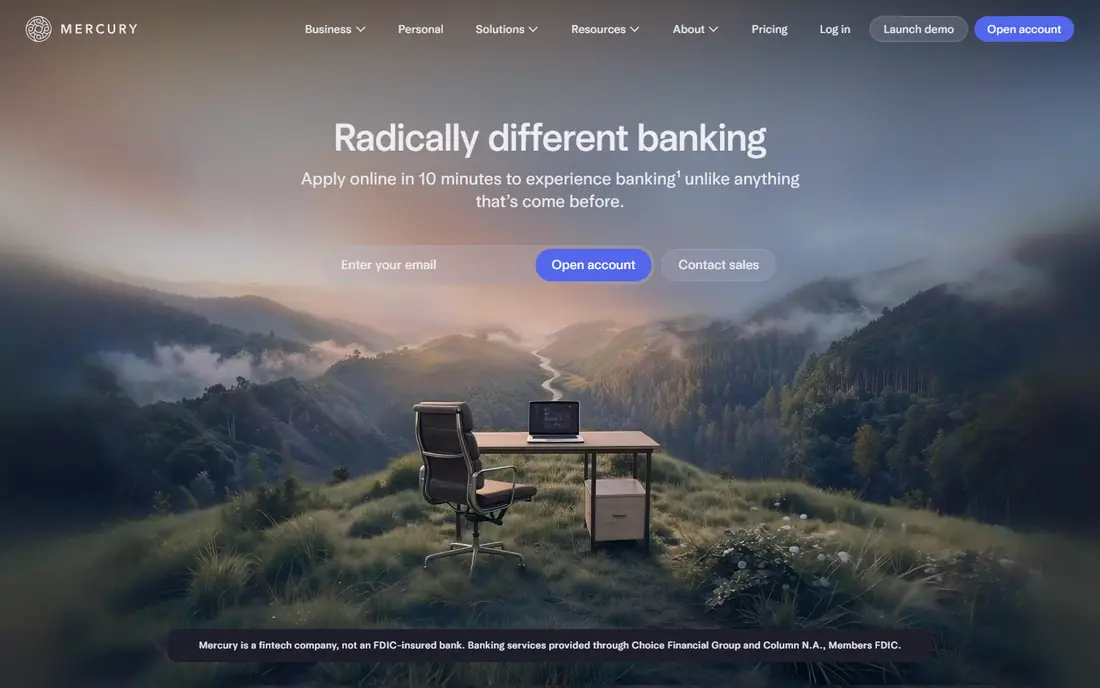
Mercury is a business banking platform that explicitly supports many crypto and Web3 companies as customers for fiat banking. Founders use it for operating accounts, wires, cards and accounting integrations, while crypto assets themselves are held elsewhere. That split is common, and it suits startups that need reliable fiat rails more than an all-in-one crypto bank.
The limit to understand is the model. Mercury works through partner banks, so deposit insurance and account terms depend on those partners and on the account structure. It also does not hold crypto directly. For an early-stage crypto startup that needs a clean operating account and fast onboarding, Mercury is often the easiest first account to test, subject to its eligibility review.
- No monthly fee on basic checking
- Wires to exchanges described in public reviews
- Sub-accounts and integrations
- Mercury is a fintech platform using partner banks, not a chartered bank itself
- Crypto custody is not provided
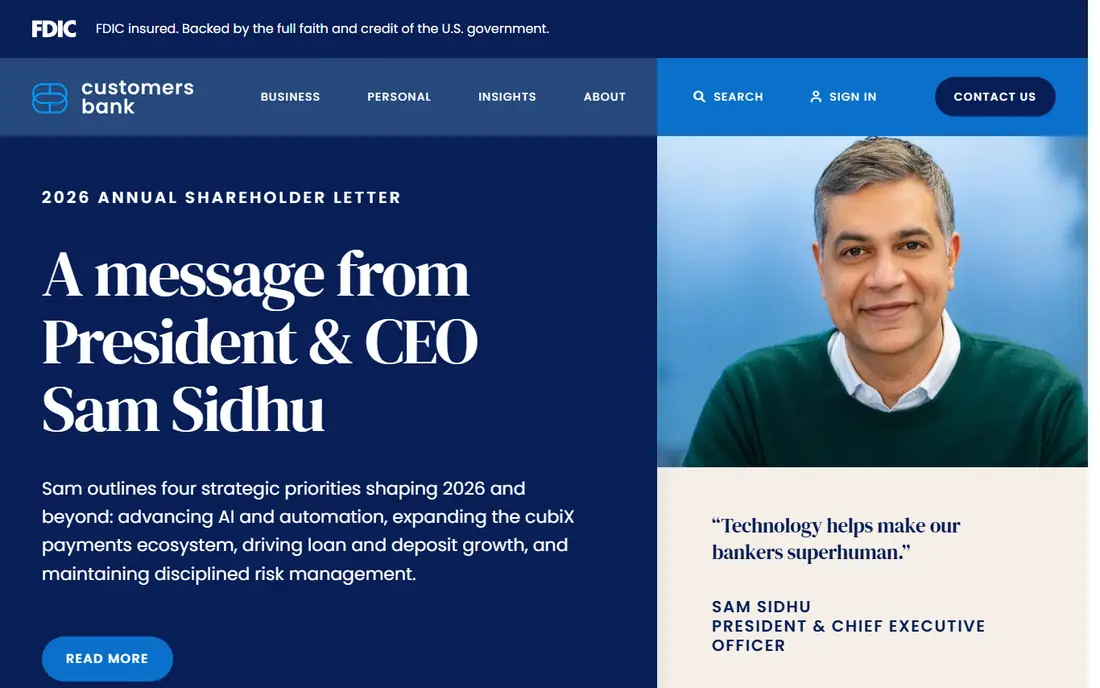
Customers Bank serves selected digital asset businesses through commercial banking and its Customers Bank Instant Token network, known as CBIT. That network lets participating clients move US dollars between accounts at the bank in real time, including outside normal banking hours. For exchanges, issuers and trading firms, faster settlement can reduce prefunding and counterparty delays.
This is not a self-serve startup account. Eligibility, documentation and ongoing monitoring are demanding, and services depend on the business profile. Companies that need real-time settlement and can pass institutional review should ask about CBIT eligibility early. Smaller startups may find Mercury or a similar platform easier for day-to-day operating cash.
- Instant token payment network for participating clients
- Experience with regulated digital asset firms
- Commercial banking
- Aimed at institutional clients
- Onboarding and compliance requirements are extensive
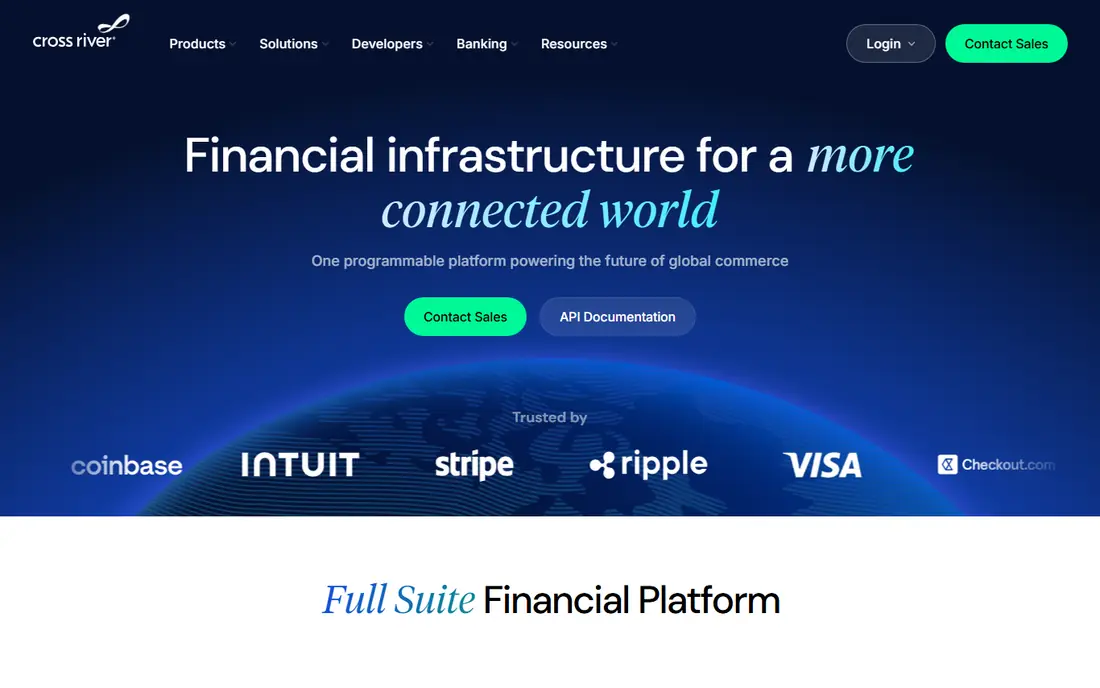
Cross River Bank is a technology-focused bank that acts as a sponsor and infrastructure partner for many fintech platforms. Its public materials describe payments across ACH, wire and real-time rails through a single API, and in October 2026 it announced integration of Ripple USD into its core system for eligible fintech clients. That makes it relevant to platforms building payment products rather than to a single company seeking a basic account.
The distinction matters. A crypto firm usually reaches Cross River through a partner programme or a commercial relationship, not through a standard online sign-up. Firms building payment, card or stablecoin features should explore it as infrastructure. Firms that only need an operating account will likely move faster elsewhere.
- API-first banking infrastructure
- Real-time payment rails
- Recent stablecoin integration work
- Partner-focused model, not a simple retail business account
- Availability varies by programme and state
Lead Bank is a state-chartered bank that presents itself plainly as a banking partner for fintech and crypto companies. Its services include API-driven payments, account structures for partners and embedded financial products, with public references to moving between dollars and stablecoins for partner use cases. Compliance is treated as a core part of the offer, which is essential in this sector.
Onboarding is selective and programme-based. A platform that wants to embed accounts, cards or payments into its own product is the natural fit. A small crypto startup that only needs to pay staff and vendors will usually find a simpler account elsewhere, then revisit Lead Bank when it builds a partner product.
- Banking-as-a-service infrastructure
- API-driven payments
- Public focus on crypto and fintech clients
- Partner model with selective onboarding
- Not aimed at small firms needing only a checking account
FV Bank describes itself as a crypto-friendly bank offering USD depository accounts together with digital asset custody and conversion. Customers can hold dollars and crypto in related accounts, make wire and ACH payments and use Visa cards linked to fiat balances. Its newer stablecoin invoicing tools let businesses issue invoices settled in stablecoins and received as dollars.
International availability is both a strength and a limit. Services vary by residence and business location, so a US firm should confirm exactly which products it can use. FV Bank suits firms that want banking and custody closer together, especially those with cross-border customers. Firms that need only US domestic banking may prefer a US-chartered option.
- USD accounts alongside digital asset custody in one platform
- International client base
- Cards and payments
- Eligibility varies by country
- Fees and account terms need direct confirmation
Evolve Bank and Trust is known as a sponsor bank behind many fintech products, including cards and payment programmes. Public reporting has also linked it to crypto card and stablecoin-linked products through partners. For a crypto firm building a card or payments product, a sponsor bank relationship is often the route to market.
Direct account seekers should set expectations accordingly. Evolve is most useful as infrastructure for a programme, with compliance, programme terms and partner agreements shaping what is possible. It is not the simplest choice for a startup that only needs an operating account and wires.
- Long record as a fintech sponsor bank
- Payments and card programme support
- FDIC-insured deposits
- Partner and programme focus
- Direct business banking is not its main public pitch
JPMorgan Chase
Great for: Large, established crypto and blockchain businesses
JPMorgan Chase serves selected large crypto and blockchain businesses through institutional and commercial banking, with global payments and treasury management as the core offer. Its scale suits established firms with complex cash management, international payments and lender or investor relationships that value a major bank name.
Smaller crypto startups should expect a long review and a real chance of refusal, particularly if the business issues tokens or has a less established compliance history. JPMorgan is best viewed as a later-stage banking relationship, or as a second bank for treasury and payments, rather than a first account for a new Web3 startup.
- Global payments and treasury services
- Institutional banking depth
- Experience with large digital asset clients
- Lengthy underwriting
- Selective appetite, especially for smaller or token-issuing firms
Western Alliance Bank
Great for: Established firms wanting commercial banking and treasury
Western Alliance Bank continues to serve selected digital asset businesses through commercial banking, treasury management and wire services. Its pitch is traditional banking strength rather than a specialised crypto network, which suits established firms that want reliable operating accounts, credit relationships and treasury tools alongside crypto-related activity.
Crypto banking availability still depends on the client profile and on compliance review, and policies can change as regulations evolve. Firms should bring clear documentation on licensing, banking partners, exchanges used and controls. For a mature crypto business that values a commercial bank relationship, Western Alliance is a credible option to explore.
- Commercial banking and treasury services
- Wire and payment support
- Experience with regulated digital asset firms
- Availability varies by client profile
- No dedicated crypto payment network is its main pitch
Anchorage Digital Bank
Great for: Regulated digital asset custody and banking for institutions
Anchorage Digital Bank is a federally chartered bank focused on digital assets, offering custody, trading-related services and settlement for institutional clients. That charter and institutional focus distinguish it from a general business bank that merely tolerates crypto clients. Funds, trading firms and large token projects use it for custody and related services under a regulated banking framework.
The obvious limit is audience. Anchorage is not aimed at early-stage startups seeking a simple operating account, and minimums, fees and eligibility reflect that. For institutions that need regulated custody alongside banking services, it is one of the clearest US options. Smaller firms will usually pair a fiat operating account elsewhere with a separate custody provider.
- Federally chartered digital asset bank
- Institutional custody
- Governance and settlement services
- Institutional focus
- Not a general startup checking account
How we picked these
We compared official service descriptions and public reporting for banks and banking platforms described as serving crypto, blockchain or digital asset firms in the United States. We favoured live services with a clear fiat, payments or custody offer and excluded closed institutions. Silvergate Bank and Signature Bank closed in 2023 and are not listed as live options. We did not claim hands-on testing. This article is general information only and is not financial advice. Crypto assets are volatile, regulations vary by jurisdiction, and deposit insurance, where it applies, covers eligible fiat deposits up to legal limits, not crypto assets themselves.
What to check before opening a crypto business account
Start with a clear description of your business. Banks will ask what you sell, who your customers are, which exchanges and counterparties you use, where funds come from and what licences you hold. Prepare that summary, plus formation documents, ownership details and compliance policies, before applying. A vague application usually leads to delays or refusal.
Next, separate three needs: operating cash, payments and custody. An operating account handles payroll and vendors, a payments relationship handles wires and settlement, and custody holds crypto assets. One provider rarely does all three well for every firm, so plan for more than one relationship. Confirm deposit insurance limits, wire cut-off times, account fees, supported exchanges and what happens if a counterparty changes.
Finally, plan for policy change. A bank can narrow its crypto appetite, change fees or ask for more documentation as rules evolve. Keep a second account ready, avoid concentrating all operating cash in one place, and review terms at least once a year. A banking plan that survives a policy change is worth more than a slightly cheaper account that does not.
Frequently asked questions
Does FDIC insurance cover crypto assets?
No. FDIC insurance, where it applies at an insured bank, covers eligible deposit accounts up to legal limits. It does not cover crypto assets, investment losses or the failure of a non-bank platform. Always ask a bank which accounts are insured and up to what limit.
Why do banks ask so many questions from crypto firms?
Banks must manage money-laundering, fraud and regulatory risk, and crypto businesses vary widely in model and controls. Expect questions about licensing, customers, counterparties, source of funds and compliance programmes. Clear, honest answers usually speed up review.
Can a crypto startup use a regular business bank account?
Sometimes, but many general banks decline crypto businesses or restrict exchange transfers. A bank or platform that publicly serves crypto firms is more likely to accept the account and to understand its payment patterns. Confirm exchange and wire policies before relying on the account.
Should custody and banking sit with the same provider?
Not necessarily. Some firms prefer a regulated custodian for crypto assets and a separate bank for fiat operations, which spreads risk and lets each provider do what it does best. Others prefer one platform for simplicity. Compare security, insurance, fees and exit options in both models.
What happens if a bank changes its crypto policy?
A bank may restrict services, ask for more information or close accounts if its risk appetite changes. Keeping a second account, maintaining clean records and reviewing terms regularly reduces disruption. Do not assume a policy that applies today will apply unchanged next year.
Sources
See where you really rank - block by block
ProMapRanker scans Google Maps across a grid of your service area. Simple monthly plans from $19, white-label on every plan.
Start freeKeep reading
 worlds best local seo company
8 Worlds Best Local SEO Companies for Map Pack Growth in 2026
Compare the worlds best local seo company options for Google Business Profile work, citations, reviews, and multi-location rankings and reporting in 2026.
Read → world's best web hosting company
World's Best Web Hosting Company in 2026
Searching for the world's best web hosting company? We compared 10 hosts on price, renewal rates, speed, and support to help you choose well today in 2026.
Read → who's got the best nanny tax services
Who's Got the Best Nanny Tax Services in 2026
We answer who's got the best nanny tax services, comparing full filing, back taxes, software, and pricing so families can handle nanny taxes correctly.
Read →