 ProMapRanker
Best Backlink Indexing Tool in 2026


Steady campaigns with drip feed · Pricing starts at: $19 per month
Key takeaways
- Google Search Console is the free baseline for pages you own, and paid indexers only make sense for links on sites you do not control.
- Omega Indexer is our pick for steady campaigns, with $19 per month for 190 credits and credits returned for links that do not index.
- IndexMeNow suits a small set of high-value links, but its per-link price is the highest here.
- No indexer can promise a Google index listing. A refund policy is a cost guardrail, not a ranking promise.
Quick comparison
| Pick | Great for | Pricing starts at | Free tier | |
|---|---|---|---|---|
| Omega Indexer | Steady campaigns with drip feed | $19 per month | No | Visit |
 IndexMeNow | High-value links that resist indexing | 59 euros per pack | No | Visit |
 SpeedyIndex | High-volume links on a budget | $5 per pack | Free trial | Visit |
 Rapid URL Indexer | Bulk links with refunds | $25 per pack | No | Visit |
 Links Indexer | Low-cost monthly indexing | $9.99 per month | Yes | Visit |
 Google Search Console | Free indexing for your own site | Free | Yes | Visit |
 IndexChex | Submit and verify in one workflow | $21.99 per pack | No | Visit |
 One Hour Indexing | Fast monthly link batches | $17 per month | No | Visit |
 GigaIndexer | Small high-value batches | See website | No | Visit |
The best backlink indexing software
Here are the backlink indexing tools we shortlisted for SEOs who need new links found and checked, with clear credit rules and no promise that Google will index every link.

Omega Indexer is our pick for regular link work. The Starter plan costs $19 per month for 190 credits, with top-ups listed at $0.20 per credit, and credits do not expire. That structure suits an agency or site owner who submits links every week, since unused credits carry over instead of vanishing at month end.
The drip feed is the practical draw. You can spread submissions over up to 30 days, which looks more natural than sending thousands of links at once. Links not indexed within the stated window get their credit back. That refund helps your budget, but it does not mean Google will index a low-quality page, so fix the linked page first.
- Credits returned for links not indexed in the stated window
- Credits do not expire
- Drip feed up to 30 days
- No free plan
- Monthly plan suits regular campaigns more than one-off jobs
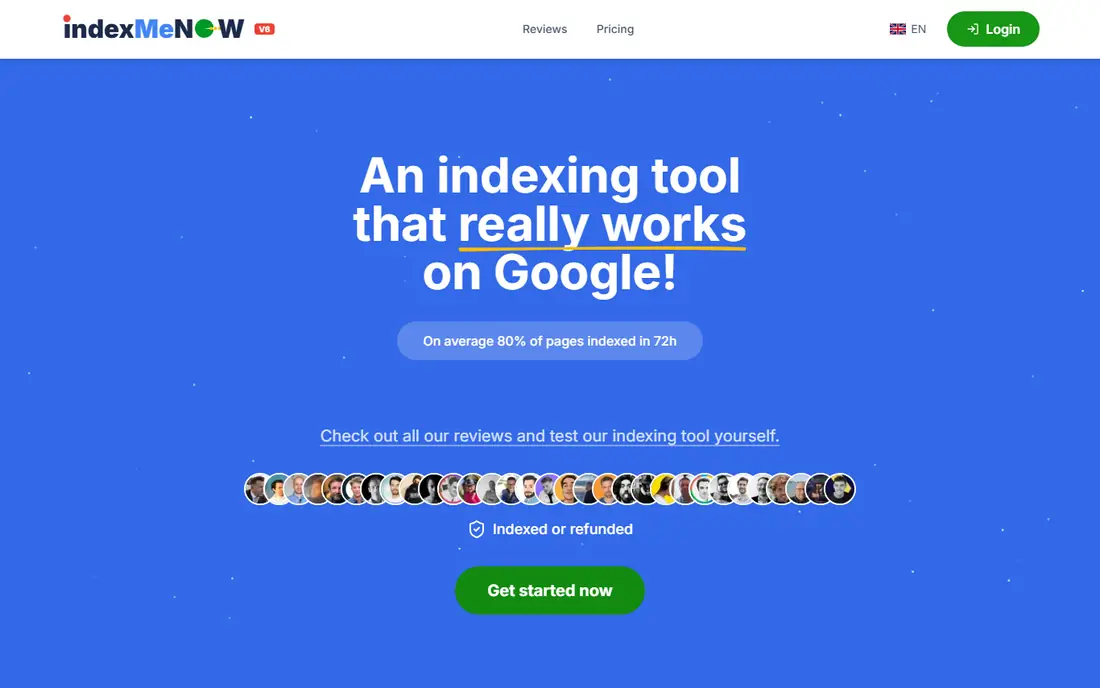
IndexMeNow is the premium option in this list, and it earns that label only for a narrow job. Packs start at 59 euros, excluding VAT, for 60 credits, with a lower per-link price on larger packs. Index checking and API access are free, which helps you verify results without spending more credits.
Use it as a second pass for important links, such as a money page or a strong editorial link that other tools did not get indexed. Do not use it for thousands of low-value tier links, since the per-link cost will eat the budget fast. The 10-day credit return softens the cost, but the credit comes back as account credit, not cash.
- Free index checker and API
- Credit returned after 10 days if a link does not index
- Aimed at hard URLs
- Highest per-link price here
- Packs start at 59 euros for 60 credits
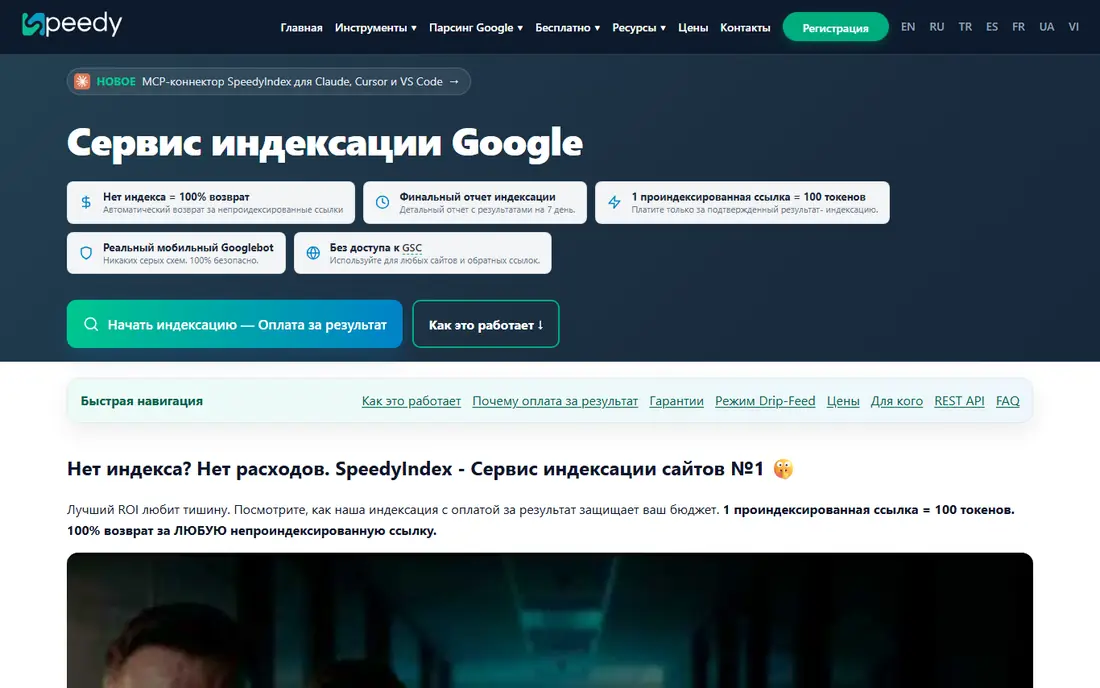
SpeedyIndex suits high-volume campaigns where cost per link matters most. Token packs start at $5 for 5,000 tokens, and one indexed link costs 100 tokens, which works out to about $0.10 per link on the smallest pack and less on larger packs. New accounts get free tokens to test the service, which is a fair way to check the workflow before buying bulk.
The Telegram bot is handy for submitting lists on the go, and the API suits automated workflows. Tokens for links not indexed within 7 days are returned. Watch the token math when you scale, since the headline pack price hides the per-link cost. Always test a small batch and verify indexing yourself before sending a large list.
- Token packs from $5
- Tokens returned if a link does not index by day 7
- API and Telegram bot
- Token math needs care at scale
- One link costs 100 tokens, so small packs go fast
Rapid URL Indexer is a straightforward bulk option. A $25 pack buys 500 credits, and credits for URLs not indexed after about 14 days in standard mode are returned automatically. That refund model makes the real cost the cost of indexed links, not the cost of every link you submit.
The missing piece is independent verification. The tool reports its own results, but it has no built-in independent checker, so run your own checks in Search Console for your own pages or with a separate index checker for other links. The WordPress plugin helps site owners submit new posts quickly, but for backlinks the bulk upload and reports matter more.
- Credits from $25 for 500 credits
- Automatic credit refunds for unindexed URLs
- WordPress plugin
- No free plan
- No built-in independent checker, so verify results yourself
Links Indexer is the low-cost monthly entry point here. Paid plans start at $9.99 per month, and a free tier is listed with 100 links per day and 1,000 per month in recent comparisons. That makes it easy to test the workflow without a large pack purchase.
The trade-off is policy clarity. Reports differ on refunds for used plans, so read the current refund page before paying and treat the first month as a test. For a small site with a steady trickle of new links, the low monthly price is attractive. For a large campaign, compare the effective per-link cost with SpeedyIndex and Rapid URL Indexer first.
- Paid plans from $9.99 per month
- Free tier with daily limits
- Simple entry point for testing
- No refunds on used plans in some reports
- Refund and reporting detail is thinner than rivals
Google Search Console is the baseline every SEO should use before paying for an indexer. It is free, it is Google's own tool, and URL inspection lets you request indexing for pages you own. Sitemaps help Google find new and changed pages, and the coverage reports show which pages are indexed and which have problems.
Its limit is ownership. You cannot submit a backlink that sits on someone else's site, which is exactly the job paid indexers claim to do. Use Search Console for your own pages, fix crawl and content problems it flags, and only then judge if a paid indexer adds anything for external links. Most indexing problems start with thin or duplicate content, not with a missing submission.
- Free
- Official Google tool
- URL inspection and sitemap submission
- Shows real indexing status
- Only works for sites you own and verify
- Cannot submit backlinks on other sites
IndexChex closes the loop that many indexers leave open: submit, then re-check. Standard jobs accept up to 10,000 URLs, and the same credit pool covers scheduled index re-checks from 1 to 30 days, one-click resubmission for links still unindexed, and CSV export. Pricing starts at $21.99 for 5,000 credits, with larger packs lowering the per-URL cost.
Instant mode is the trap to avoid without reading the terms, since it uses 60 credits per URL against 1 credit in standard mode. For most campaigns, standard mode plus scheduled re-checks is the sensible path. IndexChex is newer than Omega Indexer, so treat early results as your own test, not as a proven track record.
- Up to 10,000 URLs per standard job
- Scheduled re-checks from 1 to 30 days
- CSV export
- Instant mode uses far more credits per URL
- Newer tool with a thinner independent review base
One Hour Indexing suits a site owner who submits links in regular monthly batches and wants a simple allowance rather than pack math. Plans are listed from $17 per month in recent comparisons. The name points to fast first crawl, but first crawl and indexed status are different things, so judge it on indexed results, not on crawl speed alone.
A monthly allowance works against you if your link building is irregular, since unused allowance may not carry over the way Omega Indexer credits do. Check the current plan terms for rollover before buying. Test one month, verify a sample of links yourself, and only renew if the indexed share justifies the price.
- Monthly allowance model
- Aimed at fast first crawl
- Simple plan structure
- Monthly allowance may not suit one-off jobs
- Success claims vary widely across sources
GigaIndexer fits a small, high-value batch where you want a focused second pass rather than bulk volume. Recent comparisons place it in the small-batch niche, with a credit system and reporting aimed at that job. If you have ten strong links that matter, a focused tool can be worth more than a bulk tool that spreads effort thin.
The weak point is public pricing detail. Recent comparisons do not give a clear starting price, so we list it as See website and you should confirm the pack price and refund terms on the vendor site before buying. Do not buy on a comparison table alone. Ask for the per-link cost, the check window, and the refund rule in writing from the pricing page.
- Aimed at small batches
- Credit-based model
- Suits a second-pass workflow
- Pricing not clearly published in recent comparisons
- Thinner public detail than larger rivals
How we picked these
We compared vendor pricing pages, recent October 2026 comparison guides, and public reviews, and we kept only tools that submit or check URLs for indexing as a core job. We favored tools with a stated refund or credit-return rule, since that rule is the only cost protection when a link does not index. We did not repeat vendor success-rate claims as facts, because those claims use different test conditions and are not independently verified.
What to check before you buy
Start with your own site, because no indexer fixes a page Google does not want to index. Check Search Console for crawl errors, thin content, and duplicate pages. Make sure the linked page loads fast, has unique useful content, and is linked from your own site where it makes sense. Only then spend on external link indexing.
Test small, verify yourself, then scale
Send a small batch first, wait the full check window, and verify a sample by searching for the URL or checking a separate index checker. Compare the indexed share and the refunded credits with the price you paid. Scale only the tool that gives the best cost per indexed link on your own test, not the tool with the boldest claim on its homepage.
Avoid risky shortcuts
Do not resubmit the same URLs again and again, and do not buy links only to index them. Low-quality links can harm a site even if they get indexed, and repeated resubmission wastes credits. Focus indexing spend on links from real pages with real content, and keep a record of what you submitted, when, and what indexed.
Frequently asked questions
What is the best backlink indexing tool for most SEOs?
Omega Indexer for steady campaigns, because credits do not expire and unindexed links return credits. Google Search Console remains the free baseline for your own pages.
What is the best backlink indexing software for high-value links?
IndexMeNow, used as a second pass for a small set of important links. Its per-link price is high, so it does not suit bulk tier links.
Can a backlink indexer guarantee Google indexing?
No. No third-party tool controls Google's index. A good tool can prompt crawling and report results, and a refund policy can limit your cost, but indexing itself is Google's decision.
How long should I wait before judging an indexer?
Wait the full check window stated by the vendor, which ranges from 24 hours to 14 days across tools here. Judging on day one confuses first crawl with indexed status.
Is free backlink indexing worth trying?
Links Indexer offers a free tier with daily limits, and Search Console is free for your own site. Free tiers suit testing and small batches, but they do not replace a paid plan for large campaigns.
Should I index every backlink I build?
No. Focus on links from real, relevant pages. Indexing thousands of low-quality links costs money and can draw attention to links that add no value to your site.
Sources
See where you really rank - block by block
ProMapRanker scans Google Maps across a grid of your service area. Simple monthly plans from $19, white-label on every plan.
Start freeKeep reading
 zscaler alternatives
Best Zscaler Alternatives in 2026
Looking for zscaler alternatives? We compare 9 SASE and zero trust platforms on architecture, data protection, pricing, and fit for your network and team.
Read → zapier alternatives free
Best Zapier Alternatives Free in 2026
Nine automation tools for zapier alternatives free in 2026, all with genuinely free tiers, plus free plan limits, starting prices and upgrade paths explained.
Read → which platform is best for online reputation
Which Platform Is Best for Online Reputation in 2026
Wondering which platform is best for online reputation? We compare 8 review, listing, and response tools for small and multi-location businesses and agencies.
Read →