 ProMapRanker
Best Automotive CRM Software in 2026


Franchise stores in the Cox ecosystem · Pricing starts at: See website
Key takeaways
- VinSolutions, DealerSocket and CDK eLead lead for franchise stores and dealer groups, while AutoRaptor, Selly and ProMax fit independent lots better.
- DriveCentric stands out for AI-led customer engagement, and Tekion suits stores rebuilding their whole system around a cloud-native platform.
- Almost every automotive CRM is quote-based, so the monthly price depends on rooftops, users, modules and contract length.
- DMS integration matters more than a long feature list, because a CRM that does not sync cleanly with the DMS creates double entry for the sales team.
- Desking, equity mining and service follow-up separate a true automotive CRM from a general CRM adapted for car sales.
Quick comparison
| Pick | Great for | Pricing starts at | Free tier | |
|---|---|---|---|---|
| VinSolutions Connect CRM | Franchise stores in the Cox ecosystem | See website | No | Visit |
 DealerSocket CRM | DMS-agnostic franchise and independent groups | See website | No | Visit |
 DriveCentric | Stores wanting AI-led engagement | See website | No | Visit |
 CDK CRM | Stores and groups on CDK DMS | See website | No | Visit |
 Tekion CRM | Stores rebuilding on a cloud-native stack | See website | No | Visit |
 AutoRaptor | BDC-heavy used-car and buy-here-pay-here stores | $399 per month | No | Visit |
 Selly Automotive | Small independent dealers | See website | No | Visit |
 ProMax Complete | Independents wanting CRM, desking and credit in one | See website | No | Visit |
The best automotive crm software
A car dealership CRM has one job that matters more than any feature list, which is making sure every lead gets a fast, personal response and never falls through the gaps between the business development center, the sales floor and the service drive. These eight tools handle that job in different ways, and the best fit depends on store size, franchise status, DMS and whether the store runs a strong BDC.
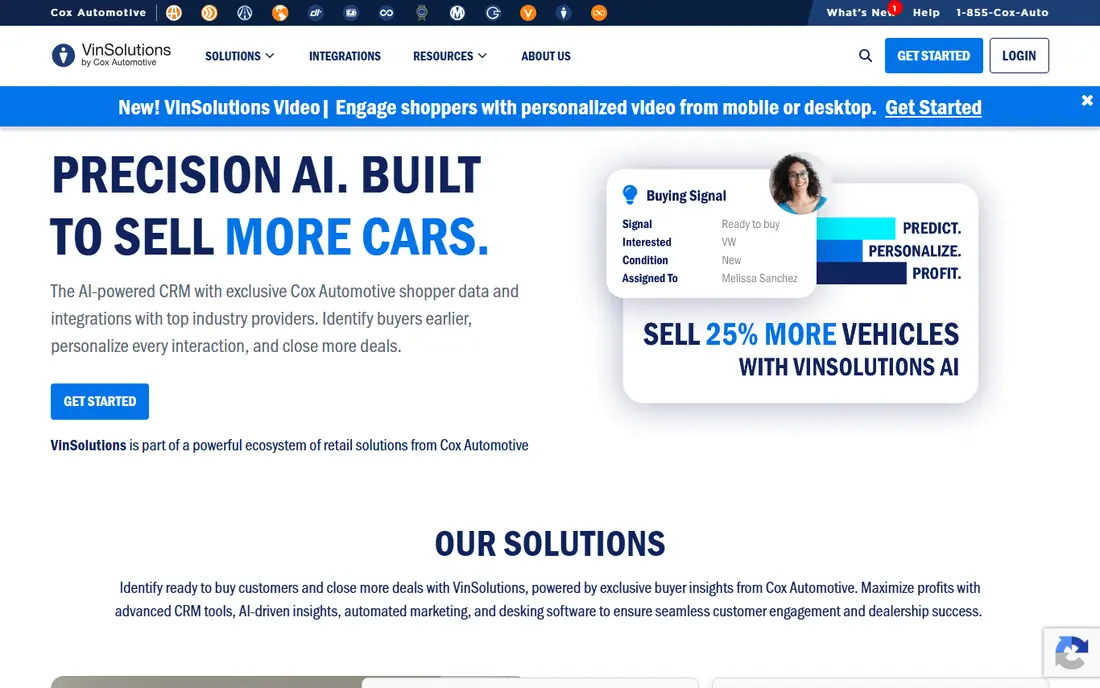
VinSolutions Connect CRM is the natural pick for franchise stores already using Cox Automotive products. Leads, customer records, marketing automation and sales follow-up sit in one system, and the link to Dealertrack DMS keeps sales and accounting data aligned. For a multi-rooftop group, that shared view across stores helps managers see which leads are being worked, which deals are stalled, and where follow-up is slipping.
The limit is ecosystem fit. A store that does not use Cox products gains less from VinSolutions, and pricing is by quote, so the cost depends on rooftops, users and modules. Implementation also takes planning, especially for a group moving from another CRM. For a franchise store already committed to Cox, VinSolutions is a strong and proven choice.
- Deep fit with Cox Automotive products and Dealertrack DMS
- Strong lead management and marketing automation
- Built for multi-rooftop groups
- Quote-based pricing
- Best value only inside the Cox ecosystem
- Implementation can be involved
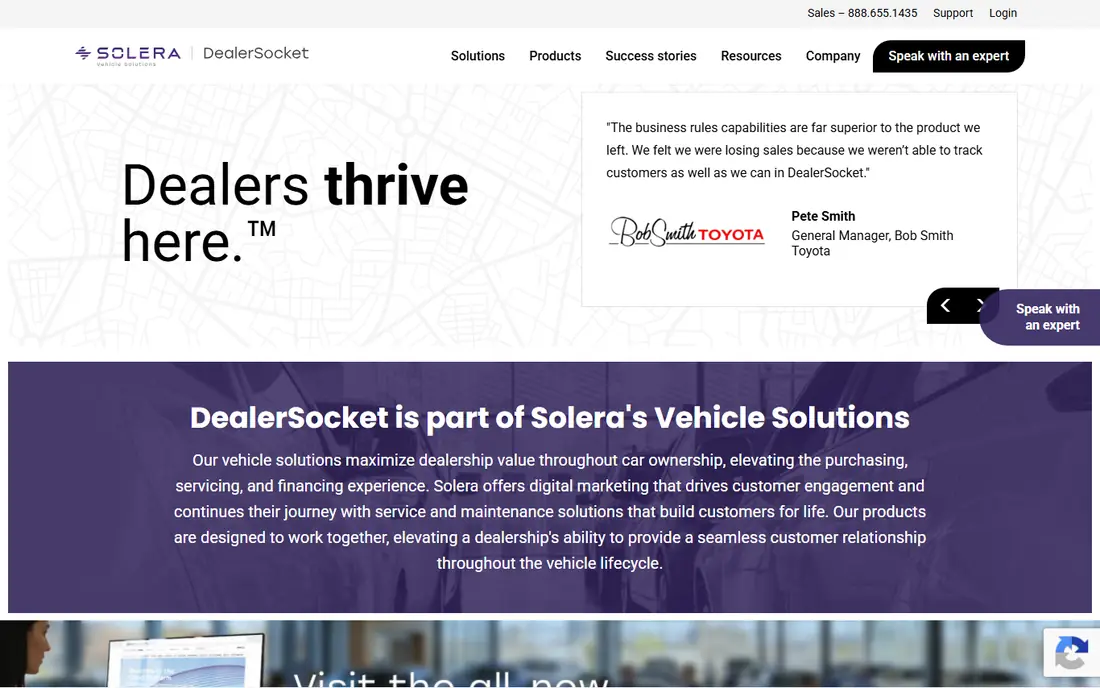
DealerSocket CRM suits dealer groups that do not want to be locked to one DMS. It covers lead management, sales follow-up, service retention and marketing, and it integrates with major DMS providers including CDK and Reynolds and Reynolds. That flexibility matters for a group running different DMS systems across rooftops, because it gives managers one consistent CRM view without forcing a DMS change.
Pricing is the main drawback, since it is quote-based and third-party estimates suggest setup costs on top of monthly fees. The platform is also broad, so a store needs to configure workflows, lead sources and reporting carefully to get value from it. For a franchise or independent group that wants a DMS-agnostic CRM with depth across sales and service, DealerSocket remains one of the leading options.
- Works with many DMS platforms
- Strong sales, service and marketing tools
- Built for dealer groups of many sizes
- Quote-based pricing with setup costs reported by third parties
- Breadth can require careful configuration

DriveCentric leads on AI-led engagement in this list. Its tools help stores respond to leads faster, keep conversations going across text, email and other channels, and surface the next best action for each customer. For a store where speed to lead and consistent follow-up decide deals, that focus on engagement is more useful than a longer list of back-office features.
The trade-offs are price opacity and data dependence. Pricing is by quote, so a store must request a full proposal, and AI tools only perform well when lead data is clean and complete. A store with messy lead sources should fix that first, or the AI will automate bad follow-up. For stores ready to invest in engagement and response speed, DriveCentric is a modern and compelling choice.
- AI-led customer engagement and follow-up
- Modern interface
- Strong fit for stores that want faster lead response
- Quote-based pricing
- Newer brand than VinSolutions or DealerSocket
- AI features need clean lead data to work well
CDK CRM, often known as eLead, is the obvious pick for stores already running CDK DMS. Because CRM and DMS share the same vendor, lead, deal, inventory and accounting data move between systems with less friction than a third-party integration usually allows. Franchise workflows, OEM compliance features and group reporting are built around that native link.
Outside the CDK world, the case is weaker. A store on a different DMS gains less, and pricing is by quote, so comparison requires a proposal. Small independent lots may also find the system larger than they need. For a CDK store or group, however, the native CRM removes integration risk and keeps the sales and back-office teams on the same record.
- Native fit with CDK DMS
- Lead management built for franchise workflows
- Strong group reporting
- Quote-based pricing
- Best fit only for CDK DMS users
- Large-system feel for a small lot
Tekion takes a different approach by building CRM and DMS together on a cloud-native platform called ARC. A store that adopts Tekion CRM is not just buying a CRM, it is moving toward a single system for sales, service, inventory and accounting. That single-stack design can remove the integration gaps that plague stores running separate CRM and DMS products from different vendors.
The cost is migration effort. Moving from a legacy DMS to Tekion is a major project, with data, training and process changes to plan. Pricing is also by quote, so the total depends on store size and modules. For a store already planning a full system rebuild, Tekion is one of the most modern options available. For a store that only wants a better CRM, a DMS-agnostic tool such as DealerSocket or DriveCentric may be a smaller step.
- Cloud-native platform with CRM and DMS in one stack
- Modern interface
- Designed for stores rebuilding systems from scratch
- Quote-based pricing
- Migration from a legacy DMS is a major project
- Newer ecosystem than CDK or Cox
AutoRaptor is the most transparent pick in this list, because it publishes a starting price of $399 per month. It is built for BDC-heavy operations, with lead management, follow-up workflows, texting and reporting designed for used-car and buy-here-pay-here stores that live on consistent outreach. Independent dealers often prefer it to enterprise tools because setup is simpler and the price is visible upfront.
The limits are scale and scope. AutoRaptor is not the first choice for a large franchise group with complex OEM requirements, and integrations or extra features can raise the monthly bill above the starting price. For an independent lot that needs disciplined follow-up without an enterprise contract, AutoRaptor offers a clear and practical balance of price and function.
- Published starting price
- Strong BDC and follow-up tools
- Good fit for used-car and buy-here-pay-here operations
- Less suited to large franchise groups
- Add-ons and integrations change the total
- Smaller brand than the enterprise rivals
Selly Automotive focuses on the small independent dealer that enterprise CRMs often overlook. It combines lead management, customer follow-up, inventory visibility and sales tools in a system sized for a single lot or a small group, without the heavy configuration that franchise platforms require. That focus makes it easier for a small team to adopt and use every day.
The trade-off is scale. Selly does not offer the same group reporting, OEM workflow depth or enterprise integration range as VinSolutions, DealerSocket or CDK, and pricing is by quote rather than published. For a small lot that wants a CRM built for its workflow, rather than a franchise system scaled down, Selly is a sensible choice.
- Built for small independents
- Lead, inventory and sales tools in one place
- Simpler setup than enterprise CRMs
- Quote-based pricing
- Less depth for large groups
- Fewer enterprise integrations
ProMax Complete
Great for: Independents wanting CRM, desking and credit in one
ProMax Complete bundles several jobs that independent dealers often buy separately. Alongside CRM and lead follow-up, it includes desking, credit application handling and appraisal connections, so a deal can move from lead to structured payment options to lender submission without leaving the system. That breadth is useful for independents that want one vendor for the sales process.
The interface feels older than newer rivals such as DriveCentric, and pricing is by quote, so a dealer must request a proposal to compare costs. Using every module well also takes setup and training. For an independent dealer that wants CRM plus desking and credit in one place, ProMax Complete remains a practical and well-established option.
- CRM, desking, credit and appraisal tools in one product
- Strong fit for independents
- Long history with independent dealers
- Quote-based pricing
- Interface feels older than DriveCentric or Tekion
- Setup needs care to use all modules well
How we picked these
We compared official feature pages, dealer-focused reviews and pricing information for automotive CRMs that handle lead management, follow-up, desking and DMS integration. We favored tools that are live in October 2026, that serve a distinct dealer type, from small independents to franchise groups, and that state their DMS fit clearly. We left out general CRMs with no automotive desking, inventory or service features, because the keyword calls for software built for car dealerships.
What to check before you buy
Start with DMS integration. Confirm in writing which DMS the CRM connects to, how often data syncs, and what happens when a deal, customer record or service visit changes in one system. A CRM that looks strong in a demo can still create double entry if the DMS link is shallow, and that extra work falls on the sales team every day.
Next, test lead response with real lead sources. Send test leads from the website, third-party sites and ad platforms, then watch how fast they appear, how they are assigned, and what follow-up the system triggers. That test shows whether the CRM will actually improve speed to lead, which is the metric that matters most for closing deals.
Finally, get the full cost in writing, including monthly fees, setup, training, texting overages and integration charges, and divide the yearly total by expected vehicle sales. That cost per car sold makes comparison honest, because a low monthly rate with heavy add-ons can cost more per deal than a higher rate that includes everything. Also ask about contract length and exit terms before signing.
Frequently asked questions
What is the best automotive crm software?
DriveCentric leads for AI-led engagement, VinSolutions and DealerSocket lead among enterprise incumbents, Tekion leads among cloud-native challengers, and AutoRaptor and Selly serve independents well. The best choice depends on dealership size, franchise status and DMS.
What is the top automotive crm software for independent dealers?
AutoRaptor, Selly Automotive and ProMax Complete are the strongest independent-focused picks in this list. AutoRaptor publishes a starting price and suits BDC-heavy used-car stores, Selly suits small lots that want a simple setup, and ProMax suits independents that want desking and credit in the same product.
How much does automotive CRM software cost?
Most automotive CRMs are quote-based, with monthly prices commonly ranging from a few hundred to a few thousand dollars depending on rooftops, users and modules. AutoRaptor publishes a starting price of $399 per month, while other vendors require a written quote for an accurate figure.
Is a CRM the same as a DMS?
No. A DMS handles accounting, inventory, repair orders and the system of record, while a CRM handles leads, follow-up and the path to a sale. Most dealerships run both, and the quality of the link between them matters more than either product alone.
Can an automotive CRM integrate with my DMS?
Leading automotive CRMs integrate with major DMS providers including CDK, Reynolds and Reynolds and Dealertrack, but depth varies by pairing. Confirm the specific DMS integration, sync frequency and data fields in writing before signing, rather than assuming a full two-way sync.
Sources
See where you really rank - block by block
ProMapRanker scans Google Maps across a grid of your service area. Simple monthly plans from $19, white-label on every plan.
Start freeKeep reading
 zscaler alternatives
Best Zscaler Alternatives in 2026
Looking for zscaler alternatives? We compare 9 SASE and zero trust platforms on architecture, data protection, pricing, and fit for your network and team.
Read → zapier alternatives free
Best Zapier Alternatives Free in 2026
Nine automation tools for zapier alternatives free in 2026, all with genuinely free tiers, plus free plan limits, starting prices and upgrade paths explained.
Read → which platform is best for online reputation
Which Platform Is Best for Online Reputation in 2026
Wondering which platform is best for online reputation? We compare 8 review, listing, and response tools for small and multi-location businesses and agencies.
Read →