 ProMapRanker
Best Automated AI Investing App in 2026


well-rounded automated investing · Pricing starts at: $5 per month
Key takeaways
- Betterment and Wealthfront are the strongest general automated investing apps, with diversified portfolios, automatic rebalancing and tax-loss harvesting.
- Fidelity Go suits small balances, since it charges no advisory fee under $25,000, while Schwab Intelligent Portfolios charges no advisory fee with a $5,000 minimum.
- Magnifi and Streetbeat add AI research and AI-managed portfolios, but they suit investors who want more involvement than a pure set-and-forget robo-advisor.
- Fees, fund expenses and cash allocation all affect returns, so compare the total cost, not just the headline advisory fee.
Quick comparison
| Pick | Great for | Pricing starts at | Free tier | |
|---|---|---|---|---|
| Betterment | well-rounded automated investing | $5 per month | No | Visit |
 Wealthfront | tax optimisation and planning tools | 0.25% per year | No | Visit |
 Fidelity Go | small balances | Free | Yes | Visit |
 Schwab Intelligent Portfolios | no advisory fee investing | Free | No | Visit |
 Vanguard Digital Advisor | low-cost index investing | See website | No | Visit |
 SoFi Automated Investing | all-in-one finance users | 0.25% per year | No | Visit |
 Acorns | spare-change investing for beginners | $4 per month | No | Visit |
 Magnifi | AI research and portfolio analysis | $13.99 per month | Yes | Visit |
 Streetbeat | AI-managed portfolios | $8 per month | Yes | Visit |
The best automated AI investing apps
Automated investing covers two related ideas: robo-advisors that build and manage a diversified portfolio for you, and AI tools that research, analyse or manage investments with varying levels of automation. The apps below include both types, and each one is actively offered in the United States in October 2026. This is not financial advice. Investing carries risk, including loss of money, and no app can promise returns. Past performance does not guarantee future results, and AI analysis is not a substitute for advice suited to your own situation.
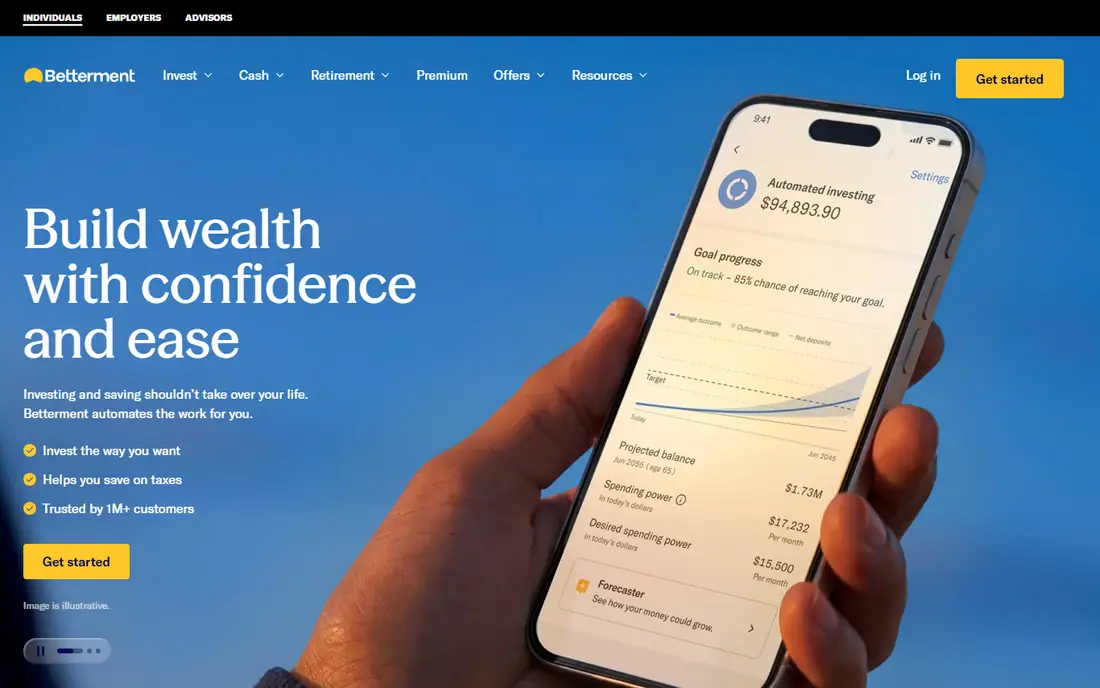
Betterment is a strong general pick because it covers the core robo-advisor job well: answer questions about goals and risk, receive a diversified portfolio, and let the app rebalance and reinvest dividends. Tax-loss harvesting on taxable accounts can help after-tax returns, though the benefit depends on your tax situation and account type. Goal-based tools help you see how a retirement, house or education goal is tracking.
Pricing needs a close look. Betterment charges 0.25% per year, or $5 per month for balances under $24,000 without a $200 per month recurring deposit, so small accounts without regular deposits pay more in percentage terms. Premium, at 0.65% per year with a $100,000 minimum, adds unlimited access to certified financial planners. For most beginners, the Digital plan is the right starting point.
- Diversified portfolios with automatic rebalancing
- Tax-loss harvesting on taxable accounts
- Goal-based planning for retirement, savings and major purchases
- $5 per month applies to smaller balances without a qualifying recurring deposit
- Human advisor access requires the Premium plan
- Fund expenses apply on top
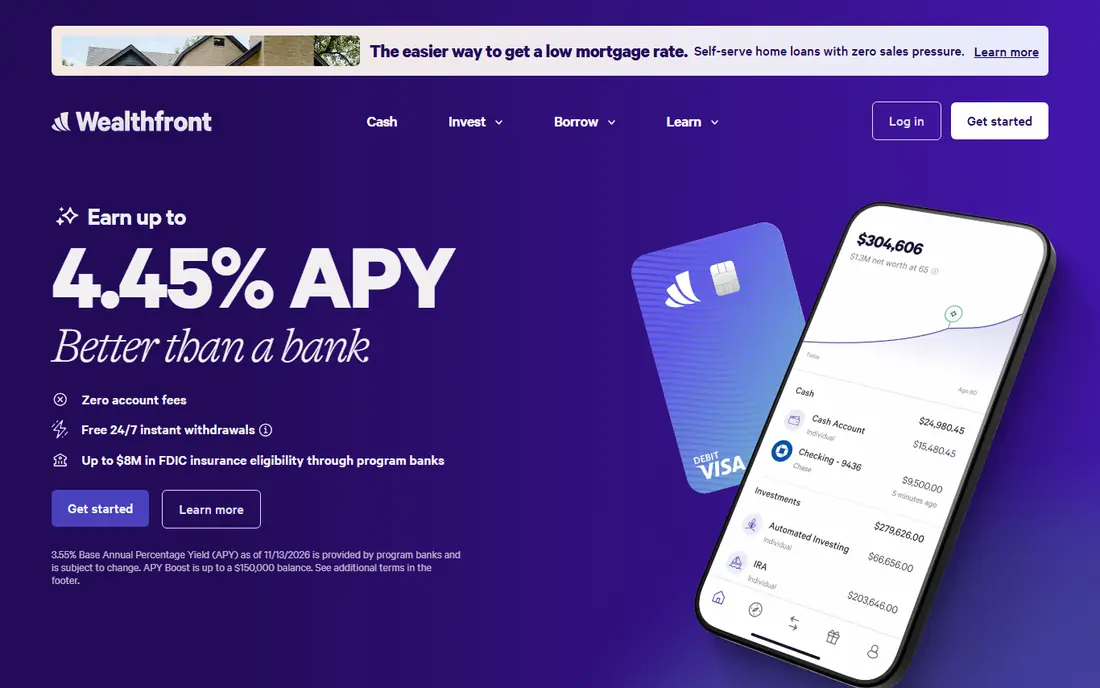
Wealthfront suits investors who want automation plus planning tools in one place. Portfolios are diversified across asset classes, rebalancing is automatic, and tax-loss harvesting is included on taxable accounts. Direct indexing, which holds individual stocks to harvest losses more precisely, becomes available at higher balances, which suits larger taxable accounts.
The $500 minimum is higher than Betterment or Fidelity Go, so very small starters may need to save first or choose a lower-minimum app. There is also no human advisor to call, which matters if you want personal guidance during a market fall. For self-directed investors who value tax tools and planning, Wealthfront is a strong choice.
- 0.25% advisory fee with a $500 minimum
- Tax-loss harvesting and direct indexing at higher balances
- Strong planning and 529 college savings tools
- No human advisor access
- $500 minimum excludes very small starters
- Fund expenses apply on top of the advisory fee
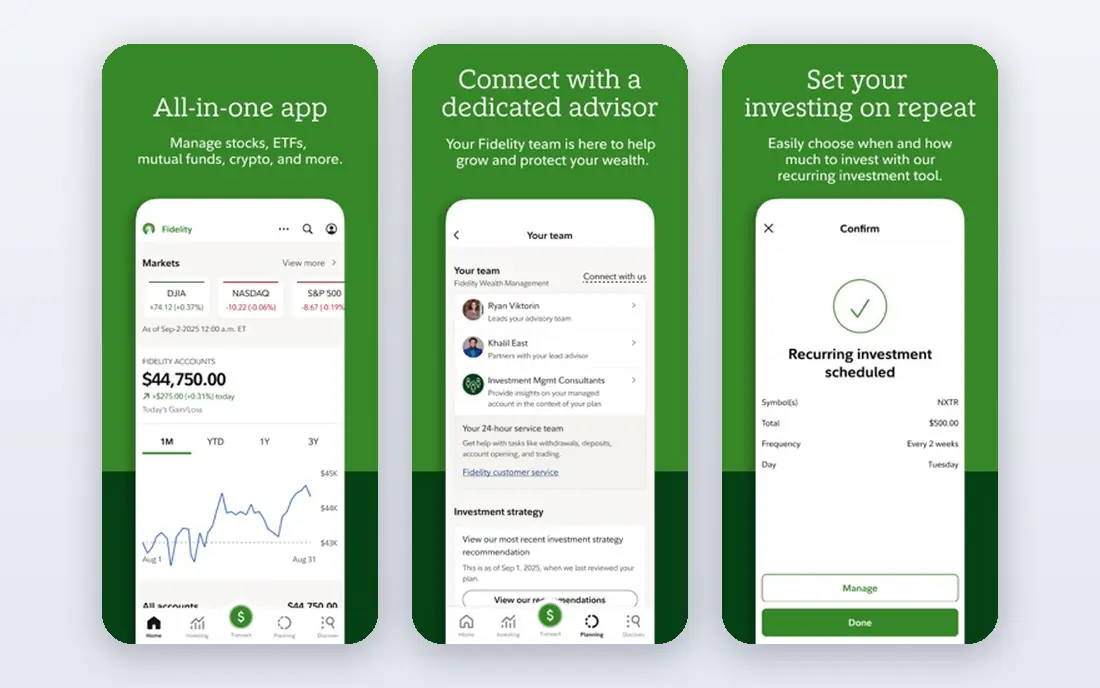
Fidelity Go is the best automated option for small balances, since the advisory fee is $0 under $25,000. That makes it a low-risk way to start automated investing, especially for users who already use Fidelity for a brokerage or retirement account. Portfolios are built from Fidelity funds, rebalancing is automatic, and the app keeps choices simple.
Above $25,000, the fee rises to 0.35% per year, which is higher than Betterment or Wealthfront, so larger investors should compare total cost. Tax-loss harvesting and human coaching also become available at $25,000, so smaller accounts get a simpler service. For a first automated account under $25,000, Fidelity Go is hard to beat on price.
- No advisory fee for balances under $25,000
- $0 to open and $10 to invest
- Access to Fidelity research and account tools
- 0.35% fee applies above $25,000
- Tax-loss harvesting and coaching become available at $25,000
- Portfolio customisation is limited
Schwab Intelligent Portfolios charges no advisory fee, which sounds like the cheapest option, but the full picture needs care. Schwab holds a portion of each portfolio in cash, and that cash earns interest for Schwab, which is how the service is funded. In a rising market, a larger cash holding can reduce returns compared with a fully invested portfolio, so compare expected cash allocation before you choose.
The $5,000 minimum also excludes small starters, and tax-loss harvesting requires $50,000 or more. For investors with $5,000 or more who already use Schwab, the no-fee structure and broad diversification are attractive. For smaller accounts, Fidelity Go or Acorns may be a better first step.
- $0 advisory fee
- Diversified portfolios across many asset classes
- Tax-loss harvesting for balances of $50,000 or more
- $5,000 minimum is high for beginners
- Cash allocation can drag returns in rising markets
- No human advisor on the base plan
Vanguard Digital Advisor suits investors who prioritise low costs and index funds above a polished app. The net advisory fee is around 0.15% per year after fund expense credits, depending on strategy and holdings, which is lower than most rivals. Portfolios use Vanguard funds, rebalancing is automatic, and you can choose index, active or ESG approaches.
The experience is plainer than Betterment or Wealthfront, with fewer planning visuals and limited human advice unless your balance reaches higher tiers. That trade will suit cost-focused investors, and it will frustrate users who want a rich app experience. Check the current fee disclosure on Vanguard site, since net fees vary by holdings.
- Low net advisory cost around 0.15% per year
- Vanguard index funds with low fund expenses
- Choice of index, active or ESG strategies
- $100 minimum and limited human advice
- Interface is plainer than rivals
- Tax-loss harvesting details vary by account
SoFi Automated Investing suits people who already use SoFi for banking or loans, since the robo-advisor sits inside the same app and account view. The $50 minimum is low, the 0.25% fee is standard for robo-advisors, and access to certified financial planners is a genuine benefit at this price. Sustainable portfolio options are also available for investors who want that tilt.
Tax-loss harvesting is not offered on the base service, which is a gap beside Betterment and Wealthfront for taxable accounts. Fund expenses for some specialised strategies are also higher than core index options, so check the funds in your chosen portfolio. For SoFi users who want a simple automated account, it is a convenient choice.
- 0.25% advisory fee with a $50 minimum
- Access to certified financial planners
- Integrates with SoFi banking, loans and other products
- No tax-loss harvesting on the base service
- Some specialised fund expenses are higher
- Portfolio quality varies by strategy
Acorns is built for people who struggle to save regularly. Link a bank card, and round-ups from everyday purchases are invested automatically, with recurring deposits as an option. That habit-building design suits beginners who want investing to happen without a monthly decision, and the educational content helps new investors learn basic terms.
The flat fee is the catch. At $4 per month for the base plan, a $100 balance pays a high percentage in fees, so Acorns works best once round-ups and deposits build a balance of several hundred dollars or more. It does not offer tax-loss harvesting or deep customisation, so serious investors may outgrow it. As a starter habit, it is effective.
- Round-ups invest spare change automatically
- $0 minimum to start in practical terms
- Simple portfolios and educational content
- Flat monthly fee is costly on very small balances
- No tax-loss harvesting
- Limited portfolio customisation
Magnifi is an AI investing assistant rather than a pure robo-advisor. Ask questions in plain language, such as how diversified your holdings are, and Magnifi analyses your connected holdings and surfaces relevant stocks, funds and risks. That conversational research suits active investors who want faster analysis, and managed portfolios are available for users who want automation on top of research.
Pricing is subscription-based, at $13.99 per month for the monthly plan, with an annual plan at a lower monthly equivalent, and managed portfolios add a further fee. That cost is high for a casual investor who trades rarely. Use the free tier first to test whether the AI answers help your decisions, and do not treat AI suggestions as personal financial advice.
- Conversational AI answers portfolio questions in plain language
- Connects to major brokerages for real holdings analysis
- Managed portfolios available for an extra fee
- Monthly subscription is costly for casual users
- Managed portfolios add 0.23% per year
- Insight quality depends on accounts connected
Streetbeat lets you describe an investment idea in plain language, then its AI builds a portfolio designed around that goal and manages allocations as news and markets change. Rebalancing can be daily, weekly or monthly, depending on your plan, and an AI advisor answers market and company questions. That combination suits investors who want AI management with more input than a standard robo-advisor portfolio.
The basic plan starts at $8 per month, with higher tiers for more queries, portfolios and advisor access, so check the tier that matches your use. Streetbeat is newer than Betterment, Wealthfront or Schwab, so its long-term record is shorter. For investors curious about AI-managed portfolios, it is worth a trial, but keep position sizes modest until you understand its approach.
- AI-managed portfolios built from your described goals
- Daily, weekly or monthly rebalancing
- AI advisor for market questions
- Subscription pricing rises steeply for fuller tiers
- Newer platform with a shorter track record than large robo-advisors
- Fees apply on top of fund costs
How we picked these
We compared official product pages, pricing pages, fee disclosures and public robo-advisor comparisons, and we kept only apps that are actively offered for automated or AI-assisted investing in the United States in October 2026. We weighed advisory fees, minimums, tax-loss harvesting, human advice, portfolio diversification and automation level, rather than marketing claims about AI alone. We did not claim hands-on testing, and prices are shown as See website where net fees vary by holdings or plan. This is not financial advice, and investing carries risk with no promised returns.
How to choose an automated investing app
Start with your balance and your tax situation. Small balances suit Fidelity Go or Acorns, mid-size taxable accounts suit Betterment or Wealthfront for tax-loss harvesting, and larger accounts suit Schwab or Vanguard on total cost. If you want a human advisor, check the minimum for that access, since it varies from $0 with SoFi planner access to $100,000 for Betterment Premium.
Next, compare total cost, not just the advisory fee. Add fund expense ratios, any cash allocation drag, and subscription fees for AI tools such as Magnifi or Streetbeat. Finally, decide how much involvement you want. A pure robo-advisor suits a set-and-forget investor, while Magnifi suits a researcher and Streetbeat suits an investor who wants AI management with input. Pick the level of involvement you will actually sustain through a market fall.
Frequently asked questions
What is the best automated AI investing app?
Betterment is a strong general pick for automated investing, Wealthfront suits tax-focused investors, and Fidelity Go suits small balances. The best automated AI investing app depends on your balance, tax situation and how much involvement you want. Magnifi and Streetbeat add AI research and management, but they cost more than a pure robo-advisor.
Is automated investing safe?
Automated investing uses diversified portfolios and regulated brokerage accounts, but investing always carries risk, including loss of money. No app can promise returns, and market falls will reduce portfolio values even with automation. Check that the provider is a registered investment adviser or brokerage, read its disclosures, and invest only money you can leave invested for your goal horizon.
How much does a robo-advisor cost?
Most robo-advisors charge 0.25% per year, with Fidelity Go free under $25,000 and Schwab charging no advisory fee with a $5,000 minimum. Acorns charges a flat monthly fee, while AI tools such as Magnifi and Streetbeat charge monthly subscriptions. Fund expenses apply on top of advisory fees, so compare total cost before you choose.
Do robo-advisors use AI?
Modern robo-advisors use algorithms for portfolio construction, rebalancing and tax-loss harvesting, and newer tools such as Magnifi and Streetbeat add conversational AI for research and portfolio management. That automation helps with discipline and tax efficiency, but it does not predict markets or guarantee returns. Treat AI outputs as analysis to review, not as advice to follow blindly.
Can I withdraw money from an automated investing app?
Yes, you can usually withdraw money, though selling investments may take a few business days to settle and transfer to your bank. Withdrawals from retirement accounts may carry tax or penalty consequences, depending on account type and age. Check withdrawal timing and tax implications before you move money you may need soon.
Sources
See where you really rank - block by block
ProMapRanker scans Google Maps across a grid of your service area. Simple monthly plans from $19, white-label on every plan.
Start freeKeep reading
 zscaler alternatives
Best Zscaler Alternatives in 2026
Looking for zscaler alternatives? We compare 9 SASE and zero trust platforms on architecture, data protection, pricing, and fit for your network and team.
Read → zapier alternatives free
Best Zapier Alternatives Free in 2026
Nine automation tools for zapier alternatives free in 2026, all with genuinely free tiers, plus free plan limits, starting prices and upgrade paths explained.
Read → which platform is best for online reputation
Which Platform Is Best for Online Reputation in 2026
Wondering which platform is best for online reputation? We compare 8 review, listing, and response tools for small and multi-location businesses and agencies.
Read →