 ProMapRanker
Best Authorization Software in 2026

Key takeaways
- Cerbos, AuthZed and Oso suit teams that want policy as code and self-hosted control, with different strengths in roles, relationships and modeling.
- Permit.io and Okta Fine Grained Authorization suit teams that want a managed service without running their own policy engine.
- Auth0 suits teams that need authentication plus basic roles in one managed platform, rather than deep fine-grained authorization alone.
- Keycloak suits teams that want open source identity and access control without license fees, if they accept self-hosting work.
- Pricing models differ sharply, from free open source cores to per-user and usage-based managed plans, so model cost at your expected check volume.
Quick comparison
| Pick | Great for | Pricing starts at | Free tier | |
|---|---|---|---|---|
 Auth0 | Managed auth plus roles | $35 per month | Yes | Visit |
 Cerbos | Self-hosted policy as code | Free | Yes | Visit |
 Permit.io | Managed full-lifecycle authorization | See website | Free trial | Visit |
 AuthZed | Relationship-based authorization | See website | Free trial | Visit |
 Oso | Developer-friendly policy modeling | See website | Free trial | Visit |
 Keycloak | Open source self-hosted IAM | Free | Yes | Visit |
 Frontegg | B2B multi-tenant authorization | See website | Free trial | Visit |
 PlainID | Enterprise policy orchestration | See website | No | Visit |
 Okta Fine Grained Authorization | Managed relationship checks | See website | Yes | Visit |
The best authorization software
Authorization software answers a different question from login software. Login proves who a user is, while authorization decides what that user can see and do, down to a single document, project or record. These tools cover role-based, attribute-based and relationship-based models.
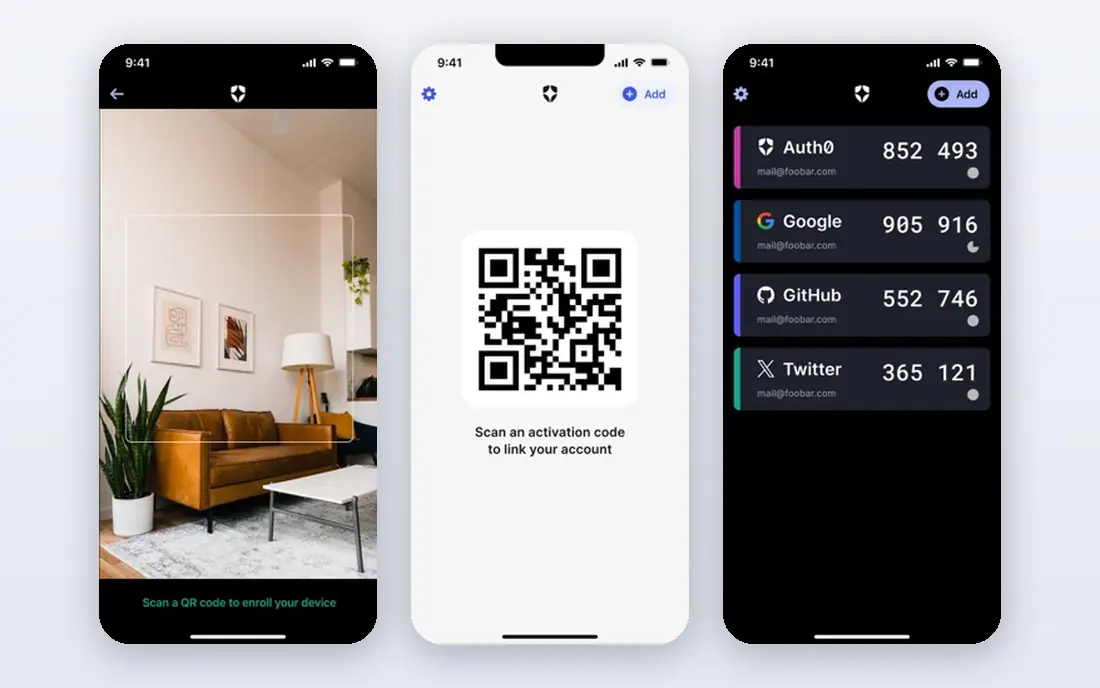
Auth0, now part of Okta, is the fastest route when you need login, signup, social sign-in and basic role-based access in one managed service. The free tier covers up to 25,000 monthly active users, which suits early products, and paid Essentials starts at $35 per month for up to 500 monthly active users on the published self-service card. Passwordless login, multi-factor authentication on paid tiers and audit-log streaming cover common production needs.
The pricing quirk matters. Paid plans include fewer monthly active users than the free tier at the entry level, so costs scale with user counts in ways that surprise teams. Auth0 also fits role checks better than complex relationship graphs, so teams with Google Docs style sharing rules should pair it with a dedicated authorization service.
- Generous free tier up to 25,000 monthly active users
- Social login and passwordless options
- Strong docs and SDKs
- Paid tiers meter by monthly active users
- Deep authorization logic can feel limited
Cerbos gives developers a self-hosted policy decision point that checks permissions from policies written as code and stored in version control. That approach suits teams that want audit trails, code review for access rules and deployment inside their own infrastructure. Policies can cover roles, attributes and resource rules, and the service answers low-latency checks from your application.
Self-hosting is both the strength and the work. Your team owns availability, scaling and upgrades, and managed cloud options change the cost picture. For teams with strong platform skills and strict data control needs, Cerbos offers control that managed services rarely match.
- Open source policy decision point
- Policies stored as code
- Self-hosted deployment
- You run and scale the service
- Managed cloud features cost extra
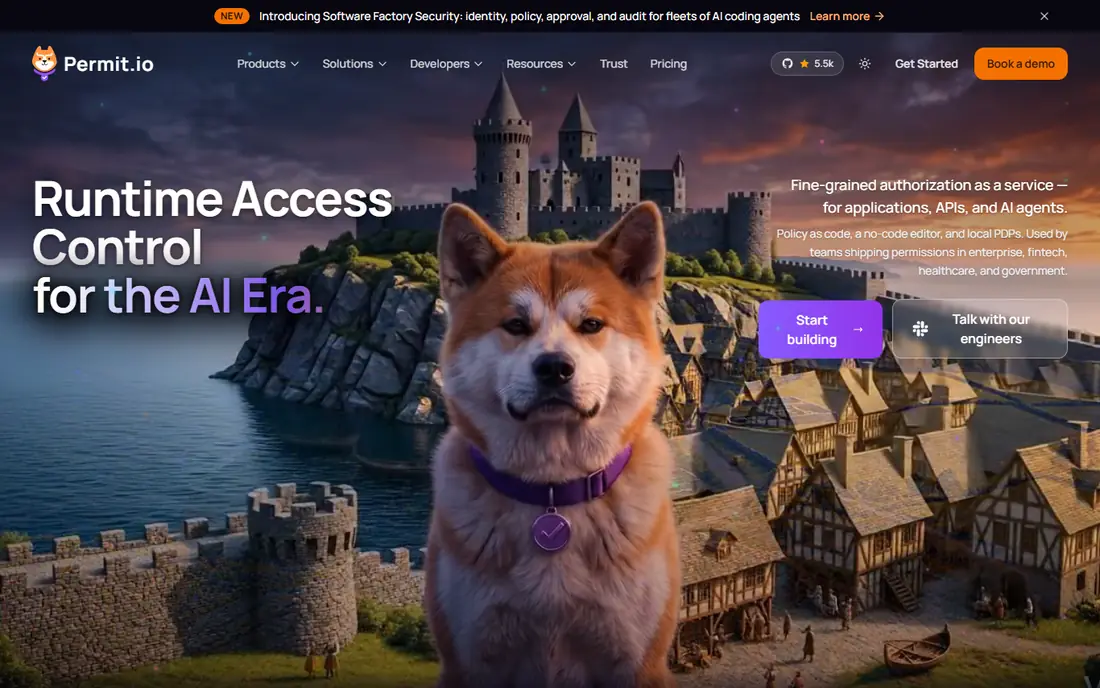
Permit.io aims to cover the full authorization lifecycle as a managed service, from policy modeling and testing to enforcement and audit. Teams can build role-based, attribute-based and relationship-based rules, and use SDKs to check permissions in code without running their own policy engine. Visual tools help product and security reviewers understand rules that developers write.
Managed convenience brings vendor dependency, and larger deployments are quoted, so teams should model check volume and tenant counts early. For a product team that wants fine-grained control without operating infrastructure, Permit.io is a strong middle ground between Auth0 roles and a self-hosted engine.
- Managed policy service
- Visual policy tools plus code
- Role and relationship models
- Quote-based pricing for larger use
- Managed service means vendor dependency
AuthZed is built around SpiceDB, an open source system inspired by Google Zanzibar, which answers sharing questions such as whether a user can see a file through a folder, a team and a project. That relationship model fits collaboration products, document systems and multi-tenant apps where access flows through groups and hierarchies. A managed cloud option removes the need to run SpiceDB yourself, while the open source core offers an exit path.
Modeling takes practice. Teams new to relationship graphs should expect design time before policies feel natural, and managed pricing is quoted. For sharing-shaped authorization at scale, AuthZed is one of the clearest specialist picks in this list.
- SpiceDB open source core
- Zanzibar-style relationship checks
- Managed cloud option
- Relationship modeling has a learning curve
- Pricing is quoted for managed use
Oso focuses on developer experience for authorization modeling, with a policy language and local tools that let engineers test rules before deployment. It supports role, attribute and relationship patterns, and its cloud service handles hosting and scaling for teams that do not want to run a policy engine. That balance suits product teams that want code-first policies without building authorization infrastructure from scratch.
The ecosystem is smaller than Auth0, and pricing for larger deployments is quoted, so teams should confirm limits and support terms. If your engineers want to write, test and review access rules like application code, Oso deserves a trial.
- Policy language built for developers
- Local testing tools
- Managed cloud option
- Pricing is quoted for larger use
- Smaller ecosystem than Auth0
Keycloak is the open source identity and access management server many teams choose when license fees are a blocker. It supports single sign-on, social login, user federation, role-based access and standard protocols such as OpenID Connect and SAML, and it runs inside your own infrastructure. That combination suits organizations with platform teams and strict hosting requirements.
The cost is operational, not license-based. Setup, clustering, upgrades and security patching fall to your team, and the admin experience takes learning. For teams that already run open source infrastructure and want control, Keycloak remains a practical authorization and identity foundation.
- Free open source core
- Single sign-on and role management
- Standard protocol support
- Self-hosting and upgrades are your job
- Interface and setup take learning
Frontegg is built for B2B SaaS products that serve many customer organizations, each with its own users, roles and single sign-on needs. Tenant-aware authorization, self-service SSO and SCIM provisioning help enterprise customers manage their own users without tickets to your team. That enterprise-ready layer is often the feature that closes B2B deals, even when core login already works.
Fit is narrower than general identity tools. Consumer apps with simple login needs will find Frontegg heavier than Auth0 or Keycloak, and pricing is quoted. For a B2B product adding enterprise customers, Frontegg solves a specific and painful gap.
- Tenant-aware roles and SSO
- SCIM provisioning
- Built for B2B SaaS
- Pricing is quoted
- Best fit is B2B SaaS, not consumer apps
PlainID centralizes authorization policy across applications, data sources and APIs, so enterprises can manage who can do what from one policy plane rather than scattering rules through code. Governance, audit trails and integration with identity providers help regulated organizations prove access controls during reviews. That orchestration view matters when the same policy must apply in a web app, an API and a data platform.
It is an enterprise tool, with quoted pricing and implementation work that small teams will find heavy. Large organizations with many systems and compliance duties gain the most, while a single-app startup should choose a lighter tool.
- Central policy management across systems
- Audit and governance tools
- Enterprise integrations
- Quote-only pricing
- Enterprise focus and implementation effort
Okta Fine Grained Authorization, built on the OpenFGA open source project, offers managed relationship-based checks for products with sharing, folders and team hierarchies. Developers model relationships, run high-volume checks through SDKs and rely on Okta operations for availability and scaling. The open source core gives teams a self-hosted fallback if they ever leave the managed service.
The model is relationship-first, so pure attribute or complex business-rule policies may fit Cerbos or Permit.io better. Teams already using Okta or Auth0 will find procurement and identity integration simpler, and the free tier helps with early evaluation.
- Managed Zanzibar-style checks
- OpenFGA open source core
- Okta operations and scale
- Relationship-first model fits sharing cases best
- Advanced policy cases may need another tool
How we picked these
We compared vendor docs, pricing pages and public reviews for authorization tools live in October 2026, focusing on policy models, deployment options, SDK quality and audit support. We used published prices only where they were clear, and See website where vendors quote, rather than repeating unverified figures. We did not claim hands-on testing, and we separated login tools from true authorization engines, while including Auth0 and Keycloak because many teams use them for role-based access.
Choosing the right authorization model
Start by naming the question your app must answer. If it is simply which role a user holds, Auth0 roles or Keycloak may be enough. If it is whether a user can access a specific document through teams and folders, a relationship tool such as AuthZed or Okta Fine Grained Authorization fits better. If it is a mix of roles, attributes and resource rules, Cerbos, Permit.io or Oso give more modeling freedom.
Next, decide who runs the engine. Managed services save platform work but add vendor dependency and usage costs, while open source self-hosting saves license fees but adds operations work. Test check latency under realistic load, since authorization runs on nearly every request, and a slow check slows the whole product.
Finally, plan for audit and change. Policies should live in version control or a reviewed policy store, with tests for common access cases and a log of who changed what. A tool that makes policy changes easy but unreviewed will create security risk as fast as it creates speed.
Frequently asked questions
What are the best authorization tools for developers?
Cerbos, Oso and AuthZed are popular developer picks, thanks to policy as code, local testing and clear SDKs. The best choice depends on whether your rules are role-based, attribute-based or relationship-based.
What is the best authorization software for fine-grained access?
Permit.io, AuthZed and Okta Fine Grained Authorization lead for fine-grained control, covering roles, attributes and relationships at the resource level. Test your hardest access case, such as nested sharing, before choosing.
Is Auth0 authorization software?
Auth0 is primarily an authentication platform with role-based access features, and it now sits alongside Okta Fine Grained Authorization for deeper cases. Many teams use Auth0 for login and add a dedicated authorization service for complex rules.
How much does authorization software cost?
Auth0 Essentials starts at $35 per month for up to 500 monthly active users, while Cerbos and Keycloak offer free open source cores. Most managed authorization services quote by usage, tenants or check volume, so model cost at scale.
Should I self-host authorization or use a managed service?
Self-hosting suits teams with platform skills and strict data control needs, while managed services suit product teams that want speed and scale without operations work. Weigh check latency, audit needs and exit options alongside price.
Sources
See where you really rank - block by block
ProMapRanker scans Google Maps across a grid of your service area. Simple monthly plans from $19, white-label on every plan.
Start freeKeep reading
 zscaler alternatives
Best Zscaler Alternatives in 2026
Looking for zscaler alternatives? We compare 9 SASE and zero trust platforms on architecture, data protection, pricing, and fit for your network and team.
Read → zapier alternatives free
Best Zapier Alternatives Free in 2026
Nine automation tools for zapier alternatives free in 2026, all with genuinely free tiers, plus free plan limits, starting prices and upgrade paths explained.
Read → which platform is best for online reputation
Which Platform Is Best for Online Reputation in 2026
Wondering which platform is best for online reputation? We compare 8 review, listing, and response tools for small and multi-location businesses and agencies.
Read →