 ProMapRanker
Best Auditing Platforms for Large Corporations in 2026

Key takeaways
- AuditBoard and Workiva are the most common shortlist picks for large internal audit and reporting teams, with strong workflow and reporting depth.
- Diligent HighBond and TeamMate+ suit audit teams that want established methodology, workpapers, and analytics in one system.
- MetricStream and ServiceNow suit very large groups that need audit inside a wider risk and compliance program.
- Software alone does not make an organisation compliant, and only an independent auditor issues audit opinions, so treat these tools as preparation and evidence systems.
Quick comparison
| Pick | Great for | Pricing starts at | Free tier | |
|---|---|---|---|---|
 AuditBoard | Modern internal audit at scale | See website | No | Visit |
 Workiva | Connected reporting and audit evidence | See website | No | Visit |
 Diligent HighBond | Audit analytics and workpapers | See website | No | Visit |
 TeamMate+ | Methodology-led internal audit | See website | No | Visit |
 MetricStream | Enterprise GRC with audit | See website | No | Visit |
 ServiceNow | Audit inside a wider ServiceNow estate | See website | No | Visit |
 Ideagen Internal Audit | Audit planning and workpaper control | See website | No | Visit |
 LogicGate | Flexible risk and audit workflows | See website | No | Visit |
 Hyperproof | Continuous compliance evidence | See website | No | Visit |
The best auditing platforms for large corporations
Large corporations need audit platforms that handle many entities, frameworks, auditors, and evidence requests without collapsing into spreadsheets. The tools below cover internal audit planning, fieldwork, workpapers, findings, controls testing, and reporting, with different strengths in analytics, reporting, and wider governance.
Please note this plainly: software alone does not make an organisation compliant. These platforms help teams plan audits, collect evidence, test controls, and track findings, but compliance depends on policies, controls, and people following them. Only an independent auditor issues audit opinions, and no platform on this list can do that for you.
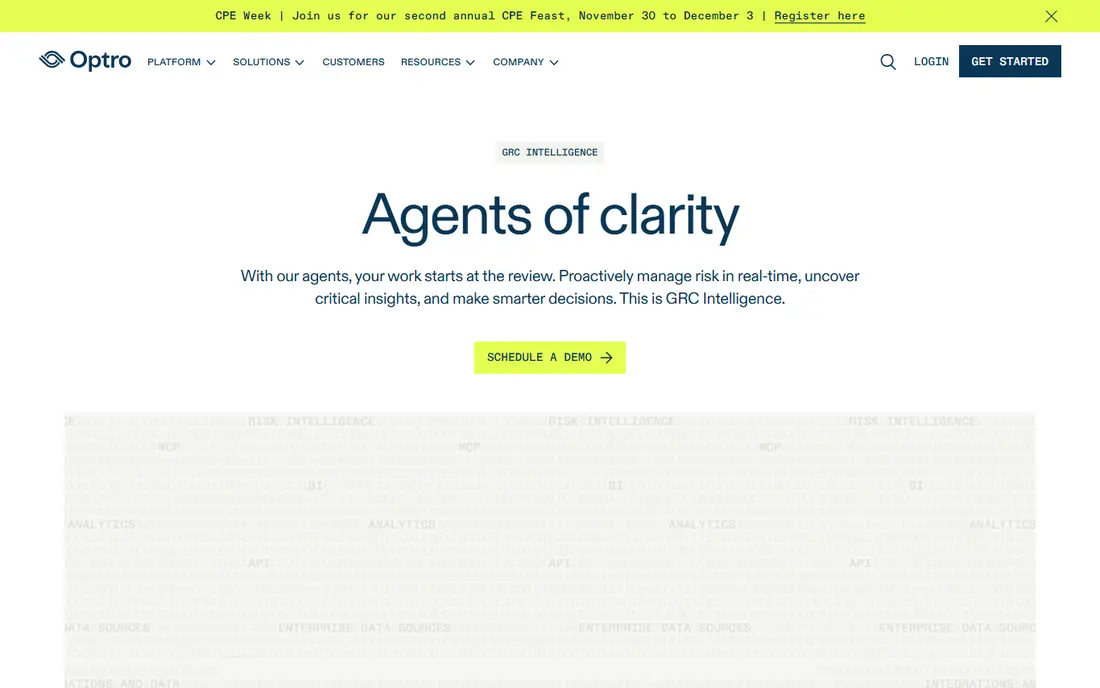
AuditBoard is built for internal audit, risk, and compliance teams in large companies. Auditors can plan engagements, manage workpapers, track findings, and share controls across audit and SOX programs, so the same control is not tested twice in different systems. Collaboration tools let business owners respond to requests and follow up on actions in one place.
Pricing is quote-based and depends on modules and user count, so budget holders need a formal proposal. AuditBoard suits a large audit function that wants a modern, connected platform and is ready to invest in rollout and training. Smaller audit teams may find the scope and cost more than they need.
- Auditor-oriented workflows for planning and fieldwork
- Shared controls across audit and SOX work
- Collaboration and reporting tools
- Pricing is not published
- Modules are priced separately
- Implementation needs planning for large teams
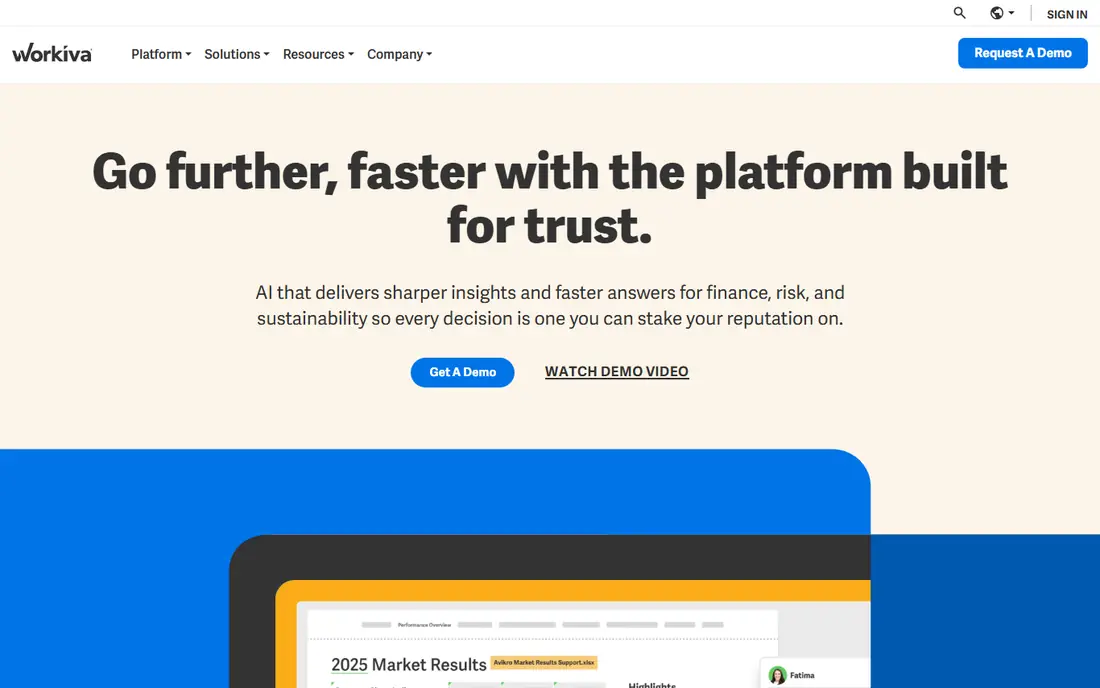
Workiva connects reporting, audit, and risk work in one cloud platform, with linked data and documents that update across reports. That linkage helps large companies keep financial reports, filings, sustainability reports, and audit evidence consistent, rather than copying numbers between files. Controls and evidence can be tied to the reports they support.
Pricing is quote-based and varies with company size and modules. Workiva suits a large corporation where audit, finance, and reporting teams already work together and need one source of truth. A pure internal audit team may prefer AuditBoard or TeamMate+ for fieldwork depth.
- Linked documents and data for reporting
- Strong SOX and disclosure workflows
- Audit trails across connected reports
- Pricing is quote-based
- Breadth suits reporting teams as much as audit teams
- Setup needs data and document planning
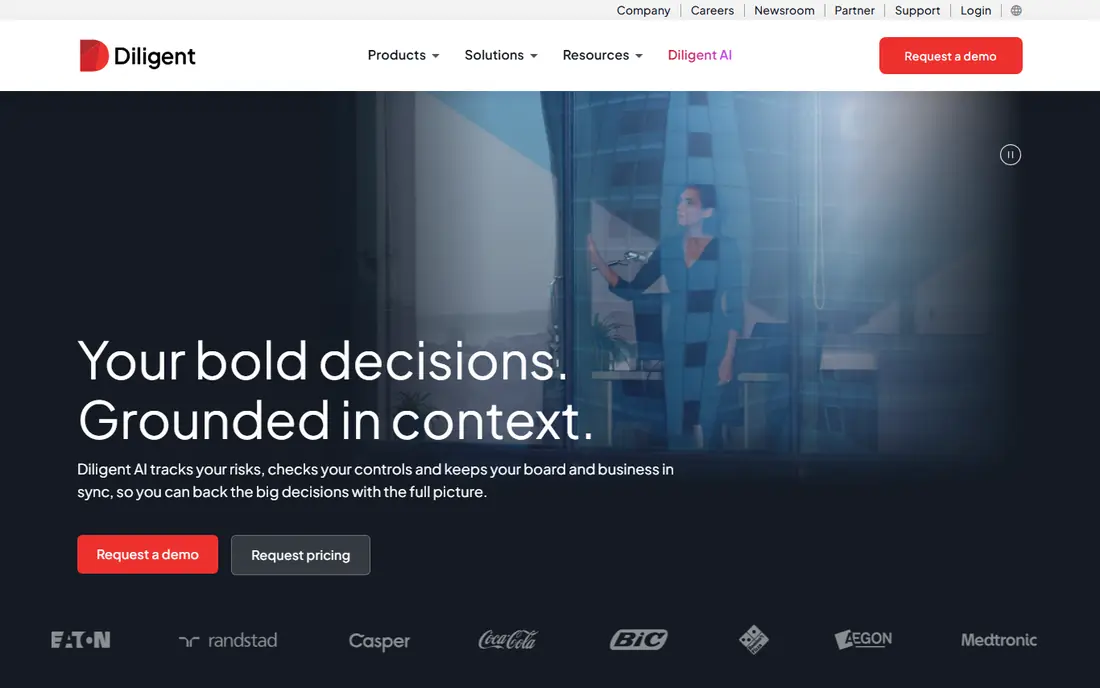
Diligent HighBond, formerly Galvanize, combines audit project management, workpapers, and analytics. Auditors can test full populations of transactions rather than small samples, which helps find exceptions that sampling might miss. Findings, actions, and reporting sit in the same system as the analytics.
Pricing is quote-based. HighBond suits audit teams that want analytics at the center of their work and have data they can connect. Teams without clean data or analytics skills should plan training and data work before expecting full-population testing to pay off.
- Audit analytics for full-population testing
- Workpaper and project management
- Board and governance links through Diligent
- Pricing is quote-based
- Analytics depth needs data skills
- Product scope has shifted with Diligent portfolio changes
TeamMate+, from Wolters Kluwer, is a long-standing internal audit system used by many large audit departments. It covers risk assessment, audit planning, scheduling, resource allocation, workpapers, findings, and reporting, with a methodology-led structure that suits teams with formal audit standards. Its track record in large, regulated companies is a key selling point.
The interface is more traditional than newer platforms, and configuration depends on how closely a team follows the built-in methodology. Pricing is arranged through the vendor. For an audit function that values proven methodology over a modern interface, TeamMate+ remains a strong pick.
- Established audit methodology and workpapers
- Risk assessment and scheduling
- Global use by large audit functions
- Pricing is licensed or subscription-based through the vendor
- Interface feels traditional
- Configuration takes effort
MetricStream serves very large organizations that need audit inside a wider governance, risk, and compliance program. Audit workflows connect to risk registers, control libraries, and compliance frameworks, so a control change in one area flows through to audit planning and testing. That shared model suits groups with many entities and regulators.
MetricStream is an enterprise purchase, with quote-based pricing and implementation that often needs specialist help. A company that only needs internal audit, without wider GRC, may find a focused audit platform faster to deploy. For a large group consolidating GRC, MetricStream is a leading candidate.
- Enterprise risk, compliance, and audit in one suite
- Shared enterprise control model
- Scales to very large, complex groups
- Pricing is quote-based and enterprise-level
- Implementation is a major program
- Suite depth can slow a focused audit rollout
ServiceNow Governance, Risk, and Compliance includes audit management alongside risk, vendor, privacy, and continuity tools. For a company already running ServiceNow for IT service and security operations, audit work can sit in the same system as incidents, changes, and security tasks, which improves visibility and follow-up.
Published comparisons put ServiceNow GRC pricing from around $50,000 per year, quote-based, though final pricing depends on scope and modules. Implementation often needs specialist consultants. ServiceNow suits a large enterprise already committed to its platform, rather than a company buying a standalone audit tool.
- Audit workflows tied to ITSM and SecOps
- Automation for control testing and remediation
- Scales across large enterprises
- Pricing is quote-based, with GRC starting at enterprise levels
- Implementation is complex
- Audit depth depends on configuration
Ideagen Internal Audit, formerly known as Pentana Audit, gives audit teams oversight and control of internal audit activity through planning, fieldwork, findings, and reporting. It can run as a cloud service or on-premises, which matters for companies with strict hosting rules. Audit leaders can track progress, resources, and actions across many engagements.
Pricing is arranged through the vendor and is not published. Ideagen suits mid-sized to large audit functions that want a focused audit workflow without buying a full GRC suite. Confirm the current product name and roadmap during evaluation, given the rebrand from Pentana Audit.
- Complete audit management workflow
- SaaS or on-premises deployment
- Oversight of audit activity across teams
- Pricing is not published
- Product was formerly Pentana Audit, so check current naming
- Reporting depth varies by setup
LogicGate is a governance, risk, and compliance platform with flexible workflow tools that audit teams can shape to their own processes. Teams can build audit plans, control tests, findings, and remediation workflows without heavy coding, and link them to risk registers and frameworks. That flexibility suits companies whose audit process does not fit a rigid template.
Flexibility is also a risk: without clear ownership and workflow standards, different teams can build inconsistent processes. Pricing is quote-based. LogicGate suits a large company that wants audit inside a wider GRC program but needs more configurability than a fixed audit product offers.
- Flexible no-code workflow building
- Risk and compliance linking
- Reporting and task tracking for audit actions
- Pricing is quote-based
- Flexibility needs governance to avoid sprawl
- Audit-specific depth varies by configuration
Hyperproof helps compliance and audit teams manage many frameworks at once by mapping one control to several standards, so evidence gathered once can support multiple audits. It connects to tools such as GitHub, Jira, ServiceNow, and cloud platforms to pull evidence automatically, and it tracks tasks and escalations when controls fail.
Pricing is quote-based. Hyperproof suits technology and security teams juggling SOC 2, ISO 27001, HIPAA, and NIST work, with audit preparation as a continuous process. A financial internal audit team may still prefer AuditBoard, Workiva, or TeamMate+ for workpaper depth, while using Hyperproof for compliance evidence.
- Controls mapped across many frameworks
- Automated evidence collection from connected tools
- Task and escalation tracking
- Pricing is quote-based
- Compliance focus suits IT and security audits more than financial audit
- Audit management depth is narrower than AuditBoard
How we picked these
We compared official product pages, pricing pages, and current audit platform comparisons for tools live in October 2026. We favored platforms used by large corporations for internal audit, controls, or compliance evidence, with multi-entity and multi-framework support. Where a vendor does not publish a price, we wrote See website rather than estimating a figure, because enterprise audit pricing varies sharply by users, modules, and entities.
How to choose an audit platform for a large corporation
Start from your audit universe, not from a feature list. List entities, frameworks, audit types, and evidence sources, then check which platforms handle that scope without heavy customization. A platform that works for one head office may fail across twenty subsidiaries with different systems.
Test evidence and reporting, not just planning
Run a pilot on a real audit, from planning through workpapers, findings, and reporting, using your own data and reviewers. Check how evidence is collected, how reviewers comment, and how findings turn into tracked actions. A platform that looks good in a demo can still slow fieldwork if evidence handling is clumsy.
Plan rollout and ownership
Assign owners for the control library, frameworks, templates, and user training before signing. Large rollouts fail when every team configures the tool differently. Keep templates consistent, limit custom fields, and review the setup after the first full audit cycle.
Frequently asked questions
What is the best auditing platform for large corporations?
AuditBoard is the most frequent shortlist pick for large internal audit teams, with Workiva close behind for connected reporting and evidence. Diligent HighBond and TeamMate+ suit methodology and analytics-led teams, while MetricStream and ServiceNow suit wider GRC programs. Shortlist by audit scope, then pilot on a real engagement.
Does audit software make a company compliant?
No. Software helps plan audits, collect evidence, test controls, and track findings, but compliance depends on policies, controls, training, and consistent action. A platform can show gaps clearly, but only people and processes can close them. Only an independent auditor issues audit opinions.
How much does enterprise audit software cost?
Enterprise audit pricing is almost always quote-based and varies by users, modules, entities, and implementation. Published comparisons show wide ranges, with ServiceNow GRC from around $50,000 per year as one example. Get a written quote for your exact scope, including implementation, training, and support.
Can one platform cover internal audit, SOX, and risk?
Yes, several platforms on this list cover audit, SOX controls, and risk in one system, including AuditBoard, MetricStream, and ServiceNow. Shared controls reduce duplicate testing, but they also need clear ownership. Decide who owns each control and framework before consolidating, or the shared model will create confusion.
Should a large corporation replace spreadsheets with an audit platform?
In most large companies, yes, once audit volume, entities, and evidence requests pass a threshold that spreadsheets cannot track safely. A platform adds version control, audit trails, and action tracking that spreadsheets lack. Migrate in stages, starting with one audit type, and keep spreadsheet exports for reviewers who need them during transition.
How long does implementation take for a large audit platform?
Implementation varies from weeks for a focused pilot to many months for a full enterprise rollout across entities and frameworks. Data migration, control libraries, integrations, and training drive the timeline more than software installation. Ask vendors for a phased plan with a pilot audit before full rollout.
Sources
See where you really rank - block by block
ProMapRanker scans Google Maps across a grid of your service area. Simple monthly plans from $19, white-label on every plan.
Start freeKeep reading
 worlds best local seo company
8 Worlds Best Local SEO Companies for Map Pack Growth in 2026
Compare the worlds best local seo company options for Google Business Profile work, citations, reviews, and multi-location rankings and reporting in 2026.
Read → world's best web hosting company
World's Best Web Hosting Company in 2026
Searching for the world's best web hosting company? We compared 10 hosts on price, renewal rates, speed, and support to help you choose well today in 2026.
Read → who's got the best nanny tax services
Who's Got the Best Nanny Tax Services in 2026
We answer who's got the best nanny tax services, comparing full filing, back taxes, software, and pricing so families can handle nanny taxes correctly.
Read →