 ProMapRanker
Best Attack Surface Management Tools in 2026


Large enterprise discovery · Pricing starts at: See website
Key takeaways
- Cortex Xpanse is our pick for large enterprises because it scans the internet at scale and can fix some exposures automatically.
- Microsoft Defender EASM suits teams already running Microsoft security tools, with consumption based pricing.
- CrowdStrike Falcon Exposure Management is the natural choice for teams already standardised on Falcon.
- Most enterprise ASM tools are quote based, so budget for a sales conversation rather than a published price.
- ASM finds assets you did not know about; it does not replace penetration testing or internal vulnerability scanning.
Quick comparison
| Pick | Great for | Pricing starts at | Free tier | |
|---|---|---|---|---|
| Palo Alto Networks Cortex Xpanse | Large enterprise discovery | See website | No | Visit |
 Microsoft Defender EASM | Microsoft security stacks | $0.011 per asset per day | Free trial | Visit |
 CrowdStrike Falcon Exposure Management | Falcon customers | See website | No | Visit |
 Tenable One Attack Surface Management | Tenable vulnerability teams | See website | No | Visit |
 CyCognito | Complex groups and subsidiaries | See website | Free trial | Visit |
 Censys Attack Surface Management | Internet scan data depth | See website | Free trial | Visit |
 Rapid7 Surface Command | Internal plus external assets | See website | No | Visit |
 Detectify | Web application monitoring | €2,500 per year | Free trial | Visit |
The best attack surface management tools
We compared external attack surface management platforms that were live in October 2026, and we kept tools that discover internet facing assets from an attacker point of view.

Cortex Xpanse scans the internet continuously to find assets tied to your organisation, including forgotten subdomains, cloud services and exposed ports, then ranks what it finds. Its Active Response add on can fix some exposures automatically, which matters when the asset list runs into thousands. For a large enterprise with acquisitions and shadow IT, that scale is the point.
The drawback is fit and price. Xpanse is quote based and built for large teams, so a small company will find it heavy and costly. If you run Palo Alto tools already, integration is smoother, but the core value is discovery at internet scale.
- Internet wide scanning
- Automated remediation add ons
- Strong enterprise integrations
- Quote based pricing
- Best suited to large teams, not small firms
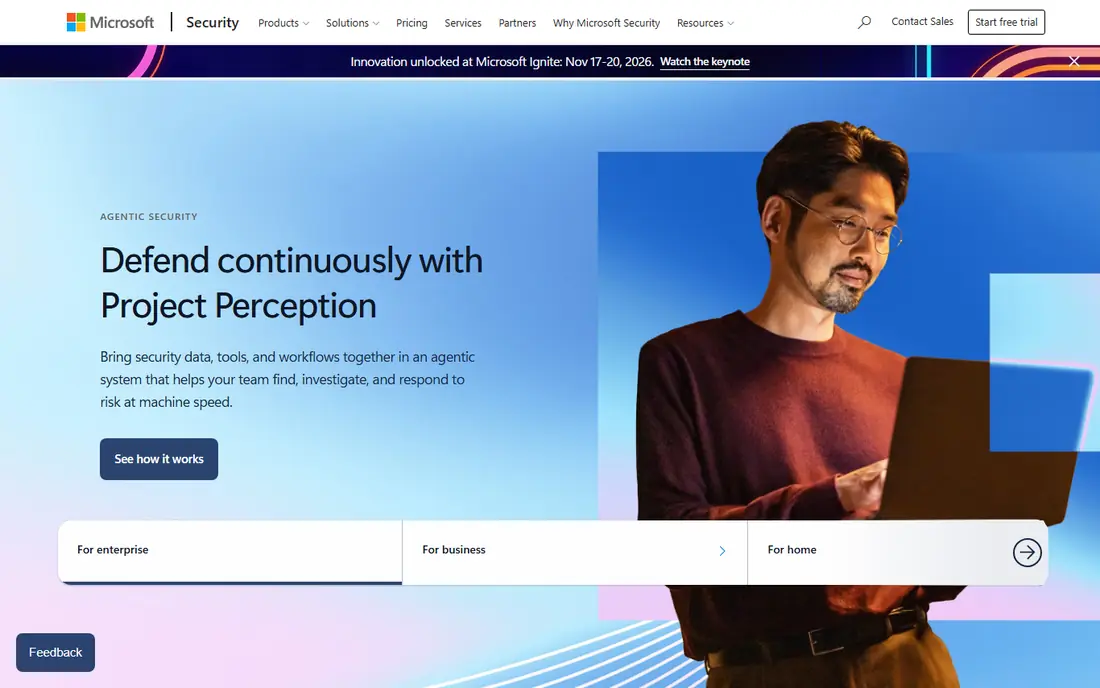
Microsoft Defender External Attack Surface Management, or Defender EASM, builds an attack surface inventory from seed domains and Microsoft inventory data, then lets teams query it in Sentinel and other Microsoft tools. Pricing is consumption based at $0.011 per billable asset per day on Azure, with a 30 day trial, which makes costs easier to model than a pure quote.
The limit is ecosystem: if you do not run Microsoft security tools, much of the integration value falls away. Asset counting also needs care, since the bill follows billable assets, not just domains. For Microsoft centred teams, though, it is a coherent and fairly priced entry into ASM.
- Consumption pricing on Azure
- Sentinel integration
- 30 day trial
- Value depends on Microsoft stack
- Asset counting needs careful reading
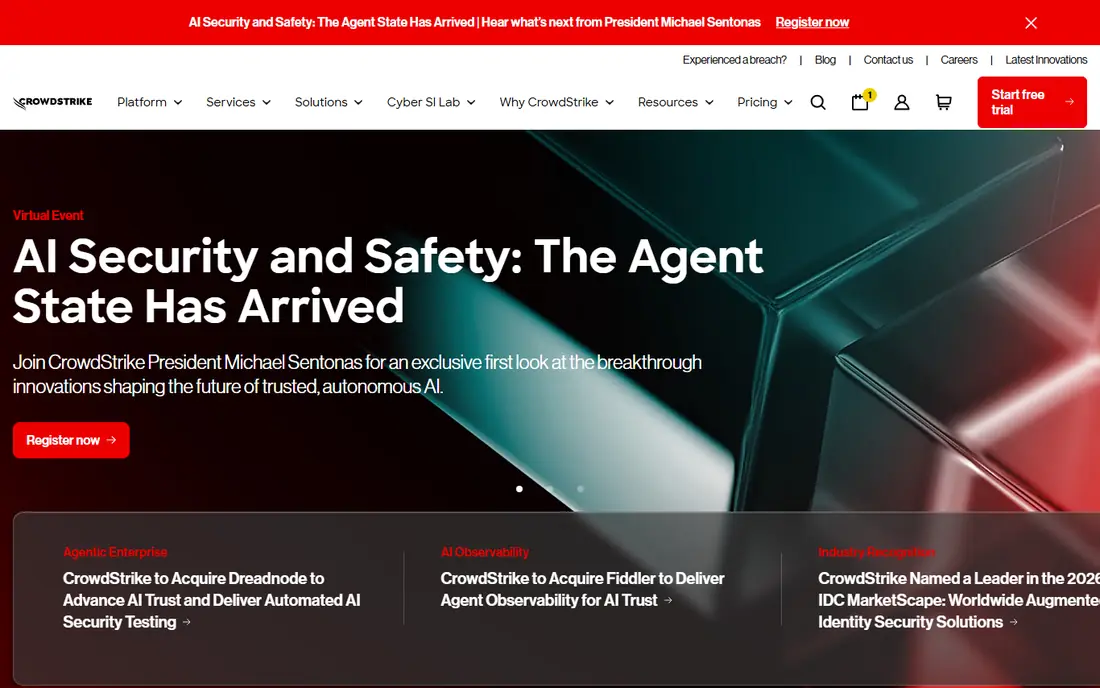
CrowdStrike Falcon Exposure Management, formerly Falcon Surface, adds external attack surface data to the Falcon platform, ranking internet facing exposures with CrowdStrike threat intelligence. For a team already running Falcon for endpoint detection, that single view of internal and external risk is convenient, and it avoids adding another console for security staff to check.
Outside Falcon, the case weakens. Pricing is quote based, and a team without Falcon would need to adopt a large platform to get this ASM module. If Falcon is already your standard, this is the ASM tool to evaluate first.
- External exposures ranked with CrowdStrike intelligence
- Falcon integration
- Continuous scanning
- Quote based
- Strongest value only inside the Falcon platform
Tenable One Attack Surface Management finds external assets from seed domains and suggested domains, then lets Tenable One scan any asset it finds. That link between discovery and scanning is the strength: an unknown subdomain becomes a scanned, assessed asset without a separate workflow. Tenable also provides rich metadata for each asset, which helps teams prioritise.
As with CrowdStrike, the value is highest inside its home platform. A team without Tenable vulnerability management will pay for a large suite to get ASM alone. For Tenable customers extending outward from known assets, it is a natural next step.
- Feeds directly into Tenable One
- Rich asset metadata
- Scan any found asset
- Quote based
- Best value only for existing Tenable customers
CyCognito takes a different starting point: give it a company name, and it maps subsidiaries and related assets without needing a full seed list. That helps large groups, private equity firms and companies after acquisitions, where no one person holds a complete domain list. Active testing then checks what it finds, rather than only listing it.
Pricing is quote based by asset volume, and the platform is aimed at enterprises. Smaller teams may find it more than they need. For complex organisations that cannot list their own estate, CyCognito solves the hardest part of ASM first.
- Seedless attribution from company name
- Active testing
- Free scan to start
- Quote based by asset volume
- Enterprise focus
Censys runs its own internet wide scans, and its ASM product draws on that first party data to show ports, services and certificates across your assets. Researchers and security teams who value raw scan depth tend to like Censys, since the data behind a finding is detailed and checkable. A free Censys account for search lets you test the data before buying the full platform.
Full ASM pricing is quote based, and the depth that researchers love can overwhelm a lean team. If your team wants to query scan data directly and build its own views, Censys is a strong choice. If you want a guided remediation workflow, a more opinionated platform may fit better.
- First party internet scan data
- Deep port and service detail
- Free search account
- Quote based for full ASM
- Data depth can overwhelm small teams
Rapid7 Surface Command combines external discovery with internal asset data into one asset graph, so teams can see known and unknown assets together. That unified view helps when an external finding needs an internal owner, a patch or a decommission decision. API integrations let it pull in data from existing tools rather than starting from scratch.
Pricing is quote based, and the unified view needs integration work to pay off. A team that already uses Rapid7 tools will get more value faster. For teams tired of separate internal and external inventories, Surface Command is worth evaluating.
- Internal and external assets in one graph
- API integrations
- Unified asset view
- Quote based
- Needs integration work to reach full value
Detectify focuses on internet facing web applications, monitoring domains for vulnerabilities and misconfigurations that web teams can fix. Its platform starts from €2,500 per year plus a per domain fee, with a free Starter plan, which makes it one of the few ASM tools here with a published entry price. Engineering led web teams often prefer that clarity.
The scope is narrower than a full enterprise ASM platform: it is about web assets, not every cloud service and subsidiary. For a web heavy company that wants continuous web monitoring without an enterprise quote process, Detectify is a practical and transparent choice.
- Web focused monitoring
- Published starting price
- Free Starter plan
- Web scope is narrower than full ASM
- Per domain fees add to the base price
How we picked these
We compared vendor product pages, recent ASM comparisons and published pricing notes, and we kept only tools that were live in October 2026. We favoured tools with continuous discovery, clear prioritisation and real integrations, and we mixed enterprise platforms with more accessible web focused tools. Where pricing is quote based, we say so rather than inventing a figure, since enterprise ASM pricing varies by asset volume and scope.
Choosing the right attack surface management tool
Start from your existing stack
ASM value grows when it plugs into tools you already use, whether that is Falcon, Tenable, Microsoft Sentinel or Rapid7. A best in class standalone tool that no one checks will lose to a good tool inside your daily console. Shortlist the ASM module from your current vendor first, then compare one independent tool against it.
Test on the estate you know least
During a trial, point the tool at the part of your estate you understand least, such as an acquired business or an old product line. Judge it on what it finds that you did not already know, not on how nicely it lists assets you already track. A tool that finds nothing new in a trial is telling you something useful, even if it is disappointing.
Check how findings become fixes
Discovery alone does not reduce risk. Ask how a finding flows into a ticket, who owns it, and whether the tool can verify a fix or automate a simple remediation. Cortex Xpanse Active Response, Defender EASM Sentinel queries and Rapid7 integrations all aim at that step, but the workflow still needs an owner on your side.
Model the pricing unit before you sign
Enterprise ASM is often priced by asset volume, employee count or a flat quote, while Defender EASM charges per asset per day and Detectify charges per domain on top of a base fee. Ask for a cost estimate on your actual asset count, and ask what counts as a billable asset. A low headline price can grow quickly if every subdomain and certificate counts separately.
Frequently asked questions
What is the best attack surface management tool?
For large enterprises, Cortex Xpanse is the strongest overall pick because of its internet scale discovery and remediation options. Microsoft Defender EASM is best for Microsoft centred teams, while CrowdStrike Falcon Exposure Management is best for Falcon customers. The right pick depends more on your existing stack than on a single ranking.
What is the best attack surface management software for small teams?
Detectify is the most accessible pick here, with a published starting price from €2,500 per year and a free Starter plan, plus a web focus that small engineering teams can act on. Intruder is another small team option outside this list, with a free plan for a small number of targets. Large enterprise platforms will usually be too heavy for a small team.
How is ASM different from vulnerability management?
Vulnerability management scans assets you already know about, while ASM first finds assets you did not know about, viewed from outside as an attacker would see them. The two work together: ASM expands the inventory, and vulnerability scanning assesses what it finds. Neither replaces the other.
Do ASM tools replace penetration testing?
No. ASM monitors exposure continuously and at scale, while penetration testing validates exploitability in depth at a point in time. A good security program uses both, with ASM catching new exposures between tests and penetration tests proving what an attacker could actually do with them.
What is the best attack surface management platform for subsidiaries?
CyCognito is the strongest pick for complex groups because it can start from a company name and map subsidiaries without a complete seed list. That seedless approach helps after acquisitions, when domain lists are incomplete and no single team owns the full estate.
Sources
See where you really rank - block by block
ProMapRanker scans Google Maps across a grid of your service area. Simple monthly plans from $19, white-label on every plan.
Start freeKeep reading
 zoho inventory alternatives
6 Alternatives to Zoho Inventory, Compared on Price and Fit
Zoho Inventory alternatives: 6 tools compared on price, free plans and fit. Katana leads the list for manufacturers. Fit and flaws are laid out for each entry.
Read → zoho crm alternatives
Best Zoho CRM Alternatives (2026)
Need Zoho CRM alternatives? We compare 7 tools on cost, free access and who each suits. Every pick gets a straight assessment. Built for quick decisions.
Read → zelle alternatives
Best Zelle Alternatives in 2026
Compare the best Zelle alternatives for sending money to friends, paying sellers and moving funds abroad, with honest notes on fees, speed and safety in 2026.
Read →