 ProMapRanker
Best AR Companies in 2026


Location-based AR and large-scale real-world mapping · Pricing starts at: See website
Key takeaways
- This guide covers augmented reality only: companies that build AR hardware, platforms, or software that overlays digital content on the real world.
- Niantic and 8th Wall lead location-based and web-based AR, while Magic Leap and Varjo focus on enterprise headsets for training and field work.
- Apple, Meta, and Snap shape consumer AR through phones, glasses, and developer platforms, even when their headsets serve different price points.
- Unity and PTC Vuforia matter because they give developers the tools to build AR apps without starting from raw computer vision code.
- The best AR company for you depends on use: consumer apps, enterprise training, retail try-on, or developer platforms are different markets.
Quick comparison
| Pick | Great for | Pricing starts at | Free tier | |
|---|---|---|---|---|
| Niantic Spatial | Location-based AR and large-scale real-world mapping | See website | No | Visit |
 Magic Leap | Enterprise AR headsets for training and field work | See website | No | Visit |
 Meta Reality Labs | Consumer AR glasses, AI glasses, and developer platforms | See website | No | Visit |
 Apple | Phone AR at scale and spatial computing | See website | No | Visit |
 Snap | Consumer AR lenses and creator tools | See website | No | Visit |
 Unity | Building AR apps across phones, headsets, and glasses | Free | Yes | Visit |
 PTC Vuforia | Industrial AR for field service, training, and manufacturing | See website | Free trial | Visit |
 Varjo | High-end enterprise headsets for design and simulation | See website | No | Visit |
 Vuzix | Smart glasses for frontline and field workers | See website | No | Visit |
The best AR companies
We compared official product pages, developer documentation, and platform descriptions for companies with live augmented reality products in October 2026. Prices for headsets, enterprise platforms, and developer tools vary by configuration and contract, so we list See website where a vendor does not publish a single consumer price. Our focus is what each company actually ships, not announcements alone.
Niantic Spatial
Great for: Location-based AR and large-scale real-world mapping
Niantic Spatial grew from the company behind location-based games that put AR on millions of phones, and its platform work now matters as much as any single game. Lightship provides mapping, positioning, and shared AR anchors so digital content can sit in a real place and persist for other users. 8th Wall, part of Niantic, lets brands run AR in a mobile browser, which removes the friction of asking a customer to download an app for a single try-on or promotion.
The trade-off is that Niantic is a platform choice, not a plug-and-play product for every business. A retailer, tourism board, or training provider still needs developers to design the experience, handle content, and test on real devices.
- Lightship platform and real-world mapping for location AR
- 8th Wall brings AR to the web without an app download
- Proven consumer reach through games
- Enterprise pricing is quote-based
- Consumer game success does not guarantee every business use case
- Platform choices need developer planning
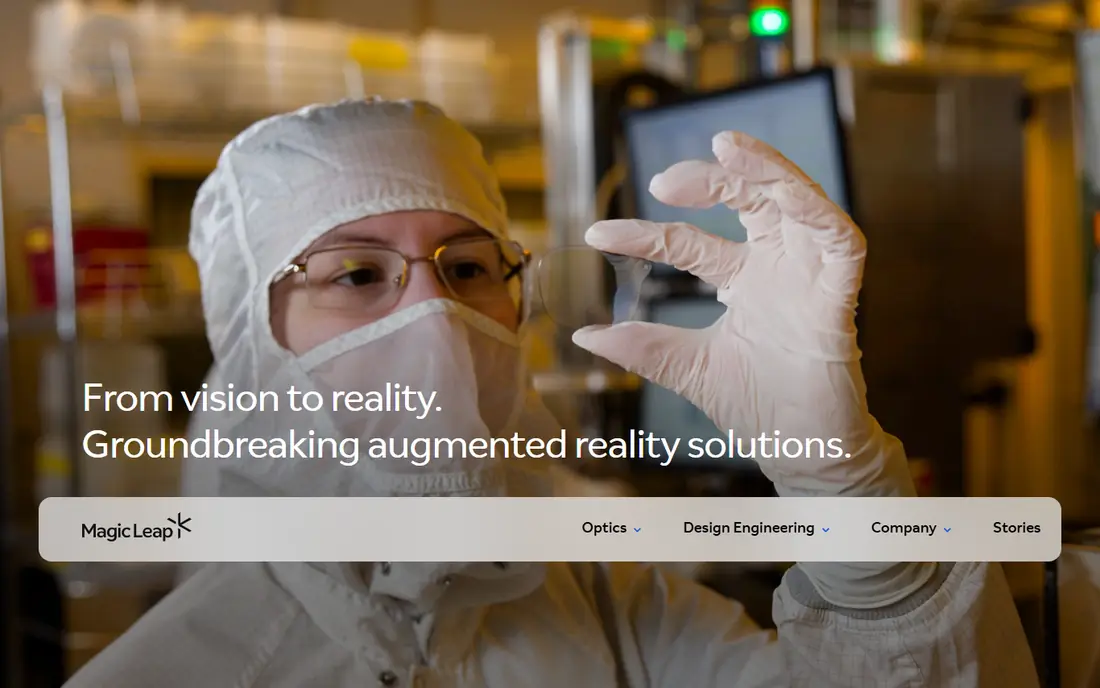
Magic Leap 2 is an enterprise headset, not a consumer gadget, and judging it as one misses its purpose. Hospitals use AR headsets for training and surgical planning support, field service teams overlay instructions on equipment, and industrial teams review 3D models at full scale on a factory floor. Magic Leap focuses on optics and tracking for extended professional use.
Cost and scope are the honest limits. A headset program includes hardware, software licenses, content development, and support, so total cost runs well above a phone-based AR trial. Consumer buyers will find little to do with Magic Leap 2 compared with a phone or consumer glasses. For an enterprise team with a clear training or field service problem, Magic Leap is one of the most focused AR headset options available.
- Magic Leap 2 headset built for enterprise use
- Strong spatial tracking and optics for professional work
- Healthcare, field service, and defense use cases
- High headset and program cost
- Limited consumer content
- Enterprise deployment needs IT and content planning
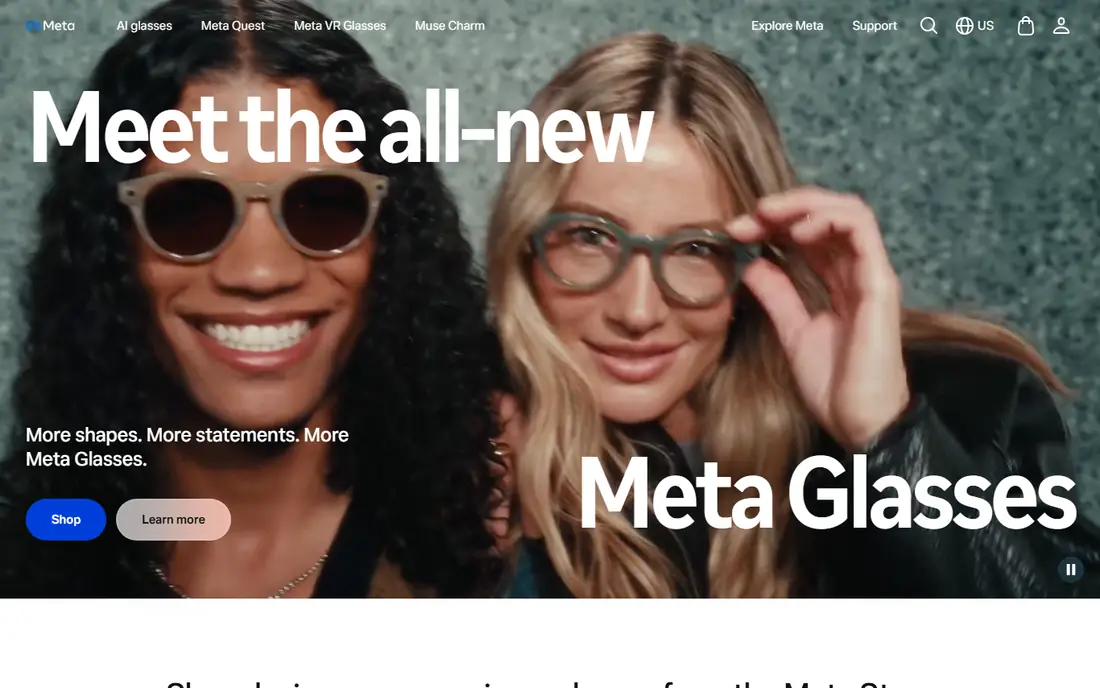
Meta Reality Labs covers AR from two directions: AI glasses that people actually wear daily, and research toward full display glasses that overlay digital content in view. Ray-Ban Meta glasses offer hands-free photos, video, audio, and AI assistance without a display, which has made them the most widely adopted smart glasses form so far. Meta also publishes AR development tools and platform work that developers use to build effects and experiences.
The catch is that the most advanced display glasses are not yet a mass-market product at a mass-market price, and availability varies by region and release wave. Camera glasses also raise privacy questions that workplaces and public venues handle differently, so buyers should check local rules and workplace policies. For consumer AR reach today, Meta is the company most people will actually encounter in daily life.
- Ray-Ban Meta glasses bring AI and camera features to everyday eyewear
- Reality Labs invests heavily in AR research and platforms
- Large developer ecosystem
- Full AR display glasses remain expensive and limited in availability
- Privacy questions follow always-on camera glasses
- Product lineup changes often
Apple shapes AR mainly through the phone in your pocket. ARKit, built into iOS, lets developers anchor furniture in a room, measure spaces, run try-on experiences, and build location-aware apps without extra hardware. Vision Pro extends the same idea into a high-end headset with spatial computing, hand tracking, and mixed reality apps.
Price is the clear barrier at the headset end: Vision Pro costs far more than consumer glasses or a phone upgrade, and its best use cases remain productivity, design review, and media rather than everyday AR. Developers also work within Apple rules and hardware, which limits some cross-platform plans. For reach, though, no AR company matches Apple: if an experience runs on a modern iPhone, it can reach hundreds of millions of people without new hardware.
- ARKit gives developers a mature phone and tablet AR platform
- Vision Pro offers high-end spatial computing
- Huge installed base of AR-capable devices
- Vision Pro is expensive
- ARKit apps vary widely in quality
- Apple ecosystem limits cross-platform flexibility
Snap turned AR into a daily habit for millions through lenses: face filters, world effects, and try-on experiences inside Snapchat. Lens Studio lets creators and brands build those effects without deep computer vision expertise, and the distribution is built in, since lenses run where users already spend time.
Spectacles, Snap standalone AR glasses, show where the company wants to go next, but they have not reached the mass availability of phone lenses. Brands should also judge Snap AR on campaign goals, not novelty: a lens that people share beats a technically impressive effect that nobody opens. For consumer AR creativity and reach, Snap remains one of the most practical platforms for brands and creators.
- Lens Studio gives creators accessible AR tools
- Snapchat lenses reach a huge young audience
- Spectacles explore standalone AR glasses
- Monetization depends on platform reach
- Spectacles availability has been limited
- Brand campaigns need creative and media planning
Unity is not an AR headset company, and that is exactly why it belongs here: most AR apps are built with a game engine, and Unity is the most widely used one for AR. AR Foundation lets developers target Apple ARKit and Google ARCore from a single project, while Unity supports headsets and glasses from other vendors too.
The free tier helps students, indie creators, and startups, but license terms change with revenue and team size, so commercial teams should confirm current pricing before scaling. Unity also demands real development skill: it lowers the barrier compared with raw computer vision code, but it does not remove design, testing, and performance work. For any team building a custom AR app rather than buying a ready-made platform, Unity is the default starting point.
- AR Foundation supports ARKit and ARCore from one project
- Huge asset store and tutorial community
- Free tier for eligible creators
- Learning curve for new developers
- Pricing and license terms need checking as revenue grows
- Performance tuning is still developer work
PTC Vuforia focuses on the factory floor, the service visit, and the training room. Its engine tracks objects and models, including CAD-based targets, so a technician can point a tablet or headset at equipment and see step-by-step instructions, parts, and safety notes overlaid on the real machine. Vuforia Studio helps industrial teams build those experiences without writing every AR feature from scratch, and PTC enterprise options cover security and deployment at scale.
Consumer marketers will find Vuforia heavier than a web AR tool such as 8th Wall, and pricing requires a sales conversation for most enterprise use. Industrial buyers, though, value the CAD connection and the focus on uptime, safety, and training outcomes rather than campaign reach. If your AR problem is helping a worker fix, assemble, or inspect something correctly, Vuforia is one of the strongest specialist platforms.
- Vuforia Engine and Studio target industrial use cases
- Model-based tracking works with CAD data
- Enterprise support and security options
- Enterprise pricing is quote-based
- Industrial deployments need content and device management
- Less suited to consumer marketing AR
Varjo builds headsets for work where visual detail cannot be compromised: automotive design review, aerospace simulation, medical visualization, and defense training. That fidelity matters when a design decision depends on seeing a curve, a label, or a tolerance correctly, not just getting a general impression.
The price and setup reflect that focus. Varjo headsets are enterprise products, often paired with powerful workstations, software licenses, and support contracts, so total cost is far above consumer headsets. There is little reason for a casual buyer to choose Varjo. For a design or simulation team that already uses high-end visualization tools, Varjo offers a level of clarity that cheaper headsets do not match.
- Very high-resolution displays for detailed design review
- Mixed reality passthrough for industrial use
- Strong fit for automotive, aerospace, and defense
- High cost and enterprise-only positioning
- Needs powerful PCs for many setups
- Limited consumer content
Vuzix focuses on smart glasses for people whose hands are busy: warehouse staff, field technicians, logistics workers, and healthcare teams. Its glasses display instructions, checklists, barcodes, and remote expert video in view, so a worker does not need to hold a tablet or phone. That hands-free design is the whole point, and Vuzix has built its products around weight, durability, and all-day enterprise use rather than entertainment.
The limits are the same ones facing all enterprise glasses: display brightness, battery life, and field of view involve trade-offs, and a glasses purchase alone does not solve workflow design. Buyers need compatible software, device management, and training to get value. For frontline teams that need information in view while working, Vuzix is a practical, focused choice alongside RealWear and similar enterprise vendors.
- Lightweight smart glasses for hands-free work
- Waveguide optics for industrial and logistics use
- Partnerships with enterprise software vendors
- Consumer appeal is limited
- Display and battery trade-offs remain
- Enterprise deployment needs software and support planning
How we picked these
We compared official product pages, developer documentation, and platform descriptions for companies with live AR hardware, platforms, or software in October 2026. We favored companies that ship products developers and businesses can buy or build on today, not concept announcements alone. We covered four angles: consumer AR, enterprise headsets, industrial platforms, and developer tools, since a single ranking across those markets would mislead. Where prices are contract-based, we say so rather than inventing a figure.
How to choose an AR company for your use case
Start with the user and the device they already own. If your audience is consumers on phones, a web AR platform or a phone lens platform will reach more people than any headset. If your user is a technician on a factory floor, an enterprise headset or smart glasses with hands-free instructions will help more than a phone app they must hold. Device choice follows the job, not the other way around.
Consumer, enterprise, and developer paths differ
Consumer AR rewards reach, shareability, and low friction: browser AR, phone lenses, and AI glasses win when no download or purchase is required. Enterprise AR rewards accuracy, safety, and integration with existing systems: CAD data, training records, and device management matter more than novelty. Developer AR rewards tools, documentation, and cross-platform support: Unity, ARKit, and ARCore matter because they reduce rebuild work. Pick the path first, then compare companies within it.
Test on real devices before committing
AR looks different on a demo video than in a bright warehouse, a small shop, or a moving vehicle. Test tracking in your actual lighting, check battery life over a full shift, and confirm that content loads on the phones or headsets your users own. A pilot with ten users and one clear task, such as completing a repair or trying on a product, tells you more than a vendor presentation. Measure completion time, errors, and user comfort, not just visual impressiveness.
Frequently asked questions
What are the best AR companies?
The best AR companies depend on use: Niantic leads location and web AR, Magic Leap and Varjo lead enterprise headsets, Apple and Meta lead consumer reach, and Unity and PTC Vuforia lead developer and industrial platforms. For a consumer campaign, start with phone and web AR. For training or field service, start with enterprise headsets and industrial platforms.
What is the best AR platform for developers?
Unity with AR Foundation is the most flexible starting point for developers who want to target both Apple and Android phones, plus headsets. Niantic 8th Wall is stronger for browser-based AR that needs no app download, and PTC Vuforia is stronger for industrial tracking with CAD models. Choose by target device and tracking needs, not by brand alone.
Which AR company makes the best headset?
Magic Leap 2 and Varjo suit enterprise training and design review, while Apple Vision Pro suits high-end spatial computing and media. Meta and Snap focus more on glasses and consumer experiences than on a single flagship headset. The best headset is the one that fits your task, budget, and software, tested in your real working conditions.
Is augmented reality different from virtual reality?
Yes. Augmented reality overlays digital content on the real world, so you still see your surroundings, while virtual reality replaces your view with a fully digital scene. AR suits field work, retail try-on, navigation, and training where seeing the real environment matters. VR suits fully immersive simulation and entertainment where the real world should be hidden.
Can small businesses use AR without a headset?
Yes. Most small business AR runs on phones or in a web browser: virtual try-on, furniture placement, product previews, and location guides all work without headsets. Tools such as 8th Wall, Snap Lens Studio, and Apple ARKit make phone AR accessible, and costs depend on content design rather than hardware. Start with one clear use case and test it with real customers.
What should I check before buying enterprise AR glasses?
Check display quality in your lighting, battery life over a full shift, weight and comfort, device management, and software compatibility with your existing systems. Confirm support, repair turnaround, and data privacy terms, especially for camera-equipped glasses in workplaces. Run a pilot with frontline users before buying at scale, and measure task completion and comfort, not just demo quality.
Sources
See where you really rank - block by block
ProMapRanker scans Google Maps across a grid of your service area. Simple monthly plans from $19, white-label on every plan.
Start freeKeep reading
 zscaler alternatives
Best Zscaler Alternatives in 2026
Looking for zscaler alternatives? We compare 9 SASE and zero trust platforms on architecture, data protection, pricing, and fit for your network and team.
Read → zapier alternatives free
Best Zapier Alternatives Free in 2026
Nine automation tools for zapier alternatives free in 2026, all with genuinely free tiers, plus free plan limits, starting prices and upgrade paths explained.
Read → which platform is best for online reputation
Which Platform Is Best for Online Reputation in 2026
Wondering which platform is best for online reputation? We compare 8 review, listing, and response tools for small and multi-location businesses and agencies.
Read →