 ProMapRanker
Best Apps to Sell Stuff Fast in 2026

Key takeaways
- For speed on bulky items, local apps such as Facebook Marketplace, OfferUp, and Craigslist usually beat shipping platforms.
- eBay reaches the largest buyer pool for unusual, collectible, and branded items, but its fees are higher than most local options.
- Fashion sells faster on Poshmark, Depop, and Vinted, where buyers already search by brand, size, and style.
- Good photos, a fair price based on sold listings, and fast replies matter more than choosing a perfect app.
Quick comparison
| Pick | Great for | Pricing starts at | Free tier | |
|---|---|---|---|---|
 Facebook Marketplace | Local sales and bulky items | Free | Yes | Visit |
 eBay | Almost anything, shipped nationwide | Free | Yes | Visit |
 Mercari | Everyday household items | Free | Yes | Visit |
 Poshmark | Brand name clothing and accessories | Free | Yes | Visit |
 Depop | Vintage and streetwear fashion | Free | Yes | Visit |
 OfferUp | Fast local sales | Free | Yes | Visit |
 Craigslist | Simple local cash sales | Free | Yes | Visit |
 Etsy | Handmade and vintage goods | $0.20 per listing | No | Visit |
 Vinted | Everyday clothing with no seller fee | Free | Yes | Visit |
The best apps to sell stuff fast
Speed depends on the item, not just the app. A sofa sells fast locally, a rare sneaker sells fast to a national buyer pool, and a handmade item sells fast where buyers already look for handmade work. We compared fees, buyer reach, shipping help, and payout timing for the apps most US sellers actually use.
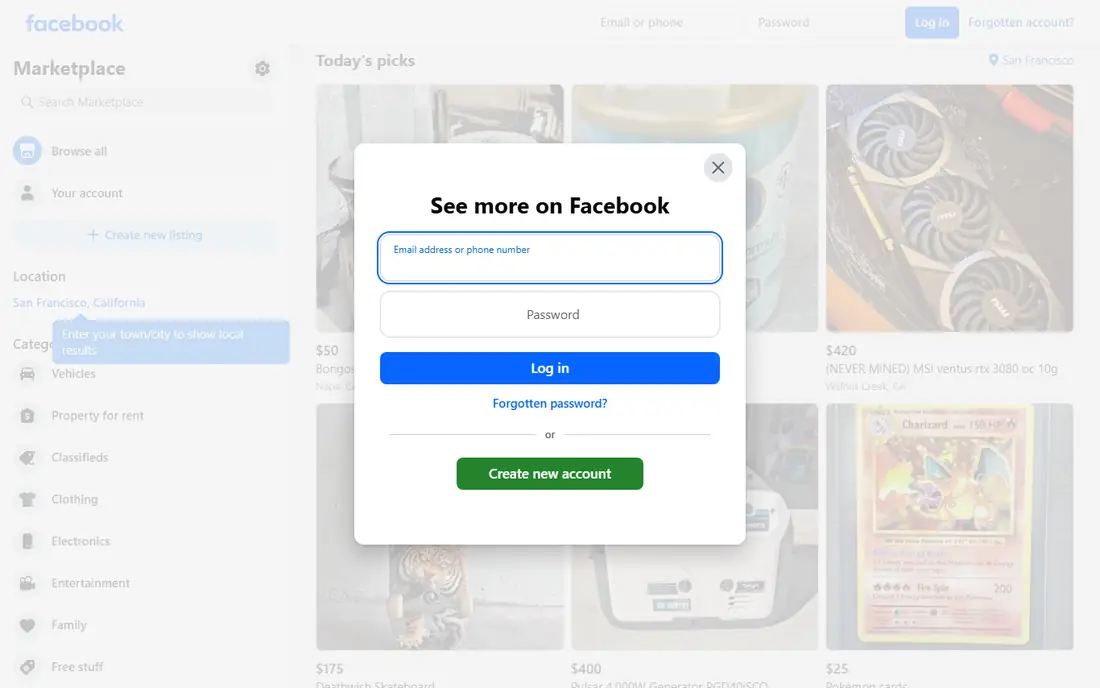
Facebook Marketplace is the fastest route for furniture, appliances, bikes, and other items that are hard to ship. Buyers search by location, so a well priced sofa can draw messages the same day. Listing is free for local sales, and payment is usually in person, which avoids shipping delays.
Shipped sales work differently. Facebook charges a selling fee on shipped orders, listed at 10 percent with a minimum charge, so check the current fee before listing a shipped item. Expect low offers and missed pickups too. Clear photos, exact dimensions, and a firm pickup window help filter out time wasters.
- Huge local buyer pool
- Free for local sales
- Easy listing from a phone
- Shipped sales carry a 10 percent fee
- No shows and haggling are common
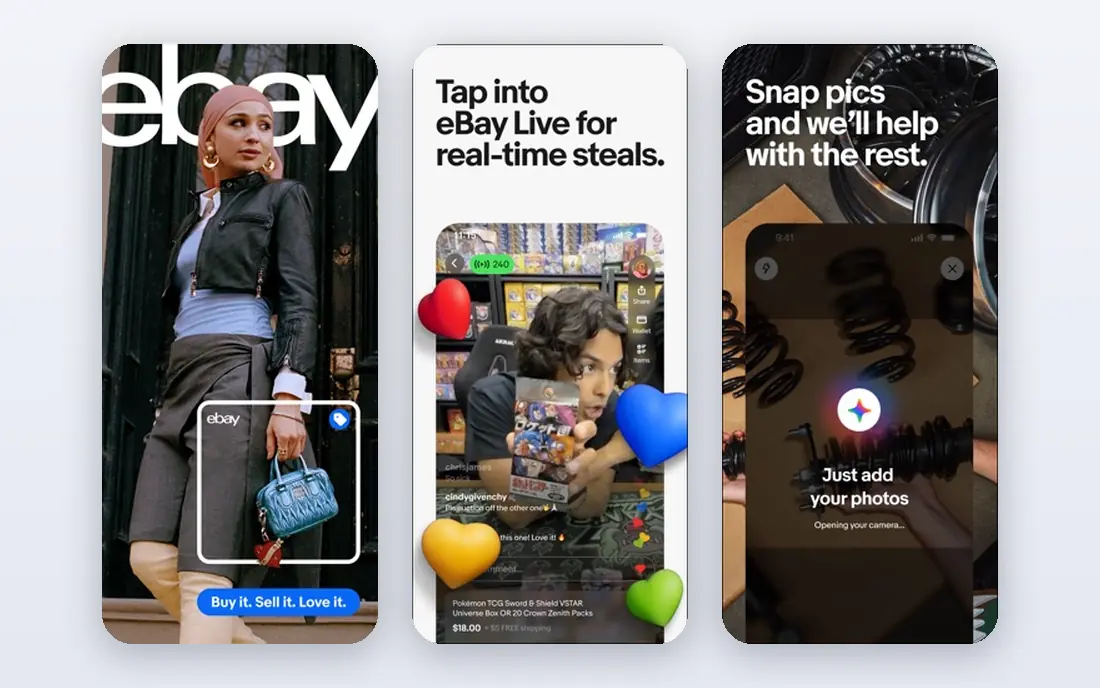
eBay remains the best choice when an item is unusual, collectible, or branded, and the right buyer may live in another state. Sellers get a set of free listings each month, and the sold listings filter shows what similar items actually sold for, which is the best pricing guide available. Shipping labels, tracking, and buyer protections are built into the platform.
Fees are the catch. Most categories carry a final value fee of about 13.6 percent plus a per order amount, so a low priced item can lose much of its margin. eBay also takes time to learn, from listing details to return rules. For fast sales, price from sold listings, offer clear shipping terms, and reply quickly to questions.
- Largest buyer pool for niche items
- Sold listings guide pricing
- Seller protections
- Final value fees are high
- Returns and cases take time to resolve
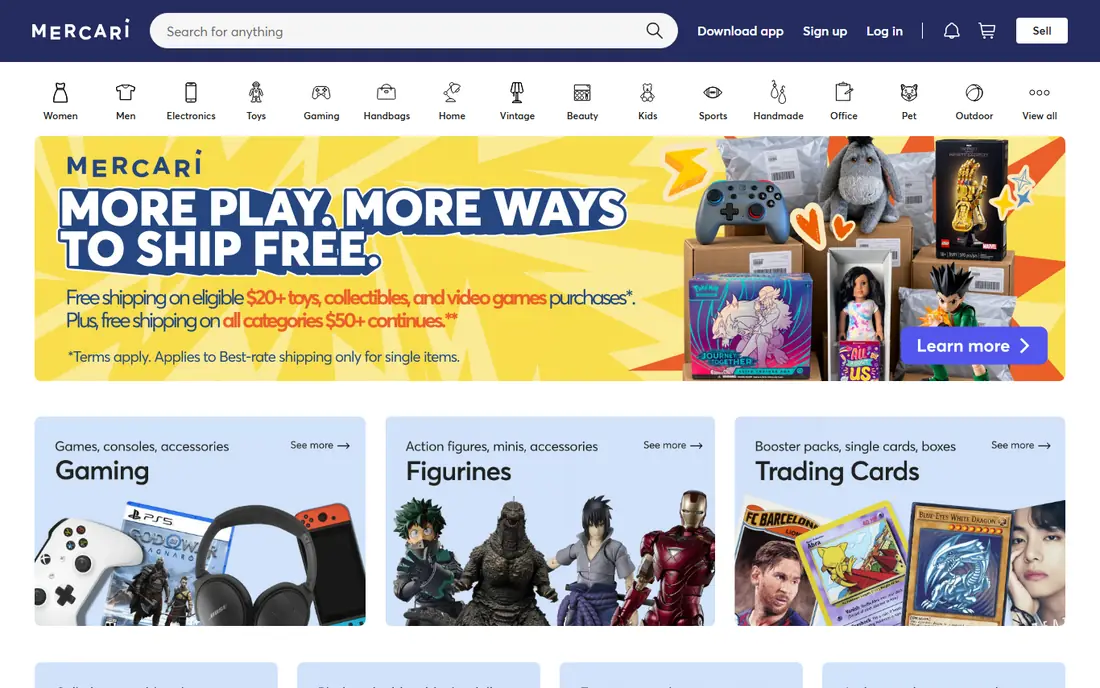
Mercari suits sellers who want a simple shipped sale without building a shop. Listing takes a few photos and a short description, and Mercari provides prepaid shipping labels for many items. That simplicity helps for electronics, home goods, toys, and everyday clothing that do not fit a fashion niche.
The selling fee is 10 percent, which is easier to predict than a tiered fee, but still cuts into low priced sales. Mercari also leans toward shipped sales rather than local pickup, so it is a weaker pick for furniture. For a box of household items, its speed and simplicity are hard to beat.
- Simple listing flow
- Prepaid shipping labels
- Broad general audience
- 10 percent selling fee
- Less local pickup focus than Marketplace
Poshmark is built for clothing, shoes, bags, and accessories, especially known brands. Buyers search by brand, size, and condition, so a well photographed branded item can sell faster here than on a general marketplace. Poshmark supplies a prepaid shipping label, which removes one common friction for sellers.
Fees are steep. Sales under $15 carry a flat $2.95 fee, while sales of $15 or more carry a 20 percent commission. Sharing listings and joining closet parties helps visibility, but that takes time. Poshmark works best when the item is branded, in good condition, and priced with the fee in mind.
- Buyers search by brand and size
- Prepaid shipping label
- Social sharing boosts views
- 20 percent fee on sales of $15 or more
- Sharing takes time to work well
Depop appeals to younger fashion buyers looking for vintage, streetwear, and one of a kind pieces. Its feed feels social, so good styling and clear photos matter as much as the item itself. For the right piece, Depop can move faster than a general marketplace because buyers arrive already looking for that style.
The buyer pool is smaller than eBay or Marketplace, so a plain, unbranded item may sit longer. Depop charges a payment processing fee on sales, listed at 3.3 percent plus $0.45 per sale for US sellers, so check the current terms before listing. Sellers who curate a clear style tend to do best here.
- Strong vintage and streetwear audience
- Social style feed
- Lower payment processing cost
- Smaller buyer pool than eBay
- Style and photos matter a great deal
OfferUp is a straightforward local selling app. It suits furniture, tools, electronics, and vehicles sold to nearby buyers, with in person payment and pickup. Listing is simple, and sellers get a set of free listings each month, which keeps casual selling cheap.
Reach varies by area, and in many places Facebook Marketplace draws more local buyers. Shipped sales on OfferUp carry a service fee, so local sales are the better value. OfferUp works well as a second local listing alongside Marketplace, with the listing removed once the item sells elsewhere.
- Local buyer focus
- Free in person sales
- Simple messaging
- Shipped sales carry fees
- Smaller reach than Marketplace in some areas
Craigslist remains useful for one reason: it is simple and free for most local posts. Furniture, appliances, cars, and free items can move quickly, especially when priced for pickup. There are no platform fees on a typical local cash sale, and no shipping step to slow things down.
The lack of protections is the trade. Sellers must screen messages, meet in safe public places for smaller items, and avoid shipping items to strangers or accepting odd payment methods. Craigslist suits sellers who are comfortable handling the sale themselves and who want the lowest possible cost.
- Free for most posts
- No account fees on local sales
- Fast for bulky items
- No buyer protections
- Spam and scams need careful screening
Etsy is the right fast route only for the right items. Buyers come to Etsy looking for handmade goods, craft supplies, and vintage items, so a well made product can find its audience faster here than on a general marketplace. Shop tools, search, and a trusted checkout help new sellers look professional from the first listing.
Fees need a clear plan. Listings cost $0.20 each, plus a transaction fee of 6.5 percent and a payment processing fee. That stack makes low priced items harder to profit on. Etsy also rewards shops with good photos, clear titles, and steady listings, so it suits sellers with a product line, not a single used item.
- Buyers seek handmade and vintage items
- Shop tools and search traffic
- Trusted checkout
- Listing, transaction, and payment fees add up
- Building a shop takes time
Vinted stands out on fees. Sellers do not pay a selling fee, which makes it attractive for everyday clothing that would lose too much margin on a commission platform. Listing is simple, and shipped sales suit sellers who do not want to arrange local pickup for clothes.
The focus is narrow. Vinted is a clothing marketplace first, so electronics, furniture, and home goods belong elsewhere. Buyer side fees can also shape what buyers are willing to pay, so price with the full checkout cost in mind. For a closet clear out, Vinted is one of the cheapest fast routes.
- No selling fee for sellers
- Simple clothing listings
- Shipped sales across the US
- Best for clothing, not general goods
- Buyer fees can affect final prices
How we picked these
We compared official fee pages, help pages, and app store listings for each platform, and weighed buyer reach against fees and payout timing. We favoured apps that are widely used in the US in 2026, that support a clear item type, and that let an ordinary seller list without a business account. We left out trade in services that buy items at a set price, since they are not open marketplaces in the same sense.
How to sell faster on any app
Price from sold listings, not from asking prices. On eBay, filter to sold items. On Marketplace and OfferUp, note how long similar items have been listed. A price 10 to 20 percent below the middle of recent sales often moves an item in days, while an optimistic price can sit for weeks.
Photos and details do the selling. Use bright, natural light, a plain background, and photos of the front, back, label, and any flaw. Add brand, model, size, dimensions, and condition in the first lines. Reply fast, be clear about pickup or shipping, and keep the listing honest about flaws, since returns and disputes cost more time than a lower price.
List in two places when the rules allow it, such as a local app plus a shipped app for different item types, and remove the other listing the moment it sells. Refresh or relist after a week with a price cut if views have stalled. Meet local buyers in safe public places, and never ship an item before payment clears on a marketplace checkout.
Frequently asked questions
What is the best app to sell stuff fast?
It depends on the item. Facebook Marketplace and OfferUp are fastest for bulky local items, eBay is fastest for niche and collectible items, and Poshmark, Depop, or Vinted are fastest for clothing. Match the app to the buyer who already wants that item.
Which app has the lowest seller fees?
Craigslist and local Facebook Marketplace sales are free for most in person deals. Vinted charges no selling fee for clothing. Shipped platforms charge more, with Mercari at 10 percent and eBay at about 13.6 percent plus a per order amount in most categories.
Is it better to sell locally or ship items?
Local sales are faster and cheaper for bulky, heavy, or low value items, since there is no shipping cost or delay. Shipping suits small, branded, or niche items where a national buyer pool will pay more than local buyers.
How do I price items to sell quickly?
Check sold listings for the exact item and condition, then price slightly below the middle of recent sales. Round local prices to easy cash amounts, and state whether the price is firm. Overpricing is the most common reason a listing stalls.
Do I need a business account to sell on these apps?
No. Ordinary sellers can list as individuals on all of these apps. Business tools and shops help for steady volume, but a single clear out works fine with a personal account.
How do I avoid scams when selling locally?
Meet in a safe public place for smaller items, accept cash or the marketplace checkout, and avoid shipping to strangers or accepting unusual payment methods. Keep communication inside the app, and walk away from any deal that pressures you to move fast.
Sources
See where you really rank - block by block
ProMapRanker scans Google Maps across a grid of your service area. Simple monthly plans from $19, white-label on every plan.
Start freeKeep reading
 zoho inventory alternatives
6 Alternatives to Zoho Inventory, Compared on Price and Fit
Zoho Inventory alternatives: 6 tools compared on price, free plans and fit. Katana leads the list for manufacturers. Fit and flaws are laid out for each entry.
Read → zoho crm alternatives
Best Zoho CRM Alternatives (2026)
Need Zoho CRM alternatives? We compare 7 tools on cost, free access and who each suits. Every pick gets a straight assessment. Built for quick decisions.
Read → zelle alternatives
Best Zelle Alternatives in 2026
Compare the best Zelle alternatives for sending money to friends, paying sellers and moving funds abroad, with honest notes on fees, speed and safety in 2026.
Read →