 ProMapRanker
Best Apps for Working Out at the Gym in 2026

Key takeaways
- Strong and Hevy suit lifters who already know their program and want fast logging, while Fitbod and Alpha Progression plan sessions for you.
- Nike Training Club is the strongest free starting point, with guided workouts at no cost.
- JEFIT offers the deepest exercise library and analysis, but its free tier includes ads.
- These apps give general information only, not medical advice, so check with a clinician before starting a new training program.
Quick comparison
| Pick | Great for | Pricing starts at | Free tier | |
|---|---|---|---|---|
 Strong | Fast minimalist logging | $4.99 per month | Yes | Visit |
 Hevy | Social logging at low cost | $2.99 per month | Yes | Visit |
 JEFIT | Large library and analysis | $12.99 per month | Yes | Visit |
 Fitbod | Sessions planned for you | $15.99 per month | Free trial | Visit |
 Nike Training Club | Free guided workouts | Free | Yes | Visit |
 Alpha Progression | Guided progression targets | $12.99 per month | Yes | Visit |
 Boostcamp | Coach-made programs | $14.99 per month | Yes | Visit |
 Caliber | Programming plus coaching options | See website | Yes | Visit |
 StrengthLog | Ad-free logging and programs | See website | Yes | Visit |
The best apps for working out at the gym
This article gives general information only, not medical advice. We compared official feature pages, pricing pages, app store listings and public reviews, focusing on gym use: logging speed, program planning, exercise guidance and offline usability on the gym floor.
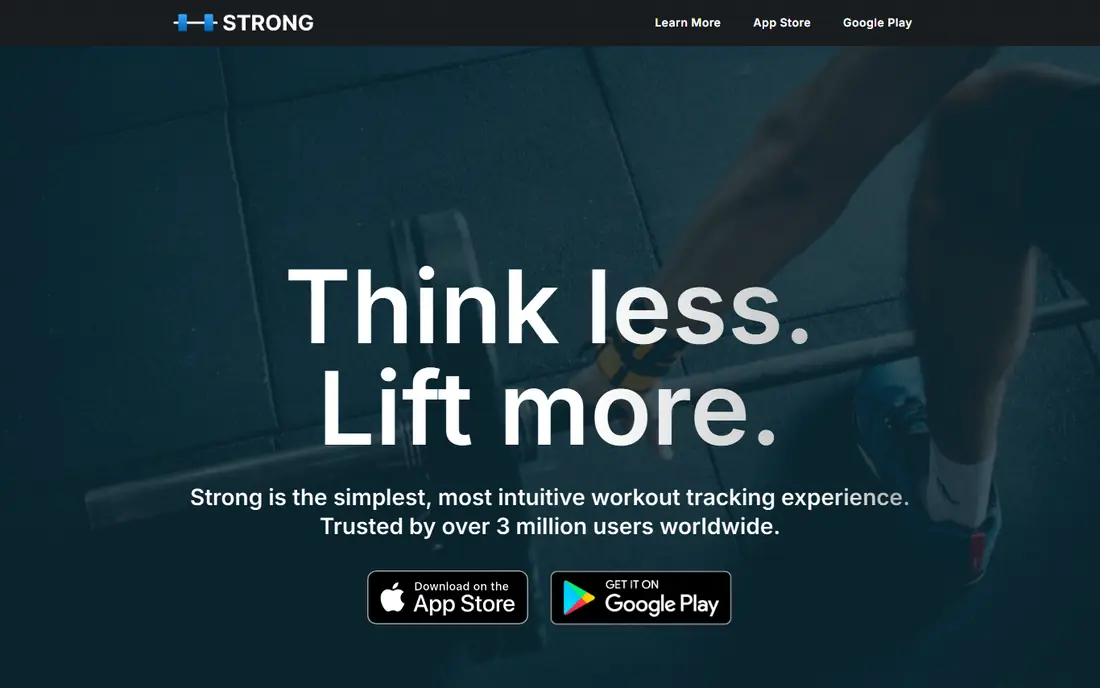
Strong is a plain, fast logbook for lifters who arrive with a program already written. Tapping sets, weights and reps takes seconds, routines can be reused, and history stays searchable without clutter. That speed matters between sets, when a complicated app can slow a workout down. The free tier covers unlimited logging with a cap on saved routines, which suits many regular lifters.
The limit is planning. Strong does not generate sessions or suggest next weights, so users must bring their own program or write one inside the app. Lifters who want guidance should pair it with a coach program, or pick a planning app instead.
- Very fast set logging
- Unlimited workout history on the free tier
- Clean interface that stays out of the way
- No built-in program generator
- Free tier caps saved routines
- Apple Watch focus is stronger than some Android features
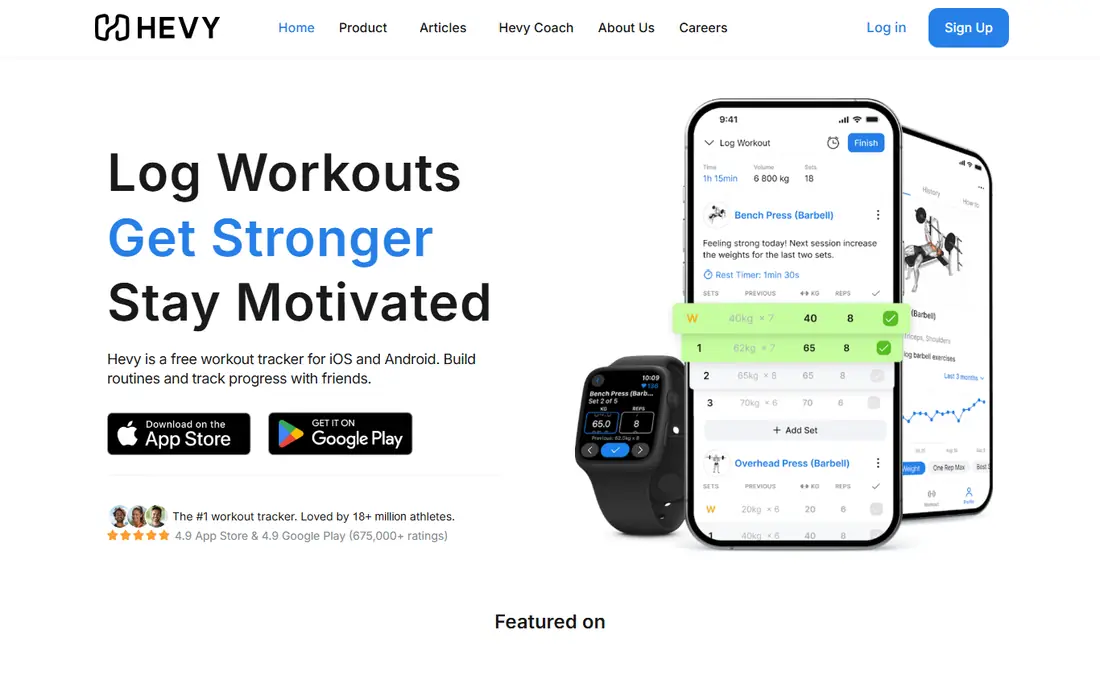
Hevy combines fast logging with a social feed, so users can follow friends, comment on workouts and stay consistent through shared routines. Logging itself is quick, with templates, rest timers and plate calculations that keep gym sessions moving. The free tier allows unlimited workouts with caps on routines, custom exercises and history length, which is generous for a free logger.
Paid Hevy Trainer adds adaptive guidance, but free users plan their own sessions, so Hevy suits lifters who like community without needing a generated plan. The social layer is the differentiator: if training alone feels dull, Hevy gives a reason to open the app daily.
- Unlimited logging on the free tier
- Social feed and friend workouts
- Low annual and lifetime upgrade prices
- Free tier caps routines and custom exercises
- Hevy Trainer guidance needs the paid plan
- History depth is limited free
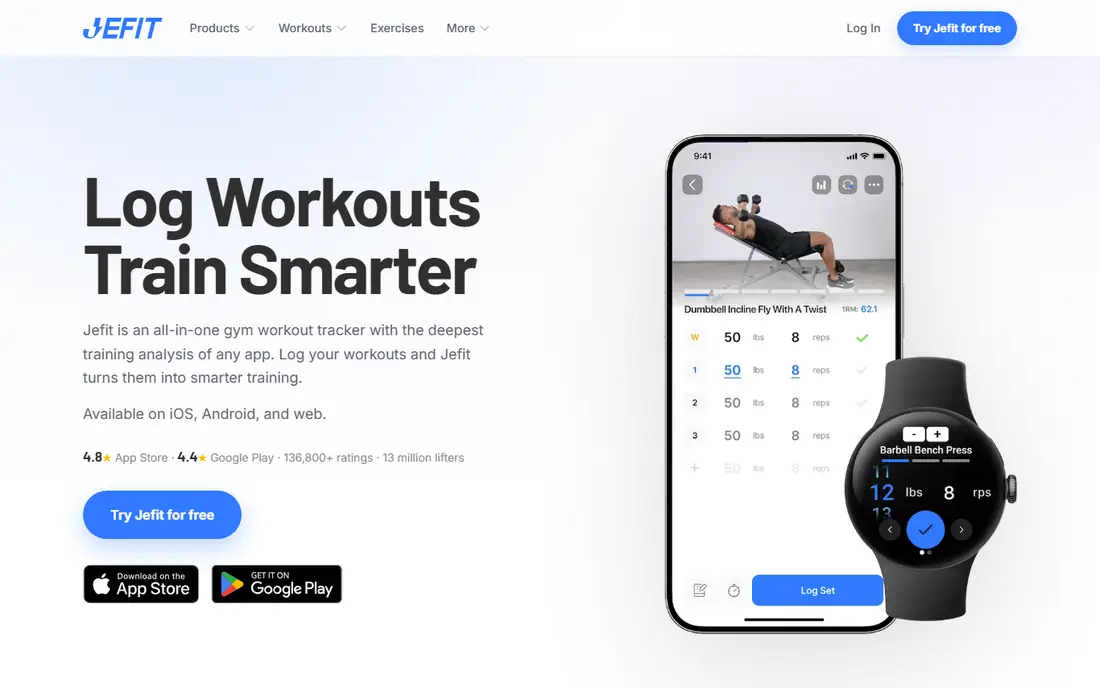
JEFIT has one of the largest exercise libraries in this group, with plans, tracking and per-muscle analysis that help users spot weak points over time. Long-time users value the depth of history, since years of workouts stay available for comparison. The Elite plan adds a periodised plan generator and fuller analysis for lifters who want structure.
The free experience is busier than Strong or Hevy, with ads and upsells, and the interface takes longer to learn. JEFIT suits lifters who want data and library depth and will tolerate a busier app to get it.
- Very large exercise library
- Pre-built plans and progress analysis
- Long history for returning users
- Free tier includes ads
- Interface feels busy
- Elite plan costs more than simpler loggers
Fitbod builds every gym session for the user, choosing exercises, sets and weights based on available equipment, muscle recovery and past performance. That hands-off planning suits people who do not want to write programs, and who train in different gyms with different equipment. The app adjusts as strength improves, so sessions evolve without manual recalculation.
The cost is the catch. There is no ongoing free tier, only a trial, and the subscription costs more than simple loggers. Lifters with a fixed barbell program may also find Fitbod too flexible, since it changes sessions where a set program would stay consistent.
- Builds each session around equipment and recovery
- Adapts as strength changes
- Large exercise library with guidance
- No ongoing free tier beyond a trial
- Higher price than loggers
- Less control for lifters with a fixed program
Nike Training Club, known as NTC, offers guided workouts across strength, HIIT, yoga and mobility at no cost, with filters for no equipment, dumbbells, bands or a full gym. Trainer-led sessions give structure to users who prefer following along rather than logging sets, and multi-week programs provide a path for beginners. For a free start, nothing else here matches its breadth.
Serious lifters will notice limits. Logging and progression tracking are lighter than Strong or JEFIT, and there is no engine prescribing next barbell weights. NTC works best as a free guided companion, or as a starter app before moving to a logger once a routine is set.
- Fully free with no subscription
- Guided strength, HIIT and mobility sessions
- Filters for equipment including full gym
- Less detailed strength logging than dedicated loggers
- No barbell progression engine
- Programs are general rather than personalised
Alpha Progression sits between a plain logger and a full planner, with a permanent free tier covering unlimited logging, manual plans, exercise videos and export, all without ads. The paid Pro plan adds plan and workout generators plus set-by-set recommendations that respond to past performance, which helps lifters apply progressive overload without guessing. Multiple gym profiles suit people training in different locations.
The guidance only works as well as the data entered. Inaccurate reps or inconsistent technique weaken the recommendations, and free users get no generated targets. Alpha Progression suits lifters who log carefully and want clear next targets without handing over full session control.
- Permanent free logging tier with no ads
- Pro gives set-by-set weight and rep targets
- Large video exercise library
- Plan generator and targets need Pro
- Recommendations depend on accurate logging
- No lifetime plan
Boostcamp gives users access to a large library of programs written by coaches, with tracking and progression built around each plan. That structure suits lifters who want to follow a proven program rather than build one, and the free tier covers many programs without a subscription. Strength, hypertrophy and general fitness goals all appear in the catalogue.
Choice can overwhelm new users, since picking between many programs takes research, and Pro features add cost for fuller tools. Boostcamp is best for lifters who know their goal, pick one program, and follow it consistently for several weeks.
- Many coach-made programs available free
- Tracking and progression built in
- Programs cover strength and physique goals
- Paid Pro adds features at a higher price
- Program choice can overwhelm beginners
- Less useful for fully custom routines
Caliber combines app-based programming with optional human coaching, giving users a middle path between a logger and a personal trainer. The free tier includes tracking and programming elements with exercise videos, which helps newer lifters learn movements while following a plan. Users who want accountability can upgrade to coaching, where a coach reviews training and adjusts plans.
Coaching is priced well above the app itself, so it suits users who value human feedback enough to pay for it. App-only users still get useful programming, but should compare Caliber with Boostcamp and Alpha Progression before committing to a paid tier.
- Free tier includes programming and tracking
- Exercise videos support form learning
- Human coaching available as an upgrade
- Coaching costs substantially more than the app alone
- Program depth varies by goal
- Some features need the paid tier
StrengthLog offers unlimited logging without ads on its free tier, plus a large exercise library and many programs, in a calm interface that avoids clutter. That ad-free free experience is rare among gym apps, and it suits lifters who want a quiet logbook with program options when needed. Premium adds deeper tools for users who want more analysis.
The premium subscription costs more than Strong or Hevy, and the community features are smaller than Hevy social feed. StrengthLog fits lifters who value a clean, ad-free logger and are willing to pay more only if premium tools prove useful.
- Unlimited logging with no ads on the free tier
- Many programs included
- Clean, calm interface
- Premium price is higher than simpler loggers
- Smaller community than Hevy
- Some advanced tools need Premium
How we picked these
We compared official pricing pages, feature pages, app store listings and public reviews, with gym-floor use in mind: how fast logging feels, whether programs are built in, what the free tier actually allows, and how well history and progress are shown. We required current availability in October 2026 and a real free tier or trial, and we left out apps focused mainly on home cardio or running rather than gym training.
How to pick for your training style
Match the app to how you train, not to the longest feature list. If you follow a written barbell program, a fast logger such as Strong, Hevy or StrengthLog will serve you better than a planner that keeps changing sessions. If you want sessions written for you, Fitbod or Alpha Progression remove planning work, while Boostcamp suits following a coach program from start to finish.
Try the free tier in a real gym session before paying. Check logging speed between sets, rest timer behaviour, offline access in a basement gym, and whether your main exercises and equipment appear. An app that feels fast on a couch but slow under a barbell will not last.
Build in rest and safety from the start. Use sensible warm-ups, learn new movements with light weights first, and stop if pain appears rather than pushing through it. Apps can track progress, but they cannot see your form, so consider a coach session for complex lifts such as squats and deadlifts.
Frequently asked questions
Which gym app is best for beginners?
Nike Training Club is the best free starting point for guided sessions, while Boostcamp suits beginners who want a set coach program. Strong or Hevy suit beginners who already have a simple routine to log.
Is there a fully free gym app?
Nike Training Club is fully free, and Strong, Hevy, JEFIT, Alpha Progression and StrengthLog offer genuinely useful free tiers. Fitbod is the exception here, with a trial rather than an ongoing free tier.
Do I need a paid plan to progress?
No. A free logger plus a sound program can drive progress for a long time, since progressive overload depends on consistent training and recovery, not on a subscription. Paid plans mainly add planning, analysis and coaching convenience.
Can these apps replace a personal trainer?
No. Apps track and plan, but they cannot watch form, spot safety issues or adapt to injuries in the way a qualified coach can. Use apps for structure and records, and seek coaching for technique and medical concerns.
What if my gym has poor signal?
Check offline behaviour before relying on an app, since basement gyms often have weak coverage. Loggers that store workouts locally and sync later handle this better than apps needing a constant connection.
How often should I change programs?
Stick with one program for several weeks before judging it, since strength changes need consistent exposure to the same movements. Change programs when progress stalls, goals change, or a program no longer fits your schedule and equipment.
Sources
See where you really rank - block by block
ProMapRanker scans Google Maps across a grid of your service area. Simple monthly plans from $19, white-label on every plan.
Start freeKeep reading
 zyte alternatives
Best Zyte Alternatives in 2026
These zyte alternatives cover managed scraping APIs, proxy networks and no code tools for lawful collection from your own or consented sources only in 2026.
Read → zerto alternatives
Best Zerto Alternatives in 2026
Compare the best zerto alternatives for disaster recovery and replication, with recovery targets, cloud options and honest trade-offs for teams in 2026.
Read → zerofox alternatives
Best ZeroFox Alternatives in 2026
We compared 9 zerofox alternatives for brand protection, phishing takedowns, dark web monitoring, and social impersonation, with clear coverage notes.
Read →