 ProMapRanker
Best Apps for Tracking Calories and Macros in 2026

Key takeaways
- MyNetDiary and Cronometer let you set custom macro targets by grams on their free plans, while MyFitnessPal and Lose It reserve gram targets for paid tiers.
- MacroFactor is the only app here with targets that adjust automatically from your logged food and weight trend, but it has no free plan.
- The cheapest paid plans in this roundup are Carb Manager at $39.99 per year and YAZIO at $47.90 per year, while most others sit near $60 to $80 per year.
- Food database size matters less than data quality: Cronometer and MacroFactor use verified sources, while MyFitnessPal relies heavily on user-submitted entries.
Quick comparison
| Pick | Great for | Pricing starts at | Free tier | |
|---|---|---|---|---|
 MyFitnessPal | Largest food database | Free | Yes | Visit |
 Cronometer | Micronutrients and verified data | Free | Yes | Visit |
 MacroFactor | Adaptive macro coaching | $11.99 per month | No | Visit |
 MyNetDiary | Feature-rich free tracking | Free | Yes | Visit |
 Lose It | Simple weight-loss diary | Free | Yes | Visit |
 Carb Manager | Low-carb and keto macros | Free | Yes | Visit |
 YAZIO | Recipes and fasting tools | Free | Yes | Visit |
 FatSecret | Free full-featured diary | Free | Yes | Visit |
 Eat This Much | Meal plans built around macros | Free | Yes | Visit |
The best apps for tracking calories and macros
Calorie tracking and macro tracking are related but not identical jobs. A calorie app only needs your daily total, while a macro app needs protein, carbs and fat targets that fit your goal. Every app below logs both, but they differ on whether custom macro targets are free, how deep the nutrient data goes, and whether targets adapt as you progress.
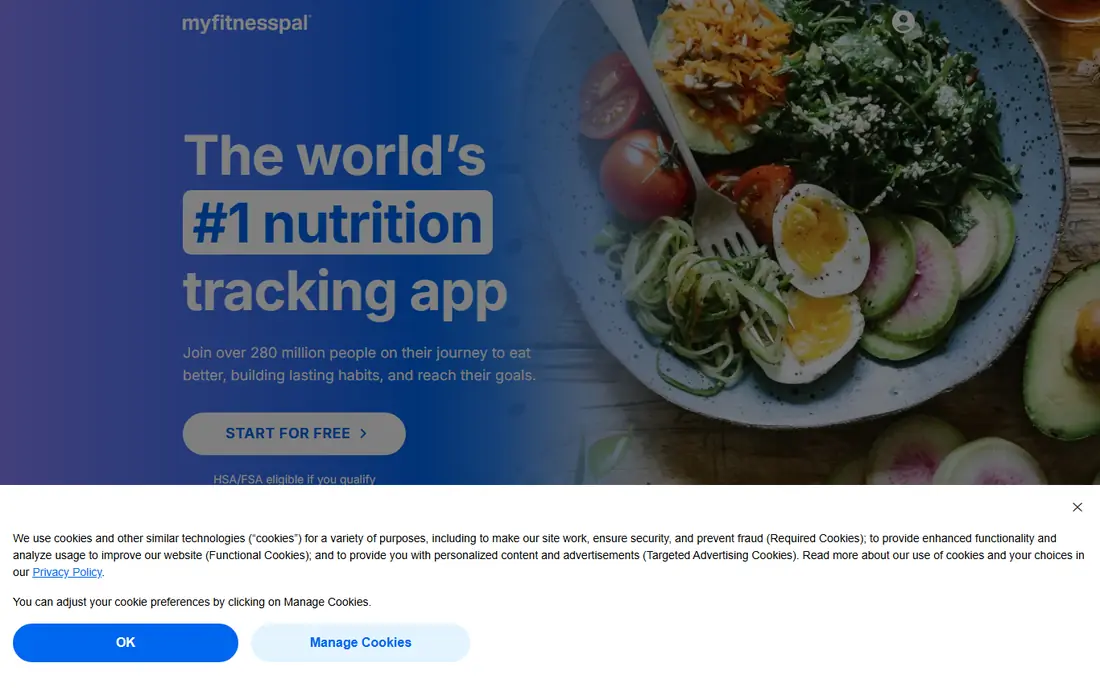
MyFitnessPal is the default choice for most people because its database is enormous. Packaged foods, restaurant dishes and common homemade meals usually appear in seconds, which keeps daily logging fast. The free plan covers calorie and macro totals, weight tracking and basic goals, and it connects with more than 35 apps and devices.
The catches sit in the paid tier. Barcode scanning, meal scanning and voice logging are Premium features, and setting macro targets by grams rather than percentages also needs Premium, listed at $79.99 per year. Because much of the database is user-submitted, entries for the same food can disagree, so check the numbers on foods you eat often.
- More than 20 million foods listed, including restaurant dishes
- Connects with many fitness apps and devices
- Quick-add and recipe tools
- Barcode, meal scan and voice logging need Premium
- Custom macros by grams need Premium
- Many entries are user-submitted and unverified
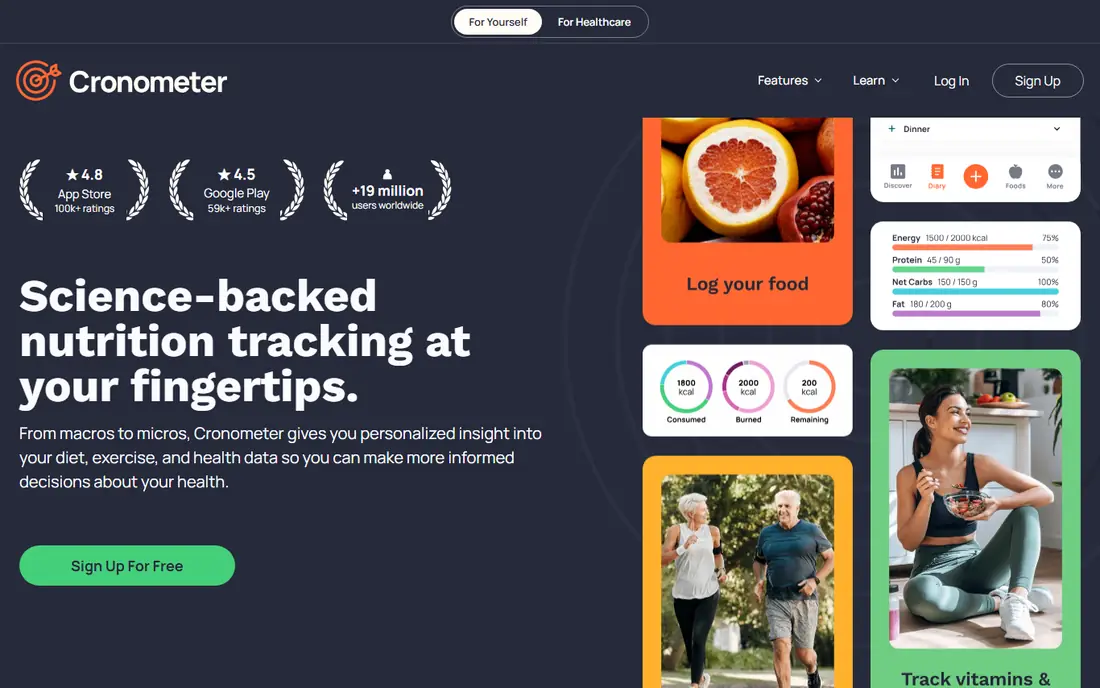
Cronometer is our pick for people who care about data quality. Its free Basic plan includes a barcode scanner and custom macro targets, and its database leans on verified and lab-analyzed sources rather than crowdsourced entries. That makes it a strong choice if you want to trust the numbers, and it tracks vitamins and minerals in far more detail than most rivals.
The Gold plan, listed at $59.99 per year, adds an ad-free experience, photo logging and more detailed charts. The database, at around 1.2 million foods, is smaller than MyFitnessPal, so some branded and restaurant items take more effort to find. If you mainly want calories and three macros, the extra nutrient detail may be more than you need.
- Free plan includes barcode scanning and custom macro targets by grams
- Data from lab-analyzed and verified sources
- Up to 95 nutrients tracked on Gold
- Smaller food database than MyFitnessPal
- Photo and voice logging need Gold
- Depth can feel like overkill for simple calorie goals
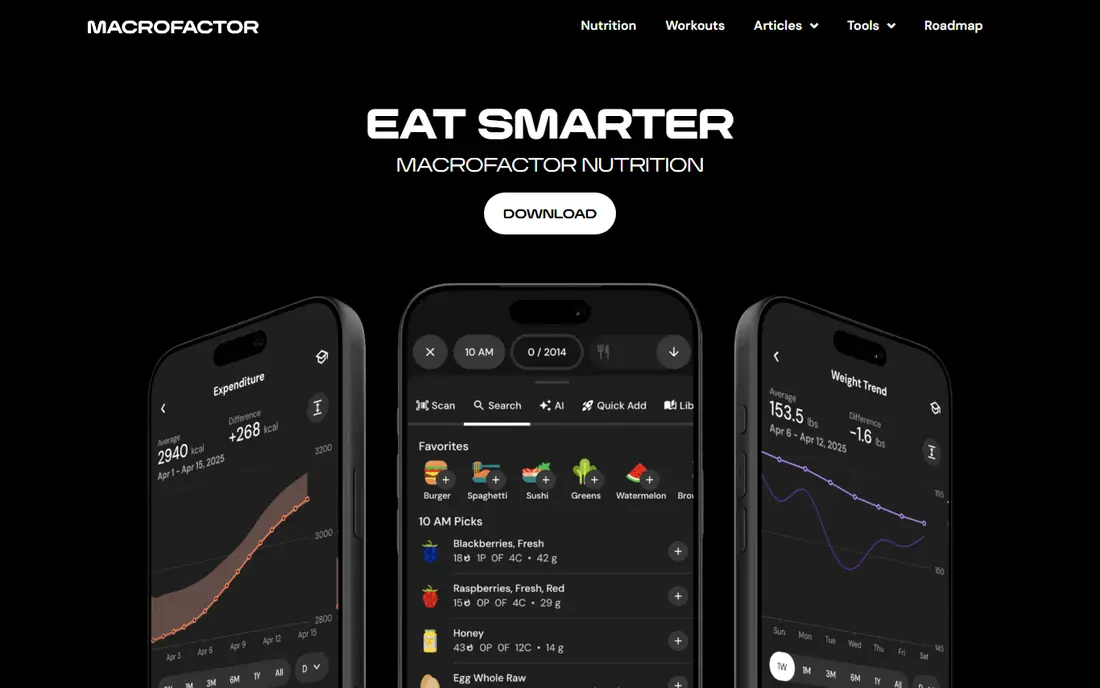
MacroFactor takes a different approach from the rest of this list. Instead of giving you fixed targets from a formula, it estimates your energy expenditure from what you log and how your weight moves, then adjusts your calorie and macro targets week by week. For lifters and people chasing body recomposition, that adaptive coaching is the main reason to pay.
There is no free version, and the company states there never will be one. Pricing is listed at $11.99 per month or $71.99 per year, with a 7-day trial. The system only works if you log consistently and weigh in regularly, so casual or on-and-off trackers will get less value from it than from a free diary.
- Expenditure algorithm adjusts targets from your food log and weight trend
- Verified food database of over 1.36 million entries
- Photo, barcode and description logging
- No free plan, only a 7-day trial
- Yearly price of $71.99 is above most rivals
- Needs consistent logging to adapt well
MyNetDiary is the strongest free option in this roundup for macro tracking specifically. Its free plan lets you set custom macro targets by grams or percentages, includes a barcode scanner, and covers a wide nutrient panel, all without ads. The database leans on staff-verified entries and official sources, which keeps the numbers more consistent than a fully crowdsourced catalog.
Premium, listed at $59.99 per year, adds an AI coach, advanced autopilot targets and meal planning tools. The free plan already covers the core job well, so the upgrade is a convenience rather than a necessity. If you want the most macro control without paying, start here.
- Custom macro targets by grams or percentages free
- No ads on the free plan
- Food database of staff-verified entries plus USDA sources
- AI coaching and advanced planning need Premium
- Interface packs in many features, which can feel busy at first
Lose It keeps food logging simple, which is exactly why many people stick with it. The diary shows your day at a glance, goals are set around a target weight and weekly rate, and the charts make progress easy to read. For someone who wants a straightforward weight-loss diary rather than a nutrition science tool, that simplicity is a genuine advantage.
The free plan covers calorie logging and basic macro totals, but setting your own macro targets requires Premium. Photo and voice logging are also paid features. If your main goal is weight loss with light macro awareness, the free plan is enough. If you need precise protein or carb targets, Cronometer or MyNetDiary give you that free.
- Clean and simple daily diary
- Weight-loss focused goals and charts
- Large food database with search and recent foods
- Custom macro targets need Premium
- Photo and voice logging need Premium
- Premium listed at $79.99 per year
Carb Manager is built for low-carb and keto eating, and it shows in every part of the app. Net carbs are tracked by default, keto recipes and meal plans are built in, and the free plan includes custom macro targets. For anyone whose macro plan centers on keeping carbs low, no general tracker matches it without paid upgrades.
Premium is listed at $39.99 per year, the lowest paid price in this roundup, and it adds per-meal targets, day-of-week targets and more planning tools. If you eat a standard balanced diet, the keto focus adds clutter you may not want. But for low-carb dieters, the free plan alone covers the core job.
- Net carb tracking built in
- Custom macro targets free
- Low-carb recipes and meal plans included
- Less useful if you do not eat low-carb
- Per-meal and day-of-week targets need Premium
- Database smaller than MyFitnessPal
YAZIO pairs food logging with recipes and fasting tools, which suits people who cook at home and want meal ideas that fit their targets. The recipe section gives full nutrition per serving, and the fasting tracker sits in the same app as the diary, so you do not need a second tool for time-restricted eating.
The free plan covers calorie and macro logging, but meal planning and some analysis tools need Pro, listed at $47.90 per year. There is also no web app, so logging happens on your phone only. For recipe-driven eaters and fasters, that combination is still good value. For desktop loggers, look at Cronometer or MyNetDiary instead.
- Large recipe collection with nutrition per serving
- Intermittent fasting tracker included
- Clean design and simple diary
- No web app
- Many planning tools need Pro
- Pro listed at $47.90 per year
FatSecret has been around for years, and its pitch is simple: the full diary is free. You can log food, track macros, record weight and exercise, and join community challenges without a subscription. The database is large, and the app covers the basics with little fuss.
The design feels older than MyFitnessPal or Cronometer, and the paid tier adds reports and extras that free users do without. If you want a no-cost diary and do not care about polish, FatSecret delivers the core job for free. If you want verified data depth, Cronometer remains the stronger pick.
- Full food diary and macro tracking free
- Large food database
- Community features and challenges included
- Dated design compared with newer rivals
- Some advanced reports and coaching sit in the paid tier
- Barcode features vary by region
Eat This Much answers a different question from the other apps here: not "what did I eat" but "what should I eat." You enter your calorie and macro targets, diet preferences and budget, and it builds a full day of meals with a grocery list. That planning step is where many macro plans fail, because hitting a protein target is easier when the meals are chosen in advance.
The free plan covers basic planning, while the premium plan is listed at $5 per month for more control over the plans. Logging itself is thinner than in MyFitnessPal or Cronometer, so many people pair it with a diary app. Used that way, it is the best planning companion in this roundup.
- Builds full meal plans around your calorie and macro targets
- Automatic grocery lists
- Free plan covers basic planning
- Tracking features are thinner than dedicated diaries
- Premium meal planning listed at $5 per month
- Best used alongside a diary, not instead of one
How we picked these
We compared official pricing pages, feature pages and app store listings for the leading calorie and macro trackers, checking prices against vendor pages and recent October 2026 comparisons. We kept apps that log both calories and macros, that are still actively maintained, and that offer either a usable free plan or a clear paid value, as with MacroFactor. We checked whether custom macro targets by grams are free or paid, whether barcode scanning is free or paid, and whether the food data comes from verified or crowdsourced sources.
What to check before you pick one
Decide first whether you need fixed gram targets or just percentages. If you need grams, Cronometer, MyNetDiary and Carb Manager give them free, while MyFitnessPal and Lose It charge for them. If you want targets that change with your progress, MacroFactor is the only app here that does that automatically, and it needs steady logging to work.
Think about how you eat. Low-carb eaters get the most from Carb Manager, recipe-driven eaters from YAZIO, and planners from Eat This Much. Also check the platform: all nine work on iOS and Android, but YAZIO has no web app, and MacroFactor has no free tier at all.
A short note on health: these apps offer general information about food and nutrition, not medical advice. Calorie and macro targets from an app are estimates, and they are not right for everyone. If you have diabetes, an eating disorder, kidney disease or any medical condition, or if you are pregnant, talk to a doctor or registered dietitian before following an app-generated plan.
Frequently asked questions
What is the best app for tracking macros and calories free?
MyNetDiary and Cronometer are our top free picks, because both let you set custom macro targets by grams without paying. MyFitnessPal has the biggest database but charges for gram targets, while MacroFactor has the smartest coaching but no free plan.
Which app is best for tracking macros specifically?
MacroFactor is the strongest for serious macro coaching, thanks to its adaptive targets. For free macro tracking, MyNetDiary and Cronometer lead. Carb Manager is the best choice if your macro plan is low-carb or keto.
Do I need to pay to track macros?
No. Several apps on this list track macros free, including MyNetDiary, Cronometer, Carb Manager, FatSecret and YAZIO. Paid plans mainly add barcode and photo logging, planning tools, coaching and ad-free use.
How accurate are calorie counts in these apps?
Accuracy depends on the data source. Cronometer and MacroFactor use verified databases, which tend to be more consistent. MyFitnessPal and FatSecret rely more on user-submitted entries, so the same food can show different numbers. Weighing food with a kitchen scale improves accuracy more than switching apps.
Can these apps track micronutrients too?
Yes, though depth varies. Cronometer tracks the most, with up to 95 nutrients on its Gold plan, and MyNetDiary also covers a wide panel. MyFitnessPal tracks a smaller set of nutrients, and Carb Manager focuses on macros and net carbs.
Are calorie tracking apps safe for everyone?
No, not for everyone. People with a history of eating disorders can find detailed tracking harmful, and app targets are estimates rather than medical guidance. If tracking causes stress or unhealthy eating patterns, stop and speak to a health professional.
Sources
See where you really rank - block by block
ProMapRanker scans Google Maps across a grid of your service area. Simple monthly plans from $19, white-label on every plan.
Start freeKeep reading
 zscaler alternatives
Best Zscaler Alternatives in 2026
Looking for zscaler alternatives? We compare 9 SASE and zero trust platforms on architecture, data protection, pricing, and fit for your network and team.
Read → zapier alternatives free
Best Zapier Alternatives Free in 2026
Nine automation tools for zapier alternatives free in 2026, all with genuinely free tiers, plus free plan limits, starting prices and upgrade paths explained.
Read → which platform is best for online reputation
Which Platform Is Best for Online Reputation in 2026
Wondering which platform is best for online reputation? We compare 8 review, listing, and response tools for small and multi-location businesses and agencies.
Read →