 ProMapRanker
Best Apps for Stress Relief in 2026

Key takeaways
- Insight Timer gives the widest free meditation library, while Calm and Headspace suit people who want guided structure and sleep content.
- Breathing and habit tools such as Breathwrk and Finch work well for short daily check-ins rather than long meditation sessions.
- Most paid plans cost about $12 to $15 per month, so a free plan or a yearly plan is worth trying before paying monthly.
- These apps offer general information only and are not a replacement for professional care for anxiety, low mood, or ongoing stress.
Quick comparison
| Pick | Great for | Pricing starts at | Free tier | |
|---|---|---|---|---|
 Calm | Sleep stories and guided relaxation | $14.99 per month | Yes | Visit |
 Headspace | Structured beginner meditation | $12.99 per month | Yes | Visit |
 Insight Timer | Large free meditation library | Free | Yes | Visit |
 Balance | Personalised daily plans | $11.99 per month | Yes | Visit |
 Finch | Gentle daily self-care habits | Free | Yes | Visit |
 Breathwrk | Guided breathing exercises | See website | Yes | Visit |
 Sanvello | Coping tools and mood tracking | See website | Yes | Visit |
 Happify | Short positive psychology activities | Free | Yes | Visit |
 Moodfit | Mood tracking and thought records | Free | Yes | Visit |
The best apps for stress relief
We compared meditation libraries, breathing tools, habit support, and pricing to find options for different routines. Some apps suit quiet evening use, while others suit a quick reset during a busy day.
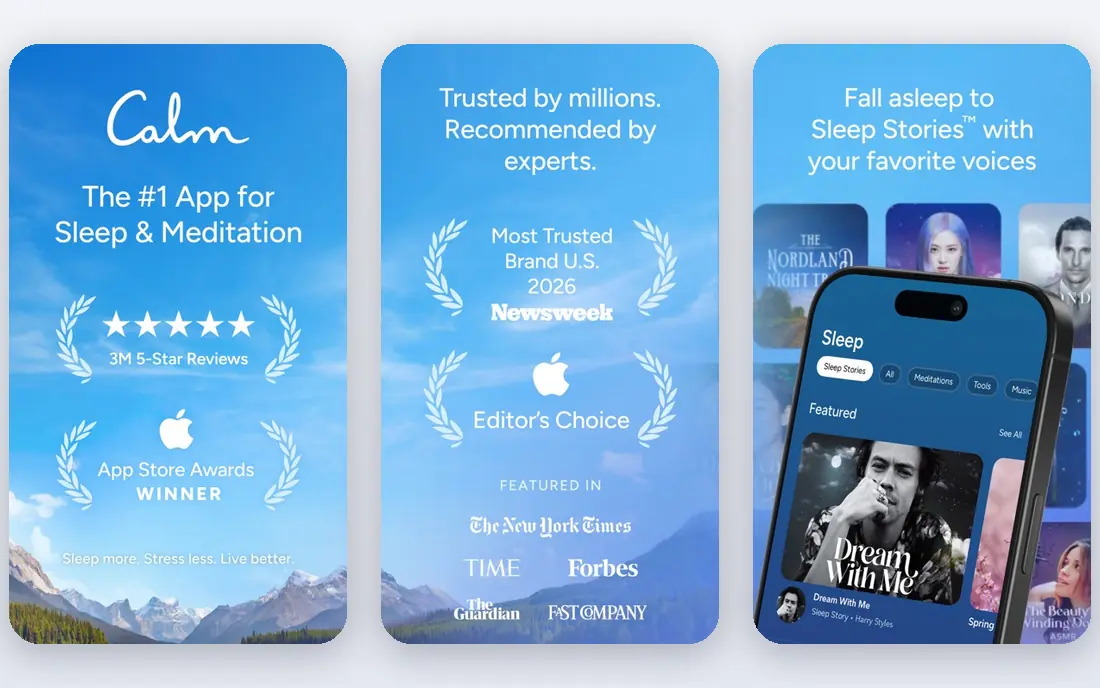
Calm suits people who find evenings the hardest part of the day. Its sleep stories and soundscapes give the mind something steady to follow, and the Daily Calm session keeps the routine short. The app also covers breathing, body scans, and short meditations for daytime stress. That mix makes it a good fit for someone who wants one app for both winding down and pausing during work.
The catch is the free tier. Only a small set of sessions is open without payment, so most of the value sits behind the subscription. The library can also feel large to browse when you only want a quick session. If sleep is your main goal, the price is easier to justify than if you only meditate a few times a month.
- Large sleep story library
- Calm soundscapes
- Short daily sessions
- Free content is limited
- Yearly cost adds up for light users

Headspace works best for people who like a clear path. Its courses build step by step, starting with short basics and moving into topics such as stress, focus, and sleep. The friendly narration and simple layout keep sessions easy to start, even on a difficult day. We found its structure helpful for beginners who feel lost in a large open library.
The trade-off is choice. Experienced meditators may want more variety or longer unguided sessions than Headspace puts first. Much of the course content also needs a paid plan after the free basics. Still, for someone building a first daily habit, that guided structure is a real strength.
- Clear beginner courses
- Short sessions
- Sleep and focus content
- Library feels less open-ended than Insight Timer
- Paid plan needed for most courses
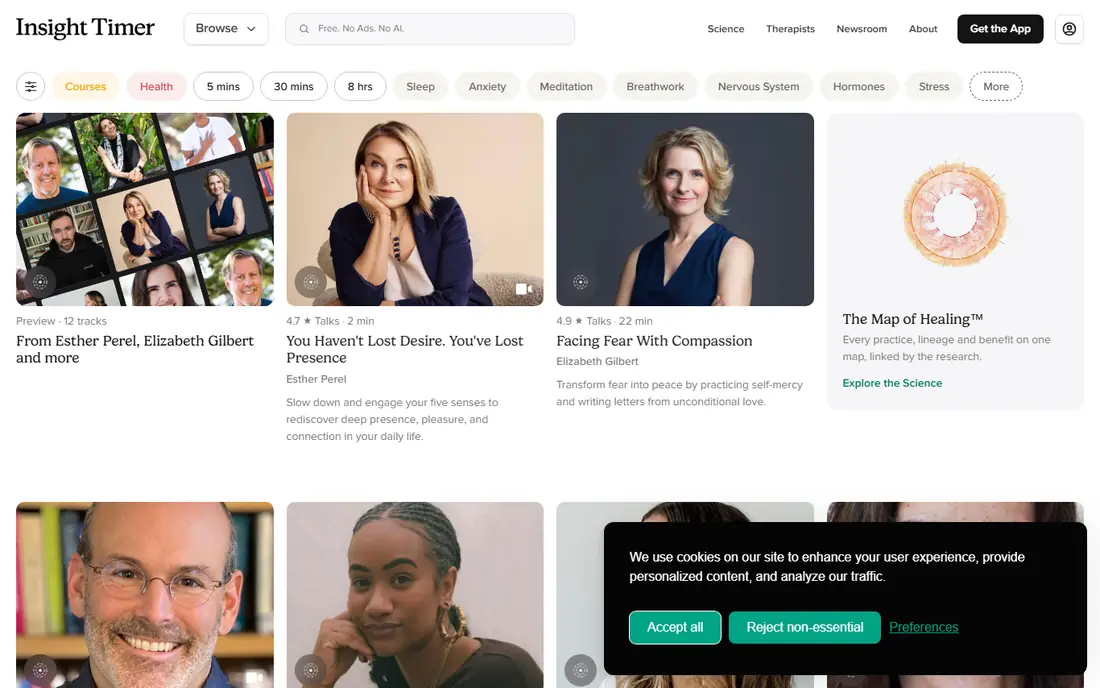
Insight Timer is the pick for people who want plenty of choice without paying first. Its free library covers meditation, breathing, sleep, and talks from many teachers, and the timer suits silent practice. Live sessions add a sense of community for people who like practising with others. For a tight budget, it is hard to beat on sheer amount of free content.
The size of the library is also its weakness. Some sessions are excellent and some are average, so finding a favourite teacher takes time. Structured courses sit behind the paid Member Plus plan, which costs about $59.99 per year based on current listings. If you prefer a guided path over browsing, Headspace may feel calmer to use.
- Very large free library
- Live events
- Timer for unguided practice
- Quality varies across teachers
- Browsing can feel crowded
Balance builds a daily plan around your experience, goals, and time available. Each session feels chosen for that day rather than picked from a long list, which helps people who stall when faced with too many options. Sessions stay short, and the app covers breathing, sleep, and focus alongside meditation. That focused routine suits busy readers who want a plan to follow.
The app works best with steady use. If you open it only once a week, the personal plan has less to build on. The free access period is generous in many current offers, but long-term use needs a subscription. Check the current offer in the app store before signing up, since first-year terms change.
- Plans adapt to your experience
- Short daily sessions
- Sleep content included
- Less free depth than Insight Timer
- Personalisation needs regular use to pay off
Finch takes a softer route to stress relief. You care for a small virtual pet by completing real self-care tasks, such as drinking water, taking a walk, or doing a breathing exercise. The check-ins are short, and the tone stays warm rather than clinical. For people who struggle to start a habit, that gentle nudge can matter more than a long meditation.
The pet theme is a matter of taste. Some readers will find it charming, while others will want a plainer tracker. Finch Plus adds more custom options and deeper insights for about $9.99 per month in current listings. The free version still covers the core habit loop, so it is easy to try without paying.
- Friendly habit prompts
- Mood check-ins
- Generous free tier
- Pet theme will not suit everyone
- Deeper tracking sits in the paid plan
Breathwrk focuses on one skill done well. Its guided breathing classes cover calm, energy, focus, and sleep, with clear pacing and simple visuals. A session can take only a few minutes, which makes it practical before a meeting or after a tense drive. People who feel restless during silent meditation often find breathing easier to follow.
The narrow focus is the limit. Breathwrk does not replace a broad meditation library or a mood journal, so many users will pair it with another app. Some classes and features need a paid plan, and pricing is shown in the app store listing. As a quick reset tool, though, it earns its place here.
- Clear breathing classes
- Short sessions
- Useful for quick resets
- Narrower scope than a full meditation app
- Some classes need a paid plan
Sanvello suits people who want tools they can use when stress rises, not only during a calm morning session. Its guided journeys cover coping skills, thought patterns, and goal setting, while mood tracking shows patterns over time. The peer community gives a place to read how others handle similar days. That practical mix sets it apart from apps that only offer audio sessions.
The app has many sections, so first-time users may need a few days to find their way around. Coaching availability and pricing vary, so check the current plan details before paying. For readers who like tracking and structured exercises, Sanvello offers more hands-on tools than a meditation-only app.
- Guided journeys
- Mood and health tracking
- Peer community
- Coaching options vary by plan and region
- Interface has many sections
Happify turns stress relief into short activities and games based on positive psychology ideas. Each track focuses on a goal, such as coping with stress or building confidence, and the tasks take only a few minutes. That format suits people who dislike sitting still for meditation but still want a daily mental health habit. Progress tracking shows streaks and completed activities at a glance.
The light tone is not for everyone. Readers dealing with heavy or ongoing stress may want the structured tools in Sanvello or support from a professional. Happify Premium adds full tracks and more activities, with pricing shown on its site. As a low-pressure daily habit, it is a friendly starting point.
- Short game-like activities
- Tracks for stress and worry
- Web and mobile access
- Activities can feel light for deep stress
- Full content needs a paid plan
Moodfit works like a personal notebook for mood and habits. You can log mood, sleep, exercise, and thoughts, then look back for patterns that link to better or worse days. Its thought records help users question unhelpful thoughts in writing, which some people prefer to audio guidance. The gratitude journal adds a short positive close to the day.
Moodfit is not a meditation app, so readers who want guided audio should pair it with Insight Timer or Calm. The free tier covers the core tracking tools, while premium adds deeper reports for about $39.99 per year in current listings. For people who learn from their own patterns, that tracking focus is the main draw.
- Mood and habit tracking
- Thought records
- Gratitude journal
- Less guided audio than meditation apps
- Premium insights need payment
How we picked these
We compared official feature pages, pricing pages, and app store listings for each app, and we left out tools that are no longer maintained or that make medical claims. We favoured apps with a clear free tier or trial, honest pricing, and content that fits everyday stress rather than clinical treatment. We did not claim hands-on testing that did not happen. This article offers general information only and is not medical advice. If stress feels severe, ongoing, or hard to manage, speak with a qualified health professional.
What to look for before you subscribe
Start with the problem you actually face at the end of a normal day. If sleep is the issue, a sleep story library matters more than a large meditation catalogue. If racing thoughts during work are the issue, short breathing sessions or a mood journal may help more than a long course. Match the app to that moment, not to the longest feature list.
Try the free tier for at least a week before paying. Note how often you open the app, how long sessions feel, and whether you return without a reminder. A yearly plan saves money only if the habit lasts, so a monthly plan is the safer first step for most people. Check what the subscription includes, since sleep content, courses, and offline downloads are often split across tiers.
Think about privacy and reminders too. Read the privacy policy to see what mood or health data is stored and how it is used. Turn off extra notifications if they add pressure rather than calm. A good stress app should lower the number of demands on your attention, not add a new daily chore that feels like homework.
Frequently asked questions
What are the best stress relief apps for beginners?
Headspace and Balance suit beginners best, since both offer short guided sessions and a clear daily plan. Insight Timer is also a good free starting point if you are happy to browse and pick teachers yourself. Start with three to five minute sessions and build up only when the habit feels steady.
What is the best relaxation app for sleep?
Calm is our pick for sleep, thanks to its sleep stories, soundscapes, and wind-down sessions. Balance and Headspace also include sleep content, but Calm puts sleep at the centre of the app. Try a story and a soundscape on different nights to see which helps you settle faster.
Which are the best apps for stress management during work?
Breathwrk suits quick workday resets, since its breathing classes take only a few minutes. Finch helps with small habits between tasks, and Moodfit lets you log what happened on a stressful day. Keep sessions short and use the same tool at the same time each day so it becomes a routine.
Are free stress relief apps good enough?
Yes, for many people. Insight Timer offers a large free library, and Finch, Happify, and Moodfit all give useful free tools. Paid plans add structure, offline access, and deeper content, but a free app used daily beats a paid app that sits unused. Pay only when you know which extra features you would actually use.
Do stress relief apps replace therapy?
No. These apps offer general information and everyday coping tools, not medical advice or treatment. They can support a healthy routine, but they do not diagnose or treat anxiety, depression, or other health conditions. If symptoms persist or worsen, contact a qualified health professional or a local support service.
Sources
See where you really rank - block by block
ProMapRanker scans Google Maps across a grid of your service area. Simple monthly plans from $19, white-label on every plan.
Start freeKeep reading
 zscaler alternatives
Best Zscaler Alternatives in 2026
Looking for zscaler alternatives? We compare 9 SASE and zero trust platforms on architecture, data protection, pricing, and fit for your network and team.
Read → zapier alternatives free
Best Zapier Alternatives Free in 2026
Nine automation tools for zapier alternatives free in 2026, all with genuinely free tiers, plus free plan limits, starting prices and upgrade paths explained.
Read → which platform is best for online reputation
Which Platform Is Best for Online Reputation in 2026
Wondering which platform is best for online reputation? We compare 8 review, listing, and response tools for small and multi-location businesses and agencies.
Read →