 ProMapRanker
Best Apps for Learning Chinese in 2026

Key takeaways
- HelloChinese is our pick for most beginners because it teaches pinyin, tones, characters, and speaking in one structured path.
- Duolingo works best as a daily habit builder, while Skritter, Pleco, and Pimsleur fill gaps in writing, reference, and listening.
- No single app covers everything, so pair a course app with a dictionary and regular speaking or reading practice.
- Free tiers are useful for testing an app, but full courses, offline lessons, and advanced review usually sit behind a paid plan.
Quick comparison
| Pick | Great for | Pricing starts at | Free tier | |
|---|---|---|---|---|
 HelloChinese | Structured beginners | Free | Yes | Visit |
 Duolingo | Daily habit building | Free | Yes | Visit |
 ChineseSkill | Game-like beginner lessons | Free | Yes | Visit |
 LingoDeer | Grammar and sentence structure | See website | Yes | Visit |
 SuperChinese | Short daily lessons | See website | Yes | Visit |
 Skritter | Character writing | $14.99 per month | Free trial | Visit |
 Pleco | Dictionary and reference | Free | Yes | Visit |
 Pimsleur | Audio and speaking | $14.95 per month | Free trial | Visit |
 Memrise | Vocabulary and phrases | See website | Yes | Visit |
The best apps for learning chinese
We compared course apps, writing tools, dictionaries, and audio programs on curriculum depth, speaking practice, review tools, and price. These nine cover the main ways people actually learn Mandarin.
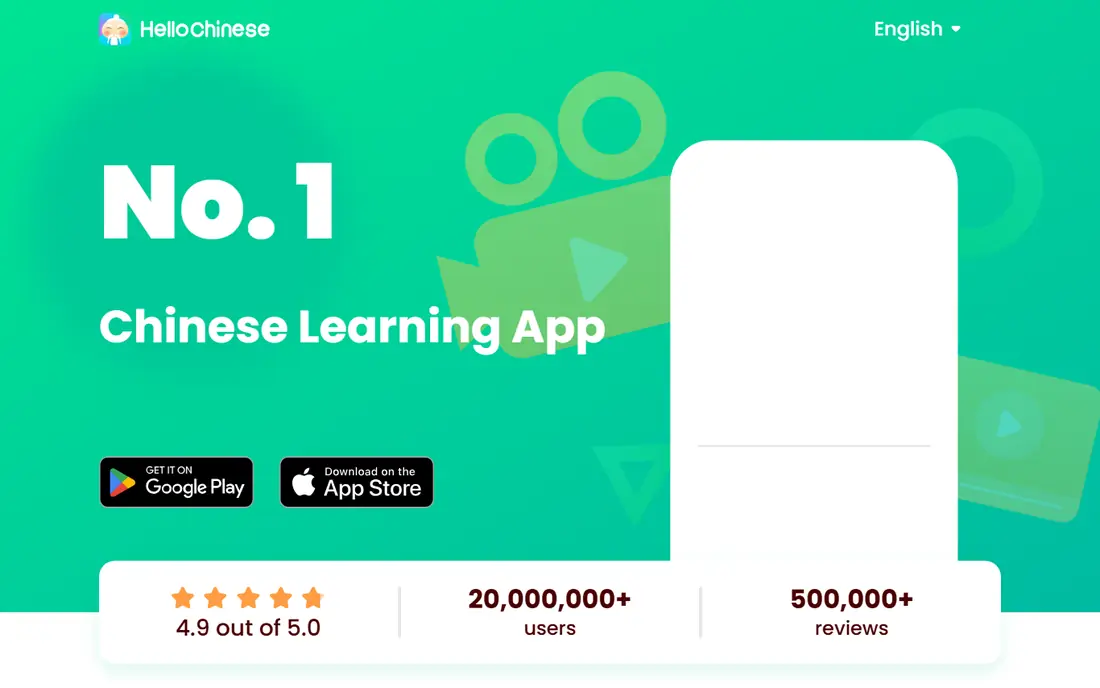
HelloChinese starts with pinyin and tones before it piles on vocabulary, which matters because tones change meaning in Mandarin. Lessons mix listening, speaking, reading, and writing, so you are not only tapping multiple-choice answers all day. The app also explains grammar in short, plain steps rather than leaving you to guess patterns from examples alone.
The trade-off is scope. Once you move past the beginner and lower-intermediate stages, you will likely need graded reading, longer listening material, or live conversation to keep growing. Still, for a first app, HelloChinese gives the most complete foundation in this list, and its free tier is enough to judge the teaching style before paying.
- Clear beginner path
- Speaking and tone practice
- Character writing built in
- Advanced content is thinner
- Full access needs a paid plan
Duolingo is the easiest app here to open every day. Short lessons, streaks, and quick review rounds lower the barrier on busy days, and that consistency matters more than any single feature. For absolute beginners, it introduces characters, pinyin, and common phrases in small, repeatable steps.
The catch is depth. Grammar explanations are brief, and the course does not go as far as a dedicated Chinese app for reading or speaking. Treat Duolingo as a warm-up or a companion to a fuller course, not as your only study tool if you want to hold a real conversation.
- Easy daily routine
- Wide availability
- Large free tier
- Grammar depth is limited
- Chinese content is shallower than dedicated apps
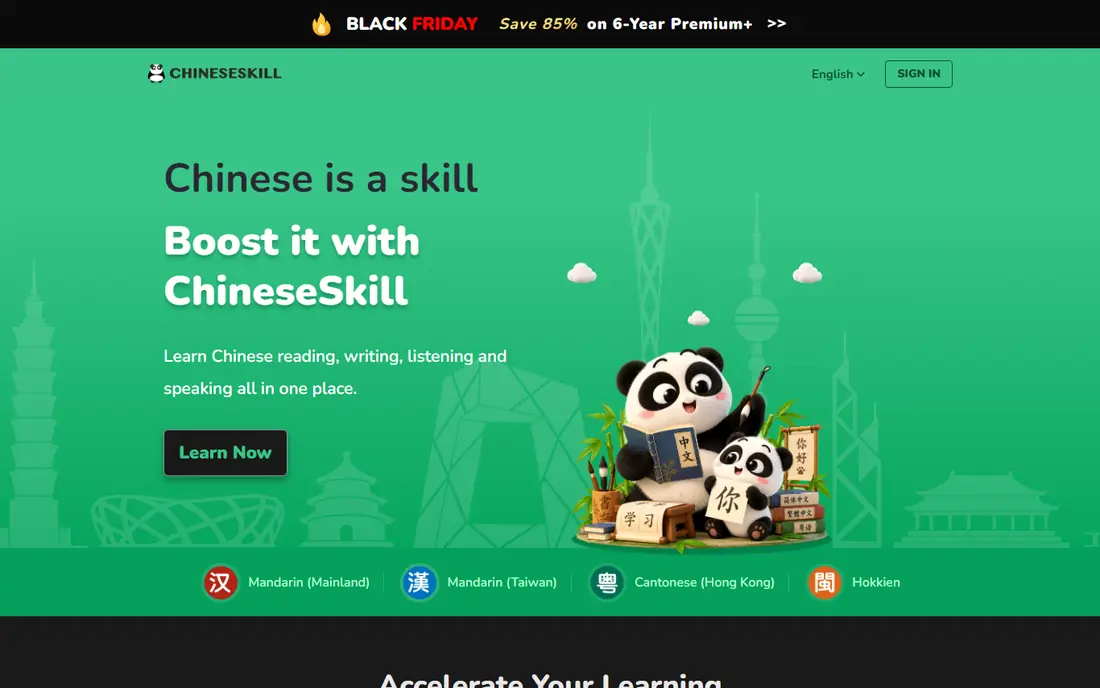
ChineseSkill takes a similar game-like approach to Duolingo but stays focused on Chinese, which shows in its tone and character work. Lessons move in small steps, with speaking checks and writing practice alongside vocabulary drills. That mix helps beginners who want variety without juggling three separate apps at the start.
Like most beginner apps, it runs out of road as you advance. Intermediate learners will want harder reading and listening, plus a dictionary like Pleco for words outside the course. As a first step, though, ChineseSkill is friendly, clear, and easy to fit into a short daily session.
- Playful lesson style
- Covers listening, speaking, reading, and writing
- Good for new learners
- Less useful at higher levels
- Paid features vary by store and region
LingoDeer stands out for learners who want to know why a sentence works, not just repeat it. Its Chinese course explains grammar points, word order, and particles in context, and the review section helps you revisit weak items. That structure suits people who felt lost in apps that teach mainly by pattern matching.
The free tier covers introductory material, so you can test the method before paying. The main drawback is that the full course is not cheap, and you may still need outside reading and speaking practice. If grammar is your weak spot, LingoDeer is a strong second app or a main course for careful, steady learners.
- Strong grammar notes
- Structured Asian-language courses
- Review tools included
- Free access is limited
- Full membership is a separate purchase decision
SuperChinese is built around short lessons that fit a commute or a lunch break, with a level test to place you before you start. Animated videos and spoken examples give context for new words, and the review system brings vocabulary back at intervals so it has a better chance of sticking. For learners who keep quitting long courses, the small-lesson format is a real advantage.
The limit is the same as with other short-lesson apps. You will not get long, natural conversations or dense reading passages from bite-size units alone. Use SuperChinese to build a daily habit and a core vocabulary, then add reading and speaking work as your level rises.
- Bite-size lessons
- Level test
- Spaced review for vocabulary
- Pricing varies by region
- Less depth for advanced reading
Skritter does one job well: it teaches you to write characters correctly, stroke by stroke, and it remembers which ones you keep forgetting. That matters if you need handwriting for a class, an exam, or life in a place where writing by hand still comes up. The app gives direct feedback on stroke order instead of only asking you to recognize a character on screen.
It is not a general course, so pair it with a speaking or reading app rather than using it alone. The monthly price is also high for a single-skill tool, though the trial lets you test whether handwriting practice actually fits your goals. If writing is not a priority, skip Skritter and spend that time on listening and speaking.
- Stroke-order feedback
- Focused writing practice
- Useful for exams and coursework
- No full conversation course
- Price adds up over a year
Pleco is the reference tool almost every serious learner ends up installing, and for good reason. You can look up words by pinyin, handwriting, or camera, hear pronunciation, and save words to flashcards. It works for a beginner checking a single character and for an advanced learner reading a news article full of unknown words.
Pleco will not teach you in a set order, so it works best beside a course app. Some extra dictionaries and features are paid add-ons, but the free core is already strong. If you install only one support tool from this list, make it Pleco.
- Excellent dictionary
- Handwriting and camera lookup
- Useful at every level
- Not a guided course
- Some add-ons cost extra
Pimsleur is the pick for learners who study while driving, walking, or doing chores. Each audio lesson builds a conversation piece by piece, asks you to respond out loud, and revisits earlier material so it stays fresh. That call-and-response style builds speaking confidence faster than tapping answers on a screen.
The weakness is reading and writing. Pimsleur teaches sound and speech first, so you will still need an app like HelloChinese or Skritter for characters. It is also a subscription, not a one-time buy. If spoken Mandarin is your main goal, especially for travel, Pimsleur earns its place.
- Strong listening and speaking drills
- Hands-free lessons
- Good pronunciation focus
- Little character or reading work
- Subscription cost is ongoing
Memrise focuses on getting words and phrases into memory through repetition and short video clips of native speakers. That makes it a good tool for travel phrases, everyday vocabulary, and review between course lessons. The format is quick, and the clips help you hear how phrases sound in real speech rather than only in a textbook voice.
It is not the best choice as a main grammar course, and some content feels more like phrase lists than a full curriculum. Used as a supplement, though, Memrise is a handy way to build vocabulary in short bursts and to keep older words from fading.
- Useful phrase videos
- Spaced repetition
- Good for travel vocabulary
- Less structured grammar teaching
- Course depth varies
How we picked these
We compared official feature pages, pricing pages, and app store listings for course depth, speaking and writing practice, review systems, and current availability in October 2026. We kept only apps that are live, clearly fit Chinese learning, and offer a real free tier or trial for testing. Where a price varied by region or store, we wrote See website rather than publishing a figure we could not confirm for US buyers.
How to choose the right app for your level
Start with your goal, not with the app store ranking. Beginners should pick one structured course, such as HelloChinese or LingoDeer, and stick with it for at least a month before adding more tools. If you already know some Chinese, test the level placement in SuperChinese or the free lessons in a course app before paying, since starting too low is a common reason people quit.
Match the tool to the skill you need most. Skritter is for writing, Pimsleur is for speaking and listening, and Pleco is for looking things up while you read. A good weekly mix might be a course app on most days, Pleco open while reading, and one or two Pimsleur sessions for speaking. Check whether you need offline lessons, too, since that feature varies and matters for travel or a weak connection.
Watch the price over a year
Free tiers are generous for testing, but most full courses are subscriptions. Add up twelve months before you commit, and check whether a yearly plan saves money compared with monthly billing. If you are unsure, use the free tier or trial for two weeks and track how many days you actually study. An app you open daily is worth more than a cheaper one you ignore.
Frequently asked questions
What is the best app to learn Chinese for beginners?
HelloChinese is our pick for most beginners because it teaches pinyin, tones, characters, grammar, and speaking in one ordered course. Duolingo and ChineseSkill are also fine starting points if you prefer a lighter, game-like routine. Try the free tier of each for a week and keep the one you open most often.
Can I learn Chinese with a free app?
Yes, for the basics. Duolingo, HelloChinese, ChineseSkill, and Pleco all offer useful free content, and SuperChinese offers free lessons too. You will likely hit a paywall for full courses, offline access, or advanced review, but free tiers are enough to learn pinyin, tones, and common phrases.
Which app is best for learning Chinese characters?
Skritter is the strongest choice here because it checks stroke order and tracks the characters you forget. Pleco is the best companion for looking up characters and saving them for review. If you only need to recognize characters for reading, a course app plus Pleco may be enough without Skritter.
How long does it take to learn Chinese with an app?
It depends on your target and your study time. Basic travel phrases can come in a few months of steady daily practice, while conversational ability usually takes much longer and needs speaking practice beyond an app. Short daily sessions beat occasional long sessions, and adding reading and conversation helps more than adding another app.
Is Duolingo good for learning Chinese?
Duolingo is good for building a daily habit and learning basic vocabulary and phrases, but it is weaker on grammar and advanced content than dedicated Chinese apps. Use it as a starter or a supplement, and move to HelloChinese, LingoDeer, or SuperChinese when you want a fuller course.
Do I need a dictionary app as well as a course app?
Yes, in most cases. A course teaches in order, while a dictionary like Pleco helps you with words you meet in real reading, menus, signs, and conversations. Keeping Pleco beside your course app makes outside reading far more practical.
Sources
See where you really rank - block by block
ProMapRanker scans Google Maps across a grid of your service area. Simple monthly plans from $19, white-label on every plan.
Start freeKeep reading
 zscaler alternatives
Best Zscaler Alternatives in 2026
Looking for zscaler alternatives? We compare 9 SASE and zero trust platforms on architecture, data protection, pricing, and fit for your network and team.
Read → zapier alternatives free
Best Zapier Alternatives Free in 2026
Nine automation tools for zapier alternatives free in 2026, all with genuinely free tiers, plus free plan limits, starting prices and upgrade paths explained.
Read → which platform is best for online reputation
Which Platform Is Best for Online Reputation in 2026
Wondering which platform is best for online reputation? We compare 8 review, listing, and response tools for small and multi-location businesses and agencies.
Read →