 ProMapRanker
Best Application Security Platforms in 2026


Developer-first code and dependency security · Pricing starts at: $25 per developer per month
Key takeaways
- Snyk, SonarQube, and Semgrep suit developer-led teams that want fast scans inside pull requests and CI.
- Checkmarx and Veracode suit regulated enterprises that need deep analysis, policy enforcement, and audit-ready reporting.
- GitHub Advanced Security is the simplest choice for teams already on GitHub, but its per-committer price adds up.
- No single scanner covers code, dependencies, containers, secrets, and running apps, so check which layers each platform actually includes.
Quick comparison
| Pick | Great for | Pricing starts at | Free tier | |
|---|---|---|---|---|
| Snyk | Developer-first code and dependency security | $25 per developer per month | Yes | Visit |
 SonarQube | Code quality plus security gates | $30 per month | Yes | Visit |
 Semgrep | Custom rules and fast CI scans | $35 per contributor per month | Yes | Visit |
 Codacy | Affordable quality and security reviews | $15 per user per month | Yes | Visit |
 GitHub Advanced Security | Security inside GitHub repos | $49 per committer per month | Yes | Visit |
 Checkmarx | Enterprise AppSec with compliance needs | See website | No | Visit |
 Veracode | Audit-ready security programs | See website | No | Visit |
 DeepSource | Automated review with autofixes | See website | Free trial | Visit |
 Burp Suite | Dynamic testing of running web apps | See website | Yes | Visit |
The best application security platforms
Application security platforms find flaws in code, dependencies, containers, and running apps before attackers do. We compared official pricing pages, feature descriptions, and plan limits for platforms live in October 2026, covering static analysis, dependency scanning, secrets, and dynamic testing.
Snyk is built for developers first. Snyk Code scans source code for flaws, while companion products scan open-source dependencies, containers, and infrastructure code, and the platform can open fix pull requests directly in your repo. The Team plan is listed at 25 dollars per developer per month, with a limited free tier for small use.
The limits are scale and breadth. A large team can see costs rise quickly, and the deepest compliance reporting sits in enterprise tiers. Snyk is best for teams that want security feedback inside the pull request, where developers can fix issues without leaving their workflow. If your team already uses Snyk for dependencies, adding Snyk Code is a natural step.
- Fast scans with fix pull requests
- Covers code, dependencies, containers, and infrastructure
- Strong IDE and CI integrations
- Full platform costs grow with team size
- Enterprise features need higher tiers
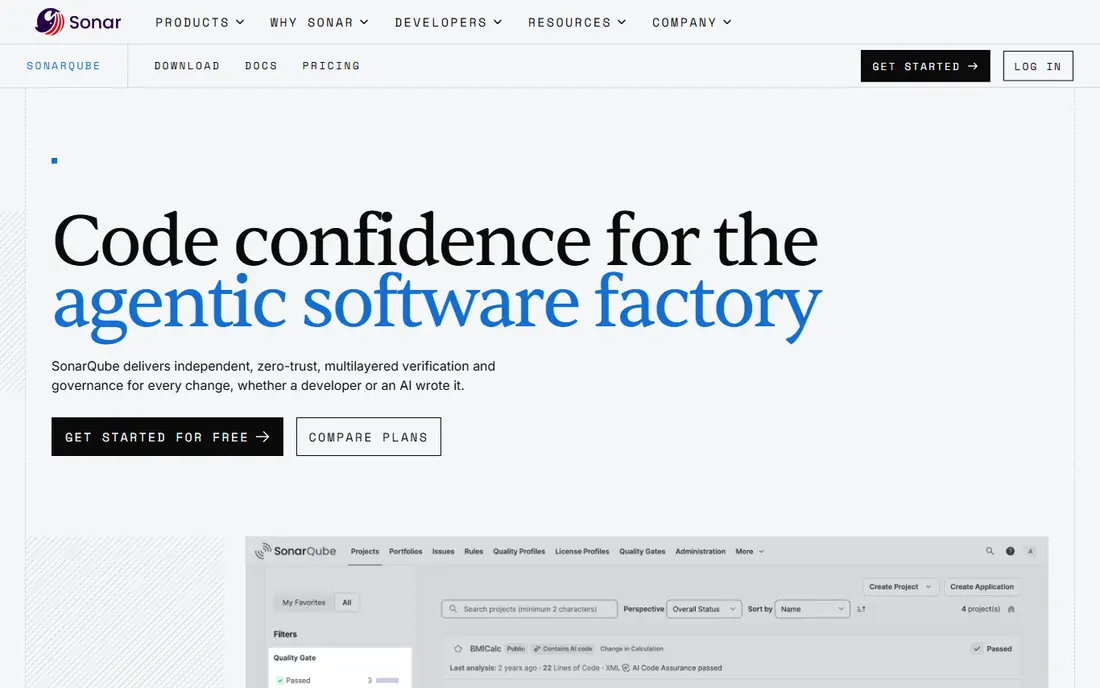
SonarQube is the safest default for teams that want code quality and security in one platform. It checks code for bugs, vulnerabilities, code smells, and duplication, and quality gates can block a merge when new issues appear. The Cloud Developer plan is listed at 30 dollars per month, and the self-hosted Community Build remains free for teams that can run it themselves.
The honest limit is depth. SonarQube covers common security issues well, but specialist SAST tools go deeper on complex flows and compliance rules. Many teams pair SonarQube for quality gates with Snyk or Semgrep for deeper security scans. If you need one tool that improves everyday code quality and catches basic security flaws, SonarQube is a strong and affordable start.
- Quality gates in CI
- Free self-hosted Community Build
- Covers quality and security in one place
- Security depth is lighter than specialist SAST tools
- Enterprise tiers cost more
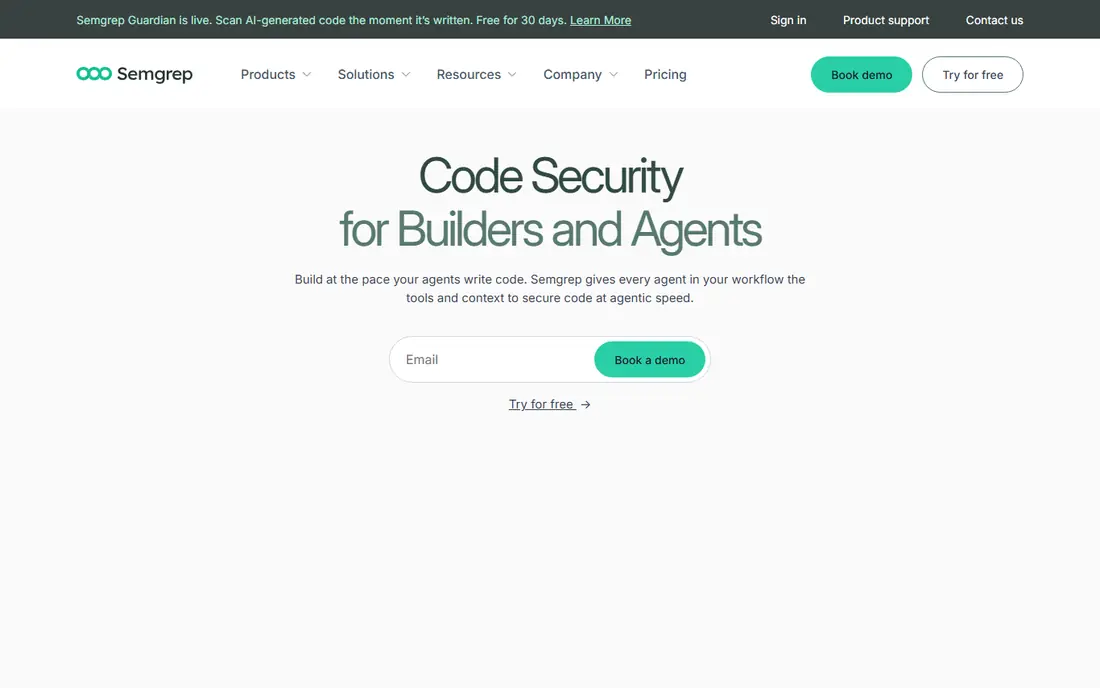
Semgrep stands out for speed and custom rules. Its open-source engine scans code in seconds, and teams can write their own rules for internal patterns, such as unsafe internal APIs or forbidden libraries, beside a large set of community rules. The Team plan is listed at 35 dollars per contributor per month, with the engine and community rules free to use.
The trade-off is tuning. Out-of-the-box rules cover common issues, but getting the best signal for your codebase takes time, and the full management, triage, and reporting features need a paid plan. For security-minded teams that want to encode their own standards and run fast checks in CI, Semgrep is a flexible and developer-friendly choice.
- Fast scans in seconds
- Custom rules for your own patterns
- Open-source engine and community rules
- Needs rule tuning for best results
- Management features sit in paid tiers
Codacy suits small to mid-sized teams that want automated code review without enterprise pricing. It checks pull requests for quality and security issues, tracks duplication and coverage, and gives a clear dashboard for team health. The Pro plan is listed at 15 dollars per user per month, with a free Developer tier for smaller use.
The limit is depth. Codacy is not a replacement for Checkmarx or Veracode in a regulated enterprise, and its rule configuration is simpler than Semgrep. For a team that wants a low-cost, low-setup review tool that catches everyday issues in pull requests, Codacy offers good value and a gentle learning curve.
- Automated pull request reviews
- Low per-user price
- Supports many languages
- Security depth is lighter than enterprise SAST
- Configuration options are simpler
GitHub Advanced Security is the simplest security upgrade for teams already on GitHub. It adds CodeQL code scanning, secret scanning with push protection, and Dependabot alerts and updates inside the repos developers already use. Public repos get Dependabot and secret scanning features at no extra cost in many cases, while private repo scanning is paid.
The main catch is price. At 49 dollars per committer per month, a large team can pay more than it would for a standalone scanner, and the value drops sharply if your code lives elsewhere. For GitHub-centered teams that want security with no new platform to learn, it is a clean choice. For mixed-platform teams, a standalone tool will usually fit better.
- CodeQL scanning inside GitHub
- Secret scanning and Dependabot
- No separate platform to manage
- Price per committer is high
- Only useful for teams already on GitHub
Checkmarx is built for enterprise application security programs, especially in regulated industries. Its platform covers static analysis, software composition, API security, container and infrastructure scanning, and developer training, with policy controls and reporting that auditors expect. Pricing is quote-based, with enterprise contracts that reflect that depth.
The barriers are cost and setup. There is no free tier, no small self-service plan, and rollout takes longer than a developer-first tool. Small teams will find Checkmarx hard to justify, and even mid-sized teams should compare it against Snyk plus SonarQube first. For a large enterprise with compliance deadlines and many codebases, Checkmarx remains a leading platform.
- Deep static analysis
- Broad language and framework coverage
- Strong compliance and policy reporting
- No free tier or self-service start
- Enterprise contracts and longer rollout
Veracode suits organizations that need an audit-ready security program with clear policy enforcement. It offers static analysis, dynamic testing, software composition analysis, and mobile security, with reports and attestations that help with customer security reviews and compliance checks. Pricing is quote-based, and the platform is sold as an enterprise program rather than a self-service tool.
The trade-offs are cost and speed of feedback. Veracode scans can feel slower and less integrated into the pull request than Snyk or Semgrep, and there is no free tier for small teams to test. For companies that must prove their security posture to customers and regulators, Veracode reporting is a real strength. For fast-moving product teams, a developer-first scanner will usually feel more natural.
- Static, dynamic, and software composition scans
- Policy and attestation reporting
- Vendor assessment model
- No free tier
- Pricing is quote-based
- Developer feedback can feel slower than newer tools
DeepSource focuses on automated code review that does more than flag issues: it can apply verified autofixes for many findings, which saves developers from manual cleanup. It checks security, performance, and quality issues in pull requests, and it integrates with GitHub, GitLab, and Bitbucket. A free trial lets teams test it on their own repos before buying.
The limits are language coverage and price clarity. DeepSource supports fewer languages than SonarQube or Checkmarx, so teams with a wide stack should check coverage first, and paid pricing varies by tier on the vendor site. For teams that want review automation with fixes, not just findings, DeepSource is a practical and time-saving option.
- Automated code review with verified autofixes
- Fast pull request feedback
- Security and quality checks together
- Language coverage is narrower than leaders
- Paid pricing varies by tier
Burp Suite is different from the rest of this list, because it tests running web applications rather than source code. Security testers use it to intercept traffic, probe inputs, scan for common web flaws, and test authentication and session handling. The Community Edition is free, while Professional adds automated scanning and advanced manual testing tools.
The honest limit is skill. Burp Suite gives a skilled tester powerful tools, but it does not replace code scanning, and a team without security testing experience will get less from it. Used beside a SAST and SCA tool, it covers the runtime layer that code scans cannot see. For any team that runs a public web app, that layer matters.
- Leading dynamic testing for web apps
- Manual testing tools for security teams
- Free Community Edition
- Needs skilled testers for full value
- Not a code scanner, so it covers a different layer
How we picked these
We compared official pricing pages, feature descriptions, and plan limits for application security platforms live in October 2026. We kept platforms that cover at least one major layer: static analysis, dependency scanning, secrets, containers, or dynamic testing. We left out tools that only check code style, tools that only monitor production infrastructure, and tools that could not be tied to a live product page.
What to check before you pay
Start with the layers you actually need. A web product usually needs static analysis, dependency scanning, and secret scanning at minimum, plus dynamic testing for public apps and container scanning if you ship containers. Check whether each platform covers those layers natively or needs extra products, because add-ons change the real price.
Run a trial on your own repos and measure false positives, scan time in CI, and how fixes appear in pull requests. A scanner that floods developers with noise will be ignored, no matter how deep its analysis. Finally, check reporting for your compliance needs, and confirm who can see findings, because security reports themselves need access controls.
Frequently asked questions
What is the best application security platform for a small team?
Snyk, SonarQube, and Codacy suit small teams best, because all three offer free tiers or low entry prices and fast pull request feedback. Start with SonarQube for quality gates, add Snyk for dependencies, and test Semgrep if you want custom rules.
Do I need both SAST and DAST?
Yes, for a public web app. Static analysis finds flaws in code before release, while dynamic testing finds flaws in the running app, such as authentication and configuration issues that code scans miss. Burp Suite covers dynamic testing, while Snyk, Checkmarx, and Veracode cover static analysis.
What is the difference between SAST and SCA?
Static analysis, or SAST, checks your own code for flaws, while software composition analysis, or SCA, checks third-party libraries and dependencies for known vulnerabilities. Most modern platforms cover both, but check the plan, because some entry tiers limit one layer.
Is GitHub Advanced Security worth the price?
It is worth it for teams already centered on GitHub that want CodeQL, secret scanning, and Dependabot with no new platform to manage. At 49 dollars per committer per month, larger or mixed-platform teams should compare standalone scanners first, because they may cost less.
Can a free scanner replace a paid platform?
A free scanner can cover basic checks for a small project, especially SonarQube Community Build, Semgrep open source, and Burp Suite Community Edition. Paid platforms add management, policy reporting, deeper analysis, and support, which matter once you have many repos, compliance needs, or customer security reviews.
Sources
See where you really rank - block by block
ProMapRanker scans Google Maps across a grid of your service area. Simple monthly plans from $19, white-label on every plan.
Start freeKeep reading
 zscaler alternatives
Best Zscaler Alternatives in 2026
Looking for zscaler alternatives? We compare 9 SASE and zero trust platforms on architecture, data protection, pricing, and fit for your network and team.
Read → zapier alternatives free
Best Zapier Alternatives Free in 2026
Nine automation tools for zapier alternatives free in 2026, all with genuinely free tiers, plus free plan limits, starting prices and upgrade paths explained.
Read → which platform is best for online reputation
Which Platform Is Best for Online Reputation in 2026
Wondering which platform is best for online reputation? We compare 8 review, listing, and response tools for small and multi-location businesses and agencies.
Read →