 ProMapRanker
Best App to Teach Kids to Read in 2026

Key takeaways
- Khan Academy Kids and Duolingo ABC are the strongest free starting points for early readers.
- Reading Eggs, Hooked on Phonics, and HOMER offer more structured phonics paths for children who need step-by-step lessons.
- Teach Your Monster to Read and Starfall work well as focused phonics practice beside a main program.
- ABCmouse covers reading inside a much wider early learning curriculum, which suits families who want one app for several subjects.
- Parents should check age ratings, data collection, ads, and in-app purchases before handing any app to a child.
Quick comparison
| Pick | Great for | Pricing starts at | Free tier | |
|---|---|---|---|---|
 Khan Academy Kids | Free early literacy | Free | Yes | Visit |
 Duolingo ABC | Free short phonics lessons | Free | Yes | Visit |
 Reading Eggs | Structured phonics program | See website | No | Visit |
 ABCmouse | All-subject early learning | See website | No | Visit |
 Hooked on Phonics | Step-by-step reading program | See website | No | Visit |
 HOMER | Personalized reading path | See website | No | Visit |
 Teach Your Monster to Read | Game-based phonics | Free | Yes | Visit |
 Starfall | Early phonics practice | Free | Yes | Visit |
The best apps to teach kids to read
We compared apps that teach letter sounds, blending, sight words, and early stories, with a focus on age fit, lesson order, and parent controls. Our pick for most families is Khan Academy Kids for free early learning, with Reading Eggs as the stronger paid phonics program.
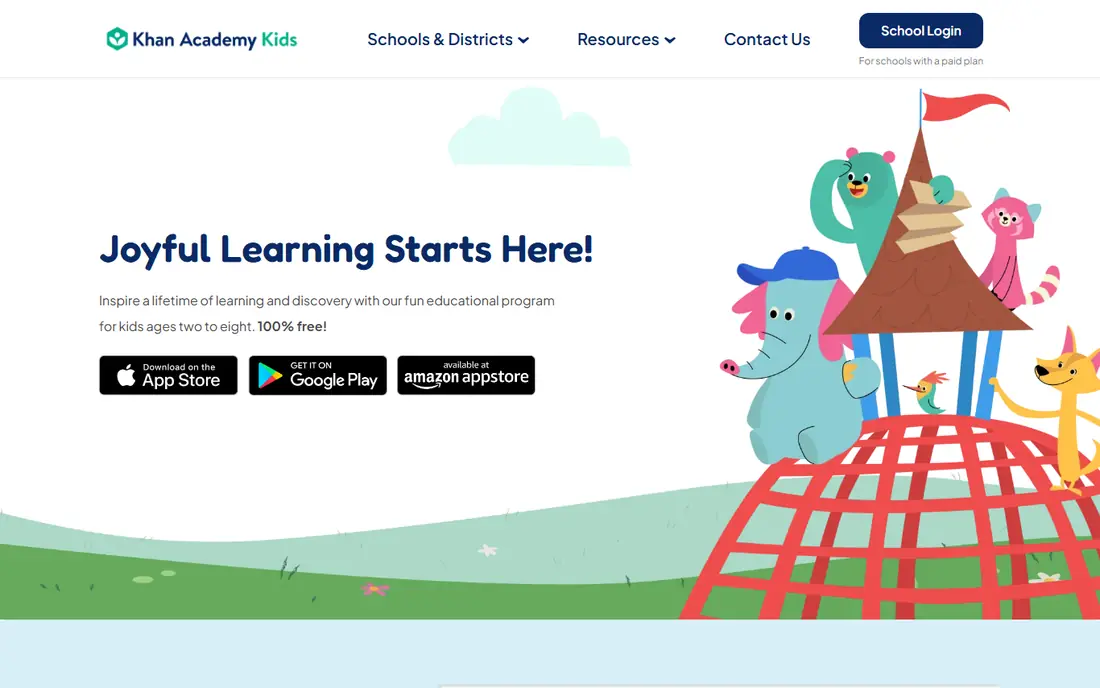
Khan Academy Kids is the easiest recommendation for families who want to start without paying. It offers letter sounds, phonics games, stories, and vocabulary inside a friendly app that has no ads and no in-app purchases. Children can move between reading, math, and social skills, which keeps sessions varied without turning the app into a single drill. Parents get a simple view of progress without needing a subscription.
The trade-off is structure. It does not follow one strict phonics sequence as closely as Reading Eggs or Hooked on Phonics, so a child who is stuck on blending may need extra guidance from a parent or teacher. The age range also tops out around 8, so older struggling readers will outgrow it. For preschool and early elementary children, though, it is an excellent free first step, and it pairs well with real books read aloud at home.
- Completely free with no ads
- Covers phonics, stories, and vocabulary
- Built with early childhood educators
- Wider than a pure reading program
- Less step-by-step phonics tracking than paid rivals
- Best for ages 2 to 8
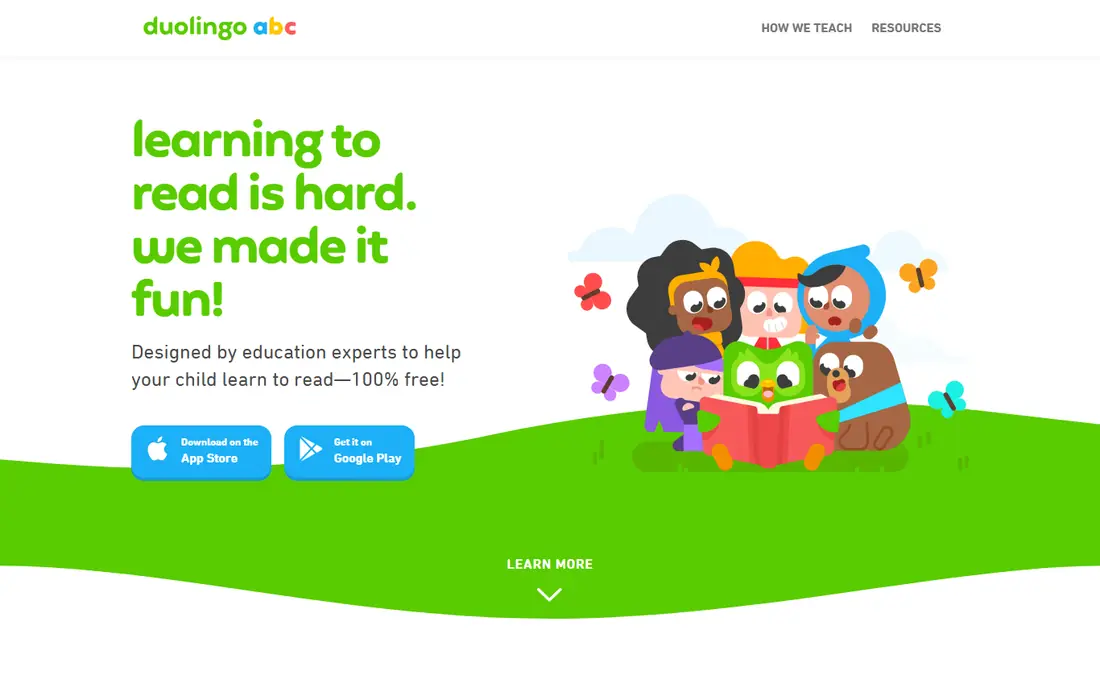
Duolingo ABC takes the short-lesson style of Duolingo and applies it to early reading. Children learn letter sounds, trace letters, blend simple words, and read short stories in quick sessions that fit a busy day. The game-like rewards help some children return each day, and the free price removes the pressure to get value from a subscription. Parents can set it up quickly and let a young child practice for 10 to 15 minutes at a time.
Depth is the limit. Duolingo ABC covers the early stages well, but it does not carry a child far into longer books or comprehension work. It also offers fewer stories and less parent reporting than a full program. Use it as a daily phonics habit for a beginner, then add a library app or a structured program when the child starts reading longer texts with confidence.
- Free
- Short, game-like lessons
- Clear focus on letters, sounds, and first words
- Limited depth beyond early reading
- Less story choice than a library app
- Best for preschool to first grade
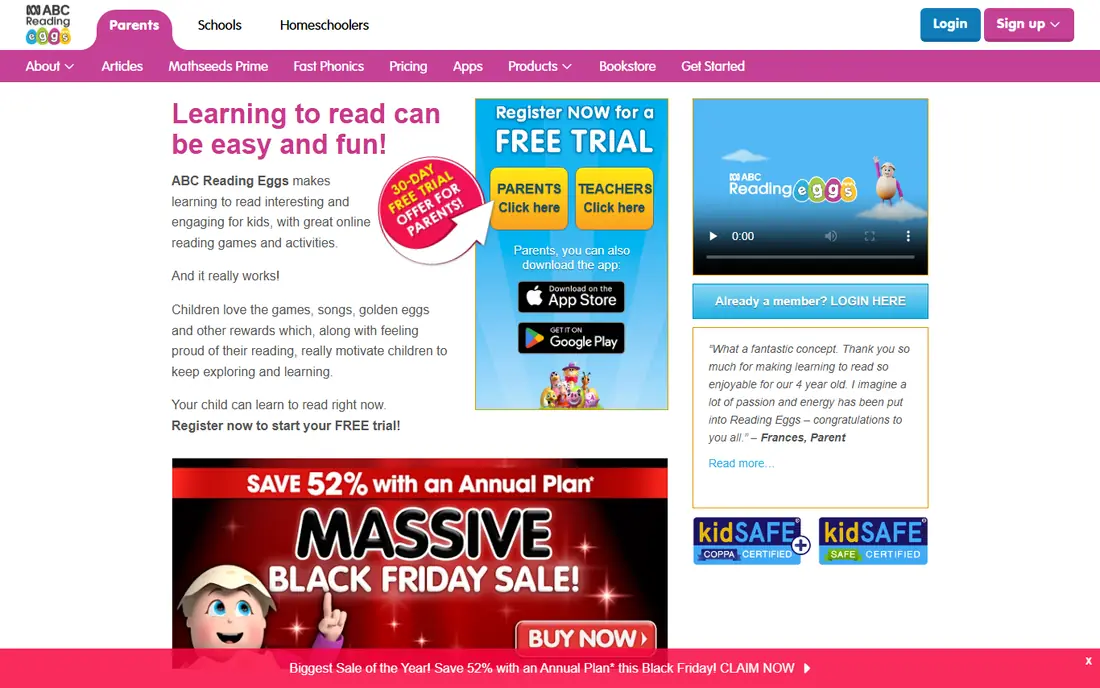
Reading Eggs is built as a full learn-to-read program rather than a set of mini-games. A placement test puts the child at the right level, then lessons move through letter sounds, blending, sight words, and reading comprehension in order. Decodable books match the sounds taught, so children practice what they just learned instead of guessing from pictures. Parent reports show which skills are progressing and which need more practice.
The main drawback is cost and screen time. It is a paid subscription, and families should check the current price and trial terms on the vendor site before signing up. Some children also tire of the lesson format after a long session, so short, regular use works better than long blocks. For a child who needs a clear path and regular practice, Reading Eggs remains one of the strongest paid choices.
- Clear phonics sequence with decodable books
- Placement test and progress reports
- Covers reading and spelling
- Paid subscription
- Price varies by plan and region
- Screen-heavy for children who prefer books
ABCmouse suits families who want one app for early learning across subjects. Reading sits beside math, science, art, and music, with stories, songs, and games tied to a learning path. A child who likes variety may stay engaged longer here than in a phonics-only app, and parents can see progress across subjects in one place. The content volume is large, which helps when a child wants to explore.
That breadth is also the weakness for reading alone. A child who needs focused phonics work may spend time on other subjects instead, and the reading path is less tight than Reading Eggs. ABCmouse is paid, so check the current plan and cancellation terms on the site. Choose it when you want a broad early learning app, and pair it with a phonics-focused tool if reading is the main goal.
- Very large library of reading, math, art, and music activities
- Step-by-step learning path
- Ages 2 to 8
- Reading is one subject among many
- Paid subscription
- Large content library can distract from reading practice
Hooked on Phonics has taught early reading for decades, and its app keeps that step-by-step method. Lessons build sounds into words, words into sentences, and sentences into short books, with practice at each step. The option to pair app lessons with printed books and workbooks helps children who learn better away from a screen, and parents can follow the level path without guessing what comes next. That clear order is reassuring for families new to phonics.
The program can feel slow for a child who already knows basic sounds, and the full kit with print materials costs more than the app alone. Plans vary, so check the current offer on the vendor site. For a beginner who benefits from repetition and a steady pace, Hooked on Phonics is a solid, time-tested choice.
- Long-running phonics program
- App lessons paired with books and workbooks
- Clear level progression
- Paid subscription with plans that vary
- Print materials add cost and clutter
- Pace may feel slow for fast learners
HOMER starts with a short assessment and builds a reading path around the child's level and interests. Lessons mix phonics, sight words, stories, and drawing, which can help a child who loses interest in drill-only apps. The path adapts as the child progresses, so practice stays near the right level rather than jumping too far ahead. Parents can track skills and see suggested activities for offline practice.
The catch is that personalization depends on regular use and honest assessment answers. If a child rushes through the setup or uses the app rarely, the path will be less accurate. HOMER is also paid, and it is aimed at ages 2 to 8, so it will not serve an older reader for long. For a young child who likes stories and variety, it is a warm and well-organized option.
- Personalized path based on the child's level and interests
- Covers reading, phonics, and stories
- Ages 2 to 8
- Paid subscription
- Personalization needs regular use to stay accurate
- Less deep for older readers
Teach Your Monster to Read turns phonics practice into a game where a child creates a monster and plays through letter sounds, blending, and first sentences. The game format works well for children who resist worksheet-style lessons, and the phonics order is clear enough for parents to follow. The desktop web version is free, which makes it easy to try before paying for a mobile version. Many teachers use it in classrooms, which speaks to its classroom fit.
Mobile pricing varies by app store, so check the listing on your device before buying. The game can also pull attention toward collecting and customizing rather than reading, so short sessions with a parent nearby work best. For focused phonics practice at low cost, it is one of the best supplements on this list.
- Free on desktop web
- Strong game-based phonics practice
- Covers letters through early sentences
- Mobile app terms and price vary by store
- Game focus may distract some children
- Limited comprehension work
Starfall is a simple, calm app for early phonics. It teaches letter sounds, short vowel patterns, and first words with clear audio and uncluttered screens. Young children can use it with little help once they know the basics, and parents can trust the free core content to stay focused on reading rather than ads or unrelated games. It works well as a short daily practice tool beside school lessons or a main program.
The full membership is paid, and the look feels older than Duolingo ABC or HOMER. It also offers fewer stories than a library app, so it will not carry a child into fluent reading alone. Use Starfall for steady early phonics practice, and add books and read-aloud time for vocabulary and comprehension.
- Free core content
- Clear letter sounds and vowel patterns
- Simple design that suits young children
- Paid membership needed for full content
- Design looks dated next to newer apps
- Limited story library
How we picked these
We compared official app pages, app store listings, age guidance, lesson structure, and privacy information for apps that teach reading in October 2026. We kept only apps that exist today, focus on letter sounds, blending, or early reading, and offer a clear path for children. We favored apps with parent controls, no-ad options, or clear data policies, and we noted where pricing or mobile terms vary by store. We did not claim hands-on testing, and we based judgments on published lesson descriptions, age ranges, and public reviews.
What parents should check before choosing
Start with age and reading level, not the app store ranking. A preschool beginner needs letter sounds and blending, while a first grader needs decodable books and sight words. Match the app to that stage, then check the parent dashboard, progress reports, and whether an adult can limit session length. Check children's-data privacy notes on the vendor site, including what data is collected, whether ads appear, and whether the app shares data with third parties. Also check age ratings and in-app purchases on the store listing, since some free apps sell extra content or a paid version inside the app. Finally, keep app time short and pair it with printed books, read-aloud time, and conversation about stories, since apps work best as a supplement to real reading, not a replacement for it.
Frequently asked questions
What is the best app to teach kids to read for free?
Khan Academy Kids and Duolingo ABC are the strongest free choices. Khan Academy Kids covers wider early literacy with no ads, while Duolingo ABC offers focused short phonics lessons for beginners.
How long should a child use a reading app each day?
Short, regular sessions of 10 to 20 minutes work well for most young children, with breaks and offline reading beside app time. Longer sessions rarely help more, and tired children stop learning from phonics drills.
At what age can a child start using a reading app?
Many children start with letter sounds and early literacy apps around ages 3 to 5, while structured learn-to-read programs fit best from ages 4 to 6. Follow the child's interest and school guidance rather than pushing an app too early.
Are reading apps safe for children's data?
Safety varies by app, so read the vendor privacy policy and the store listing before installing. Prefer apps with no ads, clear parent controls, limited data collection, and no chat with strangers, and check age ratings and in-app purchases first.
Can an app alone teach a child to read?
An app can teach letter sounds, blending, and early words, but it works best beside books, read-aloud time, and adult guidance. If a child struggles for months despite regular practice, talk to the child's teacher or a reading specialist.
What is the best app for a child who already knows letter sounds?
Reading Eggs or Hooked on Phonics fit a child ready for blending, sight words, and short books, since both offer a sequenced path beyond single letters. Teach Your Monster to Read also works well as game-based practice at that stage.
Sources
See where you really rank - block by block
ProMapRanker scans Google Maps across a grid of your service area. Simple monthly plans from $19, white-label on every plan.
Start freeKeep reading
 zscaler alternatives
Best Zscaler Alternatives in 2026
Looking for zscaler alternatives? We compare 9 SASE and zero trust platforms on architecture, data protection, pricing, and fit for your network and team.
Read → zapier alternatives free
Best Zapier Alternatives Free in 2026
Nine automation tools for zapier alternatives free in 2026, all with genuinely free tiers, plus free plan limits, starting prices and upgrade paths explained.
Read → which platform is best for online reputation
Which Platform Is Best for Online Reputation in 2026
Wondering which platform is best for online reputation? We compare 8 review, listing, and response tools for small and multi-location businesses and agencies.
Read →