 ProMapRanker
Best App to Learn Sign Language in 2026

Key takeaways
- Lingvano and ASL Bloom give the most structured lesson paths for adult beginners who want a daily routine.
- The ASL App and SignSchool are strong low-cost starting points for vocabulary and everyday phrases.
- Ace ASL and Hands On ASL focus on expressive practice, which matters because signing is a physical skill, not just recognition.
- A dictionary app alone will not teach grammar or conversation, so pair lookup tools with lessons or live practice.
- Most apps teach American Sign Language, so check the language variant before you pay if you need British Sign Language or another signed language.
Quick comparison
| Pick | Great for | Pricing starts at | Free tier | |
|---|---|---|---|---|
 Lingvano | Structured daily lessons | $17.99 per month | Free trial | Visit |
 The ASL App | Everyday phrases and vocabulary | Free | Yes | Visit |
 ASL Bloom | Guided lessons from Deaf instructors | See website | Yes | Visit |
 SignSchool | Free structured learning | Free | Yes | Visit |
 Ace ASL | Feedback on your signing | $3.99 per month | No | Visit |
 Rocket Sign Language | A full course path | See website | Free trial | Visit |
 ASL Pocket Sign | Vocabulary building on a budget | $5.99 per month | Yes | Visit |
 Marlee Signs | Short video lessons | Free | Yes | Visit |
 Hands On ASL | Fingerspelling practice | Free | Yes | Visit |
The best apps to learn sign language
We compared apps on lesson structure, video quality, practice tools, language variant, and price. Here are the options that stood out for most learners.
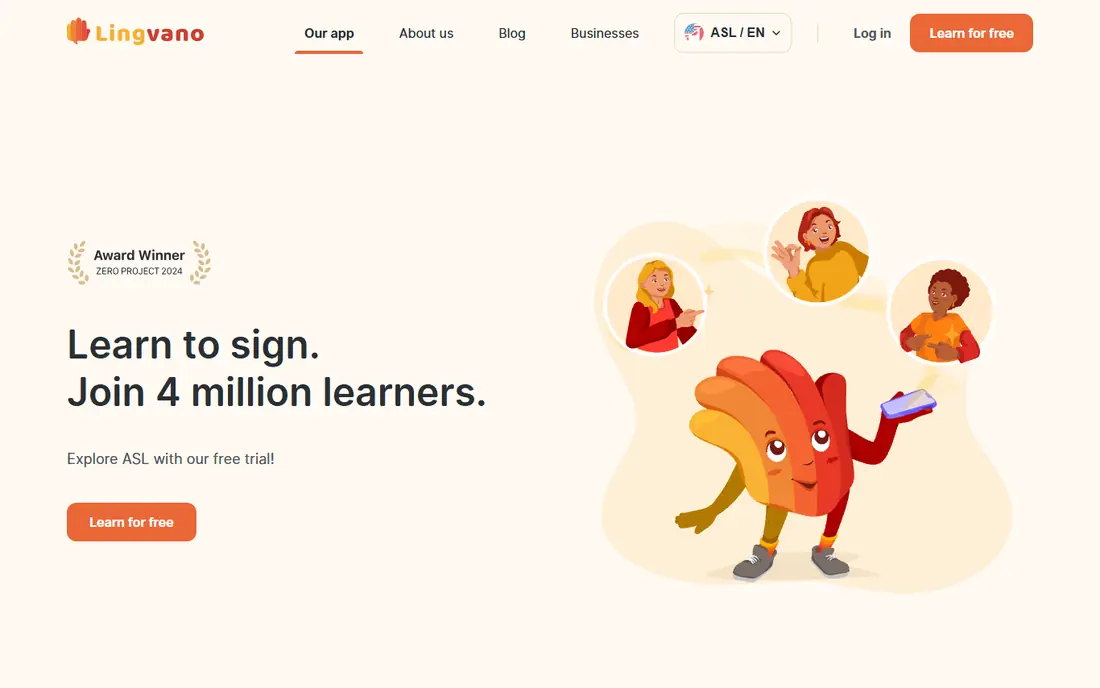
Lingvano is our pick for most people who want a clear path and a daily habit. Lessons are short, video-led, and built around real signs rather than long written explanations. You learn a sign, see it in a sentence, and then get tested on it, which keeps the work active instead of passive. The app also lets you set a daily goal, so a five-minute session still counts as progress.
The main trade-off is price. At $17.99 per month, Lingvano costs more than several rivals, and the free trial is short. That price is easier to justify if you use it most days and want both American Sign Language and British Sign Language in one place. If you only want a few travel phrases, a free dictionary app will do the job for less.
- Short gamified lessons
- Video dictionary
- Sign-recognition practice
- Subscription cost adds up over a year
- Mainly ASL and BSL
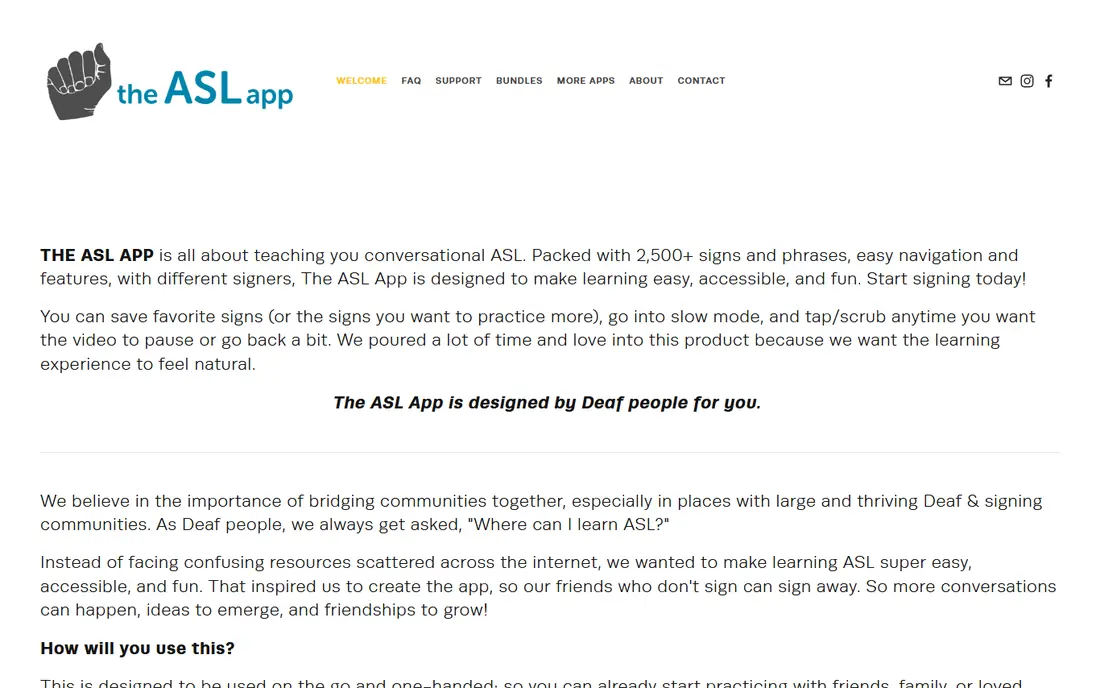
The ASL App is a good first stop for conversation. It focuses on signs and phrases people actually use, such as greetings, questions, and common requests, and it lets you slow videos down to study handshape and movement. That slow-motion control matters a lot for beginners, because a sign at full speed can blur together. The layout stays simple, so you spend time signing instead of hunting through menus.
It is less suited as a complete course on its own. You get vocabulary and phrases, but you will need another resource for deeper grammar, storytelling, and live conversation practice. Treat it as a strong companion app, or as a low-risk way to find out if you enjoy learning ASL before you pay for a full course.
- Conversational phrases
- Slow-motion video
- Simple layout
- Less of a full curriculum than Lingvano
- Full access is a paid upgrade
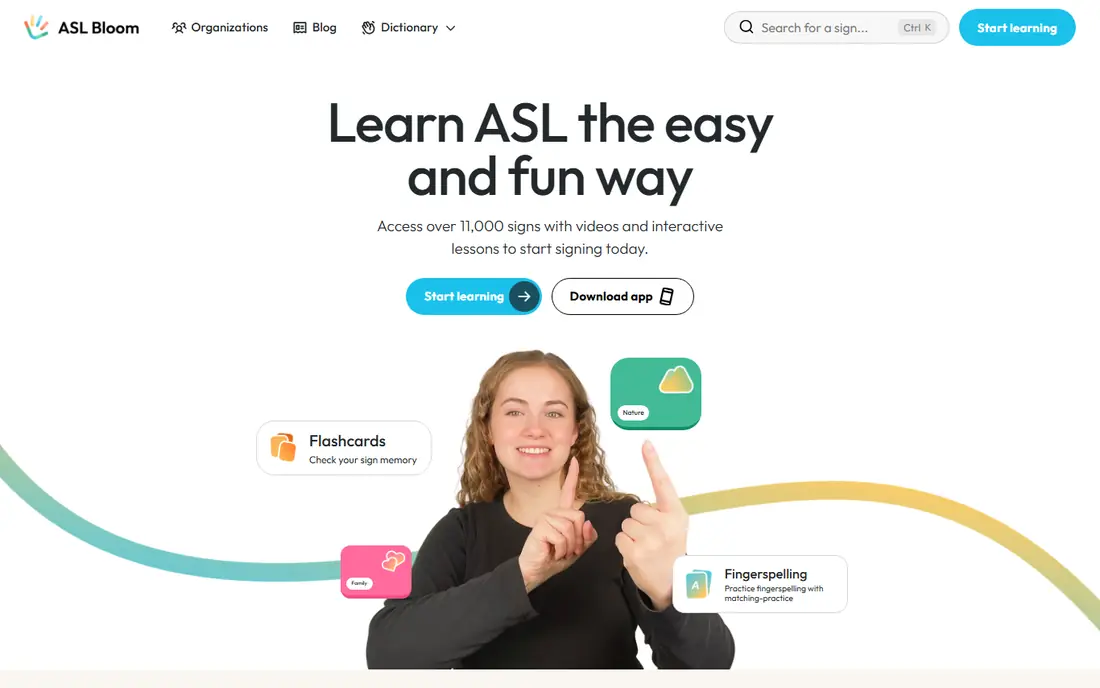
ASL Bloom aims at learners who want teaching, not just a word list. Its lessons are presented by instructors with ASL teaching credentials, and the app adds context about sign types and usage, which helps you avoid using a sign in the wrong setting. A visual dictionary and interactive tools such as quizzes and flashcards support review between lessons. The app is available on iOS and Android.
The catch is that the full lesson path sits behind a subscription, and exact pricing can vary by plan and store. Start with the free learning modules to judge the teaching style before you commit. If you value instructor-led structure and plan to study for months, ASL Bloom is a strong alternative to Lingvano.
- Lessons from credentialed instructors
- Visual dictionary
- Quizzes and flashcards
- Subscription pricing is shown in the app
- Not ideal for very young children
SignSchool is the pick for learners who want structure without a subscription. It offers video lessons organised by topic, plus games and fingerspelling practice, and it lets you browse thousands of signs. For a free app, the range is generous, and it works well as a daily practice tool for older beginners and students. You can dip in for one topic, such as food or family, without working through a long course in order.
The trade-off is polish and guidance. SignSchool does not coach you as closely as a paid app, so you need to set your own pace and review schedule. Pair it with practice with a fluent signer when you can, because no app can correct your facial grammar and body movement the way a person can.
- Free to use
- Topic-based lessons
- Games and slow-motion video
- Less hand-holding than a paid course
- Design feels basic in places
Ace ASL stands out because it tries to check your signing, not just show you signs. Using your camera, it gives feedback on expressive accuracy, which is the part of learning that most video-only apps skip. That feedback loop can catch a sloppy handshape early, before it becomes a habit. Quizzes add review, and the monthly price is low compared with Lingvano.
The scope is narrower than a full curriculum app, so Ace ASL works best alongside a lesson app or a class. It is also a paid-only app, with no free tier to test the recognition feature at length. If your main worry is signing correctly rather than just recognising signs, it is worth the small monthly cost.
- Sign-recognition feedback
- Quizzes
- Low monthly price
- No free plan
- Narrower scope than a full course
Rocket Sign Language suits learners who prefer a course over an app game. It follows a straight progression from basics toward more advanced content, and you can choose your own path if you want to skip ahead to a topic. Access on web and mobile means you can study at a desk and review on a phone. Rocket Languages is a long-running language company, so the course format feels more like a textbook with video than a daily streak app.
That format will not suit everyone. If you need gamified streaks and short daily nudges to stay motivated, Lingvano may hold your attention better. Check the current price on the vendor site before buying, as offers change, and use the free trial to confirm the teaching pace fits you.
- Structured progression
- Web and mobile access
- Lifetime-style course model
- Price is shown on the vendor site and varies by offer
- Less gamified than Lingvano
ASL Pocket Sign is built for vocabulary growth. Gamified exercises and a video dictionary help you learn new signs and review them often, which is exactly what beginners need in the first weeks. It is a good fit if you already have a class or a tutor and want extra drilling between sessions, or if your goal is to understand common signs rather than hold a full conversation right away.
It is not a replacement for grammar instruction. Knowing many single signs does not by itself let you build clear ASL sentences, which use space, facial expression, and structure in ways English does not. Use Pocket Sign for word power, and add a structured course for sentence building.
- Gamified vocabulary exercises
- Video dictionary
- Works for all levels
- Vocabulary focus means less grammar teaching
- Monthly cost for full access
Marlee Signs keeps things simple: short video lessons that show ASL fundamentals clearly, with slow-motion playback to study movement. That simplicity is a strength for true beginners who feel overwhelmed by a large app. You can learn at your own pace, repeat a sign as often as you need, and buy extra lesson packs only when you are ready for more.
The curriculum is smaller than the big course apps, so advanced learners will outgrow it. Think of Marlee Signs as a gentle on-ramp, especially good for families and casual learners, rather than a complete path to fluency. Its free starting lessons make it easy to test before spending anything.
- Clear video demonstrations
- Slow-motion playback
- Offline-friendly lessons
- Lesson packs are paid
- Smaller curriculum than Lingvano or ASL Bloom
Hands On ASL fills a specific gap: fingerspelling. Many learners can recognise common signs but stumble when spelling names, places, and words that have no single sign. This app uses 3D models and quiz games to drill the manual alphabet, which helps you read fingerspelling at speed as well as produce it. The free version covers the basics, with small paid add-ons for more content.
Do not buy it expecting a full ASL course. Its value is as a specialist drill tool next to a main lesson app. If fingerspelling is your weak spot, or if you are preparing for a class that uses it heavily, Hands On ASL is a cheap and focused fix.
- 3D sign models
- Fingerspelling quizzes
- Low-cost add-ons
- Narrow focus on fingerspelling
- Ads in the free version
How we picked these
We compared official feature pages, app store listings, and pricing pages for apps that teach sign language in 2026, and we favoured apps that are still available on iOS or Android and that use video of real signing. We checked if each app teaches American Sign Language, British Sign Language, or both, and if it offers lessons, a dictionary, practice feedback, or live tutoring. We left out apps that had closed, that only offered static images with no video, or that did not clearly state which signed language they teach. Prices below come from vendor pages and app store listings where we could confirm them; where pricing varied by store or offer, we wrote See website instead of guessing.
How to choose the right sign language app
Start with your goal
A traveller who needs greetings and polite phrases does not need the same app as a parent learning to sign with a deaf child, or a student preparing for an ASL class. Phrase apps and dictionaries suit short-term goals. Structured courses suit learners who want to build sentences and hold conversations over months. Write down your goal before you pay, and pick the app whose lessons match it.
Check the signed language first
ASL, BSL, and other signed languages are distinct languages, not signed versions of English. An app that teaches ASL will not teach you BSL signs for the same words. Confirm the language on the app page, and be wary of apps that promise every signed language in one subscription without showing separate lesson paths.
Practise with people when you can
Apps are strong for vocabulary, review, and daily habits, but conversation needs a partner. Look for local deaf community events, classes, or online conversation groups once you know basic signs. A fluent signer can correct facial expression, signing space, and rhythm in ways a camera check cannot fully replace. That step turns app knowledge into usable communication.
Watch the total cost
A low monthly price can still add up over a year, and a one-time purchase can be cheaper than a subscription if you study slowly. Use free tiers and trials to test teaching style, video clarity, and lesson length. If you stop using an app after two weeks, cancel before the trial ends, and switch to a free option such as SignSchool rather than paying for a habit you have not built yet.
Frequently asked questions
What is the best app to learn sign language for beginners?
Lingvano is our pick for most beginners because it combines short video lessons, review quizzes, and a daily goal in one place. SignSchool is the best free starting point if you want structure without paying. Try both free options first, then pay for the one whose teaching style you actually return to each day.
Are there good best apps to learn sign language for free?
Yes. SignSchool is free and structured, The ASL App offers free phrase and vocabulary content, and Marlee Signs and Hands On ASL have useful free tiers. Free apps tend to limit advanced lessons or add ads, so expect to pay or pair them with a class if you want a full curriculum.
Can an app teach me sign language fluently on its own?
An app can build vocabulary, grammar basics, and receptive skill, but fluency needs live conversation with fluent signers. Use an app for daily study, then add classes, conversation groups, or tutoring to practise expressive signing and get feedback on facial grammar and flow.
Should I learn ASL or BSL?
Choose the signed language used by the community you want to communicate with. In the United States, that is usually ASL. In the United Kingdom, it is usually BSL. Lingvano covers both ASL and BSL, but most apps on this list focus on ASL, so check before you subscribe.
How long does it take to learn basic sign language?
Most learners can pick up the alphabet, greetings, and common phrases within a few weeks of regular short practice. Holding a basic conversation takes longer, often several months of steady study plus practice with other signers. Short daily sessions beat occasional long sessions for most people.
Is sign language hard to learn from a phone?
The visual nature of sign language suits a phone well, because you can replay video, slow it down, and practise in front of the camera. The hard part is expressive feedback, which is why apps with camera checks, such as Ace ASL, and live practice with people help more than video alone.
Sources
See where you really rank - block by block
ProMapRanker scans Google Maps across a grid of your service area. Simple monthly plans from $19, white-label on every plan.
Start freeKeep reading
 zscaler alternatives
Best Zscaler Alternatives in 2026
Looking for zscaler alternatives? We compare 9 SASE and zero trust platforms on architecture, data protection, pricing, and fit for your network and team.
Read → zapier alternatives free
Best Zapier Alternatives Free in 2026
Nine automation tools for zapier alternatives free in 2026, all with genuinely free tiers, plus free plan limits, starting prices and upgrade paths explained.
Read → which platform is best for online reputation
Which Platform Is Best for Online Reputation in 2026
Wondering which platform is best for online reputation? We compare 8 review, listing, and response tools for small and multi-location businesses and agencies.
Read →