 ProMapRanker
Best App to Learn Japanese for Free in 2026

Key takeaways
- Duolingo is the best free starting point for daily habit building, while LingoDeer suits learners who want structured grammar.
- Bunpro, WaniKani, and Anki cover the three skills most free apps miss: grammar review, kanji, and custom flashcards.
- Most apps here are free to start, not fully free forever, so check what each free tier actually includes before committing.
- A small stack works better than one app: pair a course app with a kanji tool and a conversation app.
Quick comparison
| Pick | Great for | Pricing starts at | Free tier | |
|---|---|---|---|---|
 Duolingo | Daily habit building | Free | Yes | Visit |
 LingoDeer | Structured grammar | Free to start | Yes | Visit |
 Bunpro | Grammar review | Free to start | Yes | Visit |
 WaniKani | Kanji mastery | Free to start | Yes | Visit |
 Anki | Custom flashcards | Free | Yes | Visit |
 Renshuu | JLPT-focused study | Free | Yes | Visit |
 Memrise | Vocabulary and phrases | Free | Yes | Visit |
 HelloTalk | Language exchange | Free | Yes | Visit |
 JapanesePod101 | Listening lessons | Free | Yes | Visit |
The best app to learn Japanese for free
Learning Japanese for free is realistic, but no single app covers everything, and most free apps limit content, lessons, or daily time. The apps below all offer a genuine free tier, free introductory lessons, or a free desktop version, and we kept only apps that are live and widely used in October 2026. We compared official pricing pages and current 2026 Japanese learning comparisons to build this list.
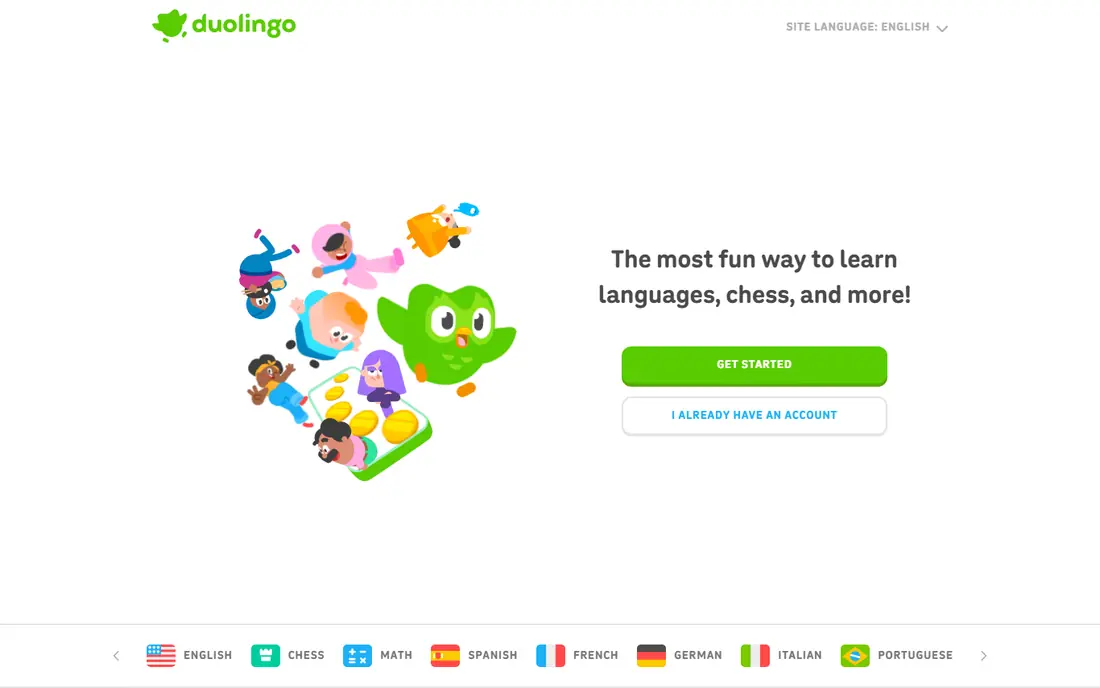
Duolingo is the best free app to learn Japanese for absolute beginners, because the core course is free and the lessons are short enough to fit into a daily routine. You learn hiragana, katakana, basic vocabulary, and simple sentences through bite-size exercises, with streaks, points, and reminders that help you keep going. Lessons usually take only a few minutes, which makes a daily habit easy to build.
The limits appear as you progress. Grammar explanations are thin, and the course does not go deep enough for intermediate learners on its own. The free plan also includes ads and a hearts system that limits mistakes. Use Duolingo to build the habit and the basics, then pair it with Bunpro for grammar and WaniKani for kanji when you are ready to go further.
- Fully free core course
- Short gamified lessons
- Strong streak and reminder system
- Grammar explanations are thin
- Depth is limited past beginner level
- Ads and hearts on free plan

LingoDeer suits learners who found Duolingo too shallow on grammar, since its Japanese course was one of its first languages and remains well developed. Lessons build vocabulary and grammar together, with learning tips that explain grammar points in context and native audio for pronunciation. That structure helps beginners understand why a sentence works, not just memorize it.
The free tier covers introductory lessons, while the full course requires a paid plan starting around $11.99 to $14.99 per month depending on the source and billing period. That makes LingoDeer a free-to-start app rather than a fully free one. If you want structured grammar and are willing to pay later, start with the free lessons and judge the teaching style before subscribing.
- Grammar explained in context
- Structured lessons for Japanese
- Native audio and learning tips
- Full course requires a paid plan
- Free access covers introductory lessons
- Less gamified than Duolingo
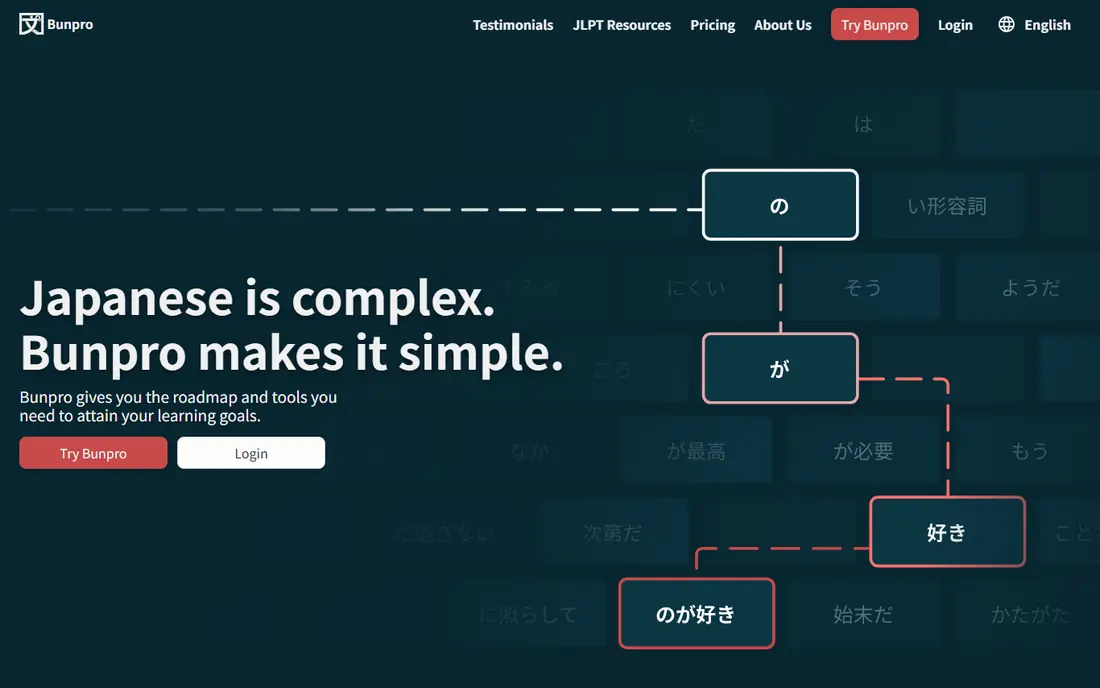
Bunpro is the grammar companion that most course apps lack. It teaches grammar points through short explanations and fill-in-the-blank reviews, using spaced repetition to bring each point back just before you forget it. Its paths align with JLPT levels, from beginner to advanced, which helps learners working toward an exam or a clear milestone.
Bunpro offers free access to start, with full access on a subscription around $5 per month. It works best as a review system alongside a course app, not as your first introduction to Japanese. Pair Bunpro with Duolingo or LingoDeer, and use it to lock in grammar that a gamified course only touches lightly.
- Spaced repetition for grammar
- JLPT-aligned paths
- Fill-in-the-blank practice
- Full access requires a subscription around $5 per month
- Best as a review tool, not a first course
- Interface is study-focused
WaniKani is the most popular kanji-specific tool for good reason: it teaches radicals, then kanji, then vocabulary in a fixed order, using mnemonics and spaced repetition to make characters stick. The first levels are free, which lets you test the system before paying, and the full course costs $9 per month, $89 per year, or $299 for lifetime access. For learners who find kanji overwhelming, that clear path is a major benefit.
WaniKani focuses on reading recognition and vocabulary, not speaking or handwriting, so it cannot be your only app. Its review pace is also set by the system, which suits learners who want structure but frustrates those who want to rush ahead. Use it as your kanji tool, and pair it with a course app and a conversation app for balance.
- Mnemonic-based kanji path
- Radicals, kanji, and vocabulary in order
- Spaced repetition built in
- Full course requires a subscription at $9 per month
- Focused on reading, not speaking or handwriting
- Pace is fixed by reviews
Anki is the free, customizable flashcard system that many serious Japanese learners use for vocabulary, kanji, and sentences. It is free on desktop, with a powerful spaced repetition algorithm and thousands of shared decks, including well-known Japanese decks. You can also build your own decks from words you meet in reading, listening, or class, which makes review personal and targeted.
The catch is setup. Anki is a tool, not a course, so you must choose good decks and build a review habit yourself. Mobile pricing varies by platform, with the desktop version free and the iOS app paid, while Android options include free clients. For learners willing to set it up, Anki is the most flexible free study tool in this list, and it stays useful from beginner to advanced levels.
- Free on desktop
- Fully customizable decks
- Powerful spaced repetition
- Setup takes effort
- Mobile app pricing varies by platform
- Quality depends on the deck you choose
Renshuu is a free Japanese study app that covers kanji, vocabulary, grammar, and JLPT preparation in one place, with gamified quizzes and spaced repetition. Its free core tools suit learners who want a broader study system without paying for several subscriptions, and its JLPT focus helps exam learners track progress by level. It also includes hiragana and katakana practice, which helps absolute beginners.
Pro features require a paid plan, and the interface is busier and less polished than Duolingo or LingoDeer. Renshuu works best as a daily study hub for learners who already know the basics and want structured review across skills. Try the free tools first, and only pay for Pro if the extra schedules and features match how you study.
- Free core study tools
- Kanji, vocabulary, and grammar in one app
- Gamified quizzes
- Pro features require a paid plan
- Interface is busy
- Less polished than Duolingo
Memrise helps learners build vocabulary and useful phrases through short lessons, spaced repetition, and video clips from native speakers. The free tier covers core vocabulary courses, which makes it a good supplement to a grammar-focused app. Hearing real speakers use phrases in context also helps pronunciation and listening more than text-only flashcards.
Grammar depth is limited, and full features require a paid plan, so Memrise should not be your only app. Course quality also varies, though Japanese is one of its stronger offerings. Use Memrise for daily vocabulary and phrase practice, alongside Bunpro for grammar and WaniKani or Anki for kanji, to cover the main skills.
- Free vocabulary courses
- Video clips from native speakers
- Spaced repetition for phrases
- Full features require a paid plan
- Grammar depth is limited
- Course quality varies by language
HelloTalk is a language exchange app that connects you with native Japanese speakers who want to learn your language, so you teach each other through chat, voice, and video calls. Partners can correct your messages, which gives real feedback that no course app can match, and the free tier covers core exchange features. That real conversation practice is essential once you know basic grammar and vocabulary.
The quality of the experience depends on finding good partners, and it takes confidence to message strangers in a new language. Paid features add extra languages and tools, but the free tier is enough to start exchanging. Use HelloTalk once you can hold a simple conversation, and pair it with a course app so you have new language to practice each week.
- Free language exchange with native speakers
- Text, voice, and video chat
- Corrections from partners
- Quality depends on your partners
- Paid features add languages and tools
- Needs confidence to message strangers
JapanesePod101 offers a large library of audio and video lessons, organized by level from absolute beginner to advanced, with a free account that includes introductory content. Listening lessons help with comprehension, pronunciation, and natural phrasing in a way that text exercises cannot, and the level structure lets you start at your current ability. Paid plans start from around $4 per month for basic access, with higher tiers adding more features.
The library can overwhelm beginners, since there are many lessons and paths to choose from, and full access requires payment. JapanesePod101 works best as a listening supplement: pick one lesson series at your level, listen daily, and use a course app for grammar and vocabulary. For learners who want to improve listening for free, the introductory content is a solid start.
- Large library of audio and video lessons
- Free account with introductory content
- Lessons by level
- Full access requires a paid plan from around $4 per month
- Lesson library can overwhelm beginners
- Less interactive than app courses
How we picked these
We compared official pricing pages and current 2026 Japanese learning comparisons, and we kept only apps that are live in October 2026 and offer a genuine free tier, free introductory lessons, or a free desktop version. We covered the main learning jobs, habit building, grammar, kanji, vocabulary, listening, and conversation, rather than listing nine versions of the same course app. Where free access covers only introductory content, we say so plainly.
How to learn Japanese for free with a small stack
Start with Duolingo for a daily habit, add Bunpro for grammar review, and add WaniKani or Anki for kanji and vocabulary. Once you can form simple sentences, add HelloTalk for conversation and JapanesePod101 for listening. That stack covers the main skills without paying for a full course, and you can upgrade only the tool you use most when you hit its free limits.
Study tips that actually help
Study a little every day rather than a lot once a week, since spaced repetition works best with daily reviews. Learn hiragana and katakana first, before relying on romaji, and practice speaking from the start, even if it feels awkward. Set a clear goal, such as passing JLPT N5 or holding a simple conversation, and let that goal decide which app gets your time.
Frequently asked questions
What is the best app to learn Japanese for free?
Duolingo is the best free app to learn Japanese for beginners, thanks to its fully free core course and short daily lessons. LingoDeer, Bunpro, and WaniKani offer free introductory access but require payment for full courses. For a complete free path, combine Duolingo with Anki and Renshuu, which offer stronger free tiers.
What are the best apps to learn Japanese for free?
The best free apps to learn Japanese include Duolingo for habits, Anki for flashcards, Renshuu for JLPT study, Memrise for vocabulary, and HelloTalk for conversation. No single app covers every skill, so a small stack works better than one app alone. Start with one course app, then add a kanji tool and a conversation app.
What is the best free app to learn Japanese for beginners?
Duolingo is the best free starting point for beginners, with a free course that teaches kana, basic vocabulary, and simple sentences. LingoDeer offers free introductory lessons with stronger grammar explanations, while Renshuu covers kana practice inside a broader free study app. Absolute beginners should learn hiragana and katakana first, whichever app they choose.
Can I learn Japanese for free with only one app?
You can build a foundation with one app, but you will hit limits on grammar, kanji, or speaking sooner or later. Duolingo alone gives habits and basics, while Anki alone gives flashcards without a course structure. A free stack, such as Duolingo plus Anki plus HelloTalk, covers more skills without paying for a subscription.
Is Duolingo good for learning Japanese?
Duolingo is good for building a daily habit and learning Japanese basics, including kana and simple sentences, for free. It is weaker on grammar explanations and intermediate depth, so pair it with Bunpro for grammar and WaniKani for kanji as you progress. For serious learners, Duolingo is a starting point, not a complete course.
How long does it take to learn Japanese with free apps?
Time varies with daily study, prior language experience, and your goal. A daily habit of 20 to 30 minutes can build basic conversational ability over many months, while reaching intermediate levels usually takes a year or more of consistent study. Free apps support that timeline well, provided you study daily and add conversation practice as you progress.
Sources
See where you really rank - block by block
ProMapRanker scans Google Maps across a grid of your service area. Simple monthly plans from $19, white-label on every plan.
Start freeKeep reading
 zoho inventory alternatives
6 Alternatives to Zoho Inventory, Compared on Price and Fit
Zoho Inventory alternatives: 6 tools compared on price, free plans and fit. Katana leads the list for manufacturers. Fit and flaws are laid out for each entry.
Read → zoho crm alternatives
Best Zoho CRM Alternatives (2026)
Need Zoho CRM alternatives? We compare 7 tools on cost, free access and who each suits. Every pick gets a straight assessment. Built for quick decisions.
Read → zelle alternatives
Best Zelle Alternatives in 2026
Compare the best Zelle alternatives for sending money to friends, paying sellers and moving funds abroad, with honest notes on fees, speed and safety in 2026.
Read →