 ProMapRanker
Best app to learn japanese in 2026

Key takeaways
- Duolingo is the easiest free start for daily habit building, but LingoDeer and Bunpro teach grammar more clearly for learners who want structure.
- WaniKani is the standout pick for kanji, because its radical, mnemonic, and spaced repetition system gives kanji a clear order and pace.
- Pimsleur and JapanesePod101 are the strongest picks for listening and speaking, while Drops and Memrise suit short vocabulary sessions.
- Most learners benefit from a stack of two apps, such as one for grammar and one for kanji, rather than expecting one app to cover every skill.
Quick comparison
| Pick | Great for | Pricing starts at | Free tier | |
|---|---|---|---|---|
 Duolingo | Daily habit building | Free | Yes | Visit |
 LingoDeer | Structured grammar | $14.99 per month | Free trial | Visit |
 Bunpro | Grammar and JLPT prep | $5 per month | Free trial | Visit |
 WaniKani | Kanji mastery | $9 per month | Yes | Visit |
 Busuu | Balanced lessons with feedback | See website | Yes | Visit |
 Rosetta Stone | Immersive vocabulary | $15.99 per month | Free trial | Visit |
 Pimsleur | Audio listening and speaking | See website | Free trial | Visit |
 JapanesePod101 | Listening lessons | $4 per month | Yes | Visit |
 Drops | Fast vocabulary | $13 per month | Yes | Visit |
 Memrise | Vocabulary with native video | See website | Yes | Visit |
The best app to learn japanese
We compared Japanese learning apps on curriculum structure, grammar teaching, kanji coverage, speaking and listening practice, spaced repetition, and price, using official pricing pages, app store listings, and public reviews. No single app covers reading, writing, listening, and speaking equally well, so we picked apps that each do one job well and that work together as a stack.
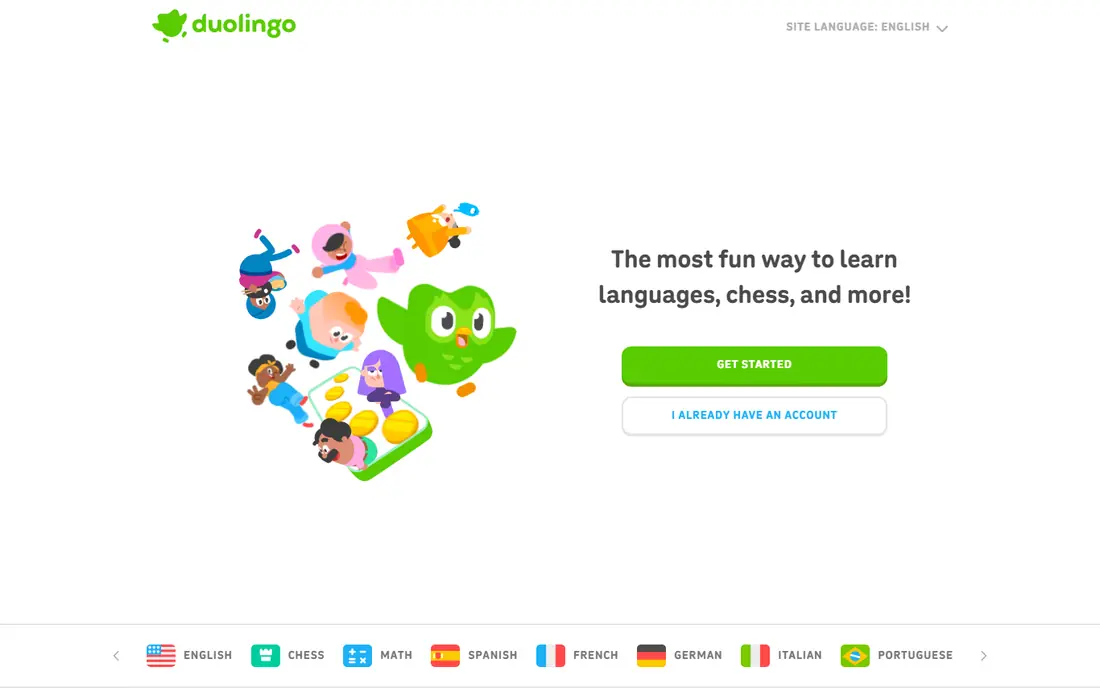
Duolingo is the easiest place to start learning Japanese, and that ease matters. Its short lessons teach hiragana, katakana, basic vocabulary, and simple sentences in bite-sized sessions, and its streaks, points, and reminders help many learners practise every day. The free tier covers the core course, while Super Duolingo removes ads and adds offline access and other extras.
The catch is depth. Duolingo teaches largely by pattern recognition, so grammar rules are rarely explained in full, and its Japanese course does not reach advanced levels. It is the best app for learning Japanese as a daily habit, especially for absolute beginners, but most learners will need LingoDeer, Bunpro, or a textbook for grammar once the basics feel comfortable.
- Free core course
- Short gamified lessons
- Streaks and reminders help daily consistency
- Grammar explanations are thin
- Japanese course coverage stops well short of advanced levels

LingoDeer is the structured alternative to Duolingo for Japanese basics. Each lesson explains grammar in plain English before asking you to use it, and native audio, sentence building, and review exercises reinforce the pattern. That structure helps learners who feel lost when an app only shows examples without rules, and it makes LingoDeer a strong pick for JLPT N5 and N4 preparation.
The catch is ceiling and cost. LingoDeer coverage for Japanese stops around the intermediate stage, and it offers little live speaking practice, so you will need another tool for conversation later. At $14.99 per month on a monthly plan, it is also pricier than Bunpro or Duolingo, so check annual or lifetime pricing if you plan to use it for several months.
- Clear grammar explanations in English
- Native audio
- Structured lessons from beginner to intermediate levels
- Coverage stops around intermediate levels
- Speaking practice is limited
- Monthly price is high without an annual plan
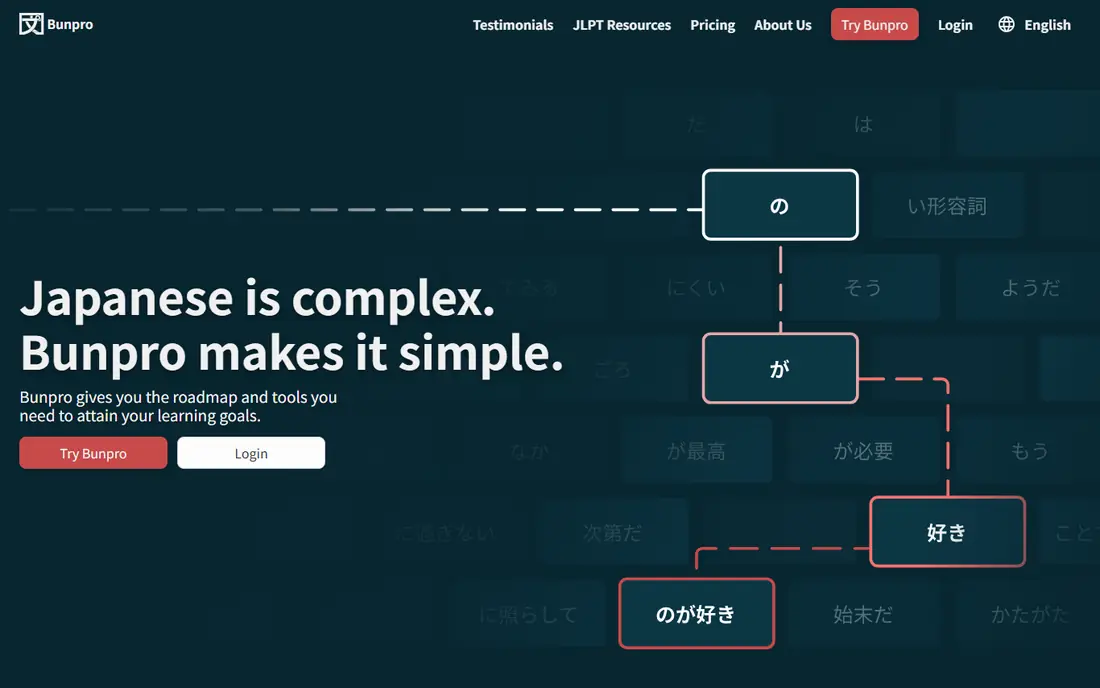
Bunpro fills the grammar gap that gamified apps leave open. It organises Japanese grammar points by JLPT level, from N5 to N1, and uses spaced repetition to bring each point back for review at the right time. Example sentences, reading links, and fill-in-the-blank reviews help you recognise grammar in context, not just memorise a rule in isolation.
The catch is style. Bunpro is a study tool, not a game, so complete beginners may find it dry without a gentler app alongside it. It also does not teach speaking or listening in depth. Bunpro is best as the second app in a stack, used after Duolingo or LingoDeer, when you want a clear, affordable path through Japanese grammar toward a JLPT goal.
- Grammar points organised by JLPT level
- Spaced repetition reviews
- Clear example sentences and links to resources
- Less engaging for complete beginners
- Speaking and listening practice are limited
- Interface is study-focused
WaniKani is the kanji specialist on this list, and it earns that title by giving kanji a clear order. It teaches radicals first, then kanji built from those radicals, then vocabulary that uses each kanji, with mnemonic stories to make readings stick. Spaced repetition schedules reviews so characters return just before you would forget them, and the first three levels are free to test the method.
The catch is scope and discipline. WaniKani teaches reading and vocabulary, not grammar or conversation, so it must sit alongside a grammar app. Daily reviews also build up quickly if you miss days, which can feel overwhelming. For learners who want a system for kanji rather than a random flashcard deck, WaniKani is the best Japanese learning app for that single job.
- Structured kanji curriculum with radicals and mnemonics
- Spaced repetition scheduling
- Covers over 2,000 kanji
- Focuses on reading, not speaking or grammar
- Daily reviews can pile up if you skip days
Busuu offers a balanced path for learners who want reading, writing, listening, and speaking in one app. Its lessons follow a clear progression, include dialogues and exercises, and let community members correct your writing and speaking, which adds a human layer that many apps lack. Premium adds grammar review, offline access, and faster feedback, while Premium Plus adds AI conversation and pronunciation tools in recent plans.
The catch is depth and price variation. The free tier only covers a small set of beginner lessons, and Busuu does not go as deep on kanji or grammar as WaniKani or Bunpro. Pricing also varies by billing period, so check the annual and monthly totals on the official site. Busuu is best for learners who want a guided all-round course with feedback, rather than a specialist tool.
- Structured lessons across skills
- Community feedback from native speakers
- Grammar review and offline access on Premium
- Free tier is limited
- Japanese depth is thinner than specialist grammar or kanji apps
- Prices vary by plan
Rosetta Stone takes an immersive approach, teaching Japanese through pictures, audio, and matching exercises with very little English explanation. That method suits learners who like to absorb vocabulary and pronunciation by exposure, and its speech recognition gives feedback on pronunciation. A lifetime option covering all languages can also make sense for learners who study several languages over years.
The catch is explanation. Learners who want clear grammar rules may find Rosetta Stone frustrating, because it expects you to infer patterns from examples. At $15.99 per month for a monthly plan, it is also expensive if Japanese is your only language. Rosetta Stone is best for beginners who enjoy immersion and pronunciation work, paired with a grammar app for structure.
- Immersive method with little English
- Pronunciation feedback
- Lifetime option for all languages
- Grammar is taught by immersion rather than explanation
- Price is high for Japanese alone
- Advanced Japanese depth is limited
Pimsleur is the audio pick for learners who study while commuting, walking, or doing chores. Its lessons use spaced repetition and prompt you to speak responses aloud, which builds listening comprehension and spoken confidence faster than tapping through multiple-choice exercises. That speaking focus makes it a strong companion to a reading or grammar app.
The catch is scope and cost. Pimsleur teaches little reading and writing, so hiragana, katakana, and kanji need another tool, and its subscription price is higher than many rivals, with monthly plans listed around $20 in some summaries. Pimsleur is best for learners who want to understand and speak Japanese in real situations, and who will actually use audio lessons daily.
- Audio-first lessons for commuting and walking
- Strong focus on speaking and listening
- Spaced repetition built into lessons
- Reading and writing are limited
- Subscription price is higher than many app rivals
- Lessons follow a fixed pace
JapanesePod101 offers a large library of listening lessons, from absolute beginner dialogues to intermediate conversations, with lesson notes, vocabulary lists, and transcripts on many lessons. Its basic plan starts at around $4 per month in recent summaries, which makes it one of the cheapest ways to add real listening practice to a study routine. That volume of native-speed audio is hard to match in a single app.
The catch is consistency. Lesson quality varies across series, and the website and app feel dated compared with Duolingo or LingoDeer. Higher tiers provide more features, so the basic price does not tell the full story. JapanesePod101 is best as a listening supplement, used alongside a grammar app, rather than as a complete course on its own.
- Large library of audio and video lessons
- Lesson notes and vocabulary lists
- Low starting price on basic plans
- Lesson quality varies by series
- Interface feels dated
- Full features require higher tiers
Drops is the vocabulary sprint app on this list. Its five-minute sessions use images, audio, and quick matching games to teach everyday Japanese words, including kana and common phrases, without long lessons or heavy grammar. That short format fits busy learners who want a low-pressure second app for vocabulary.
The catch is depth. Drops teaches words, not grammar or conversation, and its free tier limits you to a short daily session, with full access at around $13 per month in recent summaries. It is the best app for learning Japanese vocabulary in short bursts, but it should sit alongside LingoDeer, Bunpro, or JapanesePod101 for a complete routine.
- Beautiful visual vocabulary lessons
- Five-minute sessions fit busy days
- Good for kana and everyday words
- Free tier limits daily time
- Grammar and sentence building are minimal
- Not a complete course
Memrise closes this list with a vocabulary approach built around native speaker video. Short clips show words and phrases used by real speakers, which helps with listening and natural phrasing, and spaced repetition brings words back for review. The free tier covers core vocabulary, while premium adds more content, offline access, and review tools, with pricing that varies by plan.
The catch is structure. Memrise does not teach grammar systematically, and its Japanese course is stronger on vocabulary than on sentence building or JLPT preparation. It works best as a vocabulary companion to a grammar app such as Bunpro, or as a lighter alternative to Drops for learners who prefer video to illustrations. For pure vocabulary with a human face, Memrise is a pleasant daily habit.
- Native speaker video clips show words in real use
- Spaced repetition reviews
- Free tier covers core vocabulary
- Grammar teaching is light
- Japanese course depth varies
- Premium pricing varies by plan and region
How we picked these
We compared official feature pages, pricing pages, app store listings, privacy policies, and public reviews for apps that teach Japanese today and that cover at least one core skill well, whether grammar, kanji, vocabulary, listening, or speaking. We favoured apps with a clear curriculum, a usable free tier or trial where offered, and a track record of updates, and we included both gamified and study-focused tools. We did not claim hands-on testing, and prices cited are starting prices that vary by region, billing period, and plan.
How to build a Japanese study stack that sticks
Start with one main app and one support app, not five at once. A workable beginner stack is Duolingo or LingoDeer for daily lessons, plus WaniKani for kanji once hiragana and katakana feel familiar. Add JapanesePod101 or Pimsleur for listening when you can hold a basic conversation, and use Bunpro when grammar questions start to pile up. Two apps done daily beat five apps opened once a week.
Daily time, level, and JLPT goals
Aim for a daily session you can repeat, such as 20 minutes on your main app and 10 minutes on kanji or vocabulary, rather than a long weekend session that fades by Wednesday. If you plan to take the JLPT, use Bunpro and WaniKani to track level progress, and add reading and listening from JapanesePod101 as you approach N4 and N3. If travel or conversation is the goal, shift time toward Pimsleur and Busuu speaking practice, and accept slower kanji progress as a fair trade.
Frequently asked questions
What is the best app to learn Japanese for beginners?
The best app to learn Japanese for beginners is Duolingo for a free, habit-forming start, or LingoDeer if you want clearer grammar explanations from the first lesson. Duolingo is easier to stick with, while LingoDeer explains why sentences work the way they do. Many beginners start with Duolingo for a month, then add LingoDeer or Bunpro when they want more structure.
What are the best apps to learn Japanese for kanji?
The best apps to learn Japanese for kanji are WaniKani for a structured curriculum, with Drops and Memrise as vocabulary companions. WaniKani teaches radicals, kanji, and vocabulary in order with mnemonics and spaced repetition, which is more systematic than a general flashcard deck. Use WaniKani as the main kanji tool, and use Drops or Memrise for extra everyday vocabulary.
What is the best Japanese learning app for grammar?
The best Japanese learning app for grammar is Bunpro for JLPT-organised grammar with spaced repetition, or LingoDeer for guided lessons with clear English explanations. Bunpro suits learners who already know the basics and want a path from N5 toward N1, while LingoDeer suits beginners who want lessons and grammar taught together. Pair either app with reading and listening practice, because grammar alone does not build fluency.
What is the best free app to learn Japanese?
The best free app to learn Japanese is Duolingo for a full beginner course, with WaniKani free for its first three levels and JapanesePod101 free for introductory listening lessons. Duolingo covers the widest free path, while WaniKani and JapanesePod101 add kanji and listening depth at no initial cost. Test the free tiers first, and pay only when a paid feature, such as full grammar or unlimited reviews, clearly fits your routine.
What is the best app for learning Japanese speaking?
The best app for learning Japanese speaking is Pimsleur for audio-first speaking practice, with Busuu community feedback as a useful second option. Pimsleur prompts you to speak and builds listening skills through spaced repetition, while Busuu lets native speakers correct your writing and speaking. No app replaces live conversation, so consider a tutor or language exchange once you can hold basic dialogues.
Which is the best language app for Japanese overall?
The best language app for Japanese overall depends on your goal, because no single app covers grammar, kanji, listening, and speaking equally well. For a balanced start, choose LingoDeer or Busuu as a main course and add WaniKani for kanji. For a free start, choose Duolingo and add WaniKani when you are ready for kanji. The best stack is the one you will use daily, so pick apps whose style you enjoy, not just the highest-rated list.
Sources
See where you really rank - block by block
ProMapRanker scans Google Maps across a grid of your service area. Simple monthly plans from $19, white-label on every plan.
Start freeKeep reading
 youtube alternatives
Best YouTube Alternatives in 2026
Looking for youtube alternatives in 2026? We compare Vimeo, Dailymotion, Twitch, Rumble, and more on price, audience, monetization, control and privacy.
Read → what's the best ai tool for photo editing
What Is the Best AI Tool for Photo Editing in 2026
What is the best AI tool for photo editing? We compare ten tools for 2026, from Photoshop and Lightroom to Luminar, Topaz, Canva and mobile editors today.
Read → twitter alternatives
Best Twitter Alternatives in 2026
Compare the best twitter alternatives for 2026, from Bluesky, Threads, and Mastodon to Reddit, Tumblr, and Micro.blog, with free plans and audience notes.
Read →