 ProMapRanker
Best App to Catch a Cheater in 2026

Key takeaways
- This article lists only lawful, consent-based tools. No tool here can prove infidelity, and none should be used to track a person without their knowledge and consent.
- Life360, Apple Find My, Google Maps sharing, Glympse and WhatsApp live location suit mutual, agreed location sharing.
- Paired, Between and Lasting suit couples who want to rebuild communication and trust through shared work.
- If you feel unsafe, or if trust has broken down, a counselor, a trusted person or a local support service is a better next step than a tracking app.
Quick comparison
| Pick | Great for | Pricing starts at | Free tier | |
|---|---|---|---|---|
 Life360 | Family location sharing | Free | Yes | Visit |
 Apple Find My | Apple device location sharing | Free | Yes | Visit |
 Google Maps location sharing | Cross-platform location sharing | Free | Yes | Visit |
 Glympse | Temporary location sharing | Free | Yes | Visit |
 WhatsApp live location | Short-term sharing in chat | Free | Yes | Visit |
 Paired | Daily couples connection | See website | Yes | Visit |
 Between | Private couples space | See website | Yes | Visit |
 Lasting | Guided couples sessions | $29.99 per month | Free trial | Visit |
The best app to catch a cheater
We frame this list around consent and transparency, not secret surveillance. The tools below help partners who agree to share location for safety or coordination, or who want to work on communication together. Our pick for most couples is a short, agreed trial of a location-sharing tool plus a communication app, with clear rules about when sharing starts and stops.
Privacy and consent note: only share location with a person who has agreed to it, and only for a purpose you have both discussed. Laws on location tracking, device access and recording vary by state and country, and secret tracking can break the law and destroy trust. Check the privacy settings in each app, turn sharing off when the agreed period ends, and do not access a partner's device, accounts or messages without permission.
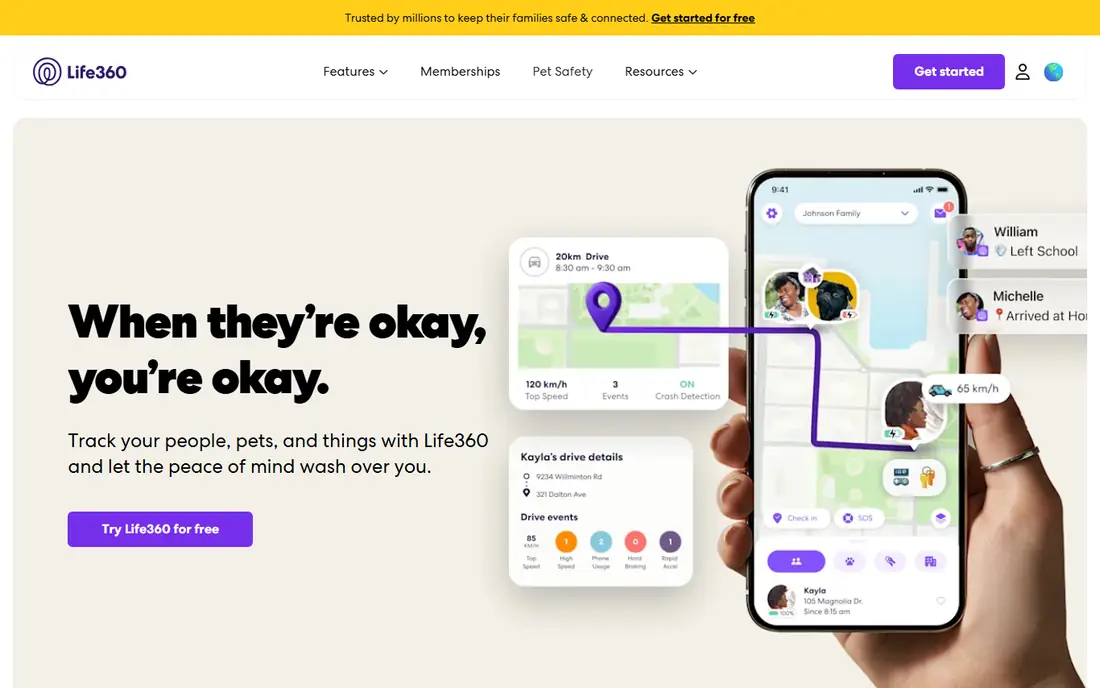
Life360 lets members of a Circle see each other on a shared map, with place alerts for arrivals and departures at saved places such as home or work. The free tier covers basic location sharing, with two days of history and a limited number of place alerts in recent listings. Paid plans add longer history, unlimited place alerts, driving reports and emergency features.
The catch is that continuous sharing can feel intrusive, even with consent, so couples should agree on who is in the Circle, when alerts are used and when sharing pauses. Life360 also collects location data, so check its privacy policy and settings. It fits families and couples who want mutual safety sharing, not one-way monitoring.
- Shared family map
- Place alerts
- Driving and crash features on paid plans
- Continuous sharing can feel intrusive
- Advanced features need a paid plan
Apple Find My lets Apple users share their location with chosen contacts and find their own devices, family devices and supported items. Because it is built into iPhone, iPad and Mac, many Apple users can start sharing without installing a new app or paying a subscription. Sharing can be set for an hour, a day or indefinitely, and it can be stopped at any time.
The limitation is platform. Find My works best inside the Apple ecosystem, and a partner on Android will need a different tool. Location accuracy also depends on device settings, battery and signal. Find My fits Apple-centered couples who want simple, mutual sharing with clear on and off controls.
- Built into Apple devices
- No extra app for many users
- Item and device finding
- Apple devices only
- Location accuracy depends on device settings
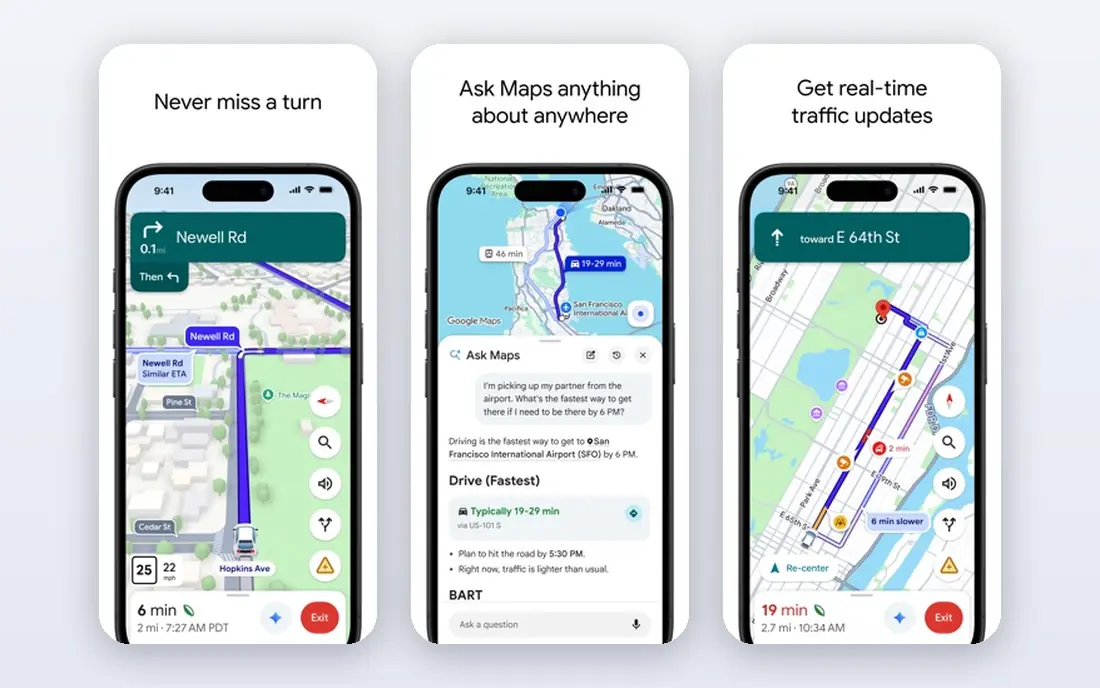
Google Maps location sharing lets a user share live location with chosen contacts for a set time or until it is turned off. It works on Android and iPhone, which makes it a practical choice for mixed-device couples. The recipient can view the location in Maps or through a link, depending on the sharing settings chosen.
The drawback is that it is live sharing, not a long history tool, so it does not build a record of past movements. That limit is actually a privacy benefit for many couples, since it reduces the temptation to review old data. Google Maps sharing fits short, agreed sharing for travel, late nights or safety check-ins.
- Works on Android and iPhone
- No extra subscription
- Time-limited sharing options
- Live sharing only, with limited history
- Needs a Google account for the sharer
Glympse focuses on temporary sharing. A user sends a link that shows live location for a chosen period, such as a trip home or a meeting, and sharing stops when the time ends or the destination is reached. The recipient can view the share in a browser without installing the app, which lowers friction for a one-off check-in.
The limitation is that Glympse is not designed for ongoing family monitoring, and it offers little history. That makes it a good consent-friendly option for a specific journey, but a poor fit for a couple who wants a shared family map. Glympse fits couples who prefer short, purpose-limited sharing over continuous tracking.
- Time-limited shares from 5 minutes to 12 hours
- Link viewing without an app
- Free for personal use
- Not built for ongoing monitoring
- Free version includes ads in some listings
WhatsApp live location lets a user share live location inside an existing chat for a chosen period, up to 8 hours in recent listings. Because many couples already use WhatsApp daily, it avoids a new app and a new account. Sharing is end-to-end encrypted in WhatsApp, and it can be stopped at any time from the chat.
The drawback is duration and scope. It is a short-term sharing tool, not a family safety platform with place alerts or history. It also requires both partners to use WhatsApp. It fits couples who want a quick, agreed check-in during travel or a late night, inside a chat they already trust.
- Live location inside an existing chat
- End-to-end encrypted sharing
- Time-limited options
- Sharing lasts up to 8 hours in recent listings
- Needs WhatsApp for both partners
Paired is a couples app built around daily questions, quizzes and expert-designed courses that both partners answer separately before seeing each other's responses. That structure can reopen conversation when a couple has stopped talking about feelings, needs and daily life. A free tier covers basic daily questions, while Premium adds more quizzes and courses.
The limitation is depth. Paired is a connection habit, not therapy and not help during a serious conflict. If trust has broken down badly, a counselor is a better next step than a daily quiz. Paired fits couples who want a small, regular way to talk and who are both willing to take part.
- Daily questions and quizzes
- Expert-designed courses
- Simple daily habit
- Light format, not crisis help
- Pricing is shown inside the app in some regions
Between is a private app for two people, with a shared chat, photos, memories and calendar in one space that only the couple can see. That privacy can help a couple build a shared record of good moments and practical plans, rather than only discussing problems. The design is simple, which helps couples who want a shared space without a complex program.
The drawback is that Between is a shared space, not a structured therapy program. It will not guide a couple through trust repair on its own. It fits couples who want a private place to stay connected day to day, alongside honest conversation about expectations and boundaries.
- Private shared space for two
- Photos, chats and shared calendar
- Simple design
- Smaller feature set than a full couples therapy app
- Pricing should be confirmed
Lasting offers structured, self-guided couples sessions across topics such as communication, trust and conflict, with a relationship assessment that personalizes the path. One subscription covers both partners, and pricing is listed at 29.99 dollars per month, with longer plans at lower average monthly cost in recent listings. Therapist-led workshops are also offered.
The important limit is that Lasting is education, not licensed couples therapy, and it does not offer one-on-one therapist messaging. For serious issues such as infidelity, abuse or addiction, a licensed therapist is the right starting point. Lasting fits couples who want structured learning together and who are both motivated to complete sessions.
- Structured sessions across many topics
- Relationship assessment
- Therapist-led workshops
- Self-guided education, not licensed therapy
- Monthly cost is higher than a quiz app
How we picked these
We compared official product and pricing pages with recent guides, and we deliberately excluded spyware, stalking tools and any app that promotes secret device access, message reading or non-consensual tracking. We favored tools that require the other person's agreement, show clear on and off controls and serve safety, coordination or communication. Where pricing conflicted across sources, we wrote See website. We did not claim hands-on testing, and we did not list any tool as proof of infidelity.
What to check before you use any of these tools
Agree the rules first. Decide who shares, for how long, for what purpose and when sharing stops, and write those rules down if it helps. Check that both partners can turn sharing off, and review app permissions together so there are no surprises. A tool that one partner resents will damage trust faster than no tool at all.
Also check the privacy policy. Location apps collect sensitive data, so confirm what is stored, how long it is kept and whether data is shared with third parties. Turn off history or extra data collection where the app allows it. If you feel unsafe, contact a trusted person, a counselor or a local support service, and do not rely on a location app for safety.
Frequently asked questions
What is the best app to catch a cheater?
No lawful app can prove cheating, and secret tracking can break the law. The lawful options are consent-based tools such as Life360, Find My, Google Maps sharing and Glympse for agreed location sharing, plus couples apps such as Paired and Lasting for communication work.
Are there apps that catch cheaters without their knowledge?
We do not list such tools here, because non-consensual tracking, device access and message reading can be illegal and can destroy trust. If you are worried about a relationship, talk directly, agree on transparency rules together or seek counseling.
Can location sharing prove where someone was?
Location sharing shows where a device was, not who held it or what happened there, and it depends on device settings, signal and battery. It should not be treated as proof of infidelity, and it should only be used with the other person's agreement.
What is the best app for couples who want to rebuild trust?
Paired suits a daily connection habit, Between suits a private shared space, and Lasting suits structured sessions on communication and trust. For serious trust damage, a licensed couples therapist is a better next step than any app alone.
How do I stop location sharing?
Open the app you used, find the sharing or Circle settings and turn sharing off for that person. In Life360, remove or pause the Circle member; in Find My and Google Maps, stop sharing with that contact; in Glympse and WhatsApp, let the time-limited share expire or stop it early.
Sources
See where you really rank - block by block
ProMapRanker scans Google Maps across a grid of your service area. Simple monthly plans from $19, white-label on every plan.
Start freeKeep reading
 zscaler alternatives
Best Zscaler Alternatives in 2026
Looking for zscaler alternatives? We compare 9 SASE and zero trust platforms on architecture, data protection, pricing, and fit for your network and team.
Read → zapier alternatives free
Best Zapier Alternatives Free in 2026
Nine automation tools for zapier alternatives free in 2026, all with genuinely free tiers, plus free plan limits, starting prices and upgrade paths explained.
Read → which platform is best for online reputation
Which Platform Is Best for Online Reputation in 2026
Wondering which platform is best for online reputation? We compare 8 review, listing, and response tools for small and multi-location businesses and agencies.
Read →