 ProMapRanker
Best App for Preschool Learning in 2026

Key takeaways
- Khan Academy Kids is our pick for most families, because it is free, ad-free and covers reading, math and social skills for ages 2 to 8.
- ABCmouse suits families who want one long structured curriculum with progress reports, at $14.99 per month or $79.99 per year.
- PBS KIDS Games is the best free companion app, with familiar characters and no login needed for many games.
- Every app on this list is child-appropriate, with no chat, dating or anonymous contact features included.
- Short, guided sessions with a parent nearby work better than long solo screen time for preschoolers.
Quick comparison
| Pick | Great for | Pricing starts at | Free tier | |
|---|---|---|---|---|
 Khan Academy Kids | free all-round learning | Free | Yes | Visit |
 ABCmouse | a structured curriculum | $14.99 per month | Yes | Visit |
 PBS KIDS Games | free character-based games | Free | Yes | Visit |
 Starfall | early reading practice | Free | Yes | Visit |
 Lingokids | playful language and math | Free | Yes | Visit |
 Reading Eggs | phonics and early reading | $9.99 per month | Free trial | Visit |
 SplashLearn | math and reading practice | See website | Yes | Visit |
 HOMER | a personal learning path | See website | Free trial | Visit |
 Sago Mini World | open-ended creative play | See website | Free trial | Visit |
The best app for preschool learning
Preschool apps should be simple to open, easy to navigate without reading, and safe to leave with a child for a short session. The apps below cover reading, math, science and creative play, with parent tools that vary by price.
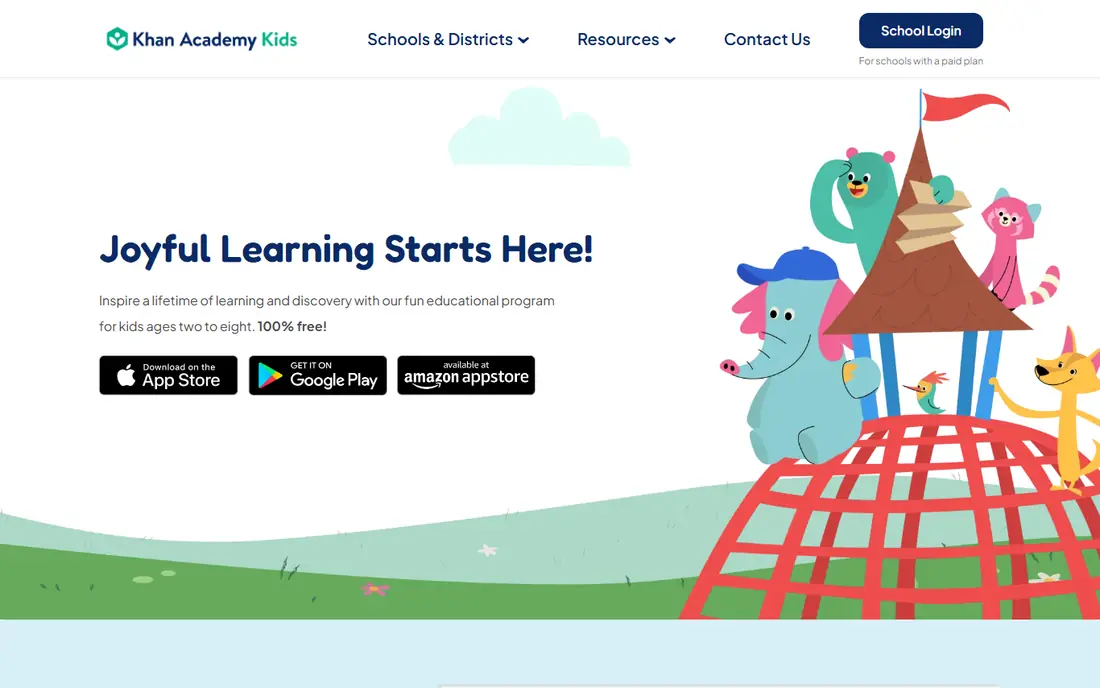
Khan Academy Kids is the strongest free starting point for ages 2 to 8. Animated guides lead children through books, songs, games and drawing activities that cover early literacy, counting, logic and feelings. Parents get progress emails, and the app works offline for travel or waiting rooms.
The limit is structure. Children near the top of the age range may move through the content quickly, and there is no paid tier to open a deeper path. For most preschool families, though, a free, ad-free app with no purchase traps is the right first install.
- Completely free with no ads or in-app purchases
- Covers phonics, math, stories and social skills
- Offline activities available
- Less structured curriculum depth than ABCmouse
- No adaptive tutor conversation
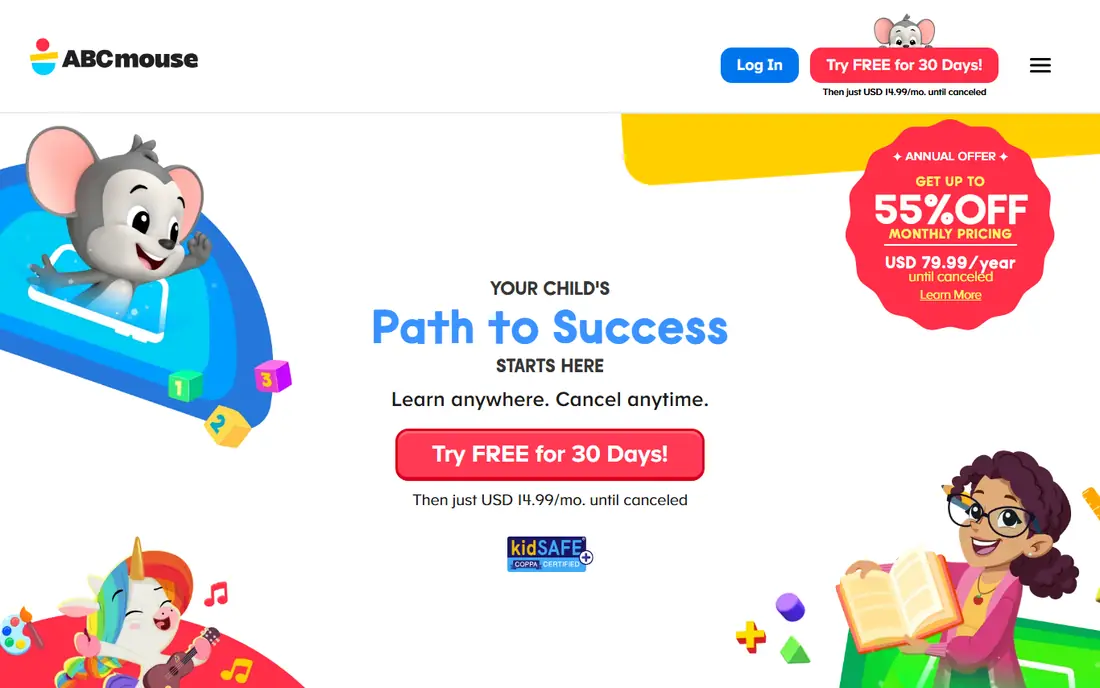
ABCmouse offers the fullest curriculum on this list for ages 2 to 8, covering reading, math, science, art and music in one guided path. Children earn tickets and badges as they finish lessons, and parents can track progress and set reward controls. A Basic free tier allows up to 10 activities a day for one child, with a 30-day trial for the full version.
Pricing is $14.99 per month, or $79.99 per year on the vendor comparison page, with some offers listed lower for the first year. ABCmouse suits families who want a daily homeschool-style routine and are happy to pay for breadth and reports.
- More than 13,000 activities across subjects
- Step-by-step learning path
- Progress reports and up to three child profiles
- Monthly price adds up for casual use
- Some families find the path rigid
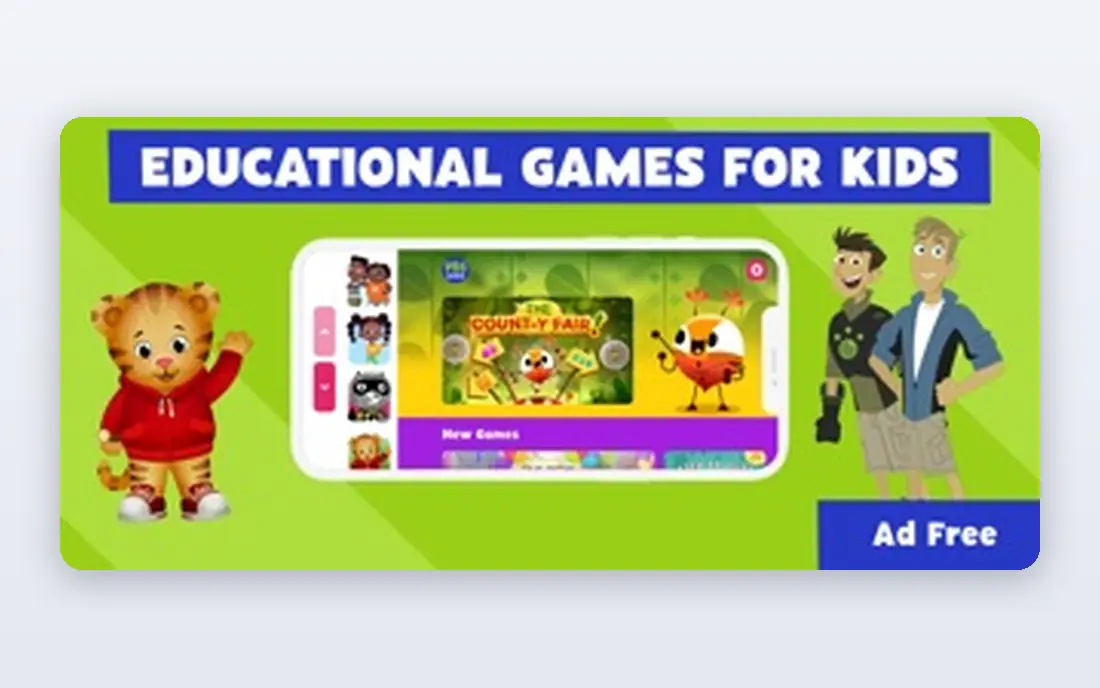
PBS KIDS Games brings Daniel Tiger, Wild Kratts and other PBS characters into short learning games for ages 2 to 8. The games cover letters, numbers, science and feelings, and the nonprofit PBS background gives parents confidence about content quality. Many games need no login, which removes account setup friction.
The app is a companion rather than a curriculum. There is no structured path or detailed parent report, so pair it with Khan Academy Kids or ABCmouse if you want progress tracking. As a free, safe second app, it is excellent.
- Free with familiar PBS characters
- No login needed for many games
- Strong social and emotional learning content
- No parent dashboard of note
- Games vary in learning depth
Starfall has taught early reading for years, and its learn-to-read section remains free. Children move from letter sounds to words, sentences and short books in a clear phonics order, with songs and games that reinforce each step. The interface is simple, which helps pre-readers navigate without help.
A home membership at $35 per year opens the full site and app content, including math and more books. Starfall is narrower than ABCmouse, but for reading alone it is focused and proven, and the free section is enough to judge fit.
- Free learn-to-read program
- Clear phonics progression
- Simple interface for young children
- Design feels older than newer rivals
- Full membership needed for all content
Lingokids covers literacy, math, science, art and music for ages 2 to 8 through songs, role-play and games. The tone is light and entertainment-led, which suits children who resist a school-style path. Offline downloads help on trips, and multiple child profiles let siblings share one subscription.
The free tier gives a taste of the library, while the full version is a subscription, listed around $15 per month in recent guides. Lingokids is a good pick for bilingual families and for children who learn best through music and play.
- More than 4,000 games, songs and shows
- Ad-free play with kidSAFE certification claimed
- Offline play and up to four profiles
- Full library needs a subscription
- Licensed characters may not suit every family
Reading Eggs builds reading through a gamified phonics path, with lessons, games and ebooks that move from letters to fluent reading. A placement test sets the starting level, and parents can follow progress on a dashboard. The program also includes a junior section for ages 2 to 4 and a library of thousands of ebooks.
Pricing is listed at $9.99 per month for up to four profiles, or $99.99 per year in recent comparisons, with a 30-day trial. Reading Eggs is narrower than ABCmouse, but for a child who needs reading help specifically, that focus is a strength.
- Structured phonics-to-fluency path
- Placement test and progress dashboard
- Large ebook library
- Monthly price for a single subject
- Some parents find the reward system distracting
SplashLearn covers preschool through grade 5, with math and reading games that follow a structured path. Children practise counting, shapes, letters and early reading through short games, and parents can see progress and assign skills. The game format suits children who like to earn rewards for correct answers.
Pricing varies by plan and is shown after sign-up, so we wrote See website rather than quote a figure that may not match your account offer. The free account with one child profile is enough to test whether the game style suits your child before paying.
- Game-based math and reading practice
- Structured learning path
- Parent reports
- Pricing is shown in-account and varies
- Free account limited to one child profile
HOMER, now often listed as Begin Homer, builds a personal learning path from a short quiz about your child age, interests and level. Activities cover reading, math, social skills and creativity, and the path adapts as the child completes lessons. Parents can track progress and set goals in the dashboard.
Pricing varies by offer and trial terms, so check the current page before subscribing. HOMER suits families who want a tailored path rather than a fixed curriculum, and who value a mix of reading and creative play.
- Personal path based on a child interests and level
- Reading, math and creativity activities
- Parent dashboard
- Subscription pricing varies by offer
- Younger range is narrower than ABCmouse
Sago Mini World is a playroom rather than a lesson book. Children explore themed worlds, build, cook, drive and pretend with friendly characters, all without needing to read instructions. That open-ended play builds imagination, fine motor control and problem-solving in a low-pressure way.
The subscription opens the full set of worlds, with a trial to test the style. Sago Mini World will not teach phonics on its own, so pair it with Khan Academy Kids or Starfall for academics, and use it as the creative, playful part of screen time.
- Open-ended play with no reading needed
- Many themed worlds and characters
- No ads in the subscription version
- Less academic structure than curriculum apps
- Subscription needed for full access
How we picked these
We compared official pricing pages, app store listings and program descriptions for preschool apps live in October 2026. We kept only child-appropriate apps with no chat, dating or anonymous contact, and we favored ad-free or ad-light options, clear age ranges and parent controls. We did not claim hands-on testing. Where pricing varied by offer, we wrote See website.
How to set up preschool screen time that actually helps
Pick one main app and one playful second app, rather than installing ten at once. Start with Khan Academy Kids as the main app, add PBS KIDS Games or Sago Mini World for variety, and keep sessions short, around 15 to 20 minutes, with a parent nearby to talk about what the child is doing.
Use parent controls before the first session. Turn off in-app purchases where possible, set a device time limit, and check that the app has no open chat or contact features. Sit with your child for the first few sessions to learn the navigation, then let them play alone for short stretches while you stay within earshot. That balance gives learning value without long solo screen time.
Frequently asked questions
What is the best app for preschool learning overall?
Khan Academy Kids is the best overall pick for most families, because it is free, ad-free and covers reading, math and social skills. ABCmouse is better if you want a paid, structured curriculum with detailed reports.
Are these apps safe for a 3-year-old?
The apps on this list are designed for young children and include no chat, dating or anonymous contact. Still, check each privacy policy, use parent controls, and supervise early sessions, since app content and ads policies can change.
How much screen time is right for a preschooler?
Short, guided sessions of around 15 to 20 minutes work well for most preschoolers, with breaks for play, reading and outdoor time. Quality and parent involvement matter more than hitting an exact minute count.
Is ABCmouse worth paying for when Khan Academy Kids is free?
It can be, if you want a long structured path, progress reports and thousands of activities in one place. If your child is happy with Khan Academy Kids and PBS KIDS Games, the free combination may be enough.
Which app is best for early reading?
Starfall and Reading Eggs are the most reading-focused picks. Starfall offers a free learn-to-read path, while Reading Eggs adds a placement test, a fuller phonics sequence and a large ebook library.
Do preschool apps replace preschool or reading together?
No. Apps work best as a supplement to reading together, talking, play and, where available, preschool classes. A parent reading a book with a child still teaches language and attention in ways an app cannot match.
Sources
See where you really rank - block by block
ProMapRanker scans Google Maps across a grid of your service area. Simple monthly plans from $19, white-label on every plan.
Start freeKeep reading
 worlds best local seo company
8 Worlds Best Local SEO Companies for Map Pack Growth in 2026
Compare the worlds best local seo company options for Google Business Profile work, citations, reviews, and multi-location rankings and reporting in 2026.
Read → world's best web hosting company
World's Best Web Hosting Company in 2026
Searching for the world's best web hosting company? We compared 10 hosts on price, renewal rates, speed, and support to help you choose well today in 2026.
Read → who's got the best nanny tax services
Who's Got the Best Nanny Tax Services in 2026
We answer who's got the best nanny tax services, comparing full filing, back taxes, software, and pricing so families can handle nanny taxes correctly.
Read →