 ProMapRanker
Best Apps for Contractor Leads in 2026

Key takeaways
- Shared marketplace leads are cheaper per contact but often shared with several contractors, so speed and follow-up matter more than volume alone.
- Exclusive leads, such as local service ads and owned local listings, usually cost more per contact but can convert at a higher rate.
- Cost per booked job is a better measure than cost per lead, since a cheap lead that never books is not a bargain.
- Check contracts, credit policies, and lead-sharing rules before paying, and track close rate by source from the first week.
Quick comparison
| Pick | Great for | Pricing starts at | Free tier | |
|---|---|---|---|---|
 Angi | Broad residential reach | See website | No | Visit |
 Thumbtack | Smaller jobs with budget control | See website | No | Visit |
 Houzz Pro | Remodel and design projects | See website | Yes | Visit |
 Google Local Services Ads | Exclusive high-intent calls | See website | No | Visit |
 Google Business Profile | Free local inbound leads | Free | Yes | Visit |
 BuildZoom | Larger residential projects | See website | No | Visit |
 ConstructConnect | Commercial bid projects | See website | No | Visit |
 Bark | Testing a new lead source | See website | No | Visit |
 Nextdoor | Neighbourhood referrals | Free | Yes | Visit |
The best apps for contractor leads
We compared official product pages, pricing models, and public lead-cost comparisons, and kept platforms that still send real contractor work in the United States. Each pick covers a different lead type, so the list works as a mix rather than a single winner for every trade.
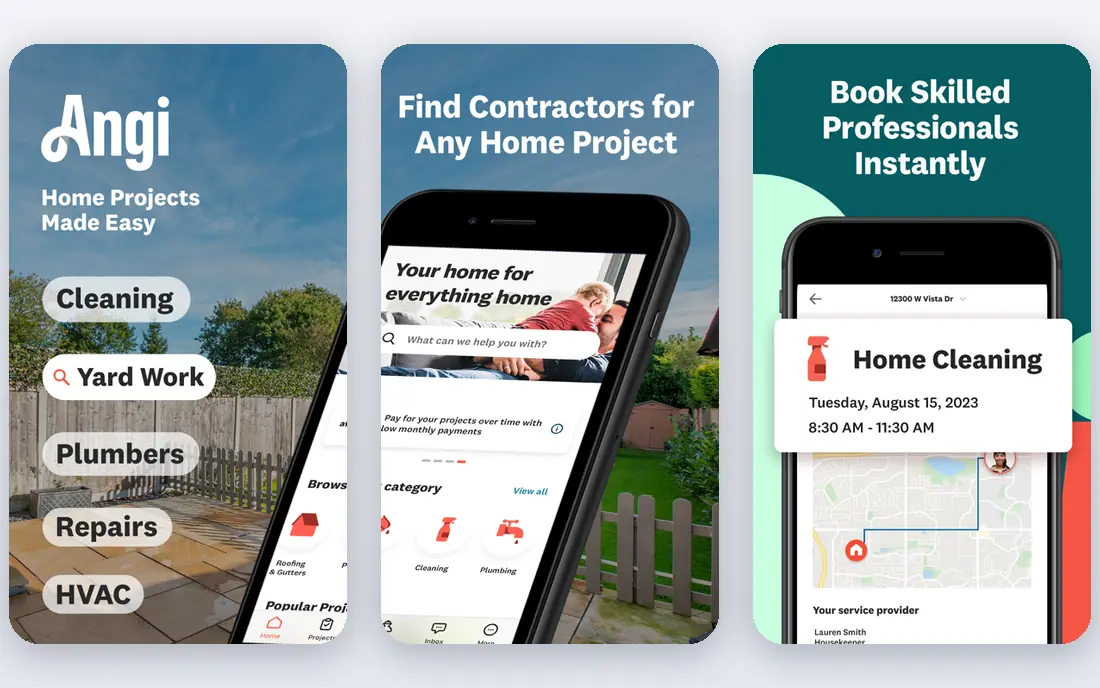
Angi, which now includes the former HomeAdvisor lead product, remains one of the largest residential lead sources for contractors. Homeowners submit project requests across many trades, and contractors can build a profile with reviews, photos, and service details. For high-volume trades such as plumbing, HVAC, roofing, and electrical, that reach can fill gaps in a schedule fast.
The weakness is sharing and cost. Leads often go to several pros at once, so the fastest responder gains a clear edge, and lead prices vary by market and job type. Angi suits contractors who answer quickly and track cost per booked job, not just cost per lead.
- Large homeowner marketplace
- Wide trade coverage
- Review and profile tools
- Leads are often shared
- Costs vary widely by trade and market
Thumbtack fits contractors who want control over spend on smaller and mid-size jobs. Pros set a service area, choose job types, and manage leads from a phone, with pay-per-lead pricing tied to customer contact. That control helps a solo operator or small crew test a market without a long contract.
Thumbtack leads are shared, so a fast, clear quote matters more than a low price alone. Lead costs also move with demand, which means a profitable market in one season can tighten in another. Track close rate by job type, and pause categories that book poorly.
- Budget controls
- Wide service categories
- Mobile lead management
- Leads are shared
- Prices move with local demand
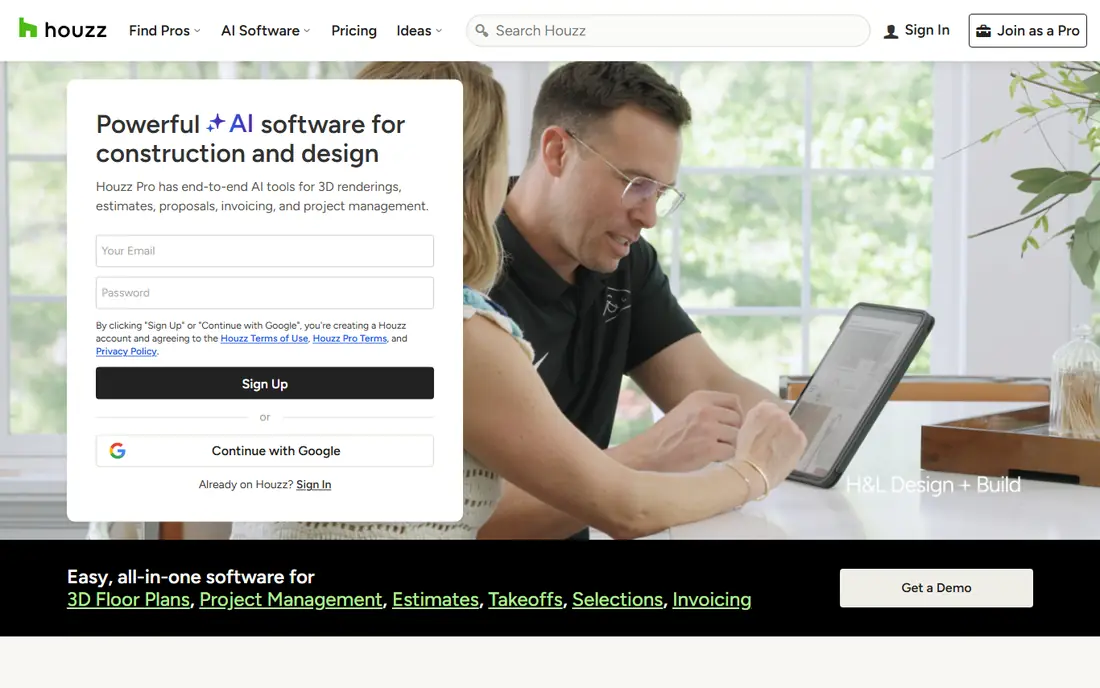
Houzz Pro suits remodelers and design-build contractors, because homeowners on Houzz often plan kitchens, baths, and additions with photos and ideas in hand. A strong portfolio does much of the selling, and the platform adds lead tools, client communication, and project features on paid plans. A free profile can still bring visibility, even before a subscription.
The trade-off is pace. Large remodel leads take longer to close than emergency repairs, and full lead tools need a paid plan. Houzz Pro fits firms that can nurture a project over weeks, not crews that need same-day service calls.
- Portfolio-led lead generation
- Design-focused homeowners
- Project tools
- Paid subscription for full lead tools
- Longer sales cycle for large projects
Google Local Services Ads sit at the top of search for eligible local services, and each lead goes to one business rather than several rivals. That exclusivity is a strong advantage, since the homeowner calls or messages you directly instead of comparing four quotes at once. A verified badge also adds trust at the moment of contact.
The cost is pay per lead, and prices vary by trade and market, so the budget needs a cap and a weekly review. Verification, licensing, and background checks also take time, so Local Services Ads suit firms ready to complete that process rather than firms seeking instant leads.
- Exclusive leads
- Top search placement
- Verified business badge
- Pay per lead
- Eligibility and verification steps take time
Google Business Profile is the free foundation every contractor should claim, since it powers the listing that appears for searches such as roofer near me and on Google Maps. A complete profile with photos, services, hours, and fresh reviews can bring high-intent calls without ad spend, and that value compounds over time. It also supports Local Services Ads, so the two work well together.
The limit is control. A free profile does not guarantee a set number of leads, and ranking needs steady upkeep. Contractors who ignore reviews or leave photos stale will see less return, even though the listing itself costs nothing.
- Free local listing
- Map and search visibility
- Review collection
- No paid lead guarantee
- Ranking needs reviews, photos, and upkeep
BuildZoom focuses on larger residential projects, including remodels and custom work, where a homeowner needs a vetted contractor rather than a quick fix. Its contractor data, project history, and review signals help homeowners shortlist firms for bigger jobs. For contractors who prefer fewer, larger projects, that focus is a clear fit.
Pricing needs care. Fee terms vary and are not fully published in every case, so a contractor should confirm the model, the timing of fees, and what happens if a project does not proceed. BuildZoom suits firms with capacity for larger work, not crews chasing daily service calls.
- Larger project focus
- Contractor data and reviews
- Success-based fees in some cases
- Fee terms are not fully published
- Project fit varies by market
ConstructConnect suits general contractors and specialty subs who bid on commercial work, with a large database of projects across the United States and Canada. Filters for stage, location, and trade help estimators focus on real opportunities, and bid documents and contacts support the bid process. It is less a consumer lead app and more a project intelligence system.
The cost is a subscription, and pricing grows with markets and seats, so a small firm should test one market first. Not every listed project reaches bid, so estimators still need to validate scope and timing before spending hours on a proposal.
- Large commercial project database
- Bid documents and contacts
- Trade and stage filters
- Subscription pricing
- Many listed projects need validation before bidding
Bark lets contractors view project requests across many services and spend credits only on leads they choose to pursue. That pay-as-you-go model can suit a contractor testing a new trade or market without a subscription. The range of categories also covers work outside standard home services, which helps multi-trade firms.
Bark needs caution. Leads are shared with other pros, credit pricing can obscure the real cost per lead, and credits may expire, so bulk buying can waste money. Start small, track booked jobs by source, and stop if close rate or lead quality falls short.
- Wide service categories
- Pay-as-you-go credits
- See leads before spending
- Leads are shared
- Credit costs and expiry need careful tracking
Nextdoor works through neighbourhood trust, where a recommendation from a nearby homeowner carries more weight than a cold ad. A free business page, with reviews and local posts, can bring referrals for smaller jobs and repeat work in a tight service area. For contractors who already work in one neighbourhood, that local proof is valuable.
Volume is uneven, and Nextdoor alone rarely fills a schedule for a larger firm. Paid local ads can widen reach, but the core strength remains referrals and reputation. Use Nextdoor as an owned, low-cost channel alongside a paid lead source, not as the only source.
- Free business page
- Neighbourhood trust and referrals
- Local recommendations
- Lead volume is uneven
- Paid ads are needed for wider reach
How we picked these
We compared official product pages, pricing models, and public contractor lead comparisons, and we kept platforms that still operate in the United States and send work to contractors. We left out closed marketplaces, pure job boards for employees, and tools that only manage jobs without generating leads. Lead sharing, exclusivity, and cost model were treated as core facts, since they change the real cost of a booked job.
Judging a lead source by booked jobs
Set a simple tracking sheet from day one, with lead source, date, job type, lead cost, and outcome. After a few weeks, divide total spend by booked jobs for each source, and compare that figure rather than the headline lead price. A source with a higher lead price but a higher close rate can be cheaper per booked job than a cheap source that rarely converts.
Speed, pricing, and contracts
Answer new leads within minutes when possible, since shared leads reward the first clear response. Ask for the credit or refund policy in writing, check whether a contract or minimum term applies, and confirm whether leads are shared or exclusive. A platform that refuses to state those terms in plain language is a warning sign, even if the first leads look cheap.
Frequently asked questions
Which contractor lead app is best overall?
There is no single winner, since the best source depends on trade, job size, and market. Angi and Thumbtack suit broad residential volume, Google Local Services Ads suit exclusive high-intent calls, and Houzz Pro suits remodelers with strong portfolios.
Are contractor leads shared or exclusive?
Most marketplace leads are shared with several contractors, while Local Services Ads and owned listings such as Google Business Profile bring exclusive contact. Always confirm sharing rules before paying, since sharing changes how fast you must respond.
How much do contractor leads cost?
Lead prices vary widely by trade, market, and job size, and many platforms do not publish a fixed price. Track cost per booked job instead, and treat published ranges as a guide rather than a quote for your area.
Should a new contractor pay for leads?
Paid leads can fill a schedule fast, but a free Google Business Profile, reviews, and referrals should come first. Add one paid source at a time, track results, and expand only the sources that book jobs at an acceptable cost.
Why do some leads never convert?
Many leads are shared, poorly timed, or outside your service area, and some homeowners are still researching rather than ready to hire. Fast response, a clear quote, and good reviews improve conversion, but no platform converts every lead.
Can a contractor pause lead spending?
Most pay-per-lead platforms allow pausing or budget caps, while some subscription platforms need notice or a contract term. Check pause rules and minimum terms before signing, and set a weekly budget cap from the start.
Sources
See where you really rank - block by block
ProMapRanker scans Google Maps across a grid of your service area. Simple monthly plans from $19, white-label on every plan.
Start freeKeep reading
 worlds best local seo company
8 Worlds Best Local SEO Companies for Map Pack Growth in 2026
Compare the worlds best local seo company options for Google Business Profile work, citations, reviews, and multi-location rankings and reporting in 2026.
Read → world's best web hosting company
World's Best Web Hosting Company in 2026
Searching for the world's best web hosting company? We compared 10 hosts on price, renewal rates, speed, and support to help you choose well today in 2026.
Read → who's got the best nanny tax services
Who's Got the Best Nanny Tax Services in 2026
We answer who's got the best nanny tax services, comparing full filing, back taxes, software, and pricing so families can handle nanny taxes correctly.
Read →