 ProMapRanker
Best App for Cargo Van Loads in 2026

Key takeaways
- DAT One offers the largest load volume, but cargo van operators must filter carefully, because most postings are for larger trucks.
- Van focused boards such as Load Work Hub filter by vehicle class first, which saves time for cargo van and box truck operators.
- Broker credit checks and rate transparency matter as much as load count, because one unpaid load hurts a small operator more than a fleet.
- Most cargo van operators use one paid board for volume plus one or two direct or app based sources for steadier lanes.
Quick comparison
| Pick | Great for | Pricing starts at | Free tier | |
|---|---|---|---|---|
 DAT One | Largest load volume | See website | Free trial | Visit |
 Truckstop | Broker vetting and rates | See website | Free trial | Visit |
 123Loadboard | Low cost entry | Free | Yes | Visit |
 Load Work Hub | Van and box truck focus | See website | No | Visit |
 Uber Freight | Instant booking | Free | Yes | Visit |
 Amazon Relay | Direct Amazon freight | Free | Yes | Visit |
 Direct Freight | Custom load alerts | See website | Free trial | Visit |
 Comfreight | Invoicing and factoring | See website | No | Visit |
 Trucker Path | Navigation plus loads | Free | Yes | Visit |
The best app for cargo van loads
We compared load boards and freight apps on cargo van relevance, load volume, rate tools, broker checks, and cost. The list mixes large general boards with van focused platforms, because the best choice for a solo van operator is rarely the same as for a small fleet. Prices for paid boards change by plan, so confirm the current plan before you subscribe.
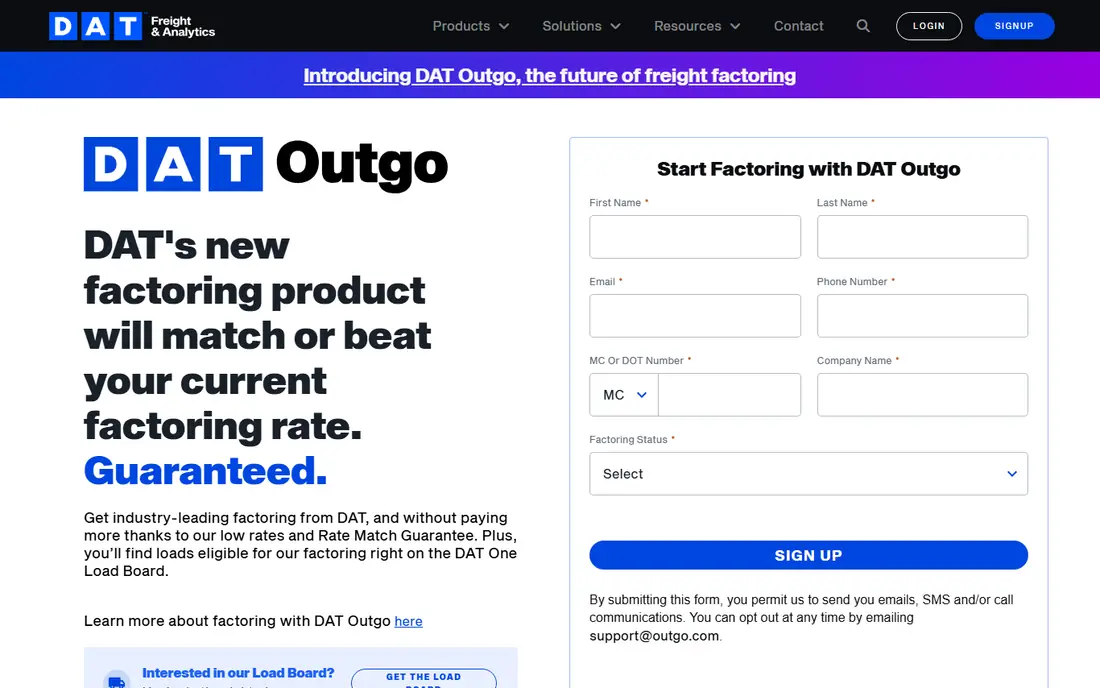
DAT One is the largest load board by posted volume, and that scale is its main advantage for cargo van operators. With millions of loads posted monthly across equipment types, a van operator who filters well can find expedited and partial loads in busy lanes. Rate data helps you judge whether a posted rate is fair before you call a broker.
The downside is focus. DAT serves all equipment types, so cargo van freight is a slice of a much larger feed. You will need to set filters for van and sprinter equipment, save searches, and check often. DAT fits operators who want maximum volume and rate benchmarks, and who are willing to manage filters to find van sized freight.
- Largest posted load volume in the United States
- Rate data and lane tools
- Long track record since 1978
- Not built for vans, so filtering takes work
- Cargo van loads can be buried among truckload posts
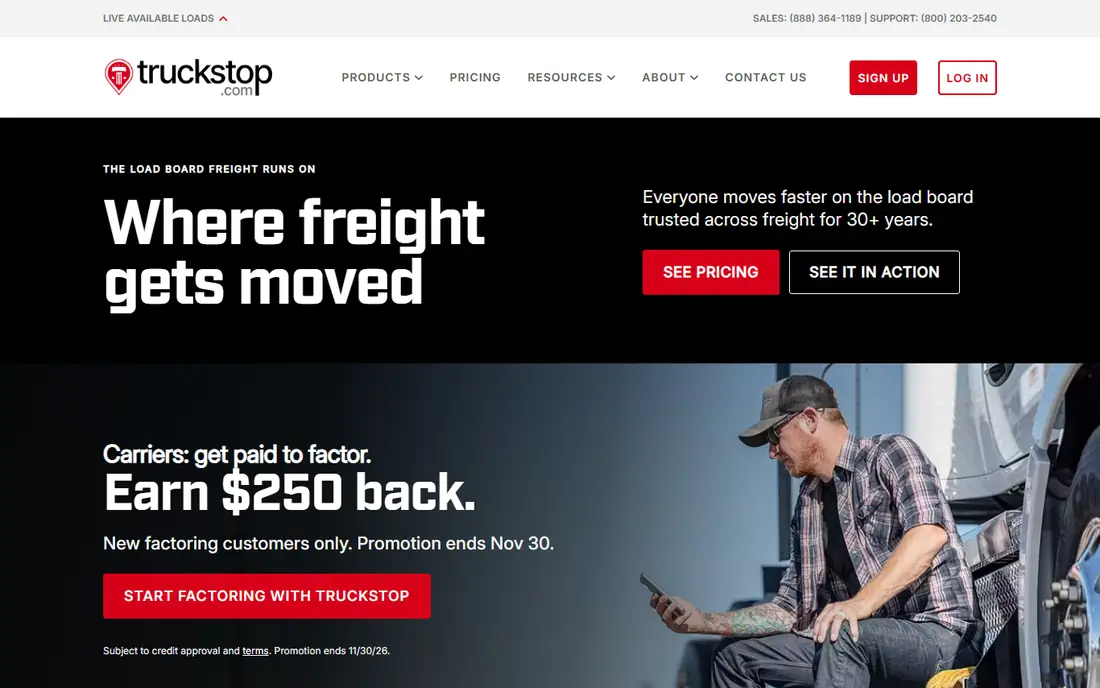
Truckstop, founded in 1995, is one of the oldest digital freight platforms in the United States, with a wide broker network and tools for checking broker credit. For an independent van operator, that vetting matters: a broker who pays slowly or not at all can wipe out a week of profit. Rate tools help you compare a load against recent lane rates before you accept.
Like DAT, Truckstop covers all equipment types, so van operators must filter manually and may find thinner van coverage in some regions. It fits experienced operators who value broker relationships and credit checks, and who use Truckstop alongside a van focused board for extra lanes.
- Large broker network
- Broker credit checks
- Rate transparency tools
- General freight platform, not van specific
- Cargo van density varies by region
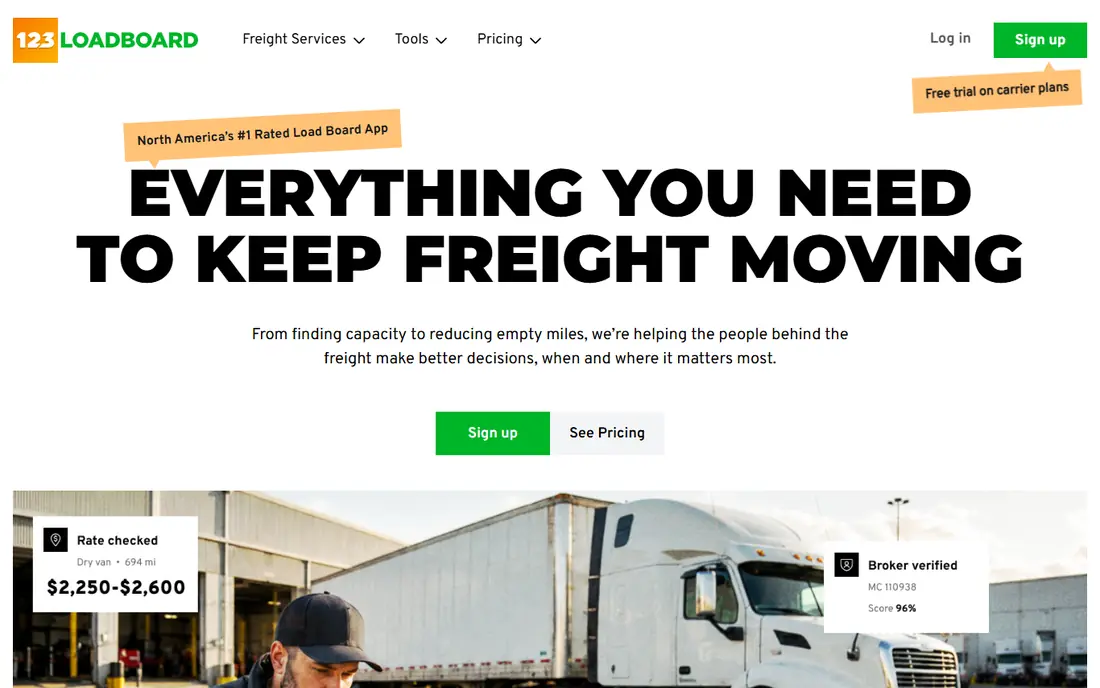
123Loadboard is a practical starting point for a solo operator who wants to test a load board before committing to a monthly subscription. The free tier lets you see how the board works, and paid upgrades add mileage routing, load alerts, and more search tools. That low cost entry is useful for a new van operator who is still learning lanes and rates.
The trade off is volume and quality. Larger paid boards post more loads and more high paying freight, so 123Loadboard works best as a second board or a starter board, not as your only source in a busy market. It fits new operators and part time van carriers who want low risk access to freight.
- Free tier for testing
- Low cost paid upgrades
- Mileage routing and load alerts on paid plans
- Fewer high paying postings than larger boards
- Load quality varies
Load Work Hub is built specifically for cargo van and box truck operators, rather than adapted from full truckload freight. Loads are filtered by vehicle class, with real time lane alerts for preferred corridors, and the platform also offers financing access, fuel card programs, insurance tools, and mentorship. That bundle appeals to operators who want business support as well as loads.
As a newer network, lane density is less even than on DAT or Truckstop, so results will vary by region. Check your main lanes before you rely on it alone. Load Work Hub fits van and box truck operators who want a board that starts with their equipment type and who value extra business tools in one place.
- Built for cargo vans and box trucks
- Loads filtered by vehicle class
- Lane alerts and partner services
- Newer network than DAT or Truckstop
- Lane density varies by region
Uber Freight offers digital freight matching with instant booking for many loads, which removes the phone calls and rate haggling that slow down traditional boards. Rates are shown upfront, and the app workflow suits operators who want to book quickly from the cab. For van operators in lanes where Uber Freight has van freight, that speed is a real advantage.
The limit is fit. Matching can favour larger freight, and van partial loads are thinner than on general boards in some areas. Uber Freight works best as a second source for instant loads, layered on a main board. It fits operators who value fast booking and clear rates over a long broker negotiation.
- Book loads without phone negotiation in many cases
- Transparent rates
- App based workflow
- Matching favours larger freight in some lanes
- Fewer van partial loads than general boards
Amazon Relay gives carriers direct access to Amazon freight through its own network, with scheduled loads and consistent lanes in many areas. For van operators who meet the requirements, Relay can provide steadier work than chasing one off broker loads. The direct relationship also removes some broker uncertainty.
Approval is stricter than an open board, with carrier, insurance, and safety requirements to meet, and van eligibility varies by program and region. Relay also offers less freedom to pick any load at any time. It fits operators who want consistent, direct freight and who can meet Amazon carrier standards.
- Direct access to Amazon freight
- Consistent lanes in many areas
- Clear requirements and scheduling
- Strict carrier requirements and approval
- Less flexibility than open boards
- Van eligibility varies
Direct Freight is a load board known for custom alerts, which suit operators who run the same lanes repeatedly and want to hear about new loads in those lanes first. Setting alerts for equipment type, origin, and destination can save hours of manual searching. The board also aggregates postings that a van operator might otherwise miss.
It does not match DAT or Truckstop for sheer volume or brand recognition, and van coverage varies by lane. Direct Freight fits operators with regular lanes who want alerts to do the watching, used alongside a larger board for rate checks and broker vetting.
- Custom alerts for preferred lanes
- Search across many postings
- Useful for niche lanes
- Smaller brand profile than DAT or Truckstop
- Van coverage varies by lane
Comfreight combines load matching with back office tools, including invoicing and factoring, which help small operators manage cash flow. Getting paid faster matters when fuel, insurance, and maintenance bills arrive before broker payments do. A board that also handles invoicing can cut admin time for a solo operator.
As a pure load volume source, Comfreight is less prominent than DAT or Truckstop, so it works better as a complement than as a sole board. Pricing also needs checking, since plans are not always listed as a simple monthly price. Comfreight fits operators who want invoicing and factoring support alongside load search.
- Load matching plus invoicing tools
- Factoring options
- Useful for cash flow management
- Less known as a pure load volume board
- Pricing needs a quote in many cases
Trucker Path built its name on GPS navigation for truckers, with weigh station alerts, parking info, and fuel prices reported by a large driver community. Its load board came later and sits inside that navigation app. For a van operator who already uses Trucker Path for routing and stops, seeing loads in the same app is convenient.
The load board itself is not van focused, and van freight mixes with full truckload freight, so filtering matters. Trucker Path fits operators who want navigation first and loads second, or who use it as a free extra source while a main board handles most freight. Do not judge it only as a load board, because navigation is where it leads.
- Strong truck navigation, parking, and fuel data
- Load board built into a driver app
- Large driver community
- Load board is secondary to navigation
- Van freight mixes with all truckload freight
How we picked these
We compared load board guides, vendor pages, and carrier focused reviews, focusing on cargo van relevance, load volume, rate tools, broker checks, and cost. We kept only boards and freight apps that are live in the United States and that list van or sprinter sized freight, rather than only full truckload work. Load volume and rates change daily by lane, so treat this list as a starting shortlist and check your own lanes before you subscribe.
What to check before you pay for a board
Start with your lanes, not the board with the most total loads. Search your home base, your usual destinations, and your return lanes for a week on a free tier or trial, and count van sized loads that actually fit your vehicle and schedule. A board with millions of truckload posts and few van posts is a poor buy for a van operator, no matter how large its headline number looks.
Rates, brokers, and cash flow
Check the rate against recent lane data, and confirm the full terms before you accept: pickup window, delivery window, detention pay, and cancellation terms. Use broker credit checks where available, and be cautious with new brokers who offer a high rate with vague terms. Plan cash flow too, since broker payment terms can stretch weeks, while fuel and insurance are due now. Factoring or quick pay options help, but they cost money, so compare the fee against the value of faster cash.
Running a van stack
Most successful van operators run a stack, not a single board. A common stack is one paid board for volume and rates, one van focused board for filtered freight, and one direct source such as Amazon Relay or Uber Freight for steadier lanes. Add a simple system for tracking profit per load, deadhead miles, and broker payment times, and drop lanes and sources that consistently pay poorly after costs.
Frequently asked questions
What is the best app for cargo van loads?
DAT One is best for total volume and rate data, while Load Work Hub is best for van filtered freight. Many operators use both, plus a direct source such as Amazon Relay or Uber Freight. The best single app depends on your lanes, so test two boards in your area before you commit.
What are the best apps for cargo van loads for beginners?
123Loadboard is a good low cost start, because its free tier lets you learn the market without a subscription. Trucker Path is also useful for free navigation plus loads. Once you know your lanes, add DAT One or Truckstop for volume and broker checks.
Do I need a paid load board to find cargo van loads?
No, but paid boards usually offer more loads, better rate data, and better alerts. Free tiers and app based sources such as Uber Freight and Amazon Relay can provide loads, but volume and lane coverage may be thinner. Many operators start free, then pay for the board that proves itself in their lanes.
How do I avoid bad brokers as a cargo van operator?
Use broker credit checks where available, confirm all terms in writing on the rate confirmation, and be wary of rates far above the lane average with vague details. Track payment times by broker, and stop hauling for brokers who pay late repeatedly. A single unpaid load can outweigh several good loads, so vetting is part of the job.
Can a cargo van operator use Amazon Relay?
Some van operators can, depending on the program, vehicle, insurance, and safety requirements in their region. Amazon Relay has strict carrier approval, so check current eligibility on its site before you plan around it. If approved, Relay can give steadier lanes than open boards alone.
Sources
See where you really rank - block by block
ProMapRanker scans Google Maps across a grid of your service area. Simple monthly plans from $19, white-label on every plan.
Start freeKeep reading
 zscaler alternatives
Best Zscaler Alternatives in 2026
Looking for zscaler alternatives? We compare 9 SASE and zero trust platforms on architecture, data protection, pricing, and fit for your network and team.
Read → zapier alternatives free
Best Zapier Alternatives Free in 2026
Nine automation tools for zapier alternatives free in 2026, all with genuinely free tiers, plus free plan limits, starting prices and upgrade paths explained.
Read → which platform is best for online reputation
Which Platform Is Best for Online Reputation in 2026
Wondering which platform is best for online reputation? We compare 8 review, listing, and response tools for small and multi-location businesses and agencies.
Read →