 ProMapRanker
Best App for Buying Stocks in 2026


All round investors who want low cost plus research · Pricing starts at: Free
Key takeaways
- Fidelity is our pick for most people, thanks to zero commission stock and ETF trades, fractional shares from $1, and strong retirement account options.
- Charles Schwab is a close alternative, with zero commission trades, broad support and the thinkorswim platform for advanced charting.
- Robinhood suits mobile first investors who want a simple app, fractional shares and an IRA match option.
- Webull suits active traders who want advanced charting, paper trading and free real time data.
- SoFi Invest, Public, E*TRADE and Interactive Brokers each fit a different need, from all in one banking to global markets.
- This is not financial advice, and trading carries risk, including the risk of losing money you invest.
Quick comparison
| Pick | Great for | Pricing starts at | Free tier | |
|---|---|---|---|---|
| Fidelity | All round investors who want low cost plus research | Free | Yes | Visit |
 Charles Schwab | Retirement savers who want full service support | Free | Yes | Visit |
 Robinhood | Mobile first beginners | Free | Yes | Visit |
 Webull | Active traders who want advanced tools | Free | Yes | Visit |
 SoFi Invest | Investors who want banking and investing together | Free | Yes | Visit |
 Public | Multi-asset investors who like guided research | Free | Yes | Visit |
 E*TRADE | Options traders and retirement savers | Free | Yes | Visit |
 Interactive Brokers | Global and serious traders | Free | Yes | Visit |
The best app for buying stocks
We compared official fee pages and app features for US brokers that are still available in October 2026. Most major apps now charge zero commission on US stock and ETF trades, so the real differences are in research, account types, fractional shares, retirement options and ease of use. Read the fee schedule for options, margin and account transfers before you choose, since those costs vary even when stock trades are free.
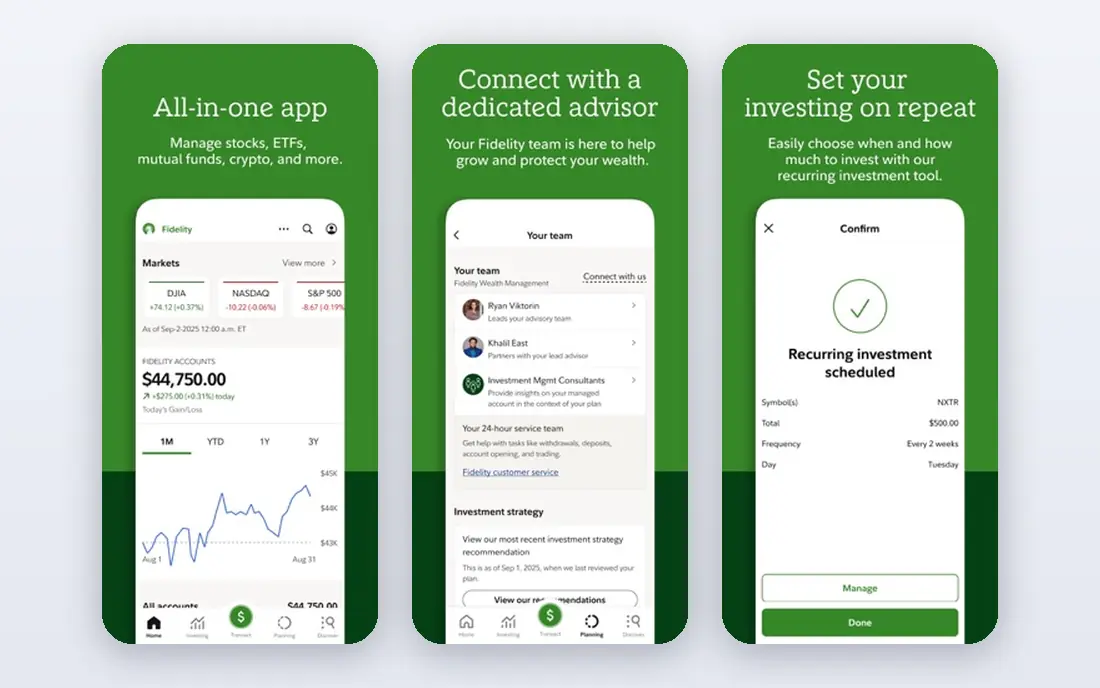
Fidelity is the app we point to first for most people, because it combines low cost with depth. US stock and ETF trades carry zero commission, fractional shares start from $1, and retirement accounts such as IRAs sit alongside taxable accounts in the same app. Research, screeners and educational content help a new investor learn without leaving the platform, and customer support is widely rated as strong for a large broker.
The trade off is complexity. The app packs in many features, and a first time investor may need a few sessions to find the tools that matter. That is a fair price for a platform that can grow with you, from a first stock purchase to retirement planning. If you want one broker that handles both simple investing and long term planning well, Fidelity is a safe and strong choice.
- Zero commission US stock and ETF trades
- Fractional shares from $1
- Strong research and retirement accounts
- App can feel busy for a first time investor
- Some advanced tools take time to learn
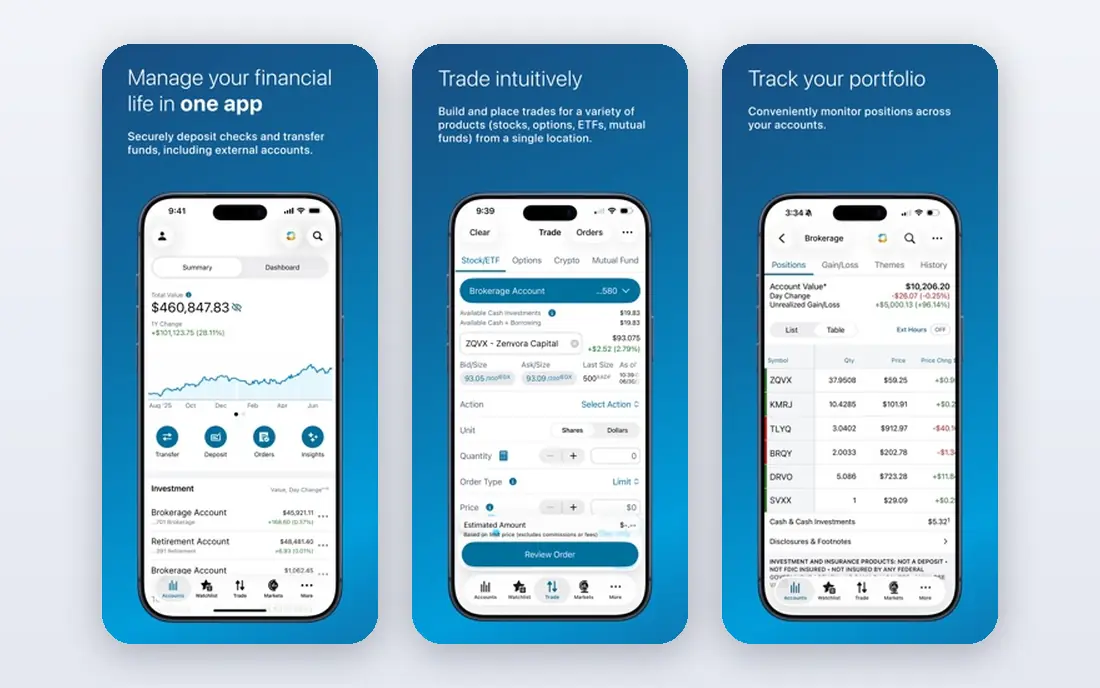
Charles Schwab is a close second for most investors, with zero commission online US stock and ETF trades, no minimum to open a brokerage account, and a wide range of retirement and education accounts. The thinkorswim platform, now part of Schwab, gives advanced traders charting, screeners and options tools that few free apps match. Support options, including branches and phone help, appeal to investors who want a person to talk to.
The catch is that Schwab can feel like several platforms stitched together, with the main app and thinkorswim serving different needs. New investors may not need thinkorswim at first, and the overlap can confuse. For a long term investor who values support, research and a full service broker at DIY prices, Schwab remains an excellent pick.
- Zero commission online US stock and ETF trades
- Thinkorswim for advanced charting
- Broad account types
- App and platforms can feel like two separate systems
- Some features overlap
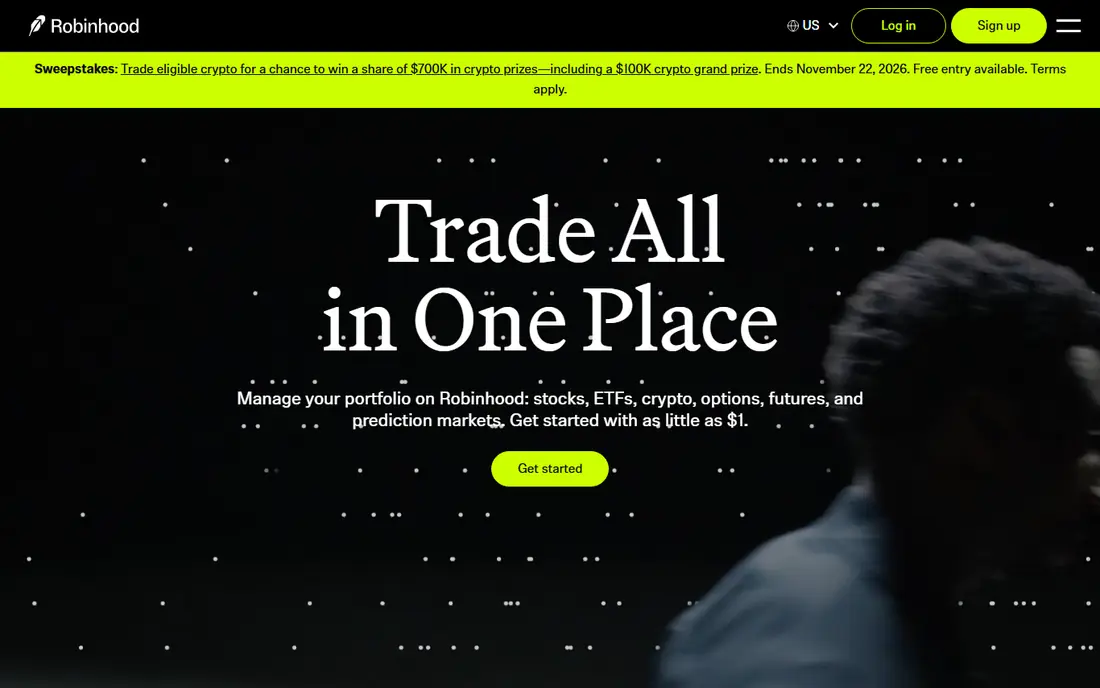
Robinhood remains the simplest mobile first way to buy stocks. The app is clean, onboarding is fast, and zero commission trades plus fractional shares from $1 let a new investor start small. Options trading carries no contract fee in recent comparisons, and IRA accounts include a match option that can add value for retirement savers who contribute regularly. Crypto trading sits in the same app for users who want it, though crypto carries its own risks and fees.
The honest limit is research. Robinhood offers less depth than Fidelity, Schwab or E*TRADE for company analysis, screeners and planning tools. Support is also mainly digital, which suits app native users but frustrates others. If you want the easiest possible start and you plan to invest regularly in stocks and ETFs, Robinhood is a strong choice. If research drives your decisions, pair it with outside research or choose Fidelity.
- Simple mobile app
- Zero commission stock and ETF trades
- Fractional shares from $1
- IRA match options
- Research is thinner than Fidelity or Schwab
- Customer support is mainly digital
Webull suits investors who want pro level data without paying for it. Advanced charting, technical indicators, real time quotes and paper trading help an active trader practice and analyze before risking real money. Zero commission stock, ETF and options trades keep costs low for frequent traders, and the desktop and mobile apps share the same workflow. For a trader who lives in charts, Webull offers more depth than Robinhood at the same price point of free.
The trade off is breadth for long term investors. Webull does not offer mutual funds, and its retirement and planning tools are thinner than Fidelity or Schwab. Paper trading is a real advantage for beginners, so use it before you trade live. If you trade actively and want data rich tools for free, Webull is a strong pick. If you want a set and forget retirement plan, look elsewhere.
- Zero commission stock, ETF and options trades
- Advanced charting and indicators
- Paper trading included
- No mutual funds
- Less suited to hands off retirement planning
SoFi Invest appeals to people who want banking, loans and investing in one place. Active investing carries zero commission on stock and ETF trades, with fractional shares from $5, and an automated option builds a portfolio for users who would rather not pick stocks. That all in one shape suits a younger investor who already banks with SoFi or wants a single app for money basics.
The limit is depth. Research tools and asset range are narrower than Fidelity, Schwab or Interactive Brokers, and automated investing requires a higher minimum than active investing. If you want a simple app that covers banking and investing together, SoFi is convenient. If you want deep research or a wide asset range, a larger broker will serve you better.
- Zero commission stock and ETF trades
- Active investing from $5
- Automated investing option
- Banking in one app
- Research and asset range are narrower than large brokers
- Automated investing needs a higher minimum
Public is built for investors who want stocks, ETFs, bonds and crypto in one app, with research and community features that explain what is happening in the market. Zero commission stock and ETF trades keep the core cost low, and bond and Treasury options appeal to investors who want income alongside growth. The app design is clean, and guided research helps a newer investor understand a company before buying.
The catch is scale. Public is newer and smaller than Fidelity or Schwab, so its research library and account range are narrower, and some advanced features sit behind paid tiers. Check the fee schedule for the assets you actually trade, since spreads and fees vary by asset type. For a multi-asset investor who values a clean app and guided research, Public is a fresh and useful choice.
- Zero commission stock and ETF trades
- Stocks, ETFs, bonds and crypto in one app
- Guided research features
- Newer broker with a smaller research library than large brokers
- Some features are paid add ons
ETRADE, now part of Morgan Stanley, suits investors who want strong options tools and retirement accounts in one broker. Power ETRADE gives options traders charting, strategy tools and analysis, while the main app covers stocks, ETFs and retirement accounts. Zero commission online US stock and ETF trades keep core costs low, and Morgan Stanley research adds depth for investors who read analyst work.
The downside is polish. Parts of the app and web experience feel older than Robinhood or Public, and the overlap between platforms can confuse a new user. For an options trader or a retirement saver who values research and a full service broker, those quirks are worth tolerating. For a pure mobile beginner, a simpler app may feel easier.
- Zero commission online US stock and ETF trades
- Power E*TRADE for options
- Morgan Stanley research
- App design can feel dated in places
- Overlapping platforms confuse some users
Interactive Brokers is the choice for serious and international traders. It offers access to a very large number of global markets and currencies, far beyond a US only broker, and IBKR Lite provides zero commission US stock and ETF trades for casual investors. Low margin rates appeal to qualified active traders, and the trading tools are among the most powerful available to retail investors.
The learning curve is real. The platform assumes knowledge, and a beginner can feel lost among order types, market data options and global exchanges. Use IBKR Lite and the paper trading features first, and read the fee schedule for market data and pro pricing. If you trade internationally or trade seriously, Interactive Brokers is unmatched. If you are buying your first stock, start with Fidelity or Robinhood instead.
- Access to many global markets
- IBKR Lite offers zero commission US trades
- Low margin rates for qualified traders
- Steep learning curve
- Platform can overwhelm beginners
How we picked these
We compared official fee schedules and app features for US brokers that are still available in October 2026, favoring brokers with zero commission US stock and ETF trades, fractional shares, and clear account options. We included mobile first apps, full service brokers and global platforms, so readers can match the app to their experience level and goals. Where a fee varies by asset or account type, we advise checking the vendor fee schedule rather than guessing. We did not claim hands on testing, and we based the trade offs on published fees and features. This is not financial advice, and trading carries risk.
How to choose a stock trading app
Start with your goal, not with the app design. A long term retirement saver needs IRAs, low cost funds and planning tools. An active trader needs charting, fast orders and low options costs. A beginner needs a simple app, fractional shares and education. Write down your goal first, then shortlist apps that serve it, rather than picking the app with the flashiest home screen.
Next, check the full fee schedule. Zero commission stock trades are now standard, but options contract fees, margin interest, account transfer fees and market data fees differ. If you trade options often, a zero contract fee broker saves real money. If you hold cash, check interest on uninvested cash and any account fees. Read the schedule for the trades you will actually make.
Finally, test the app with a small amount before you move a large balance. Check how easy it is to place an order, set a limit price, find research and withdraw money. Confirm that the broker is a SIPC member, which protects securities and cash up to set limits if a member firm fails, though it does not protect against market losses. Start small, learn the app, and increase your investing only as your confidence and knowledge grow.
Frequently asked questions
What is the best app to buy stocks for beginners?
Fidelity is the best all round pick for beginners, thanks to zero commission trades, fractional shares from $1 and strong support. Robinhood is the simplest mobile option, and SoFi Invest suits beginners who want banking and investing together. The best app for you depends on whether you value research, simplicity or an all in one app more.
What is the best app for stock trading on a phone?
Robinhood offers the simplest mobile experience, while Webull offers deeper charting on a phone. Fidelity and Schwab also offer strong mobile apps with more research. Try the app interface before you fund an account, since you will use it every time you trade.
Which stock app is best for retirement?
Fidelity and Charles Schwab are strong for retirement, with IRAs, Roth IRAs and planning tools alongside taxable accounts. Robinhood also offers IRA accounts with a match option. Compare contribution rules, investment choices and fees for the account type you need, and consider speaking to a qualified advisor for retirement planning.
Are stock trading apps free?
Most major apps charge zero commission on US stock and ETF trades, and many have no account minimum. Other fees still apply, such as options fees at some brokers, margin interest, transfer fees and spreads on crypto or other assets. Read the full fee schedule before you trade.
Can I buy fractional shares?
Yes, Fidelity, Robinhood and Webull offer fractional shares from $1, and SoFi Invest offers them from $5 in recent comparisons. Fractional shares let you invest a set dollar amount in a high priced stock without buying a whole share. Check the minimum and the list of eligible stocks for each broker.
Is trading stocks risky?
Yes. Stocks can fall in value, and you can lose money you invest, including your full investment in a single stock. Diversified funds spread risk across many holdings, but they can still fall. This article is not financial advice, so consider your goals, time horizon and risk tolerance, and speak to a qualified advisor before making major investment decisions.
Sources
See where you really rank - block by block
ProMapRanker scans Google Maps across a grid of your service area. Simple monthly plans from $19, white-label on every plan.
Start freeKeep reading
 zendesk alternatives
Best Zendesk Alternatives in 2026
Compare the best Zendesk alternatives in 2026, from budget help desks to AI-first support tools, with current pricing, free plans, and honest trade-offs.
Read → wordpress alternatives
Best WordPress Alternatives in 2026
Looking for the best WordPress alternatives? We compare 8 free and paid options for blogs, business sites, stores, and developer-led projects in 2026.
Read → which real estate company has the best training
Best Real Estate Company Training in 2026
Compare which real estate company has the best training, from Keller Williams and eXp to Compass and Coldwell Banker, by program, mentor, and fit in 2026.
Read →