 ProMapRanker
Best API Testing Tools in 2026

Key takeaways
- Postman is still the most complete all-round API platform, but its free plan is now aimed at single users rather than teams.
- Bruno and Hoppscotch are strong low-cost choices for developers who want their API collections stored in files they control.
- SoapUI remains the practical pick for SOAP services, while most newer tools focus mainly on REST and GraphQL.
- Code-first tools such as REST Assured and Karate fit teams that want API tests to run in the same pipeline as their other tests.
- Start with the free tier that matches your workflow, and only pay when collaboration limits or reporting needs actually block you.
Quick comparison
| Pick | Great for | Pricing starts at | Free tier | |
|---|---|---|---|---|
 Postman | Full API lifecycle teams | $9 per user per month | Yes | Visit |
 Insomnia | Lightweight API debugging | $12 per user per month | Yes | Visit |
 Bruno | Local-first API collections | $6 per user per month | Yes | Visit |
 Hoppscotch | Browser-based API testing | $6 per user per month | Yes | Visit |
 SoapUI | SOAP and REST testing | Free | Yes | Visit |
 Katalon Studio | Low-code automated API testing | See website | Free trial | Visit |
 Apache JMeter | Load and functional API testing | Free | Yes | Visit |
 Karate | Behaviour-driven API tests as code | Free | Yes | Visit |
 REST Assured | Java API tests as code | Free | Yes | Visit |
The best api testing tools
We compared desktop clients, browser tools, and code-first frameworks on protocol support, automation, collaboration, and price, so you can pick the tool that fits how your team actually works.
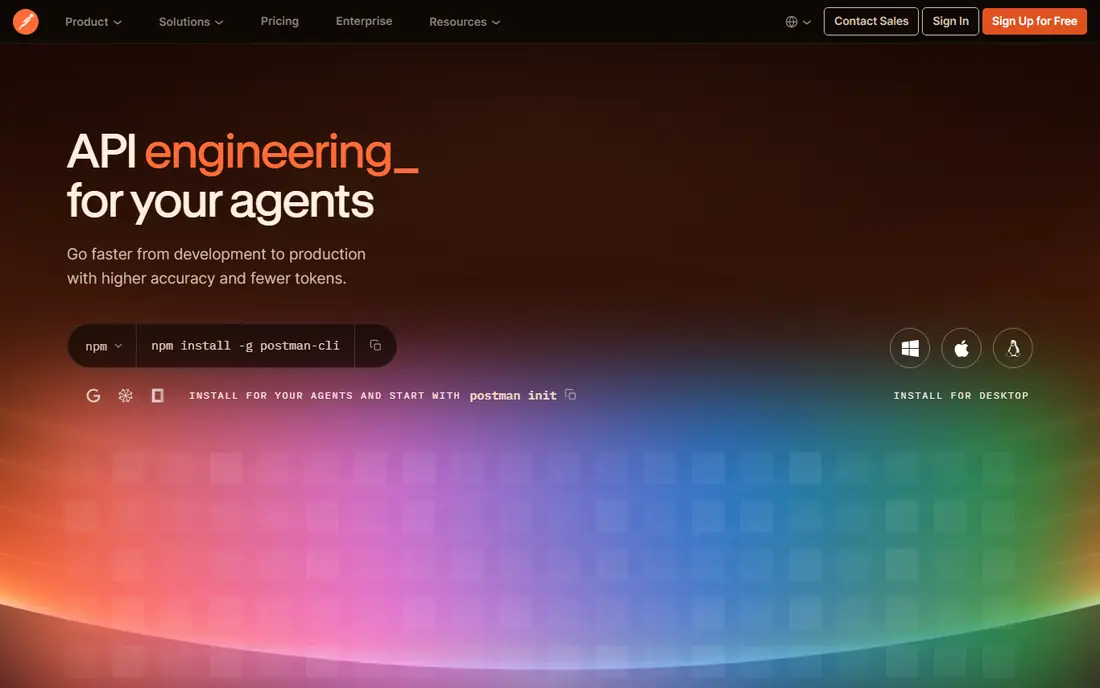
Postman is the default choice for many API teams because it covers the whole job in one place. You can explore an API, save requests in collections, add tests, build mocks, run monitors, and publish documentation without switching tools. Its public workspaces and community collections also help when you are learning a new API, because you can often find a working example before you write your own requests. For a team that needs all of that in one platform, Postman is hard to replace.
The trade is price and plan limits. The free tier suits a single developer, while team collaboration, higher limits, and admin controls sit on paid plans, so a growing team should price the per-seat cost early. Postman is also a large app, and developers who only need to send a few requests may find it heavier than a focused client. If you need the full lifecycle, though, that weight buys you a lot of useful depth.
- Mature collections, mocks, monitors, and documentation
- Large community and public workspaces
- Strong CI integration
- Free plan is limited for teams
- Costs rise quickly per seat
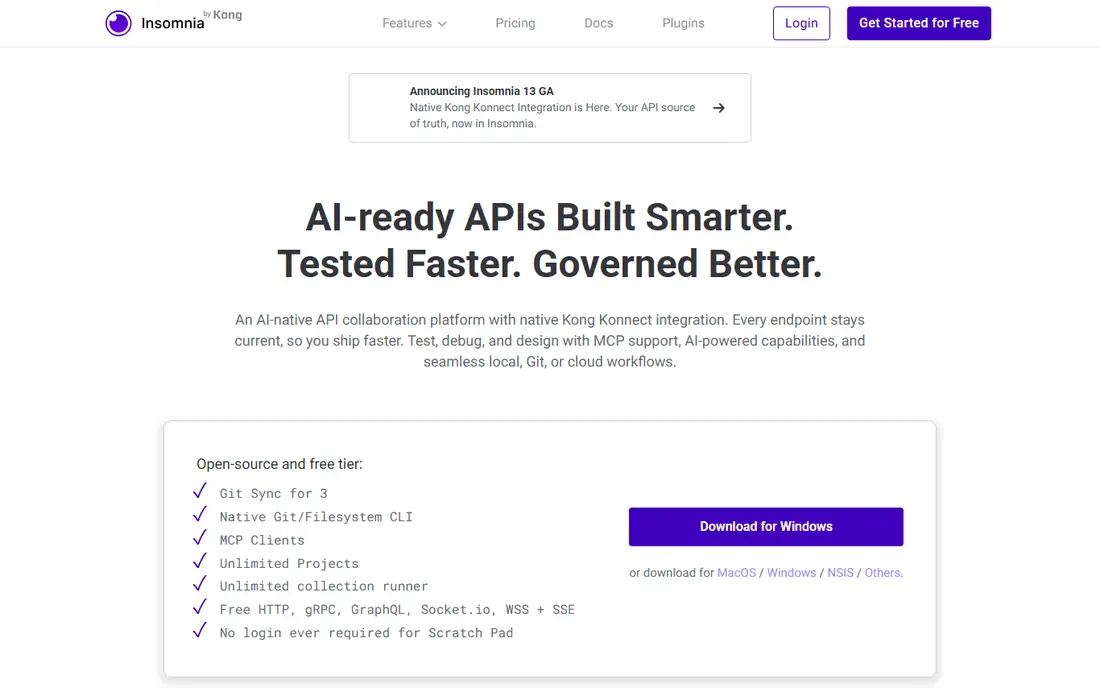
Insomnia is the tool to reach for when you want to send requests quickly and see clear responses. Its interface stays out of the way, it handles REST, GraphQL, and SOAP requests, and it makes environment variables and authentication easy to manage. For a developer debugging an API during the day, that speed matters more than a long feature list, and Insomnia keeps the focus on the request in front of you.
It is less of a full test platform than Postman, and teams that need shared workspaces, advanced reporting, or large automated suites will hit its limits sooner. Git sync and wider collaboration sit on paid plans, so a team should check those terms before standardizing on it. As a personal client or a small-team tool, though, Insomnia gives you a fast and pleasant daily workflow.
- Fast and clean request client
- Supports REST, GraphQL, and SOAP
- Git sync on paid plans
- Less depth for large automated test suites
- Team features need a paid plan
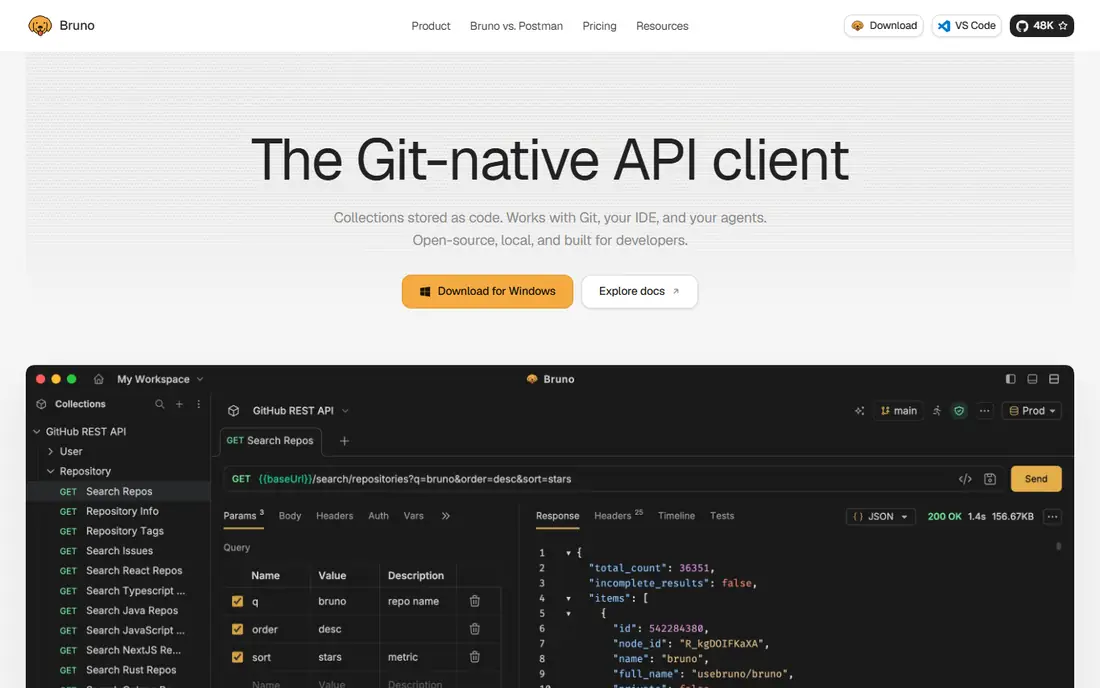
Bruno appeals to developers who want their API work stored like code. Collections live as plain files on your machine, so you can version them with Git, review changes in a pull request, and keep working offline without a cloud account. That local-first design is a real advantage for teams that already treat their test assets as code and want full control over where those files live.
The ecosystem is smaller than Postman, so you will find fewer ready-made integrations and community collections. Paid plans add team sync and collaboration features, while the free core covers the daily request and testing work. If you value Git-friendly collections and offline work over a large cloud platform, Bruno is one of the best API testing tools available now.
- Collections stored as plain files
- Works offline
- Open source core
- Smaller ecosystem than Postman
- Some team features are paid
Hoppscotch is the easiest tool on this list to start with, because it runs in your browser and needs no install. You can send REST requests, work with GraphQL, and test WebSocket connections from the same interface, and its open source base means teams can self-host if they want control over their data. For quick checks, demos, and shared machines, that low friction is a genuine advantage.
Browser-based testing has limits, and some network setups or local services are easier to reach from a desktop client. Hoppscotch also gates team collaboration and higher limits behind paid plans, so a larger team should test its self-hosted or paid route before relying on it. For individuals and small teams who want a fast, free, and open tool, it is a strong pick.
- Runs in the browser with no install
- Open source
- Supports REST, GraphQL, and WebSockets
- Browser limits can affect some workflows
- Team features sit on paid plans
SoapUI remains relevant for one clear reason: SOAP services. Many newer tools treat SOAP as an afterthought, while SoapUI was built around WSDL files, SOAP requests, and the kind of detailed message inspection that enterprise services still need. It also handles REST testing and basic load testing, so a team supporting older services does not need a separate tool for each job.
Its interface feels dated next to Postman or Insomnia, and the most advanced features, such as deeper security testing and reporting, belong to the paid ReadyAPI product from the same vendor. For a team whose main job is SOAP, though, those limits matter less than correct protocol support. SoapUI is free, proven, and still the practical answer when SOAP is central to your work.
- Strong SOAP and WSDL support
- Functional and load testing in one tool
- Free open source version
- Interface feels dated
- Advanced features sit in the paid ReadyAPI product
Katalon Studio suits a QA team that wants API testing alongside web and mobile testing in one platform. You can build API tests with low-code steps or scripts, reuse test objects across test types, and get built-in reporting without assembling a separate framework. That breadth helps a team that already tests a full product, because API checks sit next to the interface checks they support.
It is heavier than a focused API client, and a developer who only needs to test endpoints will find it overkill. Pricing is also seat-based, so a large QA team should get a clear quote before committing. For a dedicated QA function that values one platform for several test types, Katalon is a practical and well-supported choice.
- Low-code and scripted testing in one tool
- API, web, and mobile testing together
- Built-in reporting
- Heavy for API-only work
- Pricing is seat-based and can add up
Apache JMeter is best known for load testing, but it is also a solid functional API testing tool when you need to prove an API holds up under traffic. You can build test plans with many virtual users, measure response times under load, and run the same plans from a CI pipeline. For a team that needs both correctness checks and performance evidence, JMeter covers both jobs without a license fee.
The interface is dated, and building a first test plan takes longer than sending a request in Postman or Insomnia. JMeter is also less pleasant for exploratory API work, so most teams pair it with a client for daily debugging and use JMeter for load and regression runs. If performance matters to your API, that pairing is worth the extra learning time.
- Free and open source
- Strong load testing
- Runs in CI pipelines
- Dated interface
- Steeper learning curve for beginners
Karate lets testers write API tests in a plain, readable style that reads closer to a specification than to code. You describe requests, expected responses, and data checks in simple steps, and the framework handles HTTP, JSON, and test reporting for you. That readability helps product and QA teams review tests together, and the same framework can extend to UI and load testing when needed.
The trade is learning its syntax and running on the Java platform, which may feel unfamiliar to a team that works in another language. Paid IDE tools exist, but the core framework is free and open source, so a small team can start without a license. If you want API tests that non-developers can read and maintain, Karate is a strong code-first choice.
- Plain-language test syntax
- API, UI, and load testing in one framework
- Free open source core
- Custom syntax to learn
- Runs on the Java platform
REST Assured is the natural API testing tool for a Java team. It gives you a clean syntax for sending requests, checking status codes, and validating JSON responses inside the same test frameworks you already use, such as JUnit or TestNG. That fit means API tests live next to your unit tests, run in the same pipeline, and follow the same code review habits as the rest of the project.
It is not a graphical client, so it will not help a tester who wants to explore an API by clicking through requests. REST Assured also assumes a Java project, so teams in other languages should look at Karate or a language-native library instead. For Java teams, though, it is a simple, free, and well-proven way to automate API checks.
- Clean Java syntax for API tests
- Fits standard Java test frameworks
- Free and open source
- Java only
- No graphical client for exploratory testing
How we picked these
We compared official feature and pricing pages, protocol support, automation options, and free plan limits, and we kept only tools that are live and widely used for API testing in 2026. We included desktop clients, a browser tool, and code-first frameworks, because teams test APIs in different ways. Prices marked as See website reflect vendors that do not publish a simple starting price, and we did not invent plan figures where the vendor page was unclear.
How to choose the right API testing tool
Start with the protocol you actually test. If your work is mainly REST and GraphQL, almost any tool on this list will serve you, so pick on workflow and price. If SOAP is central, narrow the list to SoapUI and tools with real WSDL support, because a REST-first client will slow you down. If you test WebSockets or need load results, check those features directly rather than assuming a general client covers them.
Next, decide where your tests will live. A graphical client is best for exploration and manual checks, while a code-first tool is best when tests must run in CI and be reviewed like code. Many teams use both, with a client for daily debugging and a framework for regression runs, and that pairing often beats forcing one tool to do every job. Finally, check collaboration early, because free plans differ sharply on team size, shared workspaces, and Git sync, and those limits decide the real cost for a team.
Frequently asked questions
What is the best api testing tool for beginners?
Postman is the easiest starting point for most beginners, because its interface, documentation, and community collections make it simple to send a first request and save it. Insomnia is a good second choice when you want a lighter client. Both have free plans, so try each with a real API before you pay.
What is the best tool for api testing in CI pipelines?
Karate and REST Assured fit CI pipelines well, because their tests are code that runs with your other automated tests. JMeter also runs well in CI for load checks, while Postman collections can run through its command-line runner. Pick the option that matches your team's language and existing pipeline.
Which API testing tool is best for SOAP APIs?
SoapUI is the strongest pick for SOAP, because it was built around WSDL files and SOAP message handling. Its paid sibling, ReadyAPI, adds deeper enterprise features, but the free SoapUI version covers core SOAP testing. Most REST-first clients can send SOAP requests, but they offer less help with WSDL structure.
Is there a free api testing tool that works well for teams?
Bruno and Hoppscotch are strong free options, because their free cores cover real daily work and their collections can be shared through files or self-hosting. Postman and Insomnia also have free plans, but team collaboration is limited on those tiers. Check the current free plan limits before you standardize.
What is the best api tool for GraphQL testing?
Postman, Insomnia, and Hoppscotch all support GraphQL requests and schema exploration, so any of them can handle GraphQL work. Insomnia and Hoppscotch feel lighter for quick GraphQL checks, while Postman suits a team that also needs mocks, monitors, and documentation. Try your own schema in each before you choose.
Sources
See where you really rank - block by block
ProMapRanker scans Google Maps across a grid of your service area. Simple monthly plans from $19, white-label on every plan.
Start freeKeep reading
 outreach alternatives
Outreach Alternatives in 2026
Compare outreach alternatives for 2026, from Salesloft and Apollo to HubSpot and Lemlist, with pricing, channels, features, limits, and honest trade-offs.
Read → best web conference tools
Best Web Conference Tools in 2026
Compare the best web conference tools for meetings, webinars and team calls, with current pricing, free plans and honest limits for each option here today.
Read → best voice cloning tools
Best Voice Cloning Tools in 2026
Compare the best voice cloning tools in 2026, from ElevenLabs and Descript to Resemble and Cartesia, with consent rules, pricing, licenses, and limits.
Read →