 ProMapRanker
Best API Security Platforms for Enterprise in 2026

Key takeaways
- Salt Security and Traceable lead for behavioral runtime protection and deep discovery across large API estates.
- Akamai API Security, formerly Noname, suits enterprises that want edge native blocking alongside discovery and testing.
- Cequence, Wallarm, Cloudflare, and Imperva cover API plus bot, edge, or web application firewall needs in different ways.
- 42Crunch and StackHawk suit design time and pipeline testing, catching API flaws before production rather than only in runtime.
- Most enterprise API security pricing is quote based, so run discovery on your real traffic before comparing platforms.
Quick comparison
| Pick | Great for | Pricing starts at | Free tier | |
|---|---|---|---|---|
 Salt Security | Behavioral runtime protection | See website | No | Visit |
 Akamai API Security | Edge native blocking | See website | No | Visit |
 Traceable AI | Full lifecycle tracing | See website | No | Visit |
 Cequence Security | API plus bot protection | See website | No | Visit |
 Wallarm | Unified WAAP protection | See website | No | Visit |
 42Crunch | Design time contract security | See website | No | Visit |
 Cloudflare API Security | Edge bundled protection | See website | No | Visit |
 StackHawk | Pipeline API testing | See website | Free trial | Visit |
The best API security platforms for enterprise
We compared enterprise API security platforms on discovery, posture management, runtime protection, active testing, and blocking, with a focus on large, complex API estates.
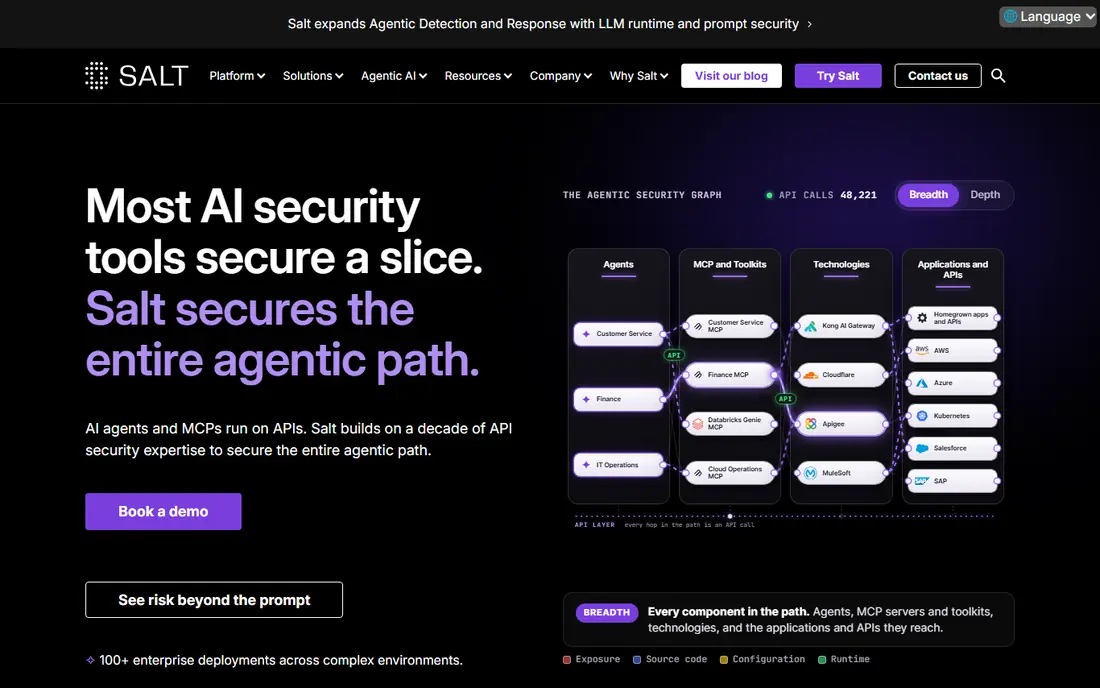
Salt Security is built around behavioral analysis of API traffic, correlating patterns over time to identify real attack sequences rather than flagging isolated anomalies. That approach helps enterprises find shadow APIs, zombie APIs that should have been retired, and business logic abuse that signature tools miss. Its API Context Engine supports design analysis and remediation guidance, and in 2026 Salt added protection for AI agents, MCP servers, and large language model interfaces, an emerging surface for many enterprises.
The limits are cost and tuning. Salt is enterprise only with no public pricing, and third party marketplace references suggest annual costs around 100,000 dollars for large traffic volumes, though your quote will depend on API calls and modules. Deployment also needs tuning time to reduce false positives. Salt suits large enterprises with extensive API portfolios and a security team that can own that tuning. Smaller teams should look at pipeline testing tools first.
- Behavioral analysis of API traffic over time
- Shadow and zombie API discovery
- AI agent and MCP protection in 2026
- Enterprise only pricing is quote based
- Tuning alert sensitivity takes time
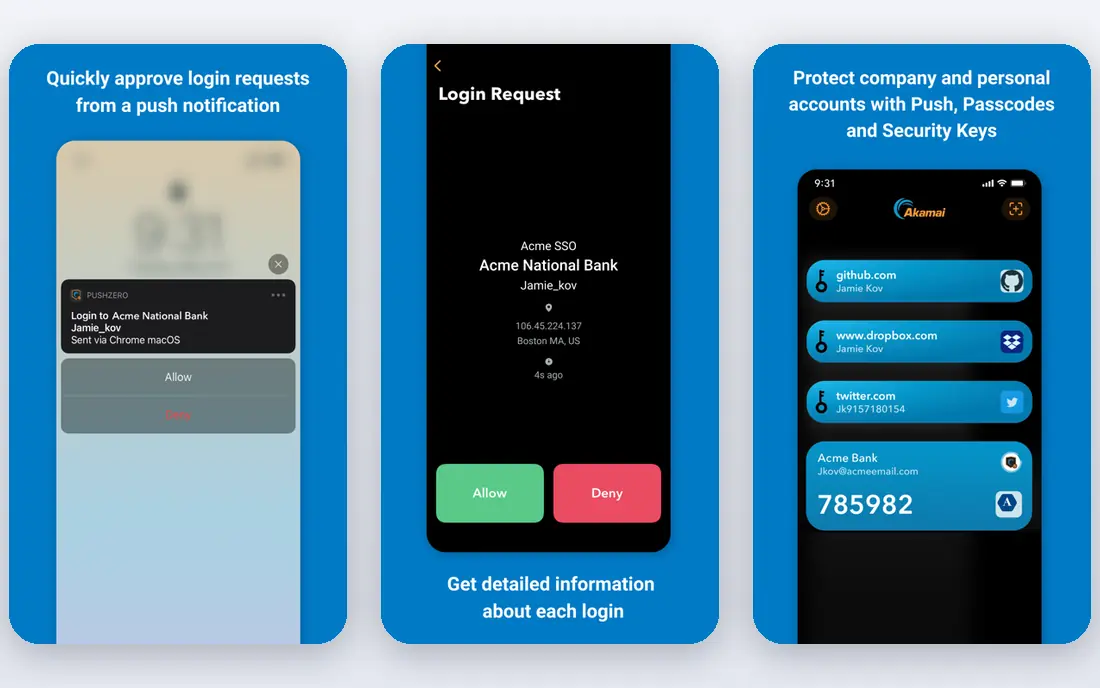
Akamai API Security, formerly Noname Security, which Akamai acquired in 2024, covers discovery, posture management, runtime protection, and active testing in one platform. It discovers APIs through traffic analysis, code scanning, and external reconnaissance, and its runtime protection uses behavioral baselining to detect anomalies. Active testing includes a large library of security tests for APIs before deployment, which helps teams catch flaws in staging as well as in production.
Edge native blocking is the key advantage for Akamai customers. Since Akamai already sits at the edge for many enterprises, blocking can happen there without a separate inline deployment. The trade-off is packaging and setup complexity during the post acquisition integration, and enterprise pricing that is quote based, with third party references to entry packages above 100,000 dollars a year. Enterprises already using Akamai for content delivery or web security should evaluate this first.
- Discovery through traffic, code, and external checks
- Edge native blocking
- Active testing module
- Enterprise pricing is quote based
- Setup can be complex after the Noname acquisition
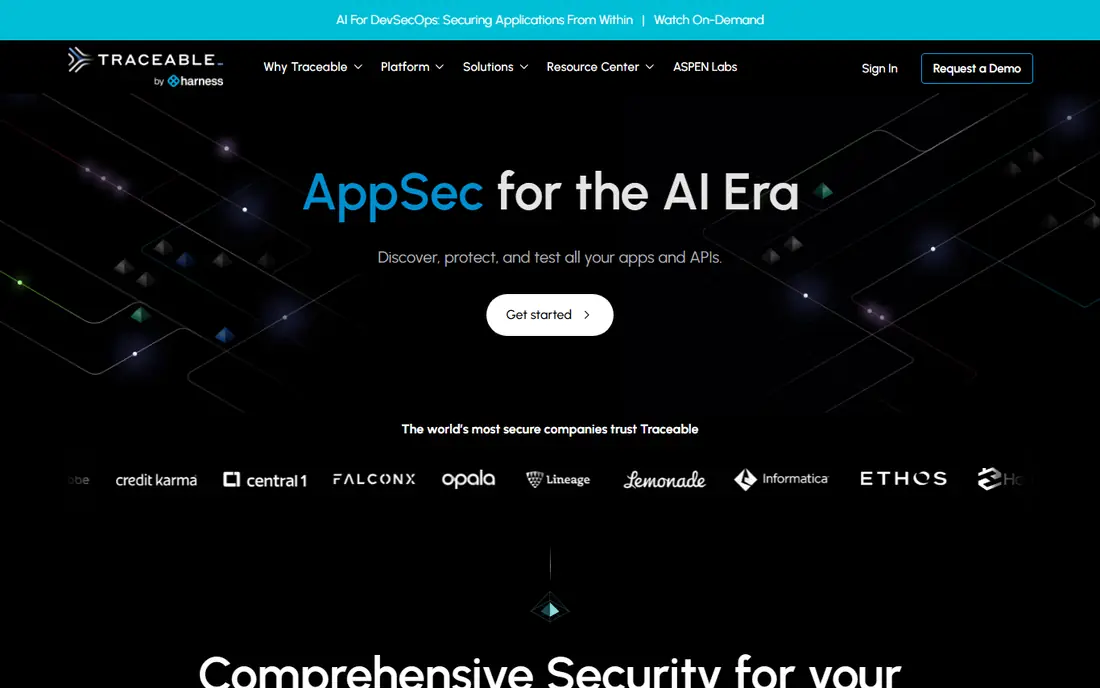
Traceable AI offers full lifecycle API security, from discovery and posture management through testing to runtime protection, with deep tracing of API calls across microservices. That tracing helps analysts see how a request moves through services, where sensitive data flows, and where abuse or anomalous behavior starts. For organizations with complex microservice architectures, that end to end visibility is more useful than a flat list of endpoints.
Deployment needs integration work to instrument services and to feed tracing data into the platform, so Traceable suits teams with platform engineering support. Pricing is enterprise and quote based, and the platform is best evaluated on your most complex services, not on a simple demo API. If your main problem is understanding API behavior across many services, Traceable is a strong shortlist pick alongside Salt.
- Deep distributed tracing across microservices
- Discovery plus testing plus runtime
- Abuse detection
- Enterprise pricing is quote based
- Deployment needs tracing integration work
Cequence Security combines API discovery and protection with bot management and fraud defense, which suits public facing APIs that face automated abuse, credential stuffing, and scraping alongside traditional API attacks. Native blocking lets teams stop malicious traffic in the request path, rather than only alerting on it, and its discovery covers shadow and undocumented APIs from traffic. For consumer facing platforms, banking apps, and e-commerce APIs, that combined coverage reduces the need for separate bot and API tools.
Internal only API teams may find the bot features more than they need, and they should compare Cequence against Salt or Traceable for pure internal discovery and runtime depth. Pricing is enterprise and quote based. Choose Cequence when your APIs are public, face bot traffic, and need active blocking as well as discovery.
- Native blocking
- API discovery plus bot and fraud defense
- Good for public facing APIs
- Enterprise pricing is quote based
- Bot focus may be more than some internal API teams need
Wallarm offers unified web application and API protection, with native blocking, API discovery, and testing in a single WAAP platform. That breadth suits teams that want to protect websites and APIs together, without managing separate web firewall and API tools. Tiered pricing gives more published options than purely quote based rivals, which helps mid size enterprises budget and compare plans before a sales conversation.
Discovery depth is the trade-off. Wallarm discovery is solid for WAAP use, but dedicated runtime leaders such as Salt and Traceable offer deeper behavioral discovery and tracing for very large API estates. Wallarm suits teams that need good API protection inside a broader web security platform, rather than the deepest standalone API runtime tool. Test its API inventory against your real traffic during a trial to confirm coverage.
- Native blocking
- Unified web app and API protection
- Tiered pricing options
- Discovery is less deep than dedicated runtime leaders
- Enterprise features need higher tiers
42Crunch takes a contract first approach to API security, auditing OpenAPI specifications for security flaws, enforcing policies at design time, and carrying those policies through to runtime with a micro firewall or gateway integration. That shift left focus catches misconfigurations, weak authentication, and data exposure in the API contract before code ships, which is cheaper to fix than a production incident. For API first teams with many OpenAPI specs, 42Crunch gives a clear, developer friendly workflow.
Runtime depth is less than Salt or Traceable on its own, since 42Crunch strength is in the contract and in enforcement at the gateway, not in behavioral runtime tracing. Teams that need both should pair 42Crunch with a runtime platform, or use its runtime enforcement where it fits. Published pricing options make it easier to budget than purely quote based rivals, though enterprise quotes still depend on scale.
- OpenAPI contract auditing
- Policy enforcement from design to runtime
- Published pricing options
- Design focus means runtime blocking needs a micro firewall or gateway integration
Cloudflare API Security suits enterprises already using Cloudflare for web application firewall, content delivery, or denial of service protection, since API discovery, schema validation, and abuse detection can be added inside the same edge platform. Edge native blocking stops malicious API traffic before it reaches origin servers, and the global network gives consistent protection across regions. For Cloudflare customers, the marginal cost and operational simplicity can beat a separate standalone platform.
Standalone depth depends on plan. Higher tiers add more API discovery, sequence analytics, and abuse detection, while lower tiers offer basic protection only. Enterprises with very large, complex internal API estates should compare Cloudflare API features against Salt, Traceable, and Akamai on discovery depth and tracing before standardizing. For edge led teams, Cloudflare is a practical consolidation choice.
- Edge native blocking
- Bundled with Cloudflare application security
- Wide global network
- Depth depends on Cloudflare plan
- Standalone API features vary by tier
StackHawk is a developer centric API security testing tool that runs dynamic tests in CI/CD pipelines, finding API flaws on every build before they reach production. It supports REST, GraphQL, and gRPC, integrates with common build tools, and gives developers findings in their workflow with remediation guidance. For engineering teams that want shift left API testing without a heavy enterprise platform rollout, StackHawk is the easiest starting point on this list.
The limit is scope. StackHawk tests APIs before production, but it does not replace runtime discovery, behavioral protection, or blocking for live APIs. Enterprises should pair it with a runtime platform such as Salt, Traceable, or Akamai for full lifecycle coverage. A free trial lets teams test StackHawk on real specs and pipelines before buying, which makes it a low risk first step.
- Developer friendly pipeline testing
- REST, GraphQL, and gRPC support
- CI/CD native workflow
- Pre production focus means runtime protection needs another tool
- Enterprise pricing varies
How we picked these
We compared 2026 API security evaluations, vendor product pages, and published comparison tables that covered discovery, blocking, testing, and pricing models. We favored platforms with a current enterprise offer, and we included runtime leaders, edge platforms, WAAP platforms, and pipeline testing tools so readers can compare different layers of API defense. We did not invent prices, since most enterprise API security pricing is quote based and depends on API volume, endpoints, and modules.
How to choose an enterprise API security platform
Discover first, before you buy blocking
Run traffic based discovery before you commit, since most enterprises find shadow and zombie APIs they did not know existed. A platform that cannot inventory your real estate accurately will not protect it well, whatever its blocking features claim. Use discovery results as the first finding in your business case.
Price what you already own at the edge
Check the API security features in your existing edge, WAAP, or gateway platform, such as Cloudflare, Akamai, Imperva, or F5, before buying a dedicated tool. You may already pay for useful discovery and blocking, and a dedicated runtime platform can then cover only the gaps. That sequencing saves budget and avoids duplicate tooling.
Secure contracts in CI, then protect runtime
Add contract auditing and pipeline testing early, with tools such as 42Crunch or StackHawk, so new APIs ship with fewer flaws. Add behavioral runtime protection for your most important APIs, where business logic abuse and account takeover matter most. That crawl, walk, run path gives value at each stage without a single large rollout.
Plan ownership and tuning time
API security needs owners in security, platform engineering, and development. Budget time for tuning alerts, fixing findings, and maintaining API inventories as services change. A platform with no owner will generate noise and then be ignored, however strong its feature list looks in a demo.
Frequently asked questions
What is API security for enterprise?
Enterprise API security discovers all APIs, including shadow and forgotten endpoints, checks their posture and contracts, tests them before production, and protects them in runtime against abuse, data exposure, and business logic attacks. It covers REST, GraphQL, and gRPC APIs across internal, partner, and public use.
Is a web application firewall enough for API security?
No, not on its own. A traditional web firewall protects against common web attacks but often misses API specific issues such as broken object authorization, excessive data exposure, and business logic abuse. Dedicated API platforms add discovery, schema validation, behavioral analysis, and API specific testing that a generic firewall lacks.
What is the difference between Salt and Akamai API Security?
Salt focuses on behavioral runtime protection and discovery through traffic analysis, with blocking through integrations. Akamai API Security, formerly Noname, offers discovery, posture, runtime, and testing with edge native blocking for Akamai customers. Choose Salt for deep behavioral runtime work, and Akamai when edge blocking and an existing Akamai estate matter most.
Do I need API security if my APIs are internal only?
Yes, though the priority differs. Internal APIs still face shadow endpoints, misconfigurations, excessive permissions, and insider or lateral movement risks. Discovery and posture management matter for internal APIs, while bot and public abuse protection matter more for public APIs. Start with discovery for all APIs, then add runtime protection by risk.
How much does enterprise API security cost?
Most enterprise platforms are quote based, with third party references to entry packages above 100,000 dollars a year for large runtime platforms. Pipeline testing tools and edge bundled options can cost less, depending on scale and plan. Get quotes based on your API count, traffic volume, and required modules, and run a proof of concept before signing.
Sources
- https://www.salt.security
- https://www.akamai.com
- https://www.traceable.ai
- https://www.cequence.ai
- https://www.wallarm.com
- https://www.42crunch.com
- https://www.cloudflare.com
- https://www.stackhawk.com
- https://zuplo.com/learning-center/best-api-security-tools-2026
- https://cybersecuritynews.com/best-api-security-tools/
See where you really rank - block by block
ProMapRanker scans Google Maps across a grid of your service area. Simple monthly plans from $19, white-label on every plan.
Start freeKeep reading
 zoro.to alternatives
Best Zoro.to Alternatives in 2026
We compare the best zoro.to alternatives in 2026, listing only legal licensed anime streaming services, from Crunchyroll to free options for fans today.
Read → zip alternatives
Best Zip Alternatives in 2026
We compare the best zip alternatives for buy now, pay later in 2026, covering pay-in-4 plans, fees, spending limits, and credit reporting options today.
Read → yesware alternatives
Best Yesware Alternatives in 2026
Compare the best yesware alternatives for sales email tracking, templates, and sequences, with current pricing and honest tradeoffs for small sales teams.
Read →