 ProMapRanker
Best API Security Platforms in 2026


Runtime discovery and attack blocking · Pricing starts at: See website
Key takeaways
- API discovery comes first, because you cannot protect an API you do not know exists, including shadow and zombie endpoints.
- Runtime platforms such as Salt and Traceable focus on live traffic and business logic abuse, while design-time tools such as 42Crunch and StackHawk catch problems before release.
- Edge platforms such as Akamai and Imperva suit teams that already run traffic through those networks and want blocking close to the edge.
- Most enterprise API security pricing is quote-based, so budget on a sales conversation, not on a public price card.
- The best platform for a small team is often the one it can actually run, not the one with the longest feature list.
Quick comparison
| Pick | Great for | Pricing starts at | Free tier | |
|---|---|---|---|---|
| Salt Security | Runtime discovery and attack blocking | See website | No | Visit |
 Traceable | Trace-based runtime protection | See website | No | Visit |
 Akamai API Security | Edge blocking at scale | See website | No | Visit |
 Cequence Security | API and bot abuse defense | See website | No | Visit |
 Wallarm | Unified app and API protection | See website | Free trial | Visit |
 Imperva API Security | WAAP with API protection | See website | No | Visit |
 42Crunch | Contract testing and API firewall | See website | Yes | Visit |
 StackHawk | API testing in CI pipelines | See website | Free trial | Visit |
The best api security platforms
APIs now carry most of the traffic between apps, partners, and mobile clients, and they are a favorite target because a single flawed endpoint can expose data at scale. A good API security platform does more than block bad requests. It finds every API, maps sensitive data flows, tests contracts before release, and watches live traffic for abuse that looks normal to a traditional firewall, such as an attacker slowly harvesting records through a valid account.
The platforms below cover different parts of that job. Some watch runtime traffic, some test APIs in development, and some block at the edge. Most are enterprise products with quote-based pricing, so we list starting price as See website where the vendor does not publish a price. For a small team, the design-time and testing tools are usually the practical starting point, while larger teams often pair a runtime platform with contract testing.
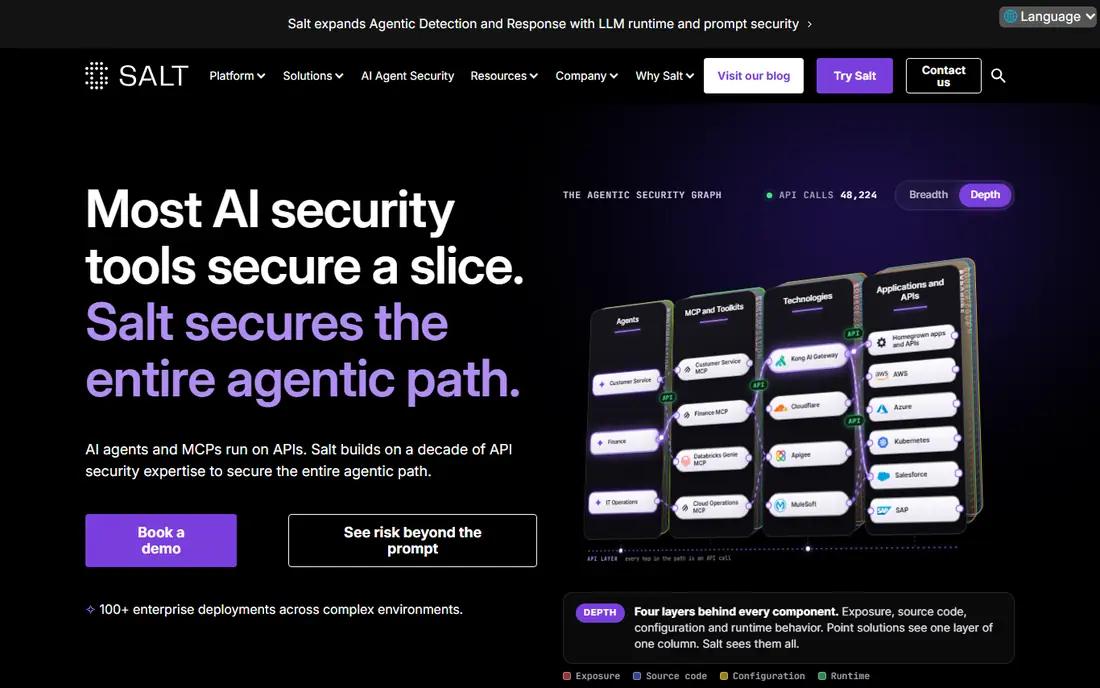
Salt Security is the best-known runtime API security platform, and its strength is context. It builds a baseline from live API traffic over days and weeks, which helps it spot slow, low-volume attacks that a simple rate limit would miss, such as credential stuffing spread across many accounts or data harvesting through a legitimate-looking session. It also discovers shadow APIs from traffic, rather than relying only on a registry that teams forget to update.
The platform integrates with gateways and inline devices for blocking, and it gives developers remediation notes tied to the actual API behavior it observed. The limits are practical. Pricing is quote-based, deployment needs traffic integration, and the product is built for larger teams with a dedicated security owner. If you run revenue-critical public APIs and need runtime defense, Salt is the first platform to evaluate, but budget time for the integration as well as the license.
- Deep traffic-based discovery
- Long-baseline attack detection
- Remediation guidance for developers
- Quote-based pricing
- Needs traffic integration work
- Enterprise focus
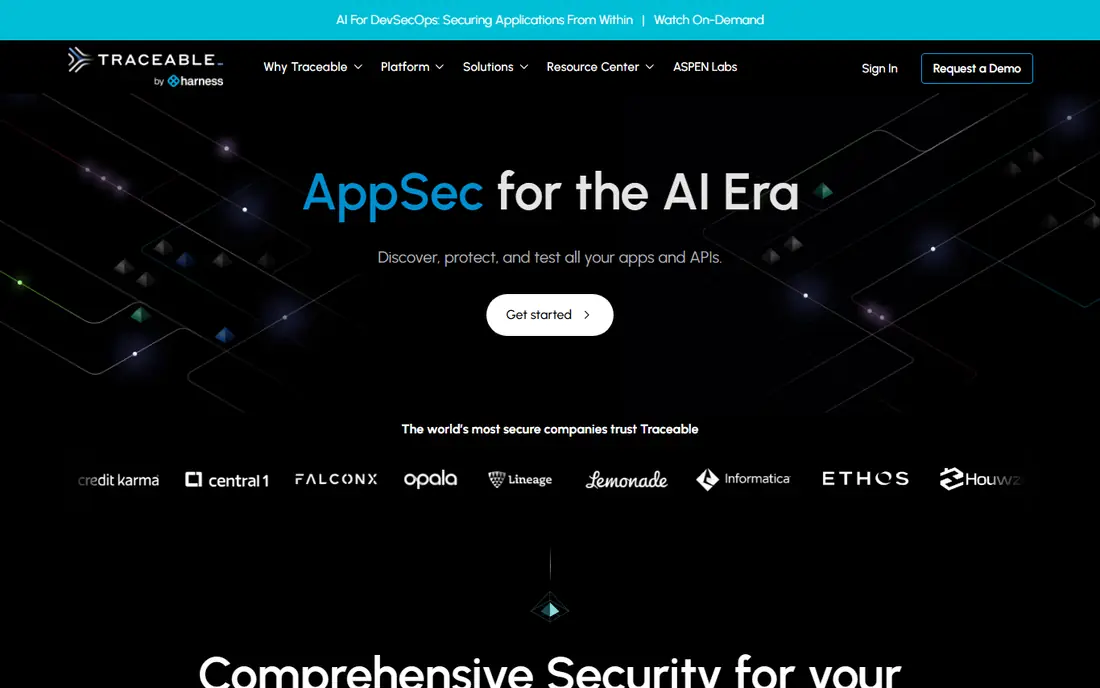
Traceable focuses on tracing every API call from entry to backend services, which gives security teams a clearer picture of where sensitive data actually flows. That tracing helps with two jobs at once: finding APIs that are not in the inventory, and spotting abuse such as broken object-level authorization, where a user reaches another user's records by changing an ID in a request. Native blocking means it can stop that traffic directly, rather than only alerting through another device.
The trade-off is maturity. Teams that already use distributed tracing will get value faster, while teams without that background will need help during setup. Pricing is quote-based, and the product is enterprise-focused. If your main worry is data exposure through business logic flaws rather than simple injection attacks, Traceable is a strong candidate, and its data flow maps are useful for compliance work as well.
- Full request tracing
- Sensitive data flow mapping
- Native blocking
- Quote-based pricing
- Best suited to teams with tracing maturity
- Setup can be involved
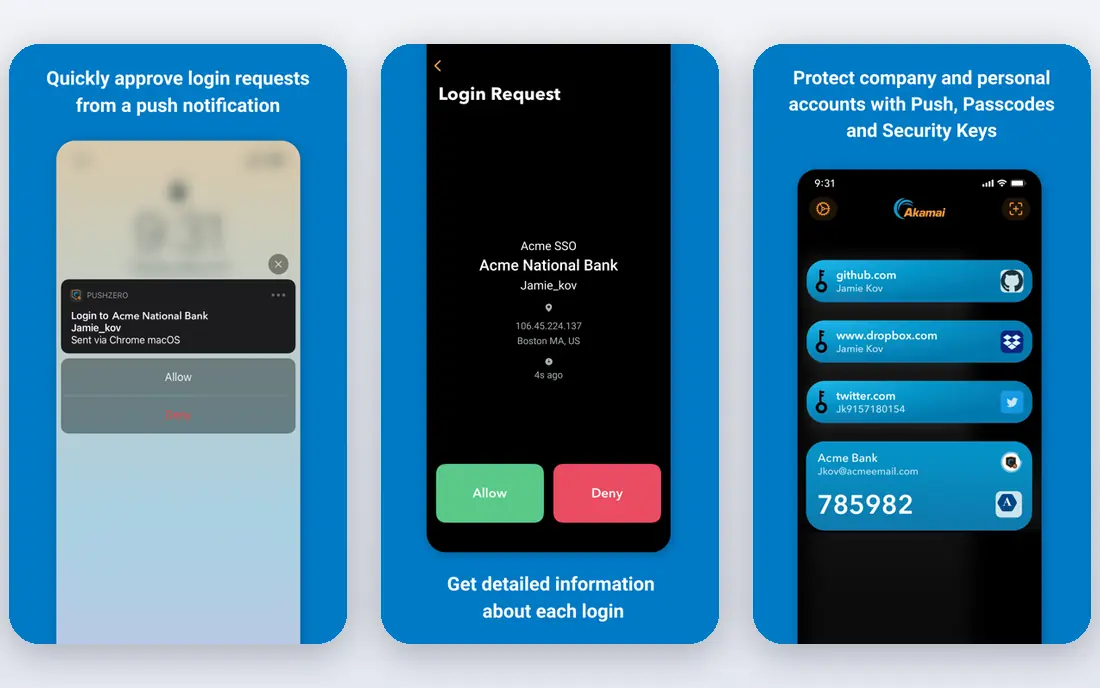
Akamai API Security suits teams that already send traffic through Akamai, since blocking at the edge stops bad requests before they reach origin servers. After Akamai absorbed Noname Security technology, its API offering covers discovery, posture, and runtime protection in one edge platform. That combination is useful for large public APIs, where scale and latency matter and where a separate inline device would add hops.
The downside is scoping. Akamai pricing is often bundled with content delivery and wider application security services, so a small team may find the conversation harder to size than a standalone tool. It is also an enterprise platform, not a quick self-serve signup. If you already use Akamai for delivery or web protection, adding API security there is usually simpler than buying a separate runtime platform. If you do not use Akamai, start with a standalone runtime tool instead.
- Edge-native blocking
- Large global network
- Strong discovery from edge traffic
- Pricing bundled with wider Akamai services
- Can be complex to scope
- Enterprise focus
Cequence Security covers both API protection and automated bot abuse, which matters because many API attacks are automated. Credential stuffing, inventory hoarding, and fake account creation often arrive as bot traffic that looks like normal API use at low volume. Cequence builds an inventory from live traffic, detects that abuse, and blocks it natively, rather than relying only on a web firewall rule set.
That breadth is also the thing to scope carefully. If you already pay for a bot management product, check where the two overlap before you buy both. Pricing is quote-based, and the platform is aimed at larger teams. For companies with public APIs that face constant automated abuse, Cequence is worth a pilot, especially if you can measure blocked abuse and false positives during a trial period.
- Native API blocking
- Bot and fraud detection
- Inventory from live traffic
- Quote-based pricing
- Overlap with bot tools needs scoping
- Enterprise focus
Wallarm offers a unified platform for web apps, APIs, microservices, and serverless workloads, with coverage for the OWASP API Top 10 risks. It supports several deployment options, including cloud, Kubernetes, and on-premises, which helps teams that run mixed infrastructure. Real-time blocking, an API inventory, and testing features sit in one console, so a team does not need three separate tools for basic coverage.
Pricing is tiered rather than fully public, so you will need a quote to compare it fairly with rivals. The platform is broad, which is a strength for a team that wants one vendor, but it can feel like a lot for a team that only needs API testing or only needs runtime blocking. Wallarm suits mid-size to large teams that want a single platform for app and API defense and are willing to run a trial to check false positive rates on their own traffic.
- Native blocking
- Multiple deployment options
- API inventory and testing features
- Tiered pricing needs a sales check
- Smaller teams may find the platform broad
- Docs take time to work through
Imperva API Security is part of Imperva's wider web application and API protection platform, which will appeal to teams that already use Imperva for web firewalling. API discovery, schema enforcement, and runtime protection sit alongside bot management and DDoS defense, so a team can manage web and API rules in one place. That matters for operations, since fewer consoles usually mean fewer missed alerts.
The catch is that API security is one part of a larger suite, so scoping the right bundle takes a sales conversation, and pricing is quote-based. Teams that only need API protection may find a focused runtime vendor simpler to evaluate. But if you already run Imperva, or you want web and API protection from one vendor with native blocking, Imperva is a sensible shortlist option, and its long history in web protection is a real asset.
- Native blocking in a mature WAAP
- Broad deployment options
- Strong web protection heritage
- Quote-based pricing
- API features sit inside a larger suite
- Setup needs planning
42Crunch takes a different angle from the runtime platforms above. It audits your OpenAPI contract against hundreds of security checks, scores the issues by severity, and tells developers exactly how to fix them. It can also enforce that contract at runtime with a lightweight firewall, which stops requests that do not match the contract. That design-time focus catches problems before they reach production, which is cheaper to fix than a live incident.
The free tier makes 42Crunch the most accessible tool on this list for a small team or a solo developer. The limit is scope. On its own, it does not give the same deep runtime behavior analysis as Salt or Traceable, so larger teams often pair it with a runtime platform. For a team starting API security from scratch, though, 42Crunch is a practical first step, and its contract discipline improves API quality as well as security.
- OpenAPI contract auditing
- Published pricing for some plans
- Lightweight API firewall
- Design-time focus means less runtime depth alone
- Smaller team support needs checking
StackHawk brings API security testing into the development pipeline, where developers already work. It uses your OpenAPI specification to drive scans against a running test API, then reports findings in terms developers can act on, with the request and response that triggered each issue. That fit with CI means security checks run on every change, rather than as a one-off audit before a release.
The limit is that StackHawk is a testing tool, not a runtime blocker. It will not stop a live attack on a production API, so teams that need runtime defense should pair it with one of the platforms above. Pricing is published for some tiers and quote-based for larger use, with a free trial available. If your team ships APIs often and wants security checks that developers will actually fix, StackHawk is a strong addition to the pipeline.
- Developer-friendly CI testing
- OpenAPI-driven scans
- Clear findings for developers
- Pre-production focus, not runtime blocking
- Needs CI setup
- Pricing needs a quote for larger use
How we picked these
We compared vendor feature pages, public comparison guides from 2026, and each platform's stated focus: discovery, runtime defense, edge blocking, or pre-production testing. We kept only platforms that are still offered as live products in October 2026, and we left out products that have been fully folded into a parent platform without a standalone API offering. We did not test these platforms hands-on, since they are enterprise products that require traffic integration and sales access. We based the comparison on vendor documentation, published pricing notes, and public reviews, and we marked pricing as See website where the vendor does not publish a price.
How to choose the right platform
Start with discovery, even if you buy nothing else. Run a traffic-based discovery exercise for two weeks and compare the result with your API registry. The gap between the two is your real risk, and it will tell you whether you need a runtime platform, a testing tool, or both. Next, check what you already own. If your traffic already passes through Akamai, Imperva, or Cloudflare, price the API features of that platform before buying a standalone tool.
Then separate testing from blocking. Contract testing and CI scanning prevent new flaws, while runtime blocking stops live abuse. Most mature teams need both, but a small team should start with testing, since it is cheaper and it fixes the root cause. Finally, run a pilot on real traffic, measure false positives, and check how findings reach developers. A platform that alerts well but never gets fixed is not protecting you.
Frequently asked questions
What are the best api security tools for small teams?
42Crunch and StackHawk are the most practical starting points for small teams, because both focus on contract and CI testing and are easier to start than a full runtime platform. A small team should begin with discovery and contract testing, then add runtime protection when its public APIs grow.
What is the best api security platform for runtime protection?
Salt Security and Traceable are the strongest runtime options here, with deep traffic analysis and blocking for business logic abuse. Salt is known for long-baseline detection, while Traceable adds full request tracing and data flow mapping. The right pick depends on your existing tracing and gateway setup.
Are there best rated api security services with free plans?
42Crunch offers a free tier for contract auditing, and Wallarm and StackHawk offer free trials. Most enterprise runtime platforms do not offer a lasting free plan, since they need traffic integration and support. For a free start, use contract testing and open-source scanning alongside your gateway rules.
How do best api security platforms handle shadow APIs?
Runtime platforms find shadow APIs from live traffic, by watching which endpoints actually receive requests and comparing them with the known inventory. That traffic-based view catches endpoints that were never registered, old versions still in use, and partner APIs that were set up informally. Registry-only tools will miss those endpoints.
What is the difference between API security and a web firewall?
A web firewall mainly blocks known attack patterns such as injection, while API security also checks business logic, authentication, authorization, and contract compliance. An attacker can abuse a valid API with valid credentials, and a traditional firewall may see nothing wrong. That is why runtime API platforms watch behavior over time, not just single requests.
Should I buy API security from my edge vendor or a standalone vendor?
If your traffic already runs through Akamai or Imperva, check their API features first, since edge blocking can be simpler and faster. If you need deep runtime behavior analysis, or you run APIs across several clouds, a standalone platform such as Salt, Traceable, or Cequence may fit better. Many large teams use both: edge blocking plus a runtime platform for critical APIs.
Sources
- https://cybersecuritynews.com/best-api-security-tools/
- https://undercodenews.com/best-api-security-tools-in-2026-eight-platforms-for-discovery-testing-and-runtime-defense-video/
- https://sourceforge.net/software/api-security/usa/?sort=rating_avg&page=2
- https://salt.security
- https://www.traceable.ai
- https://www.akamai.com
- https://www.cequence.ai
- https://wallarm.com
- https://www.imperva.com
- https://42crunch.com
- https://www.stackhawk.com
See where you really rank - block by block
ProMapRanker scans Google Maps across a grid of your service area. Simple monthly plans from $19, white-label on every plan.
Start freeKeep reading
 best employee onboarding software
Best Employee Onboarding Software in 2026
We compared the best employee onboarding software in 2026 for new employees, from simple HR tools to global platforms, to help you pick by team size today.
Read → best ecommerce platform for small business
Best Ecommerce Platform for Small Business in 2026
We compared the best ecommerce platform for small business options on price, selling features, fees, and ease of use, so you can launch a store that grows.
Read → best crm software for startups
Best CRM Software for Startups in 2026
We compared the best crm software for startups on price, free plans, and setup time, so founders can choose a simple tool that grows with their growing team.
Read →