 ProMapRanker
Best Analytics Tools for Football Teams in 2026

Key takeaways
- No single tool covers video, physical data, and scouting well, so most clubs combine two or three platforms.
- Hudl, including Sportscode and StatsBomb data, is the core video and tactical stack for many professional clubs.
- Catapult and STATSports lead on GPS workload, while SkillCorner and Wyscout lead on tracking and scouting data.
- Prices are mostly quoted, so budget for cameras, sensors, and staff time as well as the software subscription.
Quick comparison
| Pick | Great for | Pricing starts at | Free tier | |
|---|---|---|---|---|
 Hudl | Video analysis and coaching | See website | No | Visit |
 Catapult | GPS workload and video together | See website | No | Visit |
 STATSports | GPS tracking for elite teams | See website | No | Visit |
 Wyscout | Scouting and opponent analysis | See website | No | Visit |
 SkillCorner | Computer-vision tracking data | See website | No | Visit |
 Veo | Automatic match recording | See website | No | Visit |
 Nacsport | Video tagging for academies | See website | No | Visit |
 Kitman Labs | Performance and medical data in one place | See website | No | Visit |
 Teamworks AMS | Athlete data coordination | See website | No | Visit |
The best analytics tools for football teams
We cover tools for association football and American football coaching staffs where the platform fits both, but the focus here is football teams that need video, physical, and tactical insight together.
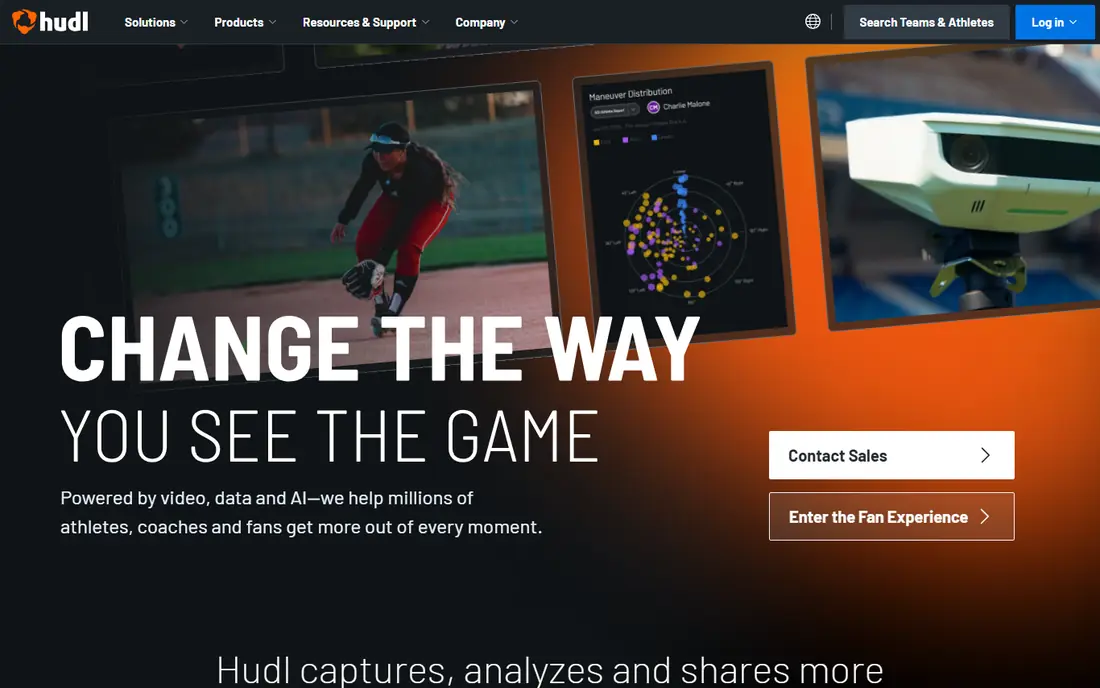
Hudl is the central video platform for many clubs, schools, and academies. Coaches record matches, tag events, build playlists, and share clips with players, while analysts use Sportscode for detailed coding and shared timelines. Since StatsBomb joined Hudl, event data and video sit closer together, which helps an analyst link a pressing sequence to the numbers behind it.
The breadth is also the drawback. Pricing is quoted by level and package, and a small club may not need every module. Training matters too, because a tagging system only helps if coaches and analysts agree on what each tag means. For a club that wants one video home for coaching, scouting, and player development, Hudl is the default shortlist pick.
- Video tagging, playlists, and sharing
- Sportscode for deep coding
- StatsBomb event data inside the Hudl ecosystem
- Quote-based pricing
- Full ecosystem can feel large for a small club
- Setup and training take time
Catapult pairs wearable GPS and inertial sensors with video and performance software, so staff can see not just what happened tactically, but how hard each player worked to make it happen. Workload, sprint, and acceleration data help fitness coaches plan training load and flag players who need attention, while video gives that data context.
Hardware and software are quoted together, and the system rewards a club with sports science staff who will act on the data daily. A small academy without that staff may collect numbers it never uses. For an elite or professional performance department, Catapult remains a leading choice for workload and injury-risk planning.
- GPS and inertial sensors for workload
- Video analysis linked to physical data
- Used widely at elite level
- Quote-based pricing
- Hardware cost on top of software
- Needs sports science staff to get full value
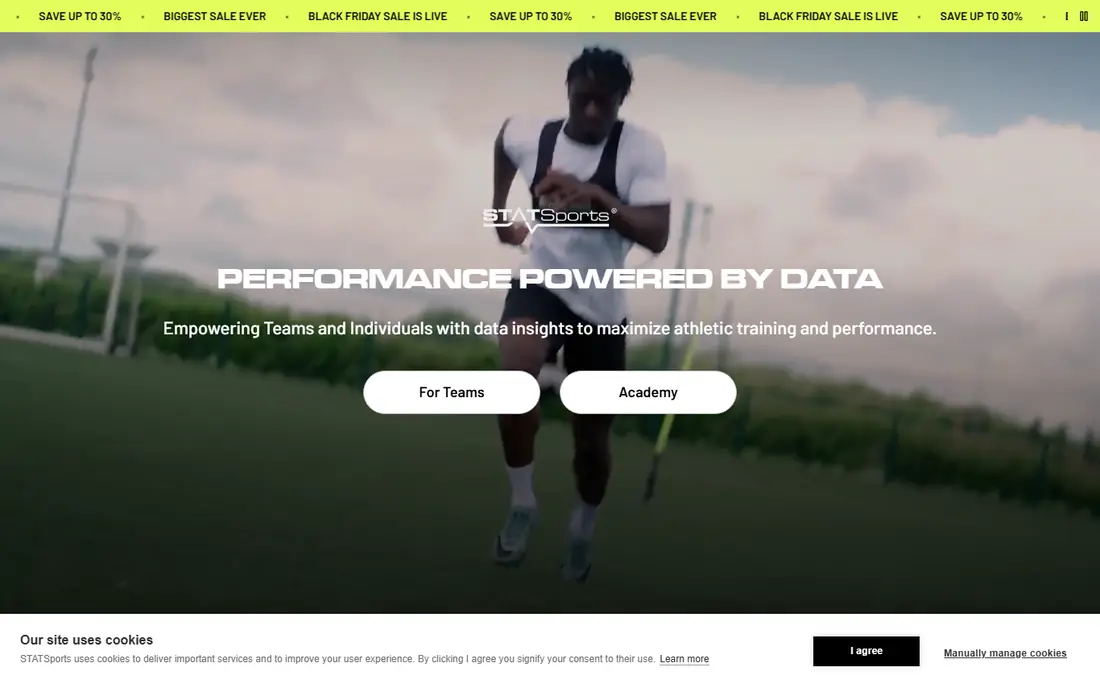
STATSports Apex trackers are a familiar sight in professional and academy football, giving live and post-session metrics on distance, speed, sprints, and load. Coaches and sports scientists use the data to set training targets, compare players by position, and track return-to-play progress against pre-injury baselines.
Team pricing is quoted, and hardware adds to the total, so a club should budget for trackers, vests, and replacement units as well as software. The data also needs a weekly routine: who reviews it, when, and what changes as a result. For a team that already runs a structured performance programme, STATSports is a proven GPS option.
- Apex GPS trackers for teams
- Live and post-session metrics
- Strong academy and professional user base
- Quote-based team pricing
- Hardware purchase or lease adds cost
- Data needs a clear weekly workflow
Wyscout, now part of Hudl, is the scouting database many professional clubs use to find players and study opponents. Video clips, event data, and player profiles let a scout compare targets across leagues, build shortlists, and prepare opponent reports without waiting for a full data team. That breadth saves hours when a transfer window is short.
Cost and league coverage are the limits. Pricing is quoted, and it is aimed at professional clubs rather than grassroots teams. Coverage is deeper for top leagues than for lower divisions, so check your target leagues before buying. For a professional recruitment department, Wyscout is still a core tool.
- Huge video and data database for scouting
- Opponent reports
- Player comparison tools
- Quote-based pricing
- Professional focus and cost
- Data depth varies by league coverage
SkillCorner uses computer vision to produce tracking data from video, without requiring players to wear sensors. That gives analysts physical metrics, such as distance and speed, plus tactical measures such as team shape and pressing intensity, from matches where wearables are not allowed or not available. It is especially useful for scouting, because it can cover matches a club did not attend.
Pricing is quoted and aimed at professional use, and the tool is football-specific. Tracking data alone does not coach a team; an analyst still needs to turn it into clear, short messages for coaches and players. For a club that wants tracking insight without a wearable programme, SkillCorner is a strong specialist pick.
- Tracking data from broadcast video without wearables
- Physical and tactical metrics
- Useful for scouting and analysis
- Quote-based pricing
- Football-only focus
- Needs analyst skill to turn tracking data into coaching points
Veo solves the first problem many clubs face: getting a usable recording of every match without a camera operator. The Veo Cam follows the ball, records automatically, and produces clips, event timelines, and drawing tools in the Veo Editor. Player profiles and analytics add-ons help with recruitment and individual feedback.
Cost is the catch. The camera is a one-off purchase, with a subscription on top, and analytics and livestreaming are paid add-ons. A club should confirm the total first-year cost, including tripod and add-ons, before comparing Veo with a manual camera setup. For a team that plays at changing grounds and needs reliable recordings, Veo is a practical choice.
- AI camera follows the ball automatically
- Event detection and clips
- Player profiles for recruitment
- Camera purchase plus subscription
- Analytics add-ons cost extra
- Setup and pitch position affect video quality
Nacsport is a video analysis tool popular with academies, semi-professional clubs, and analysts who want flexible tagging without an enterprise contract. Users build their own templates, tag live or after a match, and turn clips into presentations for coaches and players. That flexibility suits a club with its own playing model and clear analysis questions.
Template design takes thought, and the ecosystem is smaller than Hudl, so integrations and shared databases are less extensive. Pricing varies by edition, so confirm the current figure for the features you need. Paired with Veo for recording, Nacsport is a common, cost-conscious stack for academies.
- Flexible tagging templates
- Good value for academies and semi-professional clubs
- Live and post-match analysis
- Quote-based pricing in many cases
- Smaller ecosystem than Hudl
- Learning curve for template design
Kitman Labs brings performance, medical, wellness, and training data into one intelligence platform, so a club can see load, readiness, injury history, and planning in the same view. That joined-up picture helps medical and performance staff agree on return-to-play steps and training loads, rather than working from separate spreadsheets.
The platform only works as well as the data feeding it. Departments must agree on definitions, entry routines, and access rules, and implementation needs coordination across medical, performance, and coaching staff. For a multidisciplinary professional organisation, Kitman Labs is a strong central system. For a small club with one analyst, it will likely be more than needed.
- Joins performance, medical, and wellness data
- Planning and return-to-play workflows
- Used by professional organisations
- Quote-based pricing
- Needs clean data processes across departments
- Implementation takes coordination
Teamworks AMS, formerly Smartabase, is an athlete management system that centralises wellness questionnaires, medical notes, testing, training, and performance data. Coaches, medical staff, and performance staff can view the same athlete record, set alerts for changes, and track trends over a season. That coordination is its main strength.
Like Kitman Labs, it depends on daily data entry and clear governance. If staff do not enter wellness or load data consistently, the dashboards will mislead rather than help. Pricing is quoted by organisation size and modules. For a college or professional programme with several departments sharing athlete data, Teamworks AMS is a proven central hub.
- Central athlete management system
- Wellness, medical, and performance data in one place
- Widely used in colleges and pro teams
- Quote-based pricing
- Setup needs data governance
- Value depends on staff actually entering data daily
How we picked these
We compared official product pages, pricing information, and public club workflows for football analytics tools live in October 2026. We favoured tools with a clear job in video, physical tracking, scouting, or athlete management, and we wrote See website where vendors quote by club size rather than publishing a starting price.
What to check before you buy
Decide which question you need answered each week before you buy any tool. A video question needs Hudl, Veo, or Nacsport. A workload question needs Catapult or STATSports. A scouting question needs Wyscout or SkillCorner. Buying a tool before naming the question is how clubs end up with dashboards nobody opens.
Also check consent, safeguarding, and data rules, especially for youth players. Confirm who can view video and medical data, how long it is stored, and how a player or parent can ask for it to be removed. Those rules matter more than a new chart type, and they should be agreed before the first match is recorded.
Frequently asked questions
What are the best football analytics tools for teams on a budget?
Veo plus Nacsport is a common budget stack for recording and tagging, while Hudl offers packages for schools and academies. GPS and tracking-data platforms are usually quoted and suit larger budgets.
Do football analytics tools replace coaches?
No. Tools provide video, numbers, and patterns, but coaches still decide tactics, selection, and player conversations. The best clubs use analytics to support a clear coaching message, not to replace it.
How much do football analytics tools cost?
Most professional tools are quote-based, with Veo adding a camera purchase to a subscription and GPS tools adding hardware costs. Always ask for the total first-year cost, including cameras, sensors, and add-ons.
What is the difference between GPS tracking and video tracking?
GPS tracking uses wearables to measure each player directly, while video tracking such as SkillCorner derives movement from video. GPS gives individual load data in training and matches, while video tracking can cover matches without wearables.
Can small clubs use professional analytics tools?
Yes, for video and recording, through Veo, Nacsport, or academy Hudl packages. Professional scouting and tracking-data platforms are usually priced for professional clubs, so small clubs should start with video first.
Sources
See where you really rank - block by block
ProMapRanker scans Google Maps across a grid of your service area. Simple monthly plans from $19, white-label on every plan.
Start freeKeep reading
 zscaler alternatives
Best Zscaler Alternatives in 2026
Looking for zscaler alternatives? We compare 9 SASE and zero trust platforms on architecture, data protection, pricing, and fit for your network and team.
Read → zapier alternatives free
Best Zapier Alternatives Free in 2026
Nine automation tools for zapier alternatives free in 2026, all with genuinely free tiers, plus free plan limits, starting prices and upgrade paths explained.
Read → which platform is best for online reputation
Which Platform Is Best for Online Reputation in 2026
Wondering which platform is best for online reputation? We compare 8 review, listing, and response tools for small and multi-location businesses and agencies.
Read →