 ProMapRanker
Best Alternatives to Atomicwork in 2026


Atlassian-centred service teams · Pricing starts at: $20 per agent per month
Key takeaways
- Jira Service Management and Freshservice offer the fastest starts for IT teams that need ticketing and automation.
- Zendesk and Zoho Desk suit teams that also handle customer support, not only internal IT requests.
- HaloITSM and SysAid offer deeper ITIL and AI features for mid-market teams with stricter processes.
- Free tiers for up to three agents make Jira and Zoho Desk easy to trial before paying.
Quick comparison
| Pick | Great for | Pricing starts at | Free tier | |
|---|---|---|---|---|
| Jira Service Management | Atlassian-centred service teams | $20 per agent per month | Yes | Visit |
 Freshservice | Fast ITSM for mid-market teams | $19 per agent per month | Free trial | Visit |
 Zendesk | Omnichannel support with AI | $19 per agent per month | Free trial | Visit |
 ManageEngine ServiceDesk Plus | Budget ITSM with asset tracking | $13 per technician per month | Yes | Visit |
 HaloITSM | All-inclusive ITIL service desk | $49 per user per month | Free trial | Visit |
 SysAid | AI-assisted service automation | See website | Free trial | Visit |
 HappyFox | Predictable help desk pricing | $24 per agent per month | Free trial | Visit |
 Zoho Desk | Budget support inside Zoho | $14 per agent per month | Yes | Visit |
 ServiceNow | Enterprise service management | See website | No | Visit |
The best alternatives to Atomicwork
Atomicwork is an employee service platform for IT and internal support, covering ticketing, self-service, automation and AI assistance. These alternatives cover the same work, from ITSM desks to broader help desk platforms. We compared official feature pages, pricing pages, app store listings, privacy policies and public reviews.
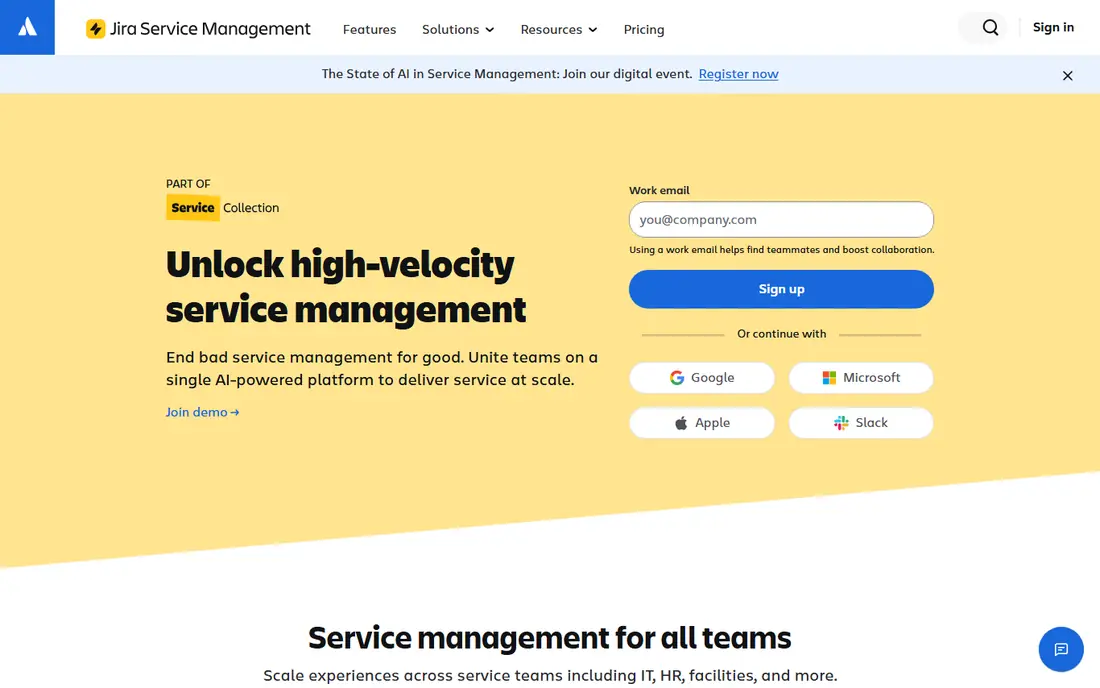
Jira Service Management is the easiest pick for teams already using Jira Software and Confluence. Service requests can link to development issues, knowledge articles can live in Confluence, and automation can route common requests without agent time. The free tier for up to three agents lets small teams start without a purchase.
Configuration is the trade-off. ITIL processes need setup, and the tool feels most natural to Atlassian users. AI features also differ by tier. For teams that already live in Atlassian tools, it offers the shortest path to a working service desk.
- Free for up to three agents
- Links service tickets to development work
- Strong automation
- ITIL setup needs configuration
- AI features vary by tier
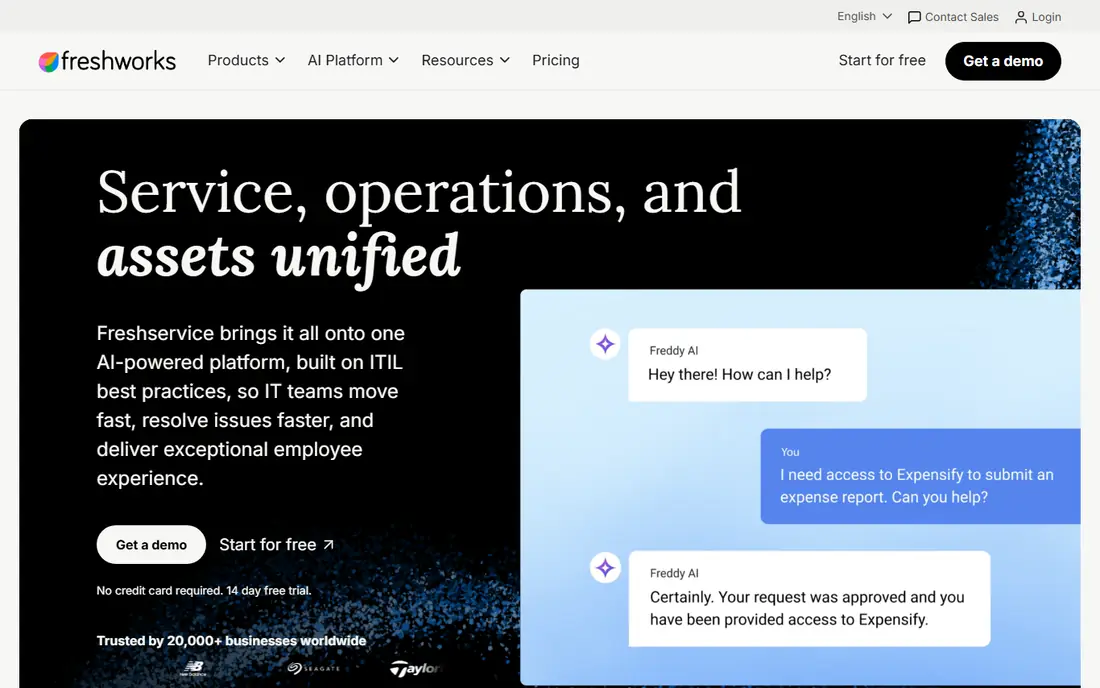
Freshservice suits teams that want a structured service desk without a long implementation. Incident, problem, change and asset features cover most internal IT needs, and the interface is easy for new agents to learn. Published pricing also makes budgeting simpler than quote-only platforms.
There is no permanent free plan, only a trial, and AI copilot features add cost. Very complex custom workflows may need a larger platform. For a fast, mid-market service desk with clear pricing, Freshservice is a strong alternative.
- Quick setup
- Published per-agent pricing
- Solid incident, asset and change basics
- No permanent free plan
- AI copilot is a paid add-on
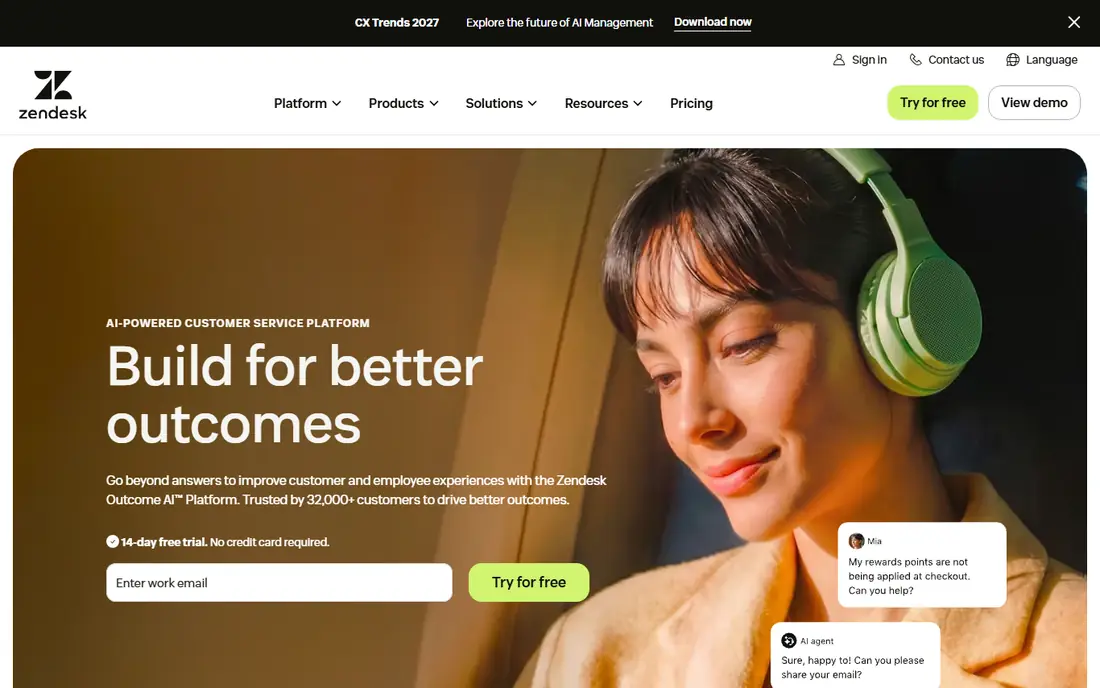
Zendesk works well when a team handles both employee requests and customer support, or when support quality and channel coverage matter most. It handles email, chat, phone and social tickets in one agent workspace, with self-service and AI options to deflect common questions. The integration range is also broad.
Pure ITIL depth is thinner than dedicated ITSM tools, and the AI copilot add-on can raise the total sharply. Teams that need strict change and problem processes may prefer an ITSM specialist. For polished, omnichannel support, Zendesk remains a leading choice.
- Polished omnichannel ticketing
- Strong AI and self-service options
- Large integration range
- Less pure ITIL depth than ITSM specialists
- AI copilot adds significant cost
ManageEngine ServiceDesk Plus is the budget ITSM option here, with a free edition for up to five technicians. It covers incident, problem, change and asset work, and it offers on-premises deployment for teams with hosting rules. That combination suits cost-conscious IT teams and regulated organisations.
The interface is less modern than Freshservice or Zendesk, and advanced AI features sit on higher tiers. Still, the free edition and published pricing make it easy to start. For teams that need ITSM plus asset tracking on a tight budget, it is a practical pick.
- Free edition for small teams
- Cloud or on-premises
- Asset management on higher tiers
- Interface feels dated in places
- Advanced AI needs higher tiers
HaloITSM offers one per-agent price for the full ITIL set, including incident, problem, change, CMDB and asset management. End users are free, which helps organisations with many requesters. Deployment can be cloud or on-premises, giving IT teams control over hosting.
Onboarding is scoped and quoted separately, so first-year cost exceeds the headline price. The ecosystem is also smaller than Atlassian or ServiceNow. For teams that want transparent, all-inclusive ITIL licensing, HaloITSM is a clear and honest option.
- Every ITIL module at one price
- End users free
- Cloud or on-premises
- Onboarding package adds first-year cost
- Smaller ecosystem than larger rivals
SysAid focuses on AI-assisted service management, with automation that categorises, routes and responds to tickets. Prebuilt workflows help teams start faster, and asset management plus analytics are built in. That mix suits mid-market teams that want automation without enterprise implementation.
Pricing is less transparent than Freshservice or Jira, so request a firm quote for your agent count. AI depth also varies by tier. For teams that want AI help with triage, self-service and reporting, SysAid deserves a trial alongside Freshservice.
- AI routing and automation
- Prebuilt workflows
- Built-in asset and analytics features
- Pricing transparency is limited
- AI features vary by plan
HappyFox suits small and mid-market teams that want a straightforward help desk with predictable pricing. Tickets, knowledge base, SLA tracking and customer feedback cover daily support work, and higher plans offer unlimited-agent pricing for larger teams. The interface is easy for agents and requesters to learn.
ITSM depth is thinner than HaloITSM or ServiceNow, so strict ITIL teams may need more. Advanced automation also sits on higher tiers. For a simple, dependable help desk that staff can run without a large admin team, HappyFox is a solid choice.
- Clear help desk workflows
- Self-service portal
- Unlimited-agent options on higher plans
- ITSM depth is thinner than specialists
- Advanced automation needs higher tiers
Zoho Desk is the budget pick for teams already using Zoho apps. It offers ticketing, knowledge base, SLA management and automation at a low entry price, with a free plan for up to three agents. Integration with Zoho CRM and other Zoho apps helps teams that already work in that ecosystem.
ITSM depth is limited compared with dedicated ITSM platforms, and advanced features require higher tiers. Teams that need strict change, problem and CMDB processes should look at HaloITSM or ManageEngine instead. For budget support inside Zoho, Zoho Desk is an easy start.
- Free for up to three agents
- Low entry price
- Strong Zoho ecosystem links
- ITSM depth is limited
- Advanced features need higher tiers
ServiceNow is the enterprise end of this list, covering ITSM, IT operations, asset, HR and wider workflows on one platform. Its CMDB and workflow depth suit large organisations with complex, cross-department processes. For global teams that need governance and scale, it sets the standard.
Cost and complexity are the trade-offs. Pricing is quote based, implementation takes months, and running it well needs dedicated staff. Small and mid-market teams will find faster options above. For enterprise service management at scale, ServiceNow remains the benchmark.
- Broadest service and workflow coverage
- Strong CMDB
- Deep enterprise integrations
- Quote-only pricing
- Implementation needs time and dedicated staff
How we picked these
We compared official feature pages, pricing pages, app store listings, privacy policies and public reviews. We kept only tools that exist and work in October 2026 and that handle internal service requests, ticketing or employee support. We checked that each homepage belongs to the named product, and we used See website where pricing is quote based.
How to choose an Atomicwork alternative
Start with who you serve. Internal IT teams need ITSM depth, while combined IT and customer support teams need omnichannel coverage. A tool that excels for one audience can frustrate the other, so list your request types, channels and service levels before you trial.
Test self-service with real employees
A portal that staff avoid will not reduce ticket volume. Trial the knowledge base, request forms and chatbot with real employees, and watch where they get stuck. Simple search, clear forms and fast answers matter more than a long feature list for self-service success.
Check automation and AI costs separately
AI triage, copilot and virtual agent features are often add-ons, not included in the base price. Ask for a written quote that includes the AI features you plan to use, and test them on real tickets. An AI feature that only works on demo data will not help your team.
Plan the switch around ticket history
Export current tickets, knowledge articles, user data and SLA rules early, and test imports in a trial tenant. Keep the old system read-only for a period after go-live, so agents can check history while the new system builds its own record. A clean cutover without history frustrates agents and requesters alike.
Frequently asked questions
What is Atomicwork used for?
Atomicwork is an employee service platform for IT and internal support, covering ticketing, self-service, automation and AI assistance for employees. Alternatives here cover the same work, with different strengths in ITSM depth, omnichannel support, AI automation and price. The best fit depends on team size and process needs.
Which alternative is best for a small team?
Jira Service Management and Zoho Desk offer the best small-team starts, with free plans for up to three agents. Freshservice also suits small teams that want a quick cloud start at a published price. Trial the free tier with real tickets before paying for a larger plan.
Which alternative offers the best AI features?
SysAid, Zendesk and ServiceNow all offer strong AI features, but pricing and depth differ. SysAid includes AI automation in its core pitch, Zendesk offers a powerful copilot at an added cost, and ServiceNow offers enterprise AI at enterprise prices. Test AI on your real tickets, not only on vendor demos.
Can these tools handle both IT and customer support?
Zendesk and HappyFox handle both well, because they are built as broader help desk platforms. ITSM specialists such as HaloITSM and ManageEngine suit internal IT better. If you serve both audiences, pick a tool with separate queues, portals and SLA rules for each group.
Do I need ITIL features to run a service desk?
Not always. Small teams can run well on simple ticketing, knowledge base and SLA features. ITIL features such as problem, change and CMDB matter more as teams grow, face audits, or manage complex services. Start simple, and add ITIL depth when process pain or compliance needs require it.
How much does a service desk tool cost per agent?
Entry prices in this list range from free tiers for up to three agents to about 49 dollars per user per month for all-inclusive ITIL licensing. Quote-only enterprise tools cost more. Always check whether AI, asset management and onboarding are included, because those items change the total.
Sources
- https://www.atlassian.com/software/jira/service-management/pricing
- https://freshservice.com/pricing
- https://www.zendesk.com/pricing
- https://www.manageengine.com/products/service-desk/pricing.html
- https://haloitsm.com/pricing
- https://www.sysaid.com/pricing
- https://www.happyfox.com/pricing
- https://www.zoho.com/desk/pricing
- https://www.servicenow.com
See where you really rank - block by block
ProMapRanker scans Google Maps across a grid of your service area. Simple monthly plans from $19, white-label on every plan.
Start freeKeep reading
 zyte alternatives
Best Zyte Alternatives in 2026
These zyte alternatives cover managed scraping APIs, proxy networks and no code tools for lawful collection from your own or consented sources only in 2026.
Read → zerto alternatives
Best Zerto Alternatives in 2026
Compare the best zerto alternatives for disaster recovery and replication, with recovery targets, cloud options and honest trade-offs for teams in 2026.
Read → zerofox alternatives
Best ZeroFox Alternatives in 2026
We compared 9 zerofox alternatives for brand protection, phishing takedowns, dark web monitoring, and social impersonation, with clear coverage notes.
Read →