 ProMapRanker
Best Alternatives to Adobe AEM in 2026


Omnichannel enterprise content · Pricing starts at: $300 per month
Key takeaways
- Contentful and Sanity suit teams that need content delivered to websites, apps, and other channels from one source.
- Storyblok suits marketing teams that want visual page building without giving up a headless setup.
- Strapi and Drupal suit teams that want control over hosting and code, with no per-seat content fee at the core.
- Sitecore and Optimizely suit large teams that want personalization and experimentation built into the platform.
- WordPress suits teams that need a wide plugin range and a large hiring pool, with more care needed on governance.
Quick comparison
| Pick | Great for | Pricing starts at | Free tier | |
|---|---|---|---|---|
| Contentful | Omnichannel enterprise content | $300 per month | Yes | Visit |
 Sanity | Flexible structured content | $15 per seat per month | Yes | Visit |
 Storyblok | Visual headless editing | $99 per month | Yes | Visit |
 Strapi | Self-hosted headless CMS | Free | Yes | Visit |
 Sitecore XM Cloud | Enterprise personalization | See website | No | Visit |
 Optimizely | Content plus experimentation | See website | No | Visit |
 WordPress | Wide plugin ecosystem | Free | Yes | Visit |
 Drupal | Secure large-scale sites | Free | Yes | Visit |
 Contentstack | Enterprise headless governance | See website | Free trial | Visit |
The best alternatives to adobe aem
Adobe Experience Manager, often called AEM, bundles content, assets, workflows, and personalization in one large platform. Teams leave it for cost, for specialist staffing, or for a more composable setup. The platforms below cover the main paths: headless, hybrid, traditional, and full digital experience suites.
Contentful is a headless content platform, which means content is stored and delivered through APIs, while the website or app front end is built separately. That split suits teams that publish the same product copy, help text, or campaign content to a website, a mobile app, and a storefront at once. Content models are reusable, so one entry can feed many pages and channels without duplicate editing.
The cost and the build effort are the catches. The Lite plan starts at $300 per month, and the free plan is meant for non-commercial use with usage caps. Teams also need front-end developers to build and maintain each display channel. For enterprises with that team in place, Contentful is a proven and well-supported choice.
- Mature APIs and integrations
- Reusable content models
- Strong multi-channel delivery
- Paid entry is high for small teams
- Front-end work is needed for every channel
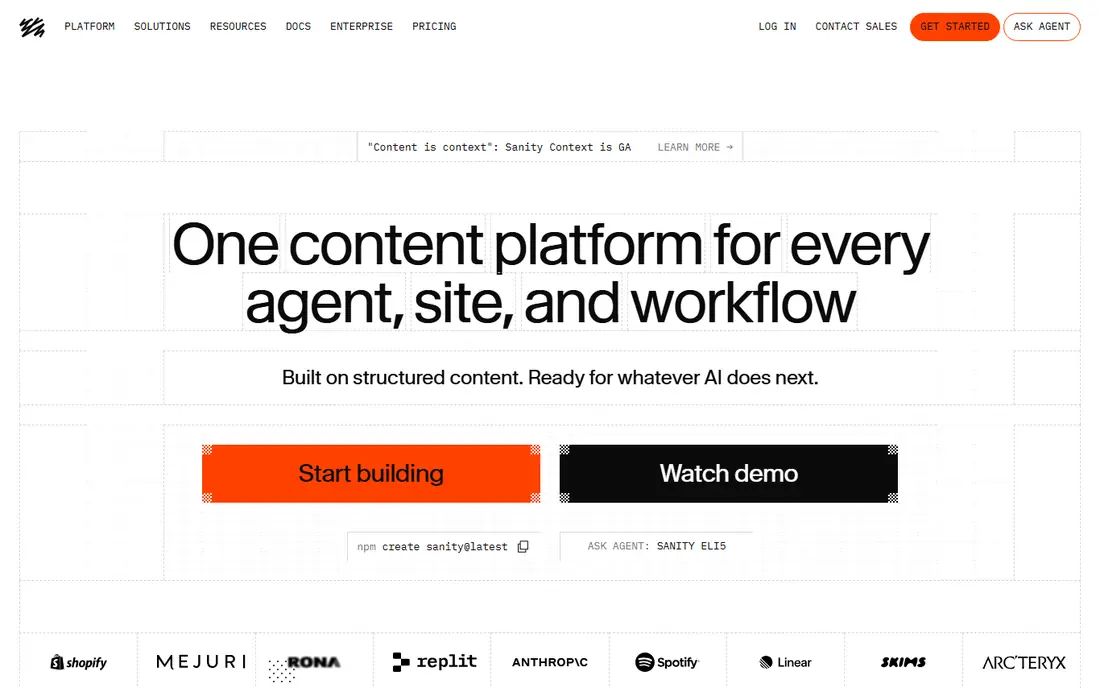
Sanity treats content as structured data, with schemas defined in code and a customizable editing studio. Editors can work together in real time, and developers can shape the studio to match the team's workflow, from simple forms to complex linked content. The free tier covers up to 20 seats with usage limits, which makes it easy to test with a real team.
The flexibility has a cost in setup time. A team without developers will struggle to get the most from Sanity, since the studio and schemas need code. Marketing teams that want a ready-made visual page builder may prefer Storyblok. For engineering-led teams that need content operations to fit their own systems, Sanity is a strong pick.
- Schema as code
- Real-time collaboration
- Generous free tier for small teams
- Setup needs developer time
- Editor experience depends on how the studio is configured
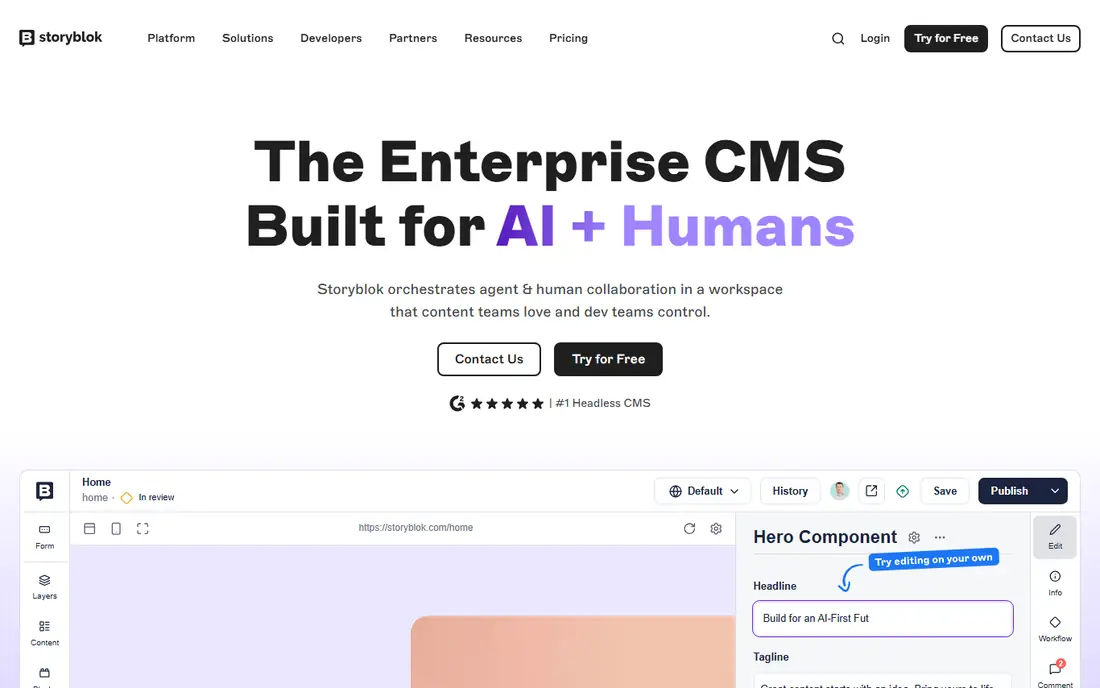
Storyblok pairs a headless back end with a visual editor that marketers can use with confidence. Editors click a component on the page, edit the text or image in place, and preview the result before publishing. Developers keep control of components and APIs, so the site can still feed apps and other channels. That balance is why many agencies pick it for marketing sites.
Pricing needs care. The Growth plan starts at $99 per month with seats included, but larger teams and higher API use move the bill up. Storyblok is also page-focused, so teams with heavy non-page content, such as large product catalogs, should test that fit early. For marketing-led sites, the editor experience is a clear strength.
- Visual editor for marketers
- Component-based pages
- Headless APIs for developers
- Growth plan can rise with seats and usage
- Weaker for non-page content types
Strapi is an open-source headless content system that teams can self-host for free, or run on Strapi Cloud from $35 per month for the Starter plan. Developers define content types, set roles and permissions, and use REST or GraphQL APIs to deliver content to any front end. Full code access means there is no vendor ceiling on customization.
Self-hosting is also the main drawback. The team owns upgrades, backups, security, and scaling, which adds work that a hosted platform would handle. The default editor is functional rather than visual, so marketers may need extra setup for a polished preview. For developer-led teams that value control, Strapi is a practical AEM alternative.
- Open-source core with full code control
- REST and GraphQL APIs
- No license fee when self-hosted
- Self-hosting adds operations work
- Editor experience is plainer than Storyblok
Sitecore XM Cloud is the closest like-for-like replacement for AEM as a full digital experience platform. It covers content, personalization, analytics, and marketing automation in a composable range, so teams can adopt the parts they need. Governance, workflows, and multi-site controls suit large brands with many regions and strict approval rules.
Cost and complexity stay high. Pricing is quote-based, and most teams need implementation partners and trained staff to run it well. That makes Sitecore a poor fit for small teams, but a sensible choice for large enterprises that already have the budget and the team to use a full suite. Compare total cost, not just the license, before shortlisting it.
- Deep personalization and analytics
- Composable product range
- Strong enterprise governance
- Pricing is quote-based
- Implementation needs specialist help
Optimizely combines content management with commerce and experimentation, so marketing teams can publish, personalize, and test in the same platform. Editors get a visual editing experience, while developers get headless APIs for other channels. The experimentation tools are a real difference from simpler headless platforms, since teams can run tests on content and offers without bolting on a separate tool.
As with Sitecore, pricing is not published, and the full range suits mid-market and enterprise teams more than small sites. Teams that only need content delivery will pay for breadth they do not use. For retail and B2B teams that test offers and pages often, the combined setup can justify the cost.
- Content, commerce, and experimentation in one range
- Visual editing
- Strong testing tools
- Pricing is quote-based
- Full range can be more than small teams need
WordPress powers a large share of the web, and that scale brings practical benefits. The core software is free, hosting options range from cheap shared plans to enterprise platforms such as WordPress VIP, and the plugin range covers forms, commerce, search, and multilingual sites. Hiring help is easier than for niche platforms, since many agencies know WordPress well.
Governance is the area that needs work. Roles, workflows, and approval chains are basic in the core, so large teams add plugins and clear processes. Plugin quality varies, and security depends on regular updates and careful plugin choices. For teams moving from AEM to a lower-cost, flexible platform, WordPress is often the fastest path, with the caveat that enterprise controls must be built, not assumed.
- Free open-source core
- Huge plugin and theme range
- Large pool of developers and agencies
- Governance needs plugins and process
- Plugin quality varies
- Security needs regular care
Drupal is an open-source content system with a strong record in government, universities, and large organizations. Its access controls, multilingual handling, and modular content types suit complex sites with many editors, roles, and languages. It can work as a traditional CMS or as a decoupled back end that feeds a separate front end through APIs.
The main cost is skill. Drupal needs developers for setup and maintenance, and the editor experience is less polished than Storyblok or Contentful out of the box. Teams with that skill in house, or with a Drupal agency, get a stable and secure platform with no license fee. Teams without developers should weigh that staffing need before choosing it.
- Strong access control and multilingual support
- Modular content models
- Long record in government and higher education
- Needs developer skill
- Editor experience is less polished than newer headless tools
Contentstack is an enterprise headless platform with a focus on governance. Teams get structured content, workflows, roles, and automation, plus a marketplace of integrations for commerce, search, and personalization. It suits organizations that manage content across many markets and channels and need clear approval paths.
Pricing is quote-based for most enterprise use, so budgeting needs a sales conversation. Content design and front-end work also take time, as with any headless platform. For large teams that want headless delivery with enterprise controls, Contentstack belongs on the shortlist next to Contentful and Sitecore.
- Enterprise workflows and roles
- Automation and marketplace integrations
- Multi-channel APIs
- Pricing is quote-based for most teams
- Setup needs developer and content design work
How we picked these
We compared official product pages, pricing pages, and independent platform guides current in October 2026. We required a live platform, a real content management function, and a plausible migration path from AEM, whether headless, hybrid, traditional, or full suite. We did not claim hands-on testing. Where pricing is quote-based, we say so plainly instead of guessing a figure.
What to check before you migrate
Start by mapping what AEM actually does for your team today. List the features in daily use: content editing, asset management, workflows, personalization, commerce, and analytics. A headless platform replaces content delivery, but not asset management or personalization, so you may need separate tools for those jobs. A full suite replaces more, at a higher price.
Next, audit your content and your team. Count content types, locales, editors, and channels, since those numbers drive headless pricing. Check who will build the front end, who will own content models, and how approvals work today. A pilot migration of one section, with real editors and real content, will show whether the editor experience and the publishing workflow hold up under daily use.
Cost and timing
Compare total cost, not just the license. Headless platforms add front-end build and maintenance. Self-hosted platforms add hosting and operations. Full suites add implementation and training. Migration timing also matters: content cleanup, redirects, asset migration, and search indexing all take time, so plan a phased move rather than a single cutover for a large site.
Frequently asked questions
What is the cheapest AEM alternative?
WordPress, Drupal, and self-hosted Strapi have free open-source cores, so the software license costs nothing. Hosting, development, and maintenance still cost money, so the cheapest option depends on whether your team can run the platform in house.
Is a headless CMS better than AEM?
Headless suits teams that publish to many channels and have developers to build front ends. AEM suits teams that want content, assets, and personalization in one suite with less assembly. The better choice depends on team skill, channel count, and governance needs.
Can I migrate AEM content to these platforms?
Yes, with planning. Content, assets, and metadata can be exported and mapped to new content models, but templates, components, and personalization rules usually need rebuilding. Test a small content set first, and keep redirects in place for changed URLs.
Which alternative is best for marketers?
Storyblok and Optimizely offer the strongest visual editing for marketers in this list. Contentful and Sanity can also work well for marketers, but the editor experience depends on how the team configures the workspace.
Do I need developers for a headless CMS?
Yes, in most cases. Headless platforms deliver content through APIs, so a front end must be built and maintained. Traditional platforms such as WordPress and Drupal still need developers for larger sites, but they offer ready-made themes and editing screens that reduce the build.
Sources
See where you really rank - block by block
ProMapRanker scans Google Maps across a grid of your service area. Simple monthly plans from $19, white-label on every plan.
Start freeKeep reading
 zoro.to alternatives
Best Zoro.to Alternatives in 2026
We compare the best zoro.to alternatives in 2026, listing only legal licensed anime streaming services, from Crunchyroll to free options for fans today.
Read → zip alternatives
Best Zip Alternatives in 2026
We compare the best zip alternatives for buy now, pay later in 2026, covering pay-in-4 plans, fees, spending limits, and credit reporting options today.
Read → yesware alternatives
Best Yesware Alternatives in 2026
Compare the best yesware alternatives for sales email tracking, templates, and sequences, with current pricing and honest tradeoffs for small sales teams.
Read →