 ProMapRanker
Best Allergy App in 2026: 9 Apps Compared

Key takeaways
- WebMD Allergy and Zyrtec AllergyCast are the most useful general starting points for pollen and symptom tracking.
- Allergy Alert from Pollen.com focuses on daily pollen forecasts, while AllergyEats focuses on restaurants.
- Food allergy users need a different tool than pollen users, so Spokin and Allergy Force cover different jobs.
- No app on this list replaces medical advice, and severe allergies need a clinician's plan.
- Most of these apps are free to download, with extra features or in-app purchases in some cases.
Quick comparison
| Pick | Great for | Pricing starts at | Free tier | |
|---|---|---|---|---|
 WebMD Allergy | General allergy tracking and learning | Free | Yes | Visit |
 Zyrtec AllergyCast | Daily pollen and weather forecasts | Free | Yes | Visit |
 Allergy Alert | Pollen.com daily allergy forecasts | Free | Yes | Visit |
 AllergyEats | Allergy-friendly restaurants | Free | Yes | Visit |
 Spokin | Food allergy community and news | Free | Yes | Visit |
 Sensio Air | Symptom and pollen correlation | Free | Yes | Visit |
 Yummly | Allergy-friendly recipes | Free | Yes | Visit |
 Allergy Force | Scanning food labels | Free | Yes | Visit |
 First Aid by American Red Cross | Emergency first aid information | Free | Yes | Visit |
The best allergy apps
This article is general information only, not medical advice. If you have severe allergies, carry the medication your clinician prescribed, and check with a clinician about any plan for managing reactions. The apps below help you track pollen, log symptoms, find restaurants, or read labels, but they do not diagnose allergies or replace professional care.
We compared official app pages, app store listings, and publisher pages for apps that are live in October 2026. We focused on what each app tracks, whether it covers pollen, food, or both, and what limits you should know before relying on it.
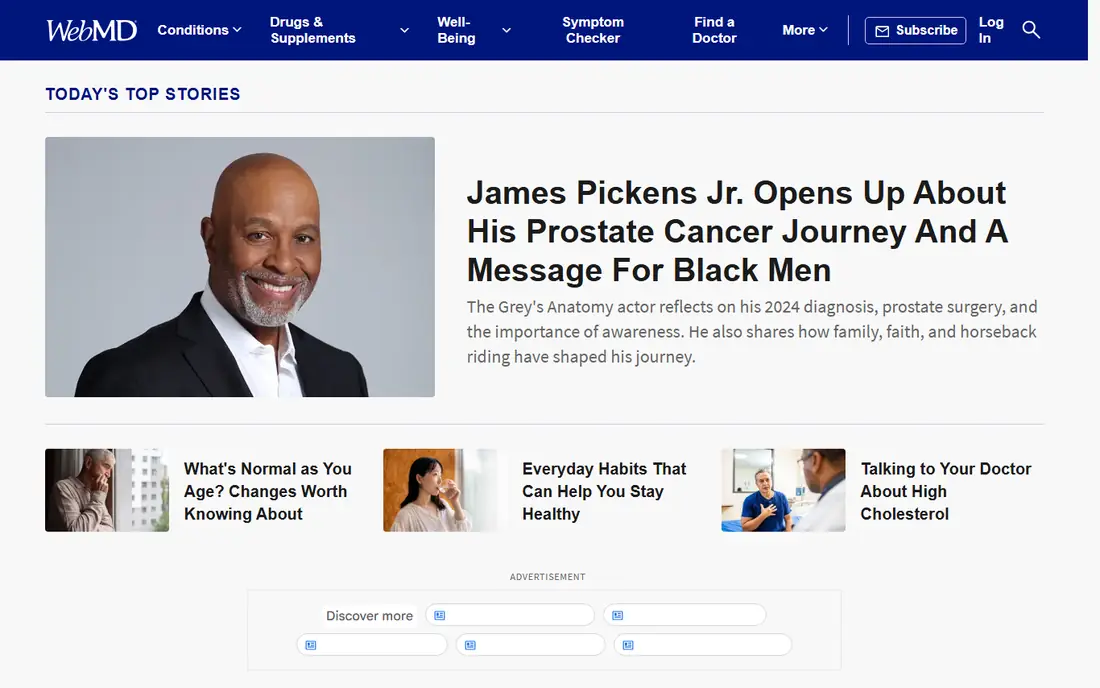
WebMD Allergy gives a broad starting point for people who are still learning what triggers their symptoms. The app offers a personalized forecast, a journal for logging good and bad days, and learning material on indoor, outdoor, food, skin, and medicine allergies. That breadth helps when you are not sure whether pollen, dust, or food is the main trigger.
The journal is the most useful part over time. A few weeks of entries can show a pattern that is hard to see from one bad day, and that record is useful to bring to a clinician visit. The app does not test for allergies, and forecasts are estimates, so treat them as planning help, not a diagnosis.
- Personalized allergy and weather forecast
- Symptom journal for daily tracking
- Broad allergy learning content
- Forecast accuracy varies by location
- Not a substitute for allergy testing
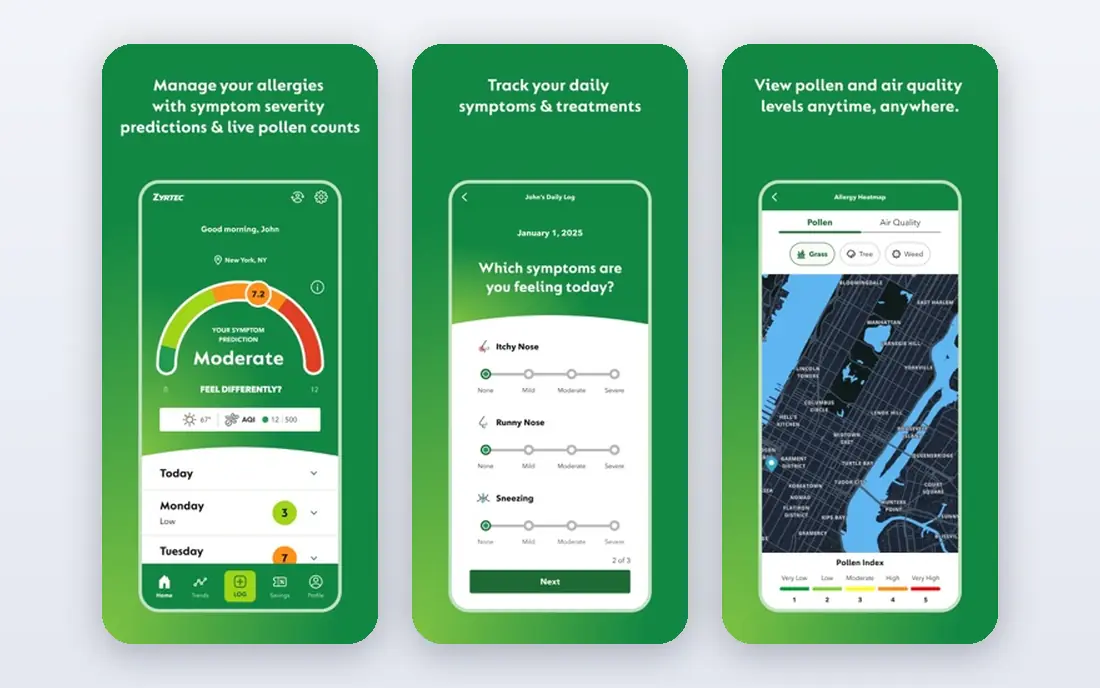
AllergyCast is built around a daily question: how bad will allergies be today where you live. It provides pollen and weather forecasts for a large number of ZIP codes, with hourly and multi-day views. That makes it easy to plan outdoor time, exercise, or travel on a high pollen day.
The app comes from a medication brand, so expect brand presence in the experience. That does not remove its value as a forecast tool, but it is worth knowing. Use it to plan your day, and follow your clinician's advice for treatment rather than taking guidance from an app forecast alone.
- Forecasts for many US ZIP codes
- Hourly and multi-day outlooks
- Simple daily check before going out
- Tied to a medication brand
- Forecast is a guide, not a medical result
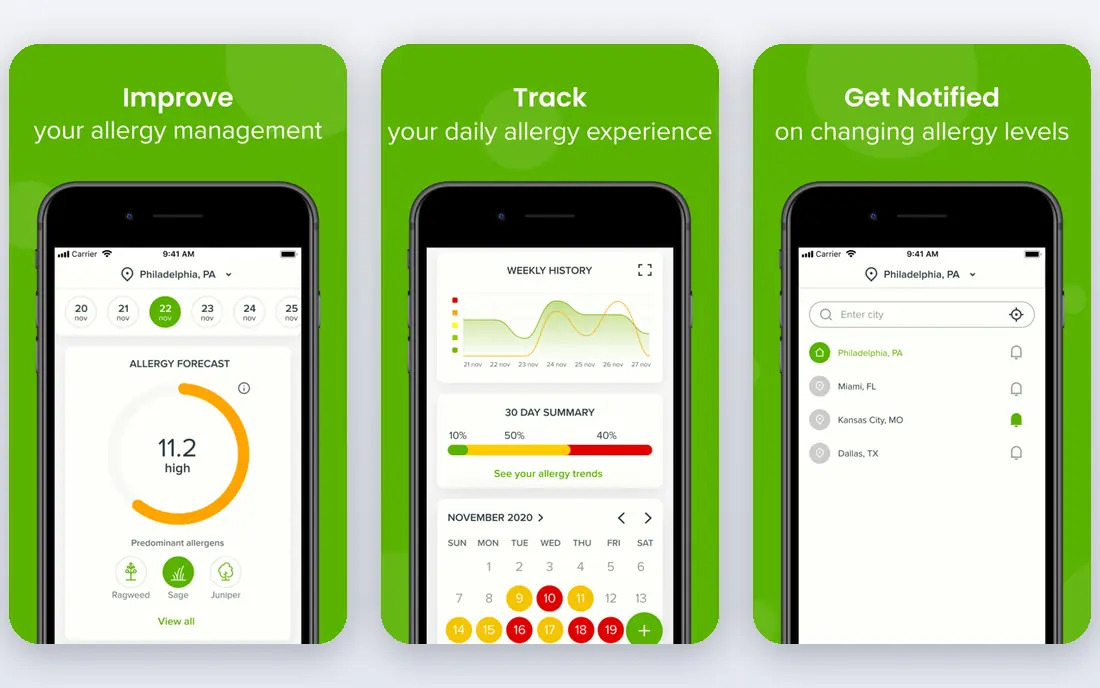
Allergy Alert, from Pollen.com, focuses on a quick morning check. Visual signals show which allergens, such as tree, grass, or ragweed pollen, are present that day, and deeper detail is available for people who want plant descriptions and photos. A five-day forecast helps with weekend planning.
It is a forecast app first, not a full health record. The diary helps you note symptoms, but a dedicated symptom tracker will give you more analysis. For a pollen sufferer who mainly wants to know what is in the air, Allergy Alert is direct and easy to use.
- Clear visual daily allergy signals
- Plant descriptions and photos
- Five-day forecast and personal diary
- US-focused coverage
- Diary features are basic compared with dedicated trackers
AllergyEats helps with a different allergy problem: eating out safely. It lists restaurants with information about allergy handling, and includes feedback from diners with allergies. That community input can point you toward places that take allergy orders seriously, and away from places with repeated problems.
Coverage is uneven, so smaller towns may have few listings. Even in well-covered cities, always tell the restaurant about your allergy, confirm ingredients, and ask about cross-contact in the kitchen. An app listing is a starting point for a conversation, not a guarantee that a meal is safe.
- Restaurant listings with allergy information
- User feedback on allergy handling
- Useful for travel and eating out
- Coverage varies by city
- Always confirm details with the restaurant
Spokin is a community and information resource for food allergy management. It brings together news, tips, and shared experiences from people living with food allergies, which can be especially useful for parents managing a child's allergy. Restaurant and product discussions add practical detail that general health sites often miss.
It does not replace label reading or a scanner app. Product recipes change, and community posts can become out of date. Use Spokin for ideas, support, and questions to raise with a clinician or dietitian, and always check the current label before eating a product.
- Food allergy news, tips, and community resources
- Useful for parents and caregivers
- Restaurant and product discussion
- Not a label scanner
- Community content needs checking against product labels
Sensio Air tries to connect symptoms with what is in the air. You log symptoms, and the app shows pollen, air quality, and weather data for your area, with alerts when levels change. Over time, that pairing can help you and a clinician see whether symptoms track with pollen, pollution, or another factor.
Coverage depends on local monitoring, so results will be stronger in larger cities. The app also offers paid features in some versions, so check what is included free before you commit to a routine. As with other trackers, it supports a conversation with a clinician, it does not replace one.
- Symptom logging linked to pollen and air quality
- Alerts for local pollen and pollution
- Reports you can share with a clinician
- Local sensor coverage varies
- Premium features may need a subscription
Yummly is a recipe app, not a medical app, but its allergy and diet filters make it useful for everyday cooking with restrictions. You can search for recipes that avoid common allergens and save meals that work for your household. That reduces the daily work of adapting recipes from scratch.
The limit matters: a recipe filter is only as good as the recipe data, and ingredient brands vary. Always read labels for the exact products you buy, and be careful with substitutions that may introduce a new allergen. Yummly is best for meal ideas, paired with careful label checking.
- Recipe search with allergy and diet filters
- Large recipe collection
- Meal ideas that fit restrictions
- Not an allergy safety tool
- Always check ingredient labels
Allergy Force is built for the grocery aisle. You set an allergy profile, scan a product barcode, and get a check against ingredients in its database. That is faster than reading every label line by line, especially when shopping for a family with several allergies.
Scan results are only as current as the product database, and manufacturers change recipes. If a scan is unclear, or the product is new, read the physical label and check with the manufacturer if needed. Use the app as a first filter, not as the final word on safety.
- Barcode scanning for ingredient checks
- Allergy profile for household members
- Useful in grocery stores
- Scan results depend on product data
- Always verify with the physical label
First Aid by American Red Cross belongs on this list for a different reason: it prepares you for an emergency. It provides first aid information, including guidance related to allergic reactions, in a format designed to be used under stress. Having it on your phone is a sensible backup to a written allergy action plan.
It is not a daily allergy app, and it does not track pollen or food. If someone has signs of a severe allergic reaction, call emergency services and follow the action plan from their clinician. The app supports that response, it does not replace it.
- Clear first aid guidance from a trusted source
- Works as a reference in an emergency
- Covers allergic reactions among other topics
- Not an allergy tracker
- Does not replace emergency care or an allergy action plan
How we picked these
We compared official app and publisher pages for apps that cover pollen forecasting, symptom tracking, food allergy support, label scanning, recipes, restaurants, and first aid. We kept apps that are live in October 2026 and that serve a clear allergy-related job, and we left out general weather or recipe apps with no allergy focus. We did not include health claims that could not be supported by the app's own description.
How to use an allergy app safely
Pick one tracker and one practical tool, rather than five apps that do the same job. A pollen forecast plus a symptom journal covers most seasonal allergy users. A food allergy household may need a scanner plus a restaurant resource instead. Log symptoms consistently for a few weeks, because a single entry rarely shows a pattern.
Bring your log to a clinician visit, along with notes on medications, foods, and exposures. Keep your allergy action plan separate from the app, in a place family members can find. Check app data against labels, restaurant staff, and local forecasts, and update your allergy profile when a diagnosis or medication changes.
Frequently asked questions
What is the best allergy app?
WebMD Allergy is a strong general pick for tracking and learning, while Zyrtec AllergyCast is a strong pick for daily pollen forecasts. Food allergy users should add a scanner like Allergy Force or a restaurant tool like AllergyEats, because pollen apps do not cover food safety.
What is the best allergy software for pollen tracking?
Allergy Alert from Pollen.com and Zyrtec AllergyCast both focus on pollen forecasts, with multi-day outlooks and local data. Sensio Air adds symptom logging linked to pollen and air quality, which helps you see patterns over time.
What is the best allergy platform for food allergies?
There is no single platform that covers every food allergy job. Allergy Force helps with label scanning, AllergyEats helps with restaurants, and Spokin helps with community information and news. Use the combination that matches your daily routine.
Are allergy apps free?
Most apps on this list are free to download, with some offering paid features or in-app purchases. Check the app store listing for subscription details before you rely on a feature that may sit behind a paywall.
Can an allergy app diagnose my allergy?
No. Apps can track symptoms and forecasts, but only a clinician with proper testing can diagnose an allergy. If symptoms are severe, frequent, or worsening, seek medical care rather than relying on an app.
What should I do for a severe allergic reaction?
Follow the allergy action plan from your clinician, use prescribed emergency medication if directed, and call emergency services. Keep emergency information accessible, and do not rely on an app alone during a severe reaction.
Sources
See where you really rank - block by block
ProMapRanker scans Google Maps across a grid of your service area. Simple monthly plans from $19, white-label on every plan.
Start freeKeep reading
 zscaler alternatives
Best Zscaler Alternatives in 2026
Looking for zscaler alternatives? We compare 9 SASE and zero trust platforms on architecture, data protection, pricing, and fit for your network and team.
Read → zapier alternatives free
Best Zapier Alternatives Free in 2026
Nine automation tools for zapier alternatives free in 2026, all with genuinely free tiers, plus free plan limits, starting prices and upgrade paths explained.
Read → which platform is best for online reputation
Which Platform Is Best for Online Reputation in 2026
Wondering which platform is best for online reputation? We compare 8 review, listing, and response tools for small and multi-location businesses and agencies.
Read →