 ProMapRanker
Best All-in-One HR Platform for Global Teams in 2026


Broadest global HR and payroll coverage · Pricing starts at: $29 per employee per month
Key takeaways
- Deel and Remote offer the broadest combination of global payroll, contractor payments and employer of record services in this list.
- Papaya Global suits finance-led teams that need consolidated payroll reporting across many countries and providers.
- Employer of record pricing is far higher than global payroll pricing, so confirm whether you need an entity, payroll only, or both.
- Employment law and payroll rules vary by country, so a platform does not replace local legal advice for hiring, termination or benefits.
Quick comparison
| Pick | Great for | Pricing starts at | Free tier | |
|---|---|---|---|---|
| Deel | Broadest global HR and payroll coverage | $29 per employee per month | No | Visit |
 Remote | Compliance-first global employment | $29 per employee per month | No | Visit |
 Papaya Global | Finance-led consolidated payroll reporting | See website | No | Visit |
 Oyster | Distributed teams hiring abroad for the first time | See website | No | Visit |
 Rippling | HR, IT and payroll for global teams | See website | No | Visit |
 G-P | Enterprise-grade global employment | See website | No | Visit |
 Multiplier | Lower-cost EOR for many markets | See website | No | Visit |
 Playroll | Multi-country payroll with clear starting prices | $10 per employee per month | No | Visit |
 Safeguard Global | Compliance-heavy global payroll and EOR | See website | No | Visit |
The best all-in-one HR platforms for global teams
These platforms combine HR records, global payroll and, in many cases, employer of record services so teams can hire across borders without setting up an entity in every country at once.
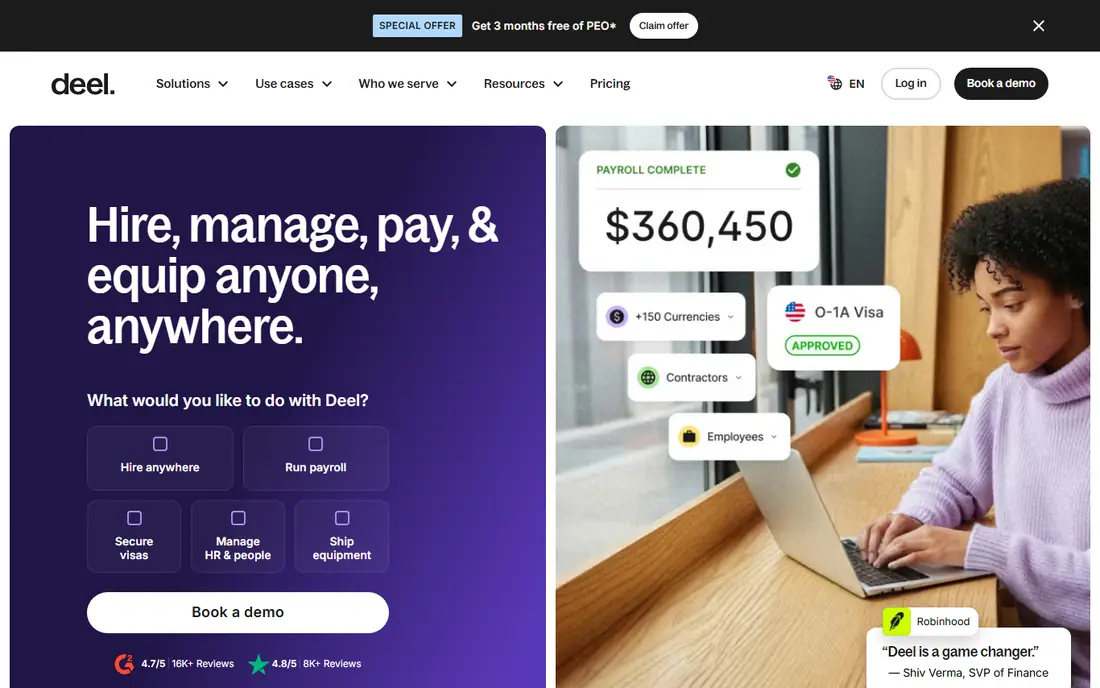
Deel is our pick for teams that need payroll, employer of record and contractor payments in one system, with published guides putting global payroll from around $29 per employee per month and EOR from around $599, which shows why the model choice matters more than the brand alone.
For a team weighing this option, the practical test is fit for broadest global hr and payroll coverage in day-to-day use, not only the feature list. The strengths above matter most when they match a real workflow, such as onboarding, reporting or a recurring task that currently takes too long. A short trial or demo with your own data will reveal gaps faster than a sales presentation, especially around integrations, permissions and support response times.
The honest weakness to weigh is listed above, and it often decides whether this product stays useful after the first month. Check contract terms, renewal pricing and what happens to your data if you leave, and ask for a written quote for the same headcount and modules you will actually use. That comparison protects you from a low starting price that rises once essential add-ons are included.
- Global payroll and EOR
- Contractor payments
- Broad country coverage
- EOR pricing is much higher than payroll pricing
- Add-on fees can apply
Remote emphasises owned entities and in-country expertise, which appeals to teams that want compliance depth rather than the lowest headline price, and it offers employer of record, global payroll and contractor management in one platform.
The honest weakness to weigh is listed above, and it often decides whether this product stays useful after the first month. Check contract terms, renewal pricing and what happens to your data if you leave, and ask for a written quote for the same headcount and modules you will actually use. That comparison protects you from a low starting price that rises once essential add-ons are included.
In practice, this product works best when one owner is responsible for rollout, training and ongoing administration. Without that owner, even a strong tool can drift into partial use, with some teams on the new system and others on spreadsheets. Plan training, set a go-live date, and review usage after thirty and ninety days before adding more modules or seats.
- Owned entities in many countries
- EOR and payroll
- Contractor management
- EOR pricing is high
- Some services cost extra for off-cycle or year-end work
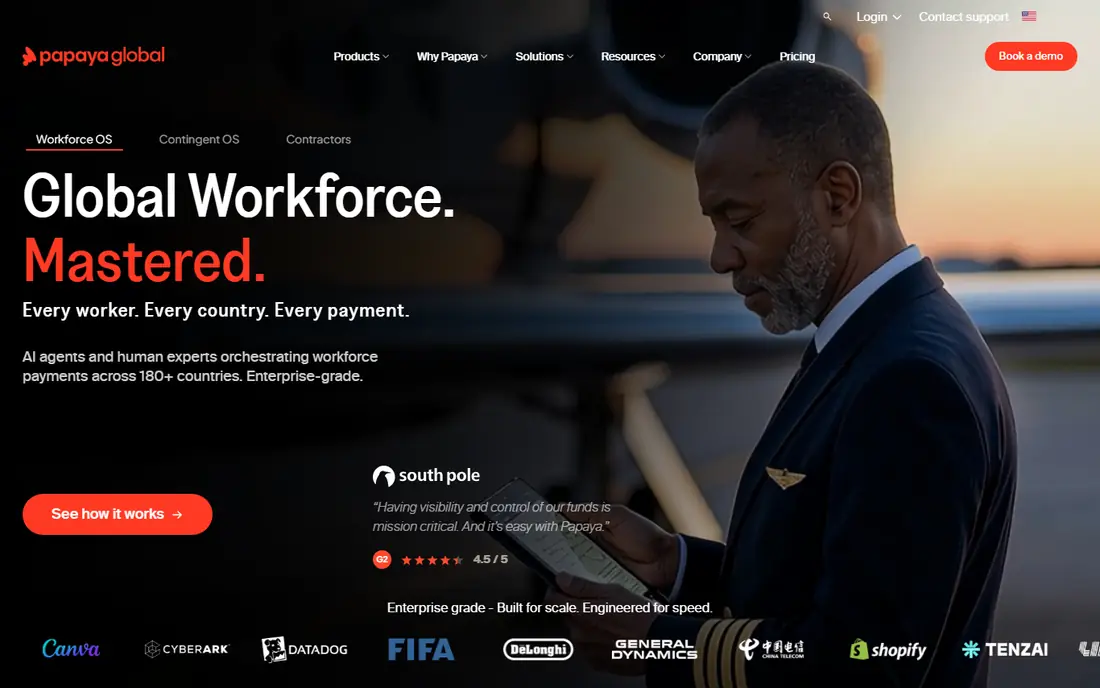
Papaya Global suits finance and operations teams that need one view of payroll across countries, providers and currencies, since its reporting and payment tools help larger global teams reconcile payroll rather than only running it country by country.
In practice, this product works best when one owner is responsible for rollout, training and ongoing administration. Without that owner, even a strong tool can drift into partial use, with some teams on the new system and others on spreadsheets. Plan training, set a go-live date, and review usage after thirty and ninety days before adding more modules or seats.
For a team weighing this option, the practical test is fit for finance-led consolidated payroll reporting in day-to-day use, not only the feature list. The strengths above matter most when they match a real workflow, such as onboarding, reporting or a recurring task that currently takes too long. A short trial or demo with your own data will reveal gaps faster than a sales presentation, especially around integrations, permissions and support response times.
- Consolidated payroll reporting
- Payments in many currencies
- Workforce analytics
- Enterprise focus
- Pricing is less transparent for smaller teams
Oyster focuses on distributed hiring, with employer of record services, localised employment support and contractor tools, and it suits remote-first teams that want guidance through a first hire in a new country.
For a team weighing this option, the practical test is fit for distributed teams hiring abroad for the first time in day-to-day use, not only the feature list. The strengths above matter most when they match a real workflow, such as onboarding, reporting or a recurring task that currently takes too long. A short trial or demo with your own data will reveal gaps faster than a sales presentation, especially around integrations, permissions and support response times.
The honest weakness to weigh is listed above, and it often decides whether this product stays useful after the first month. Check contract terms, renewal pricing and what happens to your data if you leave, and ask for a written quote for the same headcount and modules you will actually use. That comparison protects you from a low starting price that rises once essential add-ons are included.
- EOR in many countries
- Localised contracts
- Contractor payments
- EOR pricing sits at the higher end
- Standalone payroll options are limited
Rippling brings its HR, IT and payroll strength to global teams, so a hire can trigger payroll, benefits, device and access workflows in one place, which appeals to teams that already use Rippling for US HR and IT work.
The honest weakness to weigh is listed above, and it often decides whether this product stays useful after the first month. Check contract terms, renewal pricing and what happens to your data if you leave, and ask for a written quote for the same headcount and modules you will actually use. That comparison protects you from a low starting price that rises once essential add-ons are included.
In practice, this product works best when one owner is responsible for rollout, training and ongoing administration. Without that owner, even a strong tool can drift into partial use, with some teams on the new system and others on spreadsheets. Plan training, set a go-live date, and review usage after thirty and ninety days before adding more modules or seats.
- HR, IT and payroll in one system
- Device and access management
- Global payroll add-ons
- Global payroll coverage varies by country
- Pricing is modular and quote-based
G-P, formerly Globalization Partners, is a long-standing employer of record provider with broad country coverage and enterprise tools, and it suits larger teams that need a proven EOR partner for expansion into many markets.
In practice, this product works best when one owner is responsible for rollout, training and ongoing administration. Without that owner, even a strong tool can drift into partial use, with some teams on the new system and others on spreadsheets. Plan training, set a go-live date, and review usage after thirty and ninety days before adding more modules or seats.
For a team weighing this option, the practical test is fit for enterprise-grade global employment in day-to-day use, not only the feature list. The strengths above matter most when they match a real workflow, such as onboarding, reporting or a recurring task that currently takes too long. A short trial or demo with your own data will reveal gaps faster than a sales presentation, especially around integrations, permissions and support response times.
- Long-standing EOR provider
- Broad country coverage
- Compliance and analytics tools
- Pricing is quote-based
- Enterprise focus may suit larger teams best
Multiplier appeals to teams that want employer of record coverage at a lower starting point than some premium rivals, with published guides noting annual EOR pricing below several competitors, plus contractor management and payroll tools.
For a team weighing this option, the practical test is fit for lower-cost eor for many markets in day-to-day use, not only the feature list. The strengths above matter most when they match a real workflow, such as onboarding, reporting or a recurring task that currently takes too long. A short trial or demo with your own data will reveal gaps faster than a sales presentation, especially around integrations, permissions and support response times.
The honest weakness to weigh is listed above, and it often decides whether this product stays useful after the first month. Check contract terms, renewal pricing and what happens to your data if you leave, and ask for a written quote for the same headcount and modules you will actually use. That comparison protects you from a low starting price that rises once essential add-ons are included.
- EOR in many countries
- Contractor management
- Owned entities in key markets
- Pricing varies by billing term
- Global payroll options are newer and need checking
Playroll publishes a low starting price for multi-country payroll, which makes early comparison easier than quote-only rivals, and it also offers employer of record services and payroll analytics for teams that want to keep existing providers in some countries.
The honest weakness to weigh is listed above, and it often decides whether this product stays useful after the first month. Check contract terms, renewal pricing and what happens to your data if you leave, and ask for a written quote for the same headcount and modules you will actually use. That comparison protects you from a low starting price that rises once essential add-ons are included.
In practice, this product works best when one owner is responsible for rollout, training and ongoing administration. Without that owner, even a strong tool can drift into partial use, with some teams on the new system and others on spreadsheets. Plan training, set a go-live date, and review usage after thirty and ninety days before adding more modules or seats.
- Published payroll starting price
- EOR in many countries
- Payroll analytics options
- Minimums apply
- EOR pricing is higher than payroll pricing
Safeguard Global suits compliance-heavy employers that want advisory support alongside payroll and employer of record services, since its model leans on local expertise and managed payroll, which helps when rules are complex or headcount is spread thinly.
In practice, this product works best when one owner is responsible for rollout, training and ongoing administration. Without that owner, even a strong tool can drift into partial use, with some teams on the new system and others on spreadsheets. Plan training, set a go-live date, and review usage after thirty and ninety days before adding more modules or seats.
For a team weighing this option, the practical test is fit for compliance-heavy global payroll and eor in day-to-day use, not only the feature list. The strengths above matter most when they match a real workflow, such as onboarding, reporting or a recurring task that currently takes too long. A short trial or demo with your own data will reveal gaps faster than a sales presentation, especially around integrations, permissions and support response times.
- Global payroll and EOR
- Advisory-led compliance support
- Broad country coverage
- Pricing is quote-based
- Enterprise focus and longer sales process
How we picked these
We compared official product and pricing pages and current global payroll guides, checking country coverage, the difference between employer of record and global payroll, contractor options and reporting tools. We did not claim hands-on testing. We favoured platforms with owned entities or clear partner models, published starting prices where available, and tools for contracts, benefits and compliance in multiple countries.
How to choose a global HR platform
Choose EOR, global payroll or a mix
Employer of record means the provider becomes the legal employer in a country where you have no entity, handling contracts, tax and benefits for a monthly fee per employee. Global payroll means you keep your own entity and the provider runs payroll for your staff. Many teams use EOR for one or two hires in a new country and global payroll where they already have an entity and scale.
Check contracts, benefits and termination rules by country
Employment law and payroll rules vary by country, and that variation affects probation, notice periods, mandatory benefits, working time and termination costs. A platform should provide localised contracts and benefits guidance, but it does not replace local legal advice for sensitive cases. Confirm how the platform handles changes in law, and who is responsible when a local rule changes.
Protect employee data across borders
Global HR involves moving personal data across borders, which raises privacy and consent duties that differ by country. Limit access to sensitive employee data, agree on data residency and retention with the vendor, and tell staff what data is collected and why. Document consent where required, and review vendor security and sub-processor lists before rollout.
Frequently asked questions
What is the difference between EOR and global payroll?
Employer of record services make the provider the legal employer in a country where you lack an entity. Global payroll runs pay for employees you already employ through your own entity. EOR is faster for new markets, while global payroll is usually cheaper at scale.
Do global HR platforms handle local employment law?
They provide localised contracts, benefits and compliance workflows, but law varies by country and changes often. Platforms reduce risk, but they do not replace local counsel for terminations, disputes or unusual employment arrangements.
How much does global hiring cost per employee?
It depends on the model. Global payroll often starts around $29 per employee per month in published guides, while employer of record often starts at several hundred dollars per employee per month. Salaries, employer contributions and local benefits sit on top of platform fees.
Can I pay contractors through these platforms?
Yes, most platforms in this list offer contractor payments, contracts and tax forms, often at a lower monthly rate than employer of record. Contractor status rules vary by country, so misclassification risk still needs care, especially for long-term exclusive contractors.
Sources
See where you really rank - block by block
ProMapRanker scans Google Maps across a grid of your service area. Simple monthly plans from $19, white-label on every plan.
Start freeKeep reading
 worlds best local seo company
8 Worlds Best Local SEO Companies for Map Pack Growth in 2026
Compare the worlds best local seo company options for Google Business Profile work, citations, reviews, and multi-location rankings and reporting in 2026.
Read → world's best web hosting company
World's Best Web Hosting Company in 2026
Searching for the world's best web hosting company? We compared 10 hosts on price, renewal rates, speed, and support to help you choose well today in 2026.
Read → who's got the best nanny tax services
Who's Got the Best Nanny Tax Services in 2026
We answer who's got the best nanny tax services, comparing full filing, back taxes, software, and pricing so families can handle nanny taxes correctly.
Read →