 ProMapRanker
Best All-in-One Software for Multi-Entity Companies in 2026

Key takeaways
- Full ERPs such as NetSuite and Acumatica handle consolidation and operations together, while finance-led Sage Intacct focuses on accounting depth.
- Per-organisation tools such as Xero and Zoho Books suit small groups, but group consolidation needs add-ons or manual work.
- Business Central pricing is published, while most ERP pricing is quote-based and depends on users, entities and modules.
- Implementation time ranges from days for simple tools to months for a full ERP.
Quick comparison
| Pick | Great for | Pricing starts at | Free tier | |
|---|---|---|---|---|
 Sage Intacct | Finance-led multi-entity groups | See website | Free trial | Visit |
 Oracle NetSuite | Global groups needing finance and operations together | See website | No | Visit |
 Acumatica | Growing groups wanting many users without per-seat fees | See website | No | Visit |
 Microsoft Dynamics 365 Business Central | Microsoft-centred groups | $80 per user per month | Free trial | Visit |
 Intuit Enterprise Suite | US groups outgrowing QuickBooks | See website | No | Visit |
 Xero | Small groups with few entities | $25 per month | Free trial | Visit |
 Zoho Books | Small groups wanting low cost and Zoho integration | $15 per month | Yes | Visit |
 Accounting Seed | Salesforce-based groups | See website | Free trial | Visit |
 Odoo | Groups wanting modular apps in one platform | See website | Free trial | Visit |
The best all-in-one software for multi-entity companies
In this article we read best all-in-one for multi-entity companies as all-in-one software for companies that run more than one legal entity, subsidiary or branch. That means one system for general ledger, intercompany transactions, consolidation and reporting, plus, for larger groups, inventory, purchasing and CRM. A small group with two entities has different needs from a global group with fifty subsidiaries, so we include both full ERPs and simpler options, with honest limits for each. Prices are quote-based for most ERPs, so compare total cost, not just a licence headline.
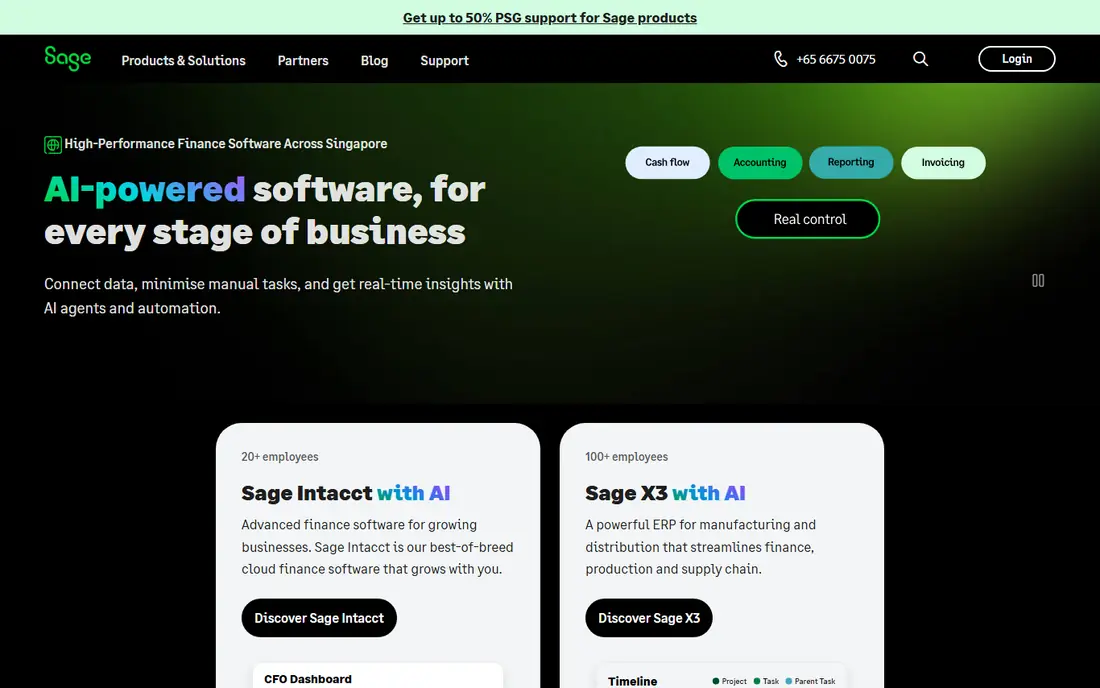
Start here if finance-led multi-entity groups is your main concern. Sage Intacct is built for finance-led multi-entity groups, with a dimensional general ledger, intercompany accounting and consolidation in one system. That finance depth is the strength, but firms that need native manufacturing should check integrations before they commit.
It fits buyers who want finance-led multi-entity groups and are willing to compare terms before they commit. Terms vary by state and policy, so confirm the details in writing. Check the policy wording, exclusions and renewal terms before you buy, and get a written quote for your exact situation.
- Dimensional multi-entity general ledger
- Intercompany and consolidation
- Strong reporting
- Quote-based pricing
- Inventory and manufacturing are limited
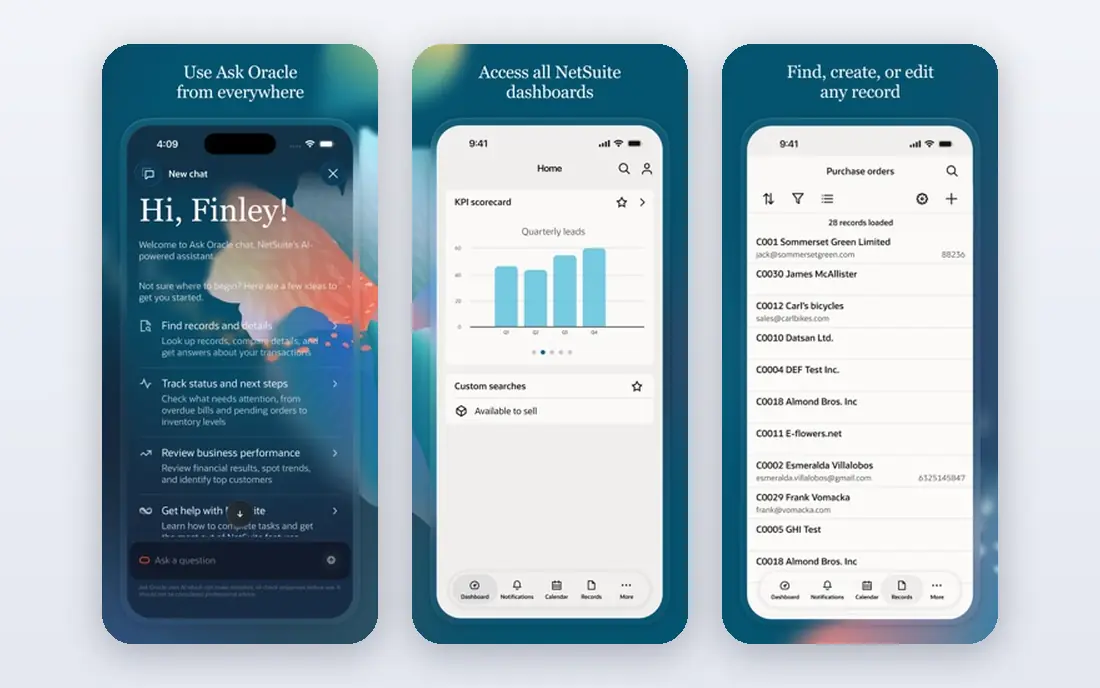
For buyers who put global multi-subsidiary groups first, this is a strong place to look. Oracle NetSuite OneWorld suits global groups that want finance, inventory, purchasing and CRM in one database, with subsidiary hierarchies and consolidation. The trade-off is cost and implementation time, since a full ERP rollout is a major project, not a quick switch.
It fits buyers who want global groups needing finance and operations together and are willing to compare terms before they commit. Terms vary by state and policy, so confirm the details in writing. Check the policy wording, exclusions and renewal terms before you buy, and get a written quote for your exact situation.
- OneWorld multi-subsidiary ERP
- Finance, inventory, CRM and supply chain in one system
- Multi-currency
- Quote-based pricing
- Implementation can take months
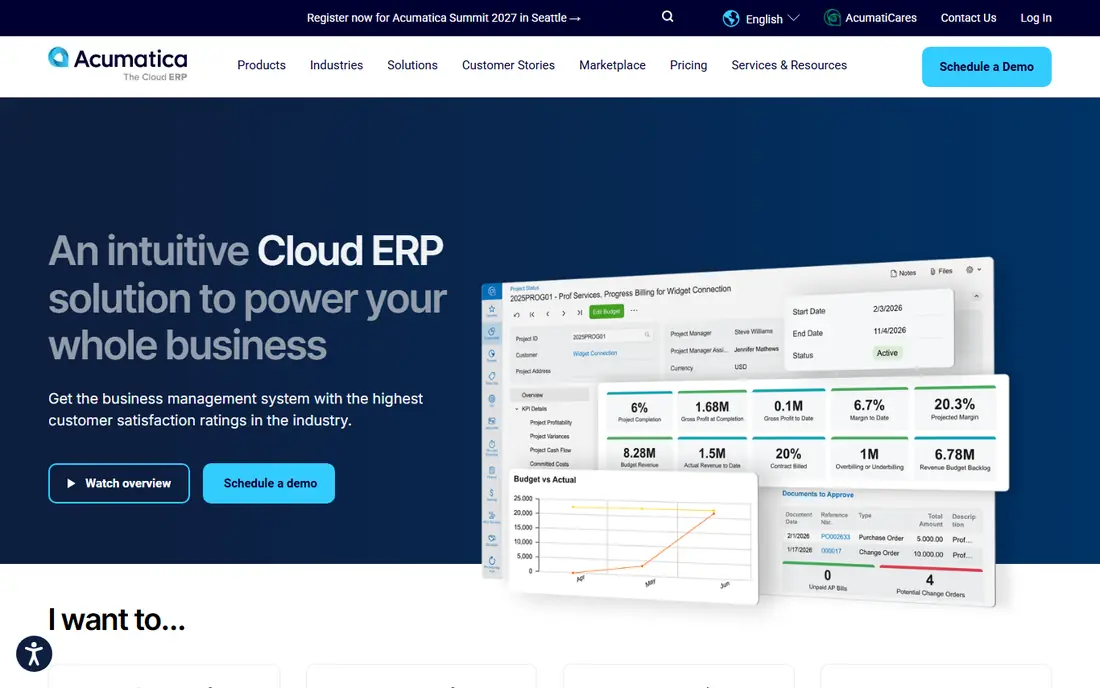
This one earns a place for readers focused on growing groups with many users. Acumatica suits growing groups where per-seat pricing would punish headcount, since it uses consumption-based pricing with unlimited users. Spend tracks transaction volume instead, so forecast volume carefully before you sign.
It fits buyers who want growing groups wanting many users without per-seat fees and are willing to compare terms before they commit. Terms vary by state and policy, so confirm the details in writing. Check the policy wording, exclusions and renewal terms before you buy, and get a written quote for your exact situation.
- Unlimited user cloud ERP
- Multiple companies and branches
- Intercompany accounting
- Consumption-based pricing
- Implementation needs a partner
Consider this option when Microsoft-centred groups matters more than a rock-bottom quote. Microsoft Dynamics 365 Business Central suits groups already on Microsoft 365, with Essentials from $80 and Premium from $110 per user per month. Setup is partner-led, so the partner matters as much as the software, and manufacturing features sit in Premium.
It fits buyers who want microsoft-centred groups and are willing to compare terms before they commit. Terms vary by state and policy, so confirm the details in writing. Check the policy wording, exclusions and renewal terms before you buy, and get a written quote for your exact situation.
- Microsoft 365 integration
- Essentials from $80 and Premium from $110 per user per month
- Multi-company consolidation
- Partner-led setup
- Manufacturing needs Premium
A practical choice for people who need US groups outgrowing QuickBooks without extra fuss. Intuit Enterprise Suite suits US groups that have outgrown QuickBooks but are not ready for a full ERP, with multi-entity views in a familiar system. It is a stepping stone, so global groups with complex statutory needs should compare it against NetSuite or Sage Intacct.
It fits buyers who want us groups outgrowing quickbooks and are willing to compare terms before they commit. Terms vary by state and policy, so confirm the details in writing. Check the policy wording, exclusions and renewal terms before you buy, and get a written quote for your exact situation.
- Multi-entity views on the QuickBooks stack
- Familiar workflow for QuickBooks users
- Payroll and payments options
- Best fit is US groups
- Complex global needs may outgrow it
We include this company because it handles small groups with few entities well. Xero suits small groups with two to five entities and minimal intercompany activity, with simple books per organisation. The limit is consolidation, since each entity is a separate subscription and group reporting needs add-ons or manual work.
It fits buyers who want small groups with few entities and are willing to compare terms before they commit. Terms vary by state and policy, so confirm the details in writing. Check the policy wording, exclusions and renewal terms before you buy, and get a written quote for your exact situation.
- Simple per-entity books
- Early from $25, Growing from $55 and Established from $90 per month
- Unlimited users per organisation
- Per-organisation pricing means each entity needs its own subscription
- Consolidation is limited
If small groups wanting low cost is the deciding factor, put this near the top of your list. Zoho Books suits small groups that want low cost and Zoho integration, with a free plan and Standard from $15 per month billed annually. Group consolidation is basic compared with a true ERP, so it fits simple groups, not complex subsidiaries.
It fits buyers who want small groups wanting low cost and zoho integration and are willing to compare terms before they commit. Terms vary by state and policy, so confirm the details in writing. Check the policy wording, exclusions and renewal terms before you buy, and get a written quote for your exact situation.
- Low cost, with Standard from $15 per month billed annually
- Zoho app integration
- Multi-organisation support
- Per-organisation pricing
- Group consolidation is basic
This pick suits readers who value Salesforce-based groups and clear terms. Accounting Seed suits groups already on Salesforce, since it runs finance, ledgers, currencies and consolidation inside Salesforce. The requirement is Salesforce itself, so groups not on that platform should not choose it for finance alone.
It fits buyers who want salesforce-based groups and are willing to compare terms before they commit. Terms vary by state and policy, so confirm the details in writing. Check the policy wording, exclusions and renewal terms before you buy, and get a written quote for your exact situation.
- Salesforce-native finance
- Multiple ledgers, currencies, intercompany and consolidation
- Strong reporting
- Requires Salesforce
- Pricing is quote-based
The final pick in this list is best viewed through the lens of modular groups wanting one platform. Odoo suits groups that want modular apps, from accounting to inventory and HR, in one platform with multi-company support. Modularity is also the risk, since a wide rollout needs careful setup, training and ongoing maintenance.
It fits buyers who want groups wanting modular apps in one platform and are willing to compare terms before they commit. Terms vary by state and policy, so confirm the details in writing. Check the policy wording, exclusions and renewal terms before you buy, and get a written quote for your exact situation.
- Modular apps for accounting, inventory, sales and HR
- Multi-company support
- Open source roots
- Implementation and customisation can be complex
- Multi-company setup needs care
How we picked these
We compared official product pages, pricing pages where published, and multi-entity feature descriptions for systems that support multiple entities, intercompany accounting and consolidation. We did not claim hands-on testing. Where pricing was not published, we wrote See website. We favoured systems with clear entity hierarchies, intercompany handling, multi-currency support and consolidated reporting, since those are the core multi-entity tests.
What to check before you buy
First, count entities, currencies and reporting needs, then test consolidation with your real chart of accounts, not a demo chart. Second, check intercompany handling: eliminations, transfer pricing and shared services should be automated, not spreadsheet work. Third, check user licensing: per-seat, per-organisation and consumption models produce very different totals for a five-entity group.
Also plan implementation honestly. Ask for a dated plan, data migration scope, training and support terms, and who owns customisations. A short pilot with two entities and one intercompany transaction reveals more than a sales demo.
Frequently asked questions
What is multi-entity software?
It is software that runs separate books for each legal entity, handles transactions between entities, and consolidates results into group reports. It should also handle different currencies, tax rules and reporting needs where relevant.
Do I need a full ERP or just accounting software?
If you only need finance and consolidation, a finance-led system such as Sage Intacct may suffice. If you also need inventory, manufacturing, purchasing and CRM in one system, a full ERP such as NetSuite or Acumatica is the better fit.
How does pricing work for multi-entity software?
It varies: per user, per organisation, or by consumption. Per-organisation tools charge per entity, so a five-entity group pays five subscriptions, while per-seat ERPs charge per user across entities. Compare total cost for your entity count.
How long does implementation take?
Simple tools can go live in days, finance-led systems often take two to four months, and full global ERPs can take six to twelve months. Data quality and process changes usually matter more than software speed.
What about intercompany transactions?
Good multi-entity software automates intercompany journals, eliminations and balances, so group reports do not need manual adjustments. Test this with a real intercompany sale and loan before you sign.
Sources
See where you really rank - block by block
ProMapRanker scans Google Maps across a grid of your service area. Simple monthly plans from $19, white-label on every plan.
Start freeKeep reading
 worlds best local seo company
8 Worlds Best Local SEO Companies for Map Pack Growth in 2026
Compare the worlds best local seo company options for Google Business Profile work, citations, reviews, and multi-location rankings and reporting in 2026.
Read → world's best web hosting company
World's Best Web Hosting Company in 2026
Searching for the world's best web hosting company? We compared 10 hosts on price, renewal rates, speed, and support to help you choose well today in 2026.
Read → who's got the best nanny tax services
Who's Got the Best Nanny Tax Services in 2026
We answer who's got the best nanny tax services, comparing full filing, back taxes, software, and pricing so families can handle nanny taxes correctly.
Read →