 ProMapRanker
Best Air Quality App in 2026: 9 Apps Compared


global cities, forecasts, and health advice · Pricing starts at: Free
Key takeaways
- IQAir AirVisual offers the widest global coverage with a 7-day forecast and health recommendations.
- EPA AirNow is the official US source and the best first check for US readers.
- Plume Labs offers a clear hourly forecast, though recent reviews report crashes on some devices.
- Air Matters and AirCare add pollutant detail and personalized advice for sensitive groups.
- PurpleAir adds hyperlocal sensor readings that help during smoke events, but one sensor alone is not enough.
Quick comparison
| Pick | Great for | Pricing starts at | Free tier | |
|---|---|---|---|---|
| IQAir AirVisual | global cities, forecasts, and health advice | Free | Yes | Visit |
 Plume Labs | clear hourly air quality forecasts | Free | Yes | Visit |
 EPA AirNow | official US air quality data | Free | Yes | Visit |
 Air Matters | detailed pollutant breakdowns | Free | Yes | Visit |
 AirCare | personalized advice for sensitive groups | Free | Yes | Visit |
 Airly | European cities and sensor maps | Free | Yes | Visit |
 PurpleAir | hyperlocal sensor readings near you | Free | Yes | Visit |
 WeatherBug | weather plus air quality in one app | Free | Yes | Visit |
 AccuWeather | forecasts with air quality context | Free | Yes | Visit |
The best air quality apps
Air quality apps differ more than their home screens suggest. Some use official government data, some use sensor networks, and some add forecasts and health advice. The apps below cover those sources, so you can pick one that fits your city, your health needs, and your travel plans.
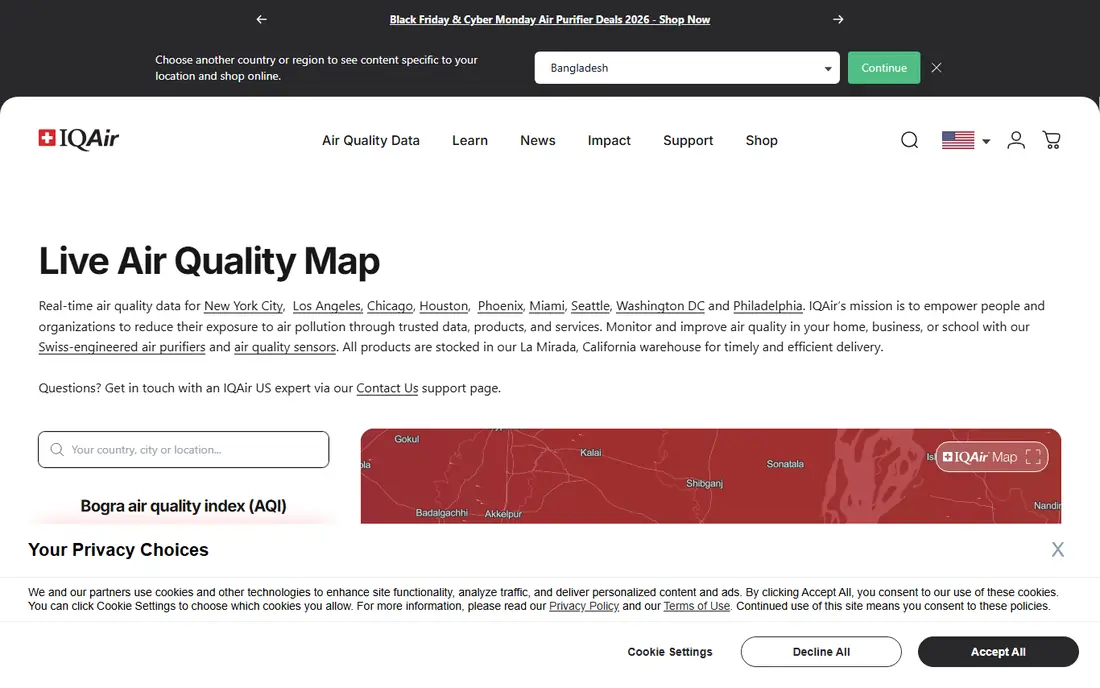
For many readers, this is the first option worth a close look. IQAir AirVisual is our pick for most people because it combines wide coverage with forecasts and health advice in one app. It draws on government monitoring stations and its own validated sensors, and it shows real-time data, historical trends, a 7-day forecast, and wildfire and smoke alerts. That mix helps travelers, families, and outdoor athletes plan around air quality.
Coverage still varies by place. A global app does not guarantee a monitor on every street, so check the source and timestamp for the location you care about. The app is free to download, with optional paid features in some regions, so start free and see how well your home city is covered before paying for extras.
- Wide global coverage
- 7-day forecast
- Health recommendations and alerts
- Coverage quality varies by location
- Some features need an account
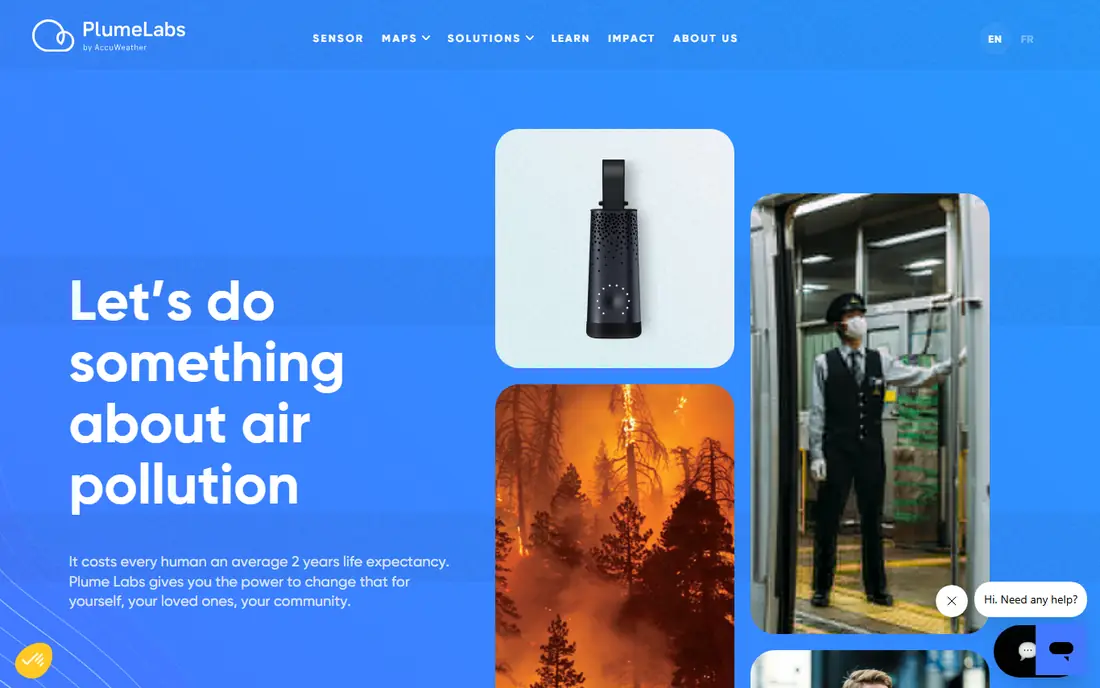
A different kind of fit shows up here. Plume Labs is known for a clear, easy-to-read forecast that shows how air quality will change through the day. That hourly view helps runners, cyclists, and parents decide when to go out and when to wait. For some cities, it also offers a pollution hotspot map, which adds street-level context beyond a single city score.
Recent user reviews report crashes on some Android devices, so the app can frustrate users even when its data is good. If Plume Labs crashes on your phone, try IQAir or AirNow as a backup and check for updates. When it works, its forecast clarity is a real strength.
- Hourly forecasts in a clear format
- Pollution hotspot maps for some cities
- Simple design
- Recent user reports of crashes on some devices
- Coverage varies by city
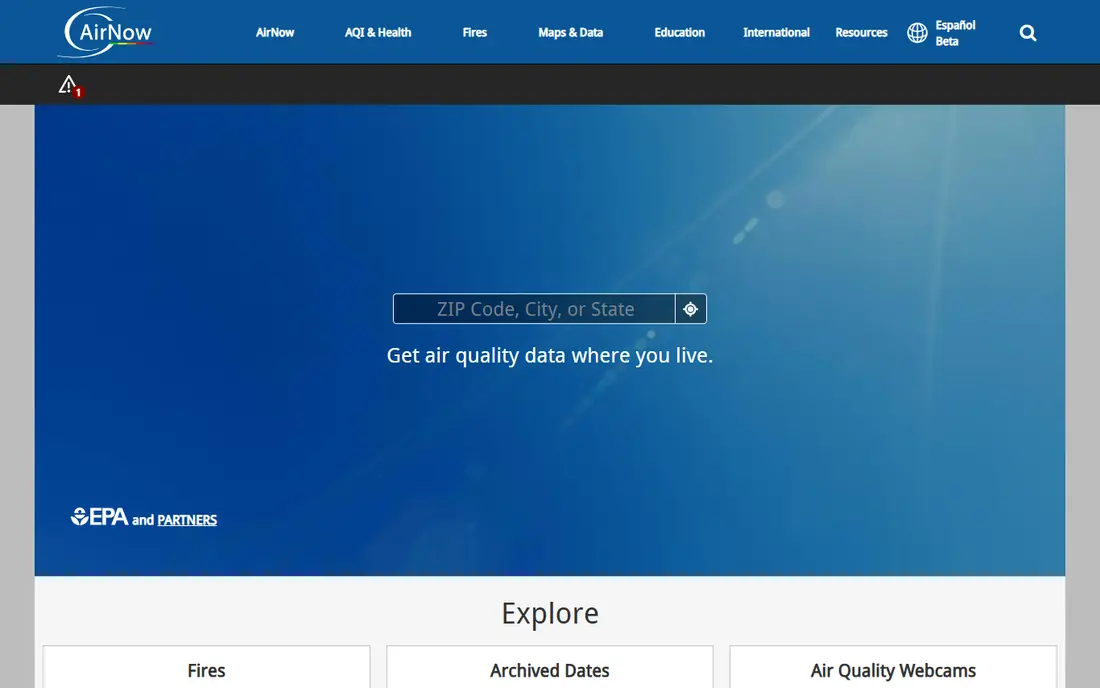
This one earns its place for a clear reason. EPA AirNow is the official US source, which makes it the most trustworthy pick for US readers who want government data. It shows current conditions, forecasts, and health guidance based on the US Air Quality Index, and it is free with no purchase needed for core features. For US cities, AirNow should be your first check.
The limit is geography. AirNow focuses on the US, so international travelers need IQAir or another global app alongside it. It also offers less detail on individual pollutants in some views than IQAir. For US daily use, though, AirNow is simple, official, and free.
- Official US government data
- Current conditions and forecasts
- No ads in the core app
- US-focused coverage
- Less detailed for international travel
If the options above feel too narrow, consider this one. Air Matters suits readers who want more than a single AQI number. It breaks down individual pollutants into concentrations, so you can see whether fine particles, ozone, or another pollutant is driving a poor day. That detail helps people with asthma or allergies understand what to watch, and the app offers mitigation suggestions alongside the data.
Its data network is smaller than IQAir, so coverage in some places may be thinner. The app is free to download, with optional purchases in some versions, so check the store listing for your device. If pollutant detail matters to you, Air Matters is a strong second app beside AirNow or IQAir.
- Breaks down individual pollutants
- Mitigation suggestions
- Modern interface
- Smaller data network than IQAir
- Some features vary by region
Here is a pick that suits a smaller, specific audience. AirCare stands out for personalized advice. It can tailor recommendations based on age, health conditions, and other factors you choose to share, which helps sensitive groups plan outdoor time. That personal angle is useful for families with asthma, older adults, and athletes who train outdoors.
Personalization needs personal details, so readers who prefer not to share health information should skip that setup and use general advice instead. Coverage also varies by location, as with all AQI apps. If tailored guidance helps you act on a poor air day, AirCare is worth trying.
- Personalized recommendations
- Health profile options
- Simple alerts
- Personalization needs health details you may not want to share
- Coverage varies
This entry stands out for how it handles the basics. Airly is a strong pick in Europe, where its sensor network and community sensors give detailed maps for many cities. You can see nearby sensors, compare readings, and check forecasts, which helps for city walks, cycling, and school runs. The app is free to download, with optional features in some versions.
Outside Europe, coverage is thinner, so travelers should pair Airly with IQAir for global trips. Airly also works best when a sensor is near you, so check the map for your area before relying on it. For European city life, Airly offers one of the most detailed local views here.
- Dense sensor maps in many European cities
- Forecasts
- Community sensors
- Best coverage in Europe
- Thinner elsewhere
Another strong choice, with a trade-off worth naming. PurpleAir is different from the other apps here because it is built around a network of real sensors, many run by individuals and organizations. During wildfire smoke, a nearby PurpleAir sensor can show conditions on your street before a city-wide average catches up. The real-time map is its main strength.
Sensor quality varies, and a single sensor can be affected by local sources, so treat one reading as a signal, not a verdict. Compare nearby sensors and check the official index as well. For smoke events and hyperlocal checks, PurpleAir is a valuable extra app, not a sole source.
- Real-time sensor map
- Hyperlocal readings
- Useful during smoke events
- Sensor quality varies
- Readings need context, not just a raw number
For readers who want a simpler route, this one helps. WeatherBug suits people who already check weather daily and want air quality in the same app. It combines forecasts, radar, severe weather alerts, and AQI readings, so you do not need a separate app for a quick check. That convenience makes it a good everyday companion, especially for outdoor plans.
AQI detail is lighter than dedicated apps such as IQAir or Air Matters, so readers with health conditions should use a dedicated AQI app for pollutant detail. The free version includes ads, which some users dislike. For a combined weather and air check, WeatherBug is convenient and free.
- Combines weather and AQI
- Alerts for severe weather and air quality
- Widely available
- AQI detail is lighter than dedicated AQI apps
- Ads in the free version
The last pick in this list fills a gap the others leave open. AccuWeather is another weather-first app that includes air quality context, which suits travelers and planners who think in forecasts. You can see AQI alongside temperature, wind, and precipitation for days ahead, and coverage is global. That forecast view helps for trips and outdoor events.
Air quality is secondary to weather here, so pollutant detail is lighter than in dedicated AQI apps. Some features need a subscription, though core weather and AQI checks are free. Use AccuWeather for planning, and pair it with AirNow or IQAir when air quality is the main concern.
- Long-range forecasts
- AQI alongside weather
- Global coverage
- AQI is secondary to weather
- Some features need a subscription
How we picked these
We compared official app listings, product pages, and data sources for each app, and we checked whether each app is free, what it covers, and where its data comes from. We favored apps that exist and work in October 2026, that show current AQI and forecasts, and that serve a clear audience, from US residents to international travelers. We did not claim hands-on testing we did not do, and we flagged where coverage varies by location, since that is the most common reason an AQI app disappoints.
How to pick an air quality app that fits your city
Start with your location. US readers should start with EPA AirNow for official data, then add IQAir for forecasts and travel. European readers should check Airly for local sensor detail. Next, check your street, not just your city. Open the app, search your home and work addresses, and look at the source and timestamp for each reading. If the nearest sensor is far away, the number is less useful. Then decide how much detail you need. A single AQI score is enough for a quick check, but people with asthma or allergies benefit from pollutant breakdowns and personalized advice. Finally, set alerts for the AQI level that matters to you, and check the app during smoke events against a second source before changing plans.
Frequently asked questions
What is the best air quality app?
IQAir AirVisual is our pick for most people, thanks to global coverage, a 7-day forecast, and health recommendations. US readers should also use EPA AirNow for official data, and European readers should check Airly for local sensors.
What is the best AQI app for the US?
EPA AirNow is the official US source and the best first check, with current conditions and forecasts based on the US index. IQAir AirVisual is a strong second app for forecasts, travel, and health advice.
What is the best app for air quality forecasts?
IQAir AirVisual offers a 7-day forecast, while Plume Labs offers a clear hourly forecast for the day ahead. For planning a trip or outdoor event, use the longer forecast, and for deciding when to go out today, use the hourly view.
Are air quality apps free?
Yes, all the apps here are free to download, with optional paid features or subscriptions in some cases. Core AQI checks, forecasts, and alerts are free in the apps listed, though some remove ads or add features on paid tiers.
Sources
See where you really rank - block by block
ProMapRanker scans Google Maps across a grid of your service area. Simple monthly plans from $19, white-label on every plan.
Start freeKeep reading
 zscaler alternatives
Best Zscaler Alternatives in 2026
Looking for zscaler alternatives? We compare 9 SASE and zero trust platforms on architecture, data protection, pricing, and fit for your network and team.
Read → zapier alternatives free
Best Zapier Alternatives Free in 2026
Nine automation tools for zapier alternatives free in 2026, all with genuinely free tiers, plus free plan limits, starting prices and upgrade paths explained.
Read → which platform is best for online reputation
Which Platform Is Best for Online Reputation in 2026
Wondering which platform is best for online reputation? We compare 8 review, listing, and response tools for small and multi-location businesses and agencies.
Read →