 ProMapRanker
Best AI Workout App in 2026: 9 Apps Compared

Key takeaways
- Fitbod is the strongest all-round pick for gym training, with daily sessions built from equipment, history and muscle recovery.
- Freeletics suits home training with little or no equipment, while Future suits people who want a human coach plus app tracking.
- Alpha Progression and JuggernautAI suit focused strength lifters, with progression plans that adjust as lifts improve.
- Prices range from free to about $199 per month for human coaching, so match the plan to how much guidance you will actually use.
- These apps give general fitness information only and are not medical advice; stop and seek care if pain, dizziness or chest symptoms appear.
Quick comparison
| Pick | Great for | Pricing starts at | Free tier | |
|---|---|---|---|---|
 Fitbod | Gym strength sessions | $15.99 per month | Free trial | Visit |
 Freeletics | Home and bodyweight training | Free | Yes | Visit |
 Future | Human coaching plus tracking | See website | No | Visit |
 Alpha Progression | Hypertrophy planning | $12.99 per month | Yes | Visit |
 JuggernautAI | Powerlifting programming | $34.99 per month | Free trial | Visit |
 Ladder | Structured team training | See website | Free trial | Visit |
 JEFIT | Gym logging with AI coach | $12.99 per month | Yes | Visit |
 Hevy | Simple strength logging | Free | Yes | Visit |
 Zing Coach | Guided general fitness | See website | Free trial | Visit |
The best AI workout apps
AI workout apps differ in what the word AI actually means. Some generate each session from your history and recovery, some adjust a set plan week by week, and some pair app tracking with a human coach. This list covers that range, with a plain note on who each app suits. Use these apps for general training only, not for injury treatment or medical decisions.

Fitbod builds each gym session from what you have done, what equipment you have and which muscles have recovered. That daily adjustment is the main reason it suits regular gym users: you open the app, follow the session and log weights, and the next session reflects that work. The exercise library covers common gym movements, with video guidance for form cues.
The cost is the main decision point. At $15.99 per month, or $95.99 per year, it makes sense if you train several times a week. Occasional users may get similar value from a free logging app. Fitbod also works best when you log honestly, since missed sessions and guessed weights weaken the next plan.
- Daily sessions built from equipment and recovery
- Large exercise library
- Clear progression over time
- No free plan beyond a trial
- Best value for regular gym users, not occasional trainers
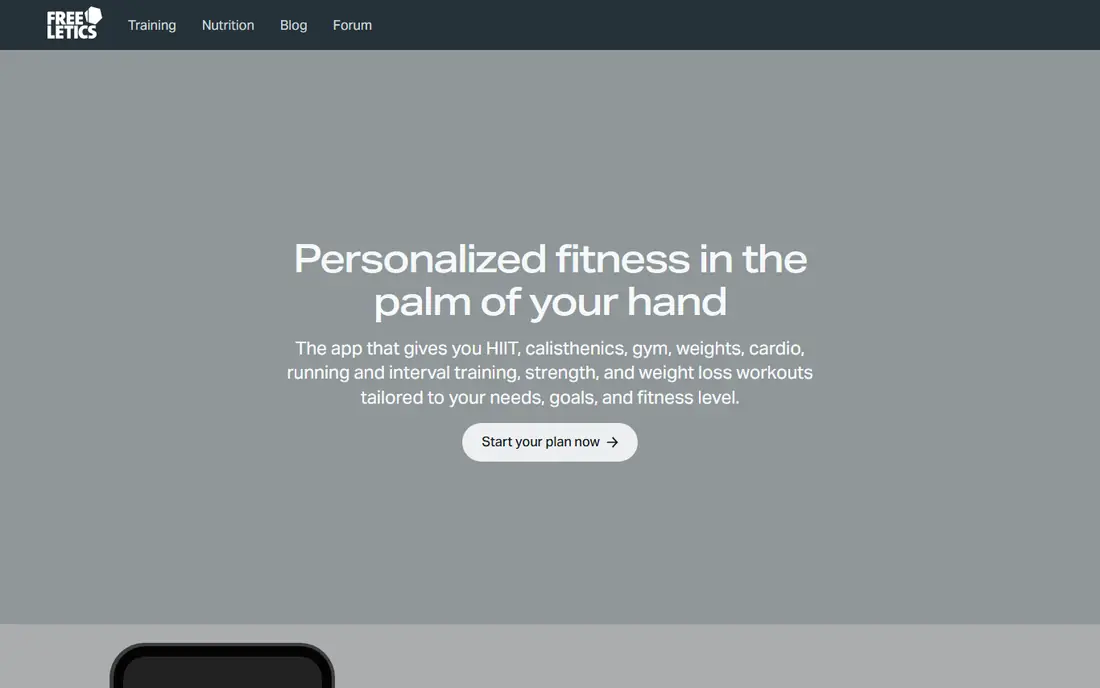
Freeletics suits people who train at home or travel often. Its Coach builds training journeys from your goal, fitness level and feedback, and many sessions need no equipment at all. That makes it easy to start in a small space, with short sessions that fit a busy day.
Free workouts give a taste of the style, but the paid Coach opens the adaptive plan. Pricing is sold in multi-month terms, so check the current term price before subscribing. If you prefer barbell training or a gym program, Fitbod or Alpha Progression will fit better than a bodyweight journey.
- Strong bodyweight journeys for home use
- Coach adapts sessions from feedback
- No gym needed for many plans
- Paid Coach is needed for full personalization
- Some journeys feel repetitive over long periods

Future pairs a human coach with app-based tracking, which suits people who need accountability more than a new algorithm. Your coach builds a plan, reviews your workouts and adjusts it as you progress, and regular messages keep training on track. That human link helps when motivation drops or life disrupts a routine.
The price reflects that service, with recent listings around $199 per month, so check the current price on the vendor site before joining. If you train well alone and only need a plan, a lower cost app will serve you better. If you have paid for gym memberships you rarely used, the coaching relationship may be the missing piece.
- A real coach builds and adjusts your plan
- Accountability through regular check-ins
- App tracking in one place
- Highest price in this list
- Value depends on how often you message your coach
Alpha Progression is built for lifters who want a structured muscle growth plan without guessing the next weight. It builds a plan, recommends progression and schedules deloads, which helps avoid random training. Free logging covers manual plans, while Pro at $12.99 per month, or $79.99 per year, adds the adaptive planning tools.
The app is narrow by design. Runners, team sport players and general fitness users will find less here than in a broader app. For gym lifters who train for hypertrophy and want a plan that adjusts over weeks, that focus is a strength. Log each set carefully, since progression advice depends on accurate records.
- Clear progression, periodization and deload planning
- Free logging for manual plans
- Focused on muscle growth
- Strength focus may not suit cardio or sport goals
- Interface rewards lifters who track sets closely
JuggernautAI suits experienced lifters who train the main powerlifts and want programming that adapts to readiness and results. Blocks adjust as you report feedback, which helps manage fatigue across a training cycle. The app is direct about its audience: it is for people who already know the lifts and want structured progression.
At $34.99 per month, or $349.99 per year, it is a specialist purchase. Beginners should build basic technique with a coach or a general strength app first, since an advanced plan cannot fix poor form. For competitive or serious recreational powerlifters, the focused programming is the reason to pay more.
- Adaptive powerlifting blocks for squat, bench and deadlift
- Readiness and feedback adjustments
- Serious strength focus
- High price and narrow focus
- Not suited to beginners or general fitness users
Ladder offers coach-led programs inside teams, which gives structure plus a social layer. Weekly plans, varied sessions and team chat help people who train better with a group, even when training alone at home or in a gym. That mix suits users who like a set schedule but want more variety than a single bodyweight journey.
Pricing has changed across tiers, so check the current Ladder plan on the vendor site before joining. Solo trainers who want to build their own sessions may prefer Fitbod or Hevy. Trainers who stick with programs when a coach and a team are involved will get more from Ladder than from a pure planning app.
- Coach-led team programs with weekly structure
- Strength and conditioning variety
- Community support in teams
- Price varies by tier
- Team format may not suit solo trainers who want full control
JEFIT has long served gym users as a logging app, and its Elite AI Coach adds plan building from your goal, equipment and schedule. That combination suits lifters who already log workouts and want the app to suggest the next step. The free tier covers basic logging, so you can test the layout before paying.
The interface packs in many features, and new users may need a few sessions to find the views they use most. Elite pricing at $12.99 per month, or $69.99 per year, is in line with other gym apps. If you want a simpler log, Hevy is cleaner. If you want a plan plus a deep exercise library, JEFIT is the stronger pick.
- Large exercise database and logging tools
- Elite AI Coach builds plans from goals and equipment
- Free tier for basic logging
- Interface can feel busy
- AI Coach features sit behind the paid Elite tier
Hevy is the simple option for lifters who already know what to do and just need a fast log. Routines, set tracking and rest timers sit in a clean layout that works well between sets. The free tier covers core logging, and Pro at $2.99 per month, or $23.99 per year, adds the Trainer features.
Hevy does not generate a full adaptive plan in the way Fitbod does, so it suits self-directed lifters better than people who want the app to choose each session. That simplicity is also its appeal: less setup, fewer decisions and a log you will actually keep. Pair it with a written program if you want structure without a higher subscription.
- Clean workout logging with routines
- Free tier covers core use
- Fast to use between sets
- Trainer features need a paid Pro plan
- It plans less for you than Fitbod or Alpha Progression
Zing Coach targets general fitness users who want guided sessions that adjust to daily readiness. It suits people returning to training, building a routine or mixing strength and cardio without a specialist plan. Short guided sessions and form cues help new users train with more confidence than a blank log would.
Specialist lifters will find less depth here than in Alpha Progression or JuggernautAI, and pricing varies by offer, so check the current price before subscribing. For a broad fitness routine, though, Zing Coach balances guidance and flexibility well. It works best when you answer readiness questions honestly each day.
- Daily readiness adjustments
- Guided sessions for general fitness
- Form guidance for common movements
- Pricing varies by offer
- Less depth for specialist strength athletes
How we picked these
We compared official pricing pages, app store listings and public comparisons, and we favored apps that are actively available in October 2026 with a clear training focus. We looked for a real adaptive or coaching feature, not just a static workout library, plus a fair price for the guidance offered. We did not claim hands-on testing; our comparison rests on published features, pricing and documented plan structures. We also noted where a human coach, rather than software alone, drives the plan.
What to check before you subscribe
Match the app to your training place first. Gym lifters need equipment filters and progression tools, home trainers need bodyweight plans, and people who need accountability need a coach or a team. A cheaper app you use four times a week beats a smarter app you open once. Try the free tier or trial for two weeks before paying for a year.
Train with care and keep expectations steady. Warm up, use weights you can control, and stop if you feel sharp pain, dizziness, chest pain or unusual shortness of breath, then seek medical care if symptoms persist. This guide gives general fitness information only and is not medical advice. If you have a health condition, an injury or a recent surgery, talk with a clinician or qualified coach before starting a new program.
Check the billing term before you pay. Some apps bill monthly, some sell multi-month terms, and annual plans can save money only if you stay consistent. Read the cancellation terms, check whether a trial converts automatically, and set a calendar reminder before a trial ends. That one step prevents most unwanted charges in this category.
Frequently asked questions
What is the best AI workout app for beginners?
Freeletics or Zing Coach are good starting points, since both offer guided sessions and adapt to feedback without needing gym equipment. Hevy also works if you already follow a simple program and only need a log. Start with a free tier, build a two-week habit, then decide whether a paid plan adds value.
What are the best AI workout apps for gym training?
Fitbod leads for all-round gym sessions, Alpha Progression suits hypertrophy planning, and JuggernautAI suits powerlifting. JEFIT is a strong logging option with an AI Coach tier. Pick based on your goal: general strength, muscle growth or powerlifting, rather than on the longest feature list.
Is there a free AI workout app?
Yes, Freeletics and Hevy offer free tiers, and JEFIT offers free basic logging. Free tiers cover core workouts or logging, while adaptive coaching usually needs a paid plan. Try the free tier first to confirm the training style fits your routine before subscribing.
How much do AI workout apps cost?
Prices in this list range from free to about $199 per month for human coaching with Future. Most software-only plans sit between $12.99 and $34.99 per month, with annual billing often lowering the monthly equivalent. Check the vendor pricing page, since terms and offers change.
Do AI workout apps replace a personal trainer?
They can replace a written plan for many healthy adults, but they do not replace in-person coaching for technique, injury history or complex health needs. Future is the closest option here because a human coach reviews your work. For form correction or rehab, work with a qualified coach or clinician.
Are AI workout apps safe?
They are generally safe for healthy adults who train within their limits, warm up and stop when pain or warning symptoms appear. They are not medical advice and cannot assess your health from app data alone. If you have a condition, injury or concern, seek professional advice before starting a new program.
Sources
See where you really rank - block by block
ProMapRanker scans Google Maps across a grid of your service area. Simple monthly plans from $19, white-label on every plan.
Start freeKeep reading
 zscaler alternatives
Best Zscaler Alternatives in 2026
Looking for zscaler alternatives? We compare 9 SASE and zero trust platforms on architecture, data protection, pricing, and fit for your network and team.
Read → zapier alternatives free
Best Zapier Alternatives Free in 2026
Nine automation tools for zapier alternatives free in 2026, all with genuinely free tiers, plus free plan limits, starting prices and upgrade paths explained.
Read → which platform is best for online reputation
Which Platform Is Best for Online Reputation in 2026
Wondering which platform is best for online reputation? We compare 8 review, listing, and response tools for small and multi-location businesses and agencies.
Read →