 ProMapRanker
Best AI Voice Clone Service for Video Editing in 2026

Key takeaways
- ElevenLabs is our pick for most video editors, with instant cloning from $6 per month and professional cloning from $22 per month.
- Descript is best when editing is the main job, since Overdub lets you fix narration by editing text in a transcript.
- Murf suits scripted video voiceovers, but custom voice clones are an enterprise add on rather than a self serve feature.
- Only clone voices you own or have clear permission to use, and keep a written record of that permission.
- Credit and minute meters differ widely, so match the plan to your monthly narration minutes before you subscribe.
Quick comparison
| Pick | Great for | Pricing starts at | Free tier | |
|---|---|---|---|---|
 ElevenLabs | Overall cloning quality | $6 per month | Yes | Visit |
 Descript | Text based video editing | $16 per month | Yes | Visit |
 Resemble AI | Watermarking and detection | See website | Free trial | Visit |
 Murf | Scripted studio voiceovers | $29 per month | Yes | Visit |
 Kits AI | Singing and music voices | $10 per month | Yes | Visit |
 HeyGen | Voice inside avatar video | See website | Yes | Visit |
 Cartesia | Real time voice API | $5 per month | Yes | Visit |
 Fish Audio | Low cost cloning | $11 per month | Yes | Visit |
 WellSaid Labs | Consented brand voices | $19 per month | Free trial | Visit |
The best AI voice clone services for video editing
We compared cloning access, video editing workflow, language and dubbing support, consent safeguards and published pricing. A plain warning applies to the whole list: only clone a voice you own or have clear, written permission to use. Never use these tools to impersonate someone, to fake an endorsement, or to create deceptive audio.
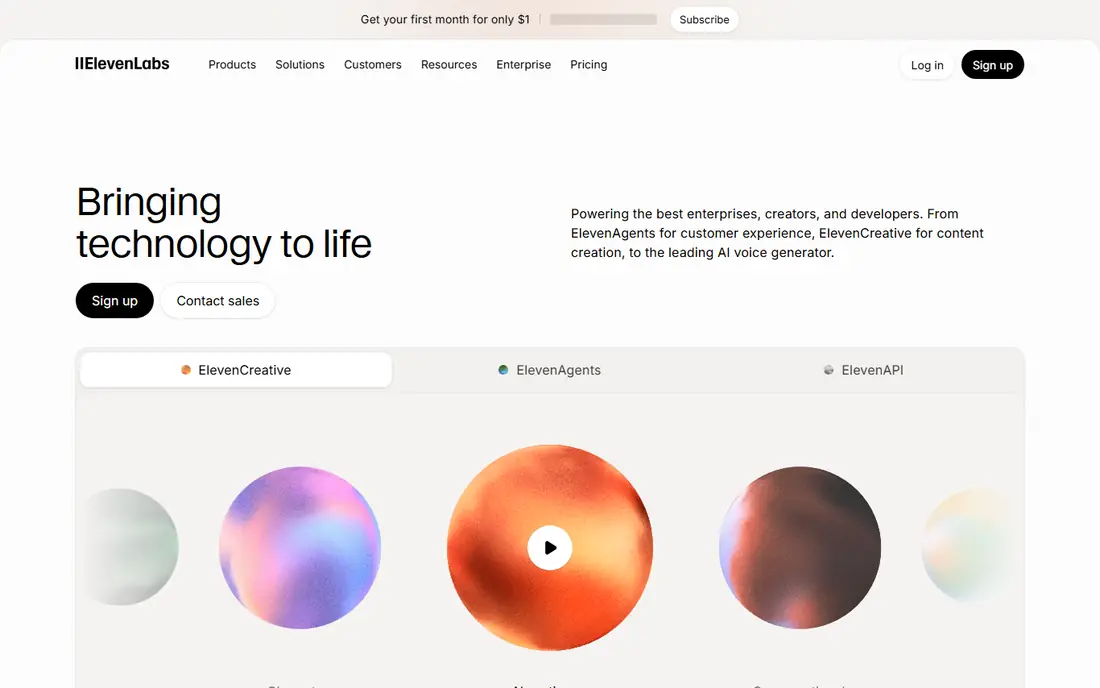
ElevenLabs is the reference point for voice cloning in video work. Instant cloning is available from the $6 per month Starter plan, while professional cloning, which trains on a longer sample, is available from the $22 per month Creator plan. For a video editor, the practical benefit is consistency: the same cloned voice can narrate a series, patch a flubbed line, and dub a version in another language without re-recording.
The cost catch is the shared credit pool. Narration, cloning, dubbing and other generation draw from the same credits, so a dubbing heavy month can eat a narration budget. Finalise scripts before you generate, and test a short clone sample against your real video audio before you commit to a long series. If the voice holds up in your edit, ElevenLabs is hard to beat for quality and range.
- Instant and professional cloning
- Multilingual dubbing
- Large voice library
- Shared credits across features
- Regenerating audio after edits uses more credits
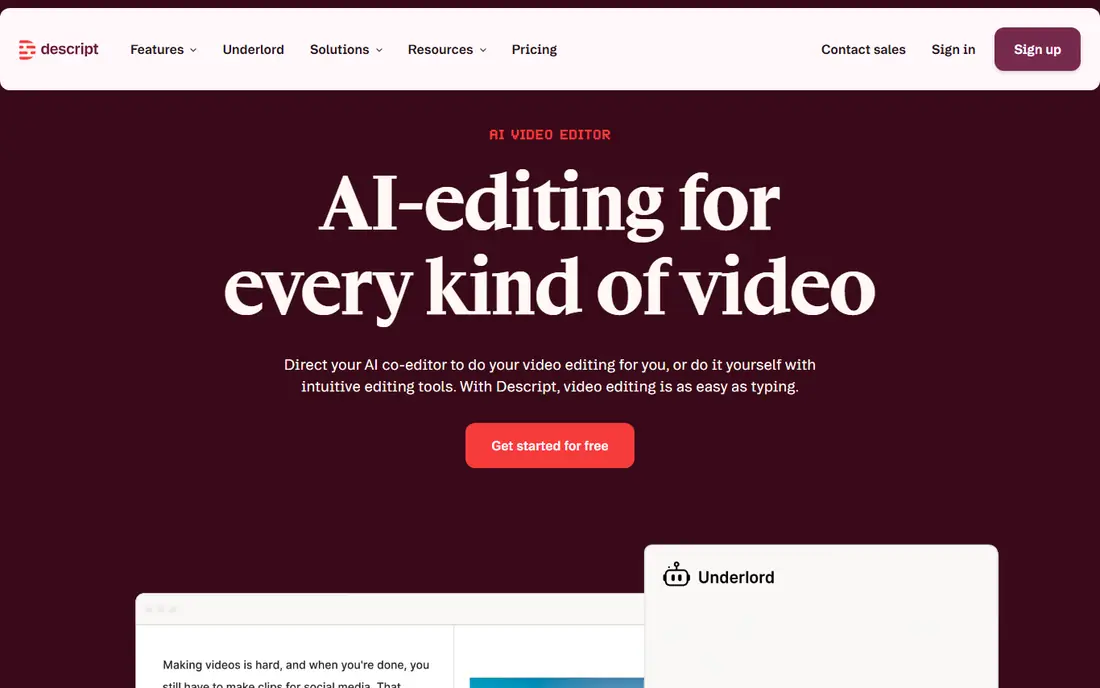
Descript is the best choice when the edit itself is the bottleneck. You edit video by editing a transcript, and Overdub lets you type a corrected word and hear it in your own cloned voice, instead of re-recording a whole take. Custom voice clones are available on paid plans, with Hobbyist pricing from $16 per month billed annually in recent listings, which makes it accessible for solo creators.
The trade off is that Descript is an editor first and a voice lab second. If you need the most natural long form narration for a commercial, ElevenLabs may sound better. If you need to fix narration, cut filler words and publish a video quickly, Descript saves more time than a small quality gap costs. Test Overdub on your own voice with a short script before you rely on it for a client project.
- Overdub voice cloning tied to transcript editing
- Video and podcast editing in one tool
- Easy correction of spoken mistakes
- Pure clone quality trails the best audio only tools
- Higher tiers needed for larger teams
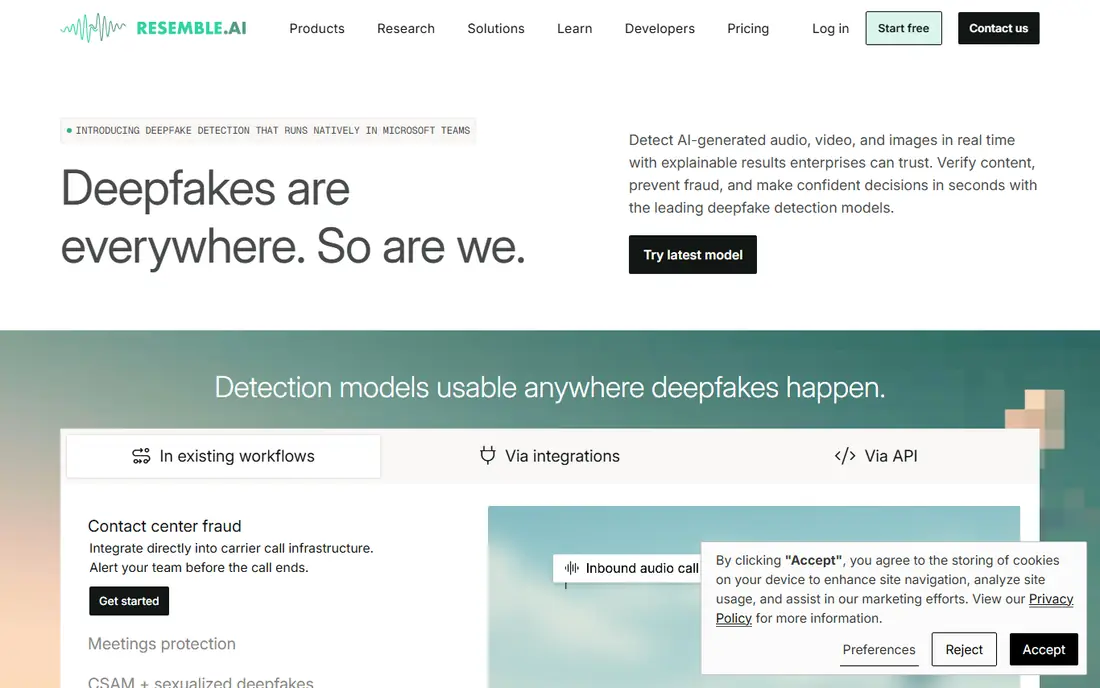
Resemble AI appeals to teams that need provenance as much as sound. Rapid clones work for quick projects, while professional clones suit a brand voice that will be used repeatedly. Watermarking and detection tools help a team show that audio was generated with permission and to check for misuse, which matters for agencies and larger brands.
The downside is pricing clarity. Pay as you go and seat based elements make the monthly total harder to predict than a flat credit plan, and the workflow is more technical than a simple studio. For a video editor who works alone, that extra setup may not be worth it. For a team that must prove consent and trace generated audio, Resemble AI is the most safety focused option here.
- Rapid and professional clones
- Watermarking and deepfake detection tools
- API access
- Pricing is usage based and harder to predict
- Setup suits technical teams more than casual editors
Murf is built for scripted narration, such as explainer videos, courses and presentations. The studio timeline, background music and slide sync help an editor line a voiceover up with visuals without switching tools. Minute based billing, at $29 per month for the Creator plan in recent listings, makes the monthly cost easier to predict than a character credit pool.
The key limit for this article is cloning access. Custom voice clones are an enterprise add on, not a self serve feature on the standard Creator plan, so a creator who wants their own cloned voice should not buy Murf expecting instant cloning. If you need a strong library of ready made voices for scripted video, Murf is excellent. If cloning your own voice is the main job, start with ElevenLabs or Descript.
- Timeline studio for video voiceovers
- Background music and slide sync
- Minute based billing
- Custom voice clones are an enterprise add on
- Raw realism trails ElevenLabs for some voices
Kits AI stands apart because it is built for singers and music producers, not just spoken narration. Singing voice cloning from $10 per month lets a creator convert a guide vocal into a trained singing model, which is useful for music videos, covers with permission, and vocal demos. For a video editor working on music content, that focus is a real advantage over general narration tools.
For plain spoken video voiceovers, Kits AI is less direct than ElevenLabs or Murf. The workflow, voice library and editing tools are centred on music, so a documentary or explainer editor may find the narration experience thinner. Use Kits AI when the voice in the video sings, and use a narration tool when the voice mainly speaks.
- Singing voice cloning
- Music focused tools
- Low starting price
- Spoken video narration is not its main strength
- Library voices vary in quality
HeyGen is the pick when the finished video, not just the audio, is the product. It pairs voice cloning with talking head avatar video, so a creator can produce a presenter led video without filming. Instant cloning from a short sample is available on lower tiers in recent listings, while a professional voice clone is a paid add on at $99 per month in some listings, so check the current tier before you plan a series.
The limit is flexibility. If you only need audio to drop into your own editor, an audio first tool gives you more control over files, formats and dubbing. If you need a finished avatar video with a cloned voice, HeyGen removes filming, lighting and retakes from the job. For faceless explainers and localised presenter videos, that trade is often worth it.
- Voice cloning inside finished avatar video
- Instant clone from a short sample
- Many languages
- Audio only workflows are less flexible than ElevenLabs
- Professional clone is a paid add on
Cartesia suits developers and creators who need voice inside an interactive product or a fast turnaround pipeline. The $5 per month Pro starting price in recent listings is low, and instant cloning is available from paid tiers, with a higher tier professional clone option. Real time performance matters when voice must respond quickly, rather than being rendered offline for a finished video.
For a traditional video editor, Cartesia is less complete as a studio. You will likely export audio into your own editor, rather than editing video inside Cartesia itself. That is fine for a team with a pipeline, but a solo editor who wants transcript editing or a timeline studio should look at Descript or Murf. Price and speed are the reasons to shortlist Cartesia, not editing depth.
- Low starting price
- Instant cloning on paid plans
- Real time voice performance
- Video editing workflow is thinner than Descript or Murf
- Clone quality depends on the model chosen
Fish Audio is the budget cloning option that still offers a real paid workflow. At $11 per month in recent listings, it undercuts the larger cloning tools, and cloning is available across paid plans rather than only on an enterprise tier. Multilingual range helps a creator who localises short videos, and a free tier lets you test the sound before paying.
The honest catch is consistency. A smaller service can sound excellent on one voice and less natural on another, and support and documentation are thinner than at ElevenLabs. Test your own voice, in the languages you actually publish, before you build a series around it. If the test passes, Fish Audio is the best value cloning route in this list for a cost sensitive editor.
- Low monthly price
- Cloning on paid plans
- Multilingual range
- Smaller brand and support footprint than ElevenLabs
- Quality varies by voice and language
WellSaid Labs is built around consented, professional voices, which makes it a safe choice for brands that cannot risk an unlicensed clone. The Starter plan is listed at $19 per month, or about $10 per month billed annually in recent listings, with a trial that includes a small download allowance. Custom brand voices are available on enterprise plans, built with the provider team rather than as a quick self serve clone.
The limit is scope. English narration is the strength, while multilingual dubbing and casual creator cloning are thinner than at ElevenLabs. For a brand video, a course series or a corporate explainer in English, the consistency and consent story are strong. For a multilingual creator channel, pair it with a dubbing tool or choose a broader cloning service.
- Consented professional voice talent
- Consistent English brand narration
- Custom brand voices on enterprise plans
- English focus limits multilingual projects
- Self serve cloning is not the main offer
How we picked these
We compared vendor pricing pages, cloning access, consent policies and video workflow features, plus independent voice cloning comparisons checked in October 2026. We kept only tools that are still available to new buyers, offer a real cloning route or a clear voiceover studio, and state a consent safeguard. We excluded tools reported as discontinued or unavailable in 2026, and we did not claim hands on testing. Where a price was tier dependent or unclear, we wrote See website.
What to check before you clone a voice
Consent is the first test, not the last. Get written permission from the voice owner, keep it on file, and do not clone a celebrity, colleague or client voice on a verbal promise. Check the provider consent process too, since some require a spoken consent sample or a verification step before a clone can be used. That friction is a good sign, not a flaw.
Next, test the voice in your real edit. Render a 60 second sample with your actual script, music and room tone, and listen on headphones and on a phone speaker. Check how the clone handles names, numbers and pauses, and how much re-rendering costs when you change a line. Finally, label generated audio where your audience or client expects it, and keep the original recordings and permission records with the project. The best ai voice clone service for video editing is the one that sounds natural in your edit and leaves a clean consent trail behind it.
Frequently asked questions
Can I clone my own voice for video editing?
Yes, if the tool offers a self serve clone and you provide your own voice samples through its consent process. ElevenLabs, Descript, Fish Audio and Cartesia offer paid cloning routes, while Murf and WellSaid Labs reserve custom clones for enterprise plans.
Is AI voice cloning legal?
It depends on consent, jurisdiction and use. Cloning your own voice, or a voice with clear written permission, for your own videos is the safe route. Cloning someone else without permission, or using a clone to impersonate them or fake an endorsement, can break the law and platform rules.
How long a sample do I need to clone a voice?
Instant clones often need only a short sample, sometimes under five minutes, while professional clones train on a longer sample, often 30 minutes or more. Longer, cleaner samples usually sound more consistent, especially for long narration.
Will a cloned voice work for dubbing?
Some tools, notably ElevenLabs and HeyGen, offer dubbing and multilingual support, but quality varies by language. Test a short dubbed clip in each target language before you commit to a full series.
What costs most in voice cloning plans?
Credits or minutes are the main meter, and re-rendering after script changes uses more of them. Finalise scripts first, and check whether cloning, dubbing and narration all draw from the same pool.
Should I tell viewers a voice is AI generated?
We recommend disclosure where the voice stands in for a real person, for a brand, or for a client project. It protects trust, and many platforms and clients now expect it for synthetic voices.
Sources
See where you really rank - block by block
ProMapRanker scans Google Maps across a grid of your service area. Simple monthly plans from $19, white-label on every plan.
Start freeKeep reading
 zscaler alternatives
Best Zscaler Alternatives in 2026
Looking for zscaler alternatives? We compare 9 SASE and zero trust platforms on architecture, data protection, pricing, and fit for your network and team.
Read → zapier alternatives free
Best Zapier Alternatives Free in 2026
Nine automation tools for zapier alternatives free in 2026, all with genuinely free tiers, plus free plan limits, starting prices and upgrade paths explained.
Read → which platform is best for online reputation
Which Platform Is Best for Online Reputation in 2026
Wondering which platform is best for online reputation? We compare 8 review, listing, and response tools for small and multi-location businesses and agencies.
Read →