 ProMapRanker
Best AI Voice Agent Platform in 2026


Developer control over every model layer · Pricing starts at: $0.05 per minute
Key takeaways
- Per-minute headline prices hide model, voice, and telephony costs, so budget on an all-in rate for your call mix.
- Retell AI and Vapi suit developer teams that want control over models, while Synthflow suits teams that want a no-code builder.
- ElevenLabs leads on voice quality in public comparisons, but you still need telephony and call logic around it.
- Open-source frameworks such as LiveKit Agents and Pipecat cut platform fees, but they move hosting and upkeep to your team.
Quick comparison
| Pick | Great for | Pricing starts at | Free tier | |
|---|---|---|---|---|
| Vapi | Developer control over every model layer | $0.05 per minute | Free trial | Visit |
 Retell AI | Managed phone agents with clear pricing | $0.07 per minute | Free trial | Visit |
 ElevenLabs Agents | High-quality voices | $0.08 per minute | Yes | Visit |
 Bland AI | Bundled outbound calling | $0.14 per minute | Free trial | Visit |
 Synthflow AI | No-code agent building | See website | Free trial | Visit |
 Play.ai | Voice agents with cloning options | See website | Free trial | Visit |
 LiveKit Agents | Open-source agent framework | See website | Yes | Visit |
 Pipecat | Open-source vendor-neutral pipelines | See website | Yes | Visit |
 Sierra | Enterprise managed agents | See website | No | Visit |
The best ai voice agent platform
An AI voice agent platform runs the full phone conversation: speech recognition, a language model, voice output, telephony, and the tools that let the agent book, look up, or transfer a call. The platforms below differ mainly in who builds the agent, how costs are billed, and how much of the stack you own. That choice matters more than a single latency claim.
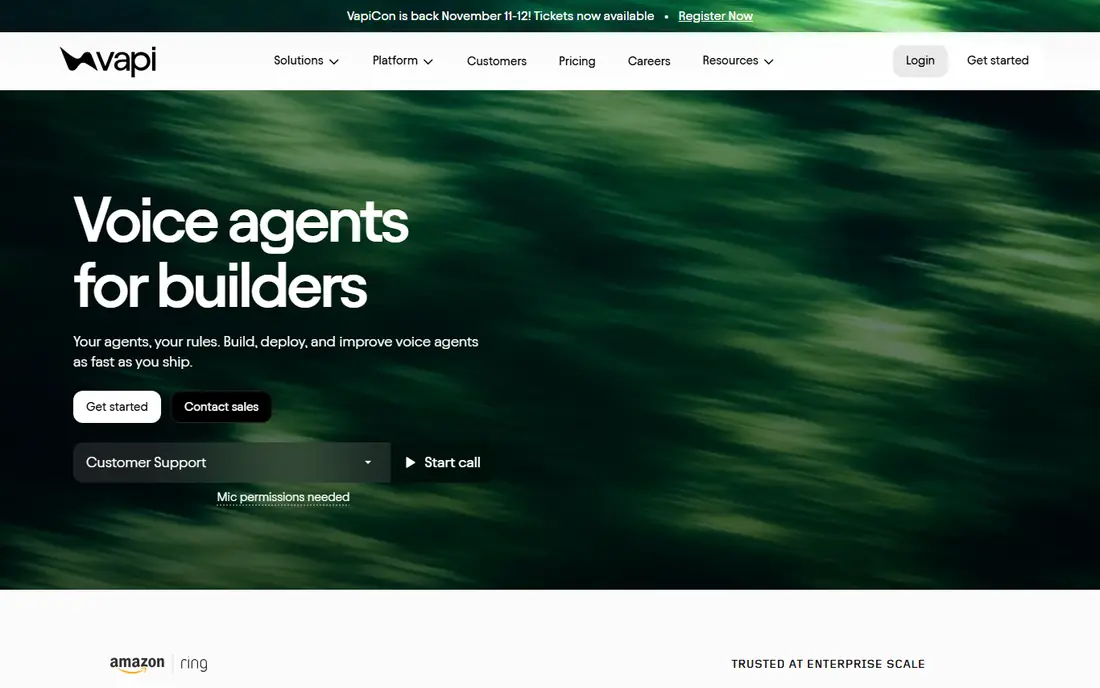
Vapi is the pick for teams that want to assemble their own stack. You can choose the transcription provider, the language model, and the voice provider, and change one layer without rebuilding the whole agent. That flexibility helps teams with a preferred model or a compliance need that points to a specific provider.
The cost picture needs care. Public comparisons put real all-in costs well above the $0.05 platform fee once model, voice, transcription, and telephony are added. If your team can model those lines and values control over a single bill, Vapi fits. If you want one predictable per-minute price, a bundled platform will feel simpler.
- Swap speech, language, and voice providers
- API-first design
- Web and phone calls
- $0.05 is a platform fee only, with provider costs on top
- Billing can involve several lines
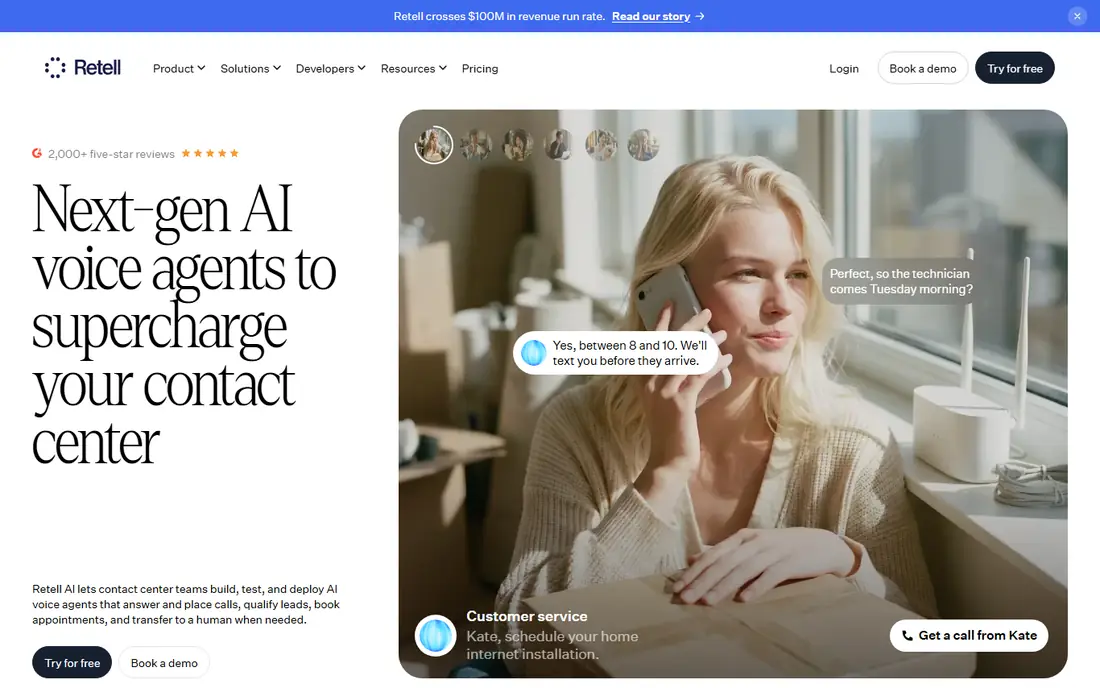
Retell AI is often the first alternative developers try when they want a managed phone agent without a large platform fee. You get a builder that a non-engineer can edit, plus an API for deeper work, and a rate card that itemizes voice, model, and telephony. Public comparisons put the all-in rate around $0.13 to $0.31 per minute depending on the model stack.
Retell also stands out on compliance basics, with a free business associate agreement noted in public comparisons, which matters for health-related use. Check data hosting, concurrency limits, and add-on costs for knowledge bases and guardrails before you scale, because those small lines add up at volume.
- No platform fee on pay-as-you-go use
- No-code builder plus API
- Free business associate agreement in public comparisons
- Language model and telephony add to the base rate
- No EU hosting in some public comparisons
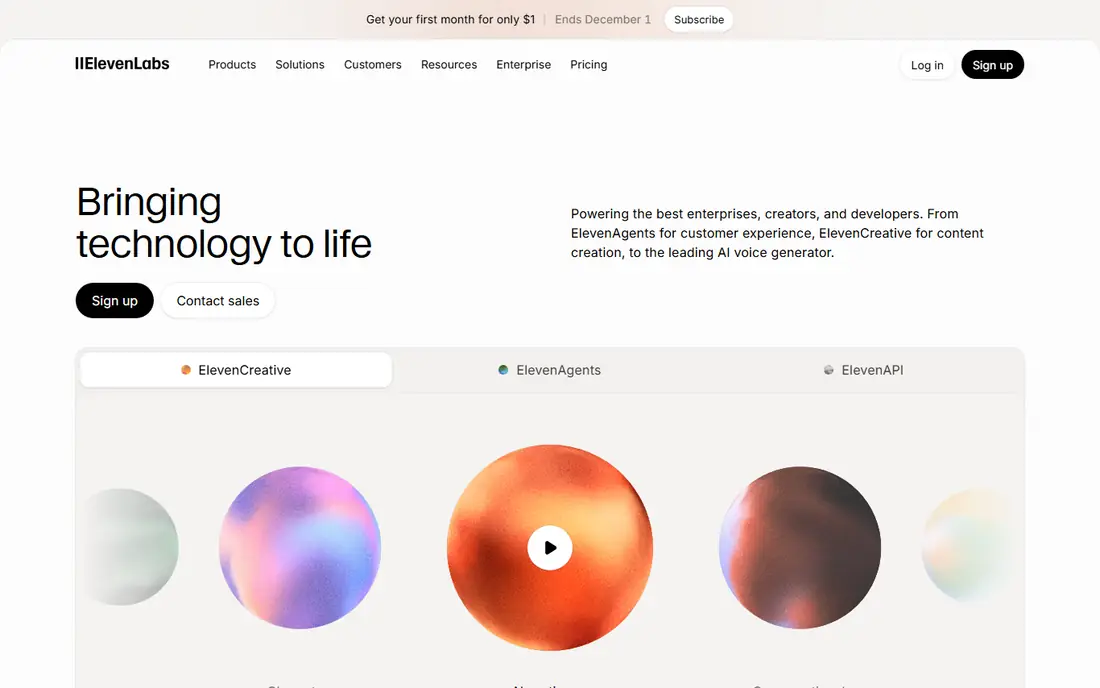
ElevenLabs Agents is the choice when voice quality is the product. If callers must trust the voice, understand it in noise, or hear it in several languages, the voice models here are a clear draw. The platform also supports custom models and tools, so an agent can look up an order or book an appointment rather than only answer questions.
The trade-off is assembly. You still need telephony, often through a provider such as Twilio, and you need to budget language model use on top of agent minutes. For a brand-led or content-led voice experience, that extra work is worth it. For a simple receptionist, a bundled platform may ship faster.
- Strong voice quality and cloning
- Wide language coverage
- Agent tools and integrations
- Language model and telephony are billed separately in many setups
- Agent minutes sit apart from text-to-speech credits
Bland AI bundles its models into a per-minute rate, which makes budgeting simpler than a stack of provider bills. It is built for high-volume outbound work with structured pathways, so a sales or outreach team can run many calls with consistent steps. Public comparisons note a free business associate agreement, which helps regulated teams.
The cost structure punishes low volume, because paid plans add a monthly fee on top of per-minute charges. Model choice is also narrower, since Bland uses its own stack rather than a bring-your-own model setup. Choose Bland when outbound volume is high and a single bundled rate matters more than model swapping.
- Bundled model rate for simpler budgeting
- Strong outbound and pathway flows
- Enterprise and on-prem options
- Plan fees apply on paid tiers
- No custom language model in public comparisons
- Less flexible model choice
Synthflow AI is built for teams without a large engineering group. A visual builder lets operations staff create, edit, and test an agent, connect it to calendars or CRMs, and publish it to phone or web. That speed matters for a receptionist, booking agent, or support line that needs to go live in weeks, not quarters.
Pricing is the main question. Public comparisons note that Synthflow has moved toward enterprise-scoped contracts, with a starting point around $30,000 per year in some comparisons, so small teams should get a written quote before assuming a low monthly plan. If your team has no developers and a clear call volume, the managed setup can still be worth the contract discussion.
- Visual no-code builder
- Fast setup for non-engineers
- Managed enterprise rollout options
- Public pricing now leans enterprise-scoped
- Model and telephony costs vary by contract
Play.ai combines voice generation with agent building, so teams that already use it for voice work can move into phone agents without changing vendors. Voice cloning helps a brand keep a consistent voice across calls, ads, and in-app audio, and multilingual support helps teams serving callers in more than one language.
As with ElevenLabs, the headline rate is not the full bill. Voice choice, model choice, and telephony change the all-in cost, so run a pilot at your real call length and check the invoice lines. Play.ai fits teams that value voice identity and already plan to use its voice tools beyond phone calls.
- Voice cloning and multilingual voices
- Agent builder for phone and web
- API access
- Per-minute all-in costs vary by voice and model
- Telephony is often separate
LiveKit Agents is a framework, not a managed phone service. It gives your developers the real-time audio loop, plus tools to plug in speech, language, and voice models, and you host the result. Public comparisons put raw hosting around $0.01 per minute before model and telephony costs, which can be far cheaper at high volume.
That saving comes with work. Your team owns uptime, scaling, telephony, compliance, and updates, and you need engineers who can build and support a voice system. For a product team that already runs real-time infrastructure, LiveKit Agents is a strong foundation. For a small business that needs a receptionist next week, a managed platform is a better fit.
- Open-source framework in Python and Node.js
- You own hosting and data flow
- Low hosting cost at scale
- You build and maintain the agent
- No managed phone service out of the box
Pipecat, from Daily, is another open-source framework for building voice and multimodal agents. Its strength is vendor neutrality: you can swap speech, language, and voice providers without being locked to one platform's stack. That freedom helps teams that want to test models, keep data on their own infrastructure, or build a custom audio flow.
Like LiveKit Agents, Pipecat is code, not a finished phone service. You need developers, a telephony setup, and monitoring for call quality and failures. It suits product teams building a voice feature into an app, or high-volume teams that want to control every layer and avoid platform markups over time.
- Vendor-neutral pipeline design
- Python framework
- Self-hosting for data control
- Developer-only setup
- You arrange telephony, models, and monitoring
Sierra is a managed enterprise service, not a self-serve platform. It builds and runs agents for large brands, with supervision, guardrails, and outcome-based commercial models in public comparisons. For a large company that needs an agent to handle complex support at scale, with human oversight built in, that service layer is the point.
The entry cost rules it out for most small teams. Public comparisons place Sierra in custom contracts around $150,000 per year or more, with per-minute equivalents well above self-serve platforms. Choose Sierra only when volume, risk, and brand control justify a managed enterprise deal, and compare it with other enterprise services before signing.
- Fully managed enterprise agents
- Outcome-focused service model
- Strong supervision and guardrails
- Custom enterprise contracts
- High entry cost
- Less suited to small teams or quick pilots
How we picked these
We compared vendor pricing pages and public pricing comparisons from 2026 that break down platform fees, model costs, voice costs, and telephony. We kept only platforms that are live and clearly run phone or web voice agents, and we included both managed platforms and open-source frameworks because buyers in this category choose between those two paths. Prices are starting or headline rates, and we used See website where pricing is contract-based or unclear. We did not claim hands-on testing, and we treated latency and quality claims as vendor or reviewer claims to verify in a pilot.
How to choose a voice agent platform
Start with who will build and run the agent. A no-code team should shortlist Synthflow, Retell, or Bland, while a developer team should compare Vapi, Retell, and the open-source frameworks. A team with no engineers should avoid a framework, no matter how low the hosting cost looks, because the build and upkeep will cost more than the platform fee saved.
Next, price a real month. Take your expected minutes, average call length, and call mix, then add model, voice, transcription, and telephony lines for each finalist. A pilot of 500 to 1,000 minutes will show where the bill actually lands, and it will also show call quality, interruption handling, and transfer behavior. Check recording consent, data retention, and business associate agreement needs before you put the agent on a live customer line.
Finally, plan the human handoff. An agent that cannot transfer cleanly to a person, with context, will frustrate callers even if the voice sounds natural. Test transfers, voicemail, after-hours behavior, and failure cases such as a caller with a noisy line or a complex request. The best platform is the one that keeps callers moving forward, not the one with the lowest headline minute price.
Frequently asked questions
What is the best ai voice agent platform for a small business?
For most small businesses, Retell AI or a no-code option such as Synthflow is a practical start, because you can build a receptionist or booking agent without a large engineering team. Check the all-in per-minute cost, the monthly plan fee, and the transfer behavior before you commit. A pilot on your real phone number will tell you more than a demo call.
What is the best ai voice agent software for developers?
Vapi and Retell AI are strong developer choices, with Vapi offering the most model-layer control and Retell offering a clearer managed path. LiveKit Agents and Pipecat suit teams that want to own the stack and host it themselves. Pick by how much control you need over models, data, and hosting, and by how much upkeep your team can carry.
How much does an ai voice agent cost per minute?
Headline rates range from about $0.05 per minute for a platform fee to $0.14 per minute for a bundled rate, but all-in costs are often $0.13 to $0.33 per minute once models, voice, transcription, and telephony are added. Open-source hosting can be lower, while managed enterprise services can be far higher. Price your real call mix, not the headline rate.
Do ai voice agents work for outbound calls?
Yes, especially with platforms built for outbound pathways such as Bland AI, but outbound use needs extra care. Check calling rules, consent, caller ID rules, and do-not-call lists for your market, and keep a clean human transfer path. An outbound agent that calls without consent or clear identification can create legal and brand risk.
Can ai voice agents book appointments and take orders?
Yes, when the platform supports tool calls to calendars, CRMs, and order systems. Test the exact booking flow, including changes, cancellations, and edge cases such as a fully booked day. A demo that books a simple appointment may still fail on a reschedule or a multi-step order, so test those paths before launch.
Are ai voice agent platforms HIPAA compliant?
Some platforms offer a business associate agreement on public plans, while others require an enterprise contract. Retell AI and Bland AI are noted in public comparisons as offering a business associate agreement without an enterprise tier, while Vapi and ElevenLabs have stricter enterprise paths. Confirm the agreement, data hosting, and retention terms in writing for your use case.
Sources
See where you really rank - block by block
ProMapRanker scans Google Maps across a grid of your service area. Simple monthly plans from $19, white-label on every plan.
Start freeKeep reading
 zscaler alternatives
Best Zscaler Alternatives in 2026
Looking for zscaler alternatives? We compare 9 SASE and zero trust platforms on architecture, data protection, pricing, and fit for your network and team.
Read → zapier alternatives free
Best Zapier Alternatives Free in 2026
Nine automation tools for zapier alternatives free in 2026, all with genuinely free tiers, plus free plan limits, starting prices and upgrade paths explained.
Read → which platform is best for online reputation
Which Platform Is Best for Online Reputation in 2026
Wondering which platform is best for online reputation? We compare 8 review, listing, and response tools for small and multi-location businesses and agencies.
Read →