 ProMapRanker
Best AI Visibility Companies in 2026

Key takeaways
- AI visibility tools track how brands appear in answers from ChatGPT, Perplexity, Gemini, and other AI systems.
- Citation data matters most, because it shows which pages AI systems use to describe your brand.
- Small teams should start with a low-cost tracker, while enterprises need prompt volume, security, and reporting depth.
- No tool can force an AI system to recommend your brand, so treat tracking as a guide for better content.
Quick comparison
| Pick | Great for | Pricing starts at | Free tier | |
|---|---|---|---|---|
 Profound | Enterprise AI visibility depth | See website | Free trial | Visit |
 Peec AI | Mid-market share of voice | See website | Free trial | Visit |
 Otterly AI | Budget-first tracking | $29 per month | Free trial | Visit |
 Brandlight | Brand sentiment and narrative | See website | No | Visit |
 Scrunch | Citation and content fixes | See website | Free trial | Visit |
 AthenaHQ | Flexible credit-based tracking | See website | Free plan | Visit |
 Goodie AI | Small business action lists | See website | No | Visit |
 Rankscale | SEO teams moving to AI search | See website | No | Visit |
 Semrush AI Visibility Toolkit | Existing Semrush users | See website | No | Visit |
The best ai visibility companies
We compared official product pages and published pricing summaries for AI visibility tools. The tools below track brand mentions, citations, sentiment, and share of voice across AI answers, but they differ in engines covered, prompt limits, and price. Start with the tool that matches your team size and reporting needs.
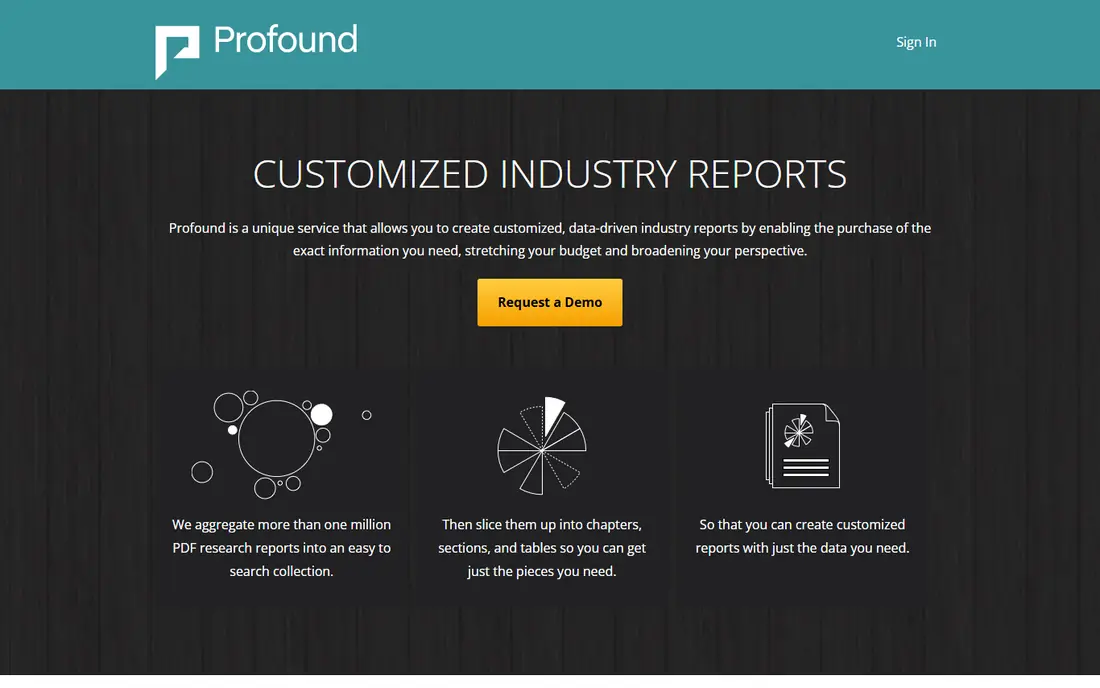
Profound is the enterprise name most often cited in AI visibility comparisons, and its strength is depth rather than simplicity. It tracks conversation demand, maps which URLs AI systems cite, and breaks visibility down by engine, so a team can see strength in one system and weakness in another. That detail helps large brands decide which pages to improve first.
The trade-off is cost and complexity. After a short trial, pricing is custom for brands, and the full value appears only when a team acts on citation data with content changes. Small businesses should test a cheaper tool first, and move to Profound when prompt volume and reporting justify it.
- Deep citation and conversation data
- Many answer engines on enterprise plans
- Agency and enterprise options
- Custom pricing after trial
- Trial prompts are limited
- Likely too much for a solo founder
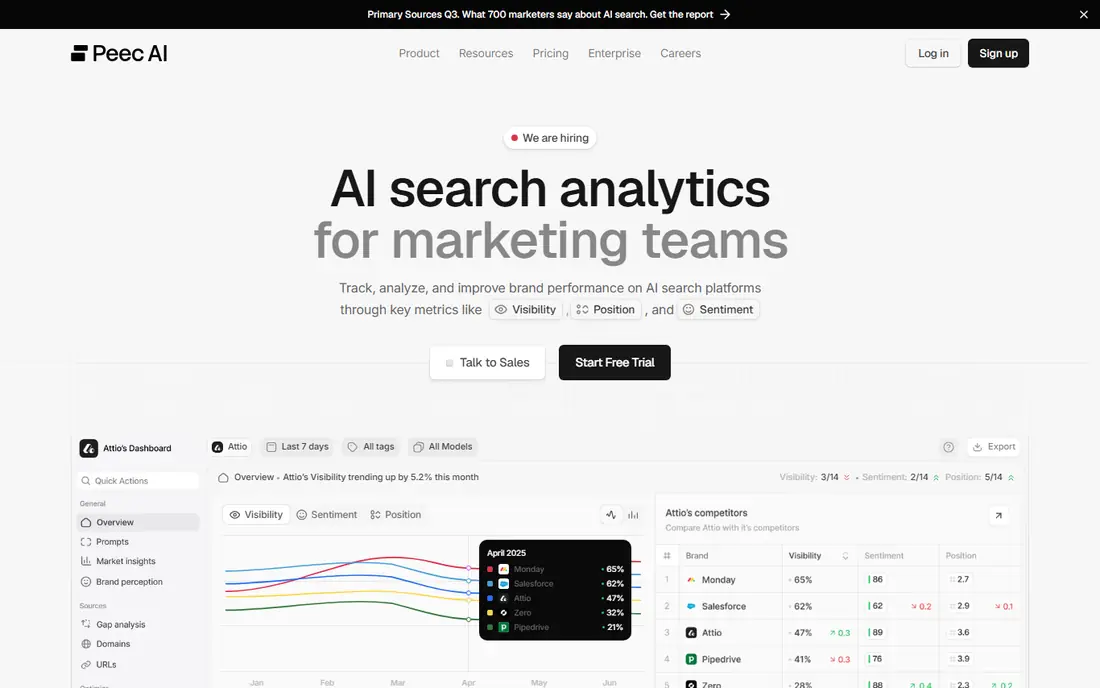
Peec AI suits mid-market brands that want a clear view of share of voice against competitors. Its dashboards show how often a brand appears in AI answers, how sentiment reads, and which competitors appear alongside it. Region-based tracking also helps brands operating in several markets.
Check plan details before buying, because engine coverage and prompt counts vary by tier. Ask how many prompts, competitors, and seats are included, and whether extra engines require an add-on. For most mid-market teams, the core tracking plus competitor comparison is the main value.
- Share of voice and competitor tracking
- Multiple engines
- Clean analytics and reporting
- Pricing varies by plan and engines
- Advanced engines may cost extra
- Check prompt limits
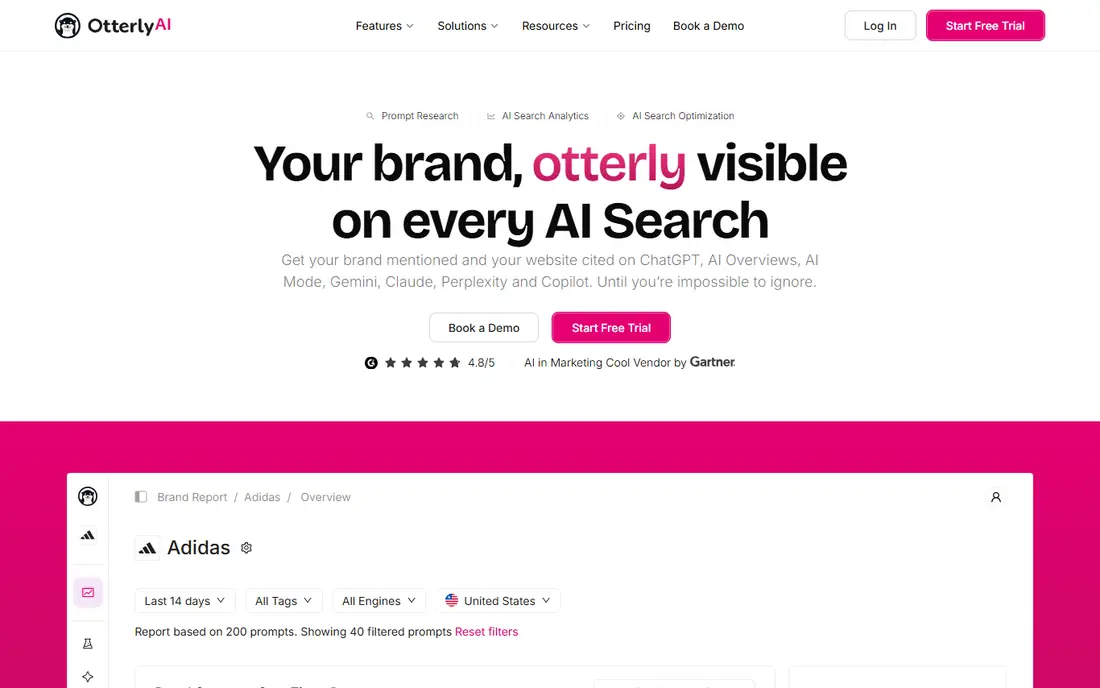
Otterly AI is the budget entry point on this list, with published entry pricing around 29 dollars per month and a trial option. It tracks brand mentions across core AI systems and gives trend flags when visibility changes, which is enough for a founder or small team to learn how AI answers describe them. Setup is simpler than enterprise platforms, so results arrive quickly.
The limit is depth. Enterprise tools cover more engines, prompts, and citation detail, while Otterly focuses on core tracking. That trade-off is fair at this price, and many small teams can start here, fix obvious content gaps, and upgrade only when they need deeper analysis.
- Low entry price
- Simple tracking setup
- Useful first step into AI search
- Fewer engines than enterprise tools
- Prompt limits are lower
- Reporting is simpler
Brandlight focuses on how AI systems describe a brand, not just whether the brand appears. Sentiment and narrative analysis can reveal whether answers frame a brand as premium, affordable, reliable, or risky, which matters for reputation and messaging. For communications and brand teams, that framing insight is often more useful than a simple mention count.
Pricing is custom and enterprise-oriented, so small firms should request a demo and a scoped quote before assuming fit. Ask which engines are covered, how sentiment is scored, and how often reports update. Narrative data helps only when someone owns the response and updates content accordingly.
- Brand sentiment and narrative analysis
- Enterprise reporting
- Focus on how AI describes brands
- Custom pricing only
- Enterprise focus
- May be more than small teams need
Scrunch stands out because it aims to fix what AI gets wrong, not just track mentions. Its citation analysis shows which sources AI systems rely on, and its tools help teams spot errors, gaps, and outdated claims in those sources. Persona and journey views add context about how different buyers encounter a brand in AI answers.
The value depends on follow-through. A team that can update its own site, docs, and listings will benefit most, while a team with no content owner may collect reports without change. Ask about prompt limits, engine coverage, and what action tools are included in each plan.
- Citation graph analysis
- Focus on fixing incorrect AI answers
- Persona and journey views
- Pricing varies by plan
- Enterprise features cost more
- Needs content ownership to act
AthenaHQ appeals to teams that want to test AI visibility without a large commitment. A free tier lets users see basic tracking, while paid plans use credits that flex with prompts and models covered. Published comparisons note wide model coverage, which helps teams that care about several AI systems at once.
Watch credit use closely. Flexible pricing helps when needs vary, but it can also rise quickly if prompt sets grow. Ask how credits are counted, what happens when credits run out, and whether alerts and sentiment tools are included in your tier.
- Free tier for testing
- Credit flexibility
- Wide model coverage in published comparisons
- Paid pricing rises with use
- Credit model needs monitoring
- Reporting depth varies by plan
Goodie AI targets small and mid-size businesses that want clear next steps, not just charts. Its reports turn visibility gaps into action lists, such as pages to update, topics to cover, or listings to fix. That practical focus helps teams without a dedicated SEO or content analyst.
Confirm pricing and limits before buying, because published summaries vary by plan and date. Ask how many prompts, competitors, and engines are included, and whether recommendations link to specific pages. Action lists are useful only when the suggested fixes match what your team can actually publish.
- Action-oriented recommendations
- Small business focus
- Simpler reporting
- Pricing is quote-based in many summaries
- Engine coverage is narrower than enterprise tools
- Check limits
Rankscale suits SEO teams and agencies that already track search rankings and want AI visibility in a similar workflow. Its reporting options, including white-label views for clients, help agencies show AI results alongside traditional search data. That fit matters when clients ask why rankings alone no longer explain traffic changes.
As a newer name than Profound or Semrush, it needs closer checking. Ask for a demo with your own brand and competitors, confirm engine coverage and prompt limits, and test report exports before committing an agency portfolio to it.
- SEO-team workflow
- White-label reporting options
- Agency-friendly structure
- Custom pricing in many summaries
- Less well known than larger rivals
- Check engine coverage
Semrush AI Visibility Toolkit makes sense mainly for teams already using Semrush. It adds AI answer tracking to a familiar SEO platform, so users can compare AI visibility with rankings, keywords, and site health in one place. Daily tracking helps teams spot sudden changes after content or site updates.
For non-Semrush users, the total cost includes the base platform plus the add-on, which may exceed a standalone tracker. Ask about per-domain pricing, engine coverage, and whether sentiment and citation detail match your needs. If you do not use Semrush otherwise, compare standalone tools first.
- Ties AI visibility to existing SEO data
- Familiar Semrush workflow
- Daily tracking options
- Add-on pricing on top of Semrush
- Not a standalone choice for non-users
- Engine coverage is limited
How we picked these
We compared official product pages and published pricing summaries for tools that track brand visibility in AI answers. We favored tools with a clear AI visibility offer, stated engine coverage, and a pricing or trial route a reader can verify. We left out general social listening tools with only a minor AI feature, and tools whose AI visibility offer was unclear.
This guide is based on publicly reported factors such as engines covered, stated features, and pricing style. It is not a verified ranking, and AI systems, prompts, and tool features change quickly. Test tools with your own brand prompts before buying, and compare citation data, not just mention counts.
How to choose an AI visibility tool
Start with a prompt list that reflects real buyer questions. Include comparison queries, problem queries, and brand queries, because AI answers differ sharply across those types. A tool that only tracks brand-name prompts will miss the category answers where new customers first meet you.
Next, check citation quality. The most useful tools show which pages AI systems cite, whether those pages are yours, and whether the facts are correct. Fixing a wrong or outdated source page often helps more than adding new content, so prioritize tools that make that work visible.
Questions to ask on a trial
Ask how many prompts, engines, competitors, and seats are included, and how often data refreshes. Ask whether sentiment, share of voice, and citation exports are included, and whether reports can be shared with clients or executives. Run the same prompt set in two tools during trials to compare fairly.
What AI visibility cannot do
No tool can guarantee that an AI system will recommend your brand, because models change, prompts vary, and answers depend on many sources. Use visibility data to improve content, listings, reviews, and source pages, then re-measure over weeks. Treat sudden single-day changes with caution, and look for trends instead.
Frequently asked questions
What is AI visibility?
AI visibility means how often, and how accurately, AI systems mention, cite, or recommend your brand in generated answers. Tools track mentions across systems such as ChatGPT, Perplexity, Gemini, and Google AI Overviews, and show which sources those answers rely on. It differs from search rankings, because there is no single position to check.
Which AI engines should a tool cover?
At minimum, cover the systems your buyers actually use, which often include ChatGPT, Perplexity, Gemini, and Google AI Overviews. Broader coverage helps larger brands, but depth on core engines matters more than a long list of rarely used systems. Check coverage for your markets, not just global claims.
How much do AI visibility tools cost?
Prices range from about 29 dollars per month for budget trackers to custom enterprise pricing for deep platforms. Mid-market tools often sit between those extremes, with costs rising by prompts, engines, and seats. Start with a trial and a small prompt set, then scale only when reporting proves useful.
Can AI visibility tools improve my rankings?
They do not directly change AI answers, but they show which pages are cited, which facts are wrong, and which topics you miss. Fixing source pages, adding clear product facts, and covering buyer questions can improve future answers over time. Treat tools as measurement and guidance, not as a ranking guarantee.
How often should we check AI visibility?
Weekly checks suit most teams, with deeper monthly reviews for trends, competitors, and citation changes. Daily checks help after major launches or reputation events, but daily noise can mislead. Focus on sustained changes across several prompts, not single answers.
Sources
See where you really rank - block by block
ProMapRanker scans Google Maps across a grid of your service area. Simple monthly plans from $19, white-label on every plan.
Start freeKeep reading
 zoro.to alternatives
Best Zoro.to Alternatives in 2026
We compare the best zoro.to alternatives in 2026, listing only legal licensed anime streaming services, from Crunchyroll to free options for fans today.
Read → zip alternatives
Best Zip Alternatives in 2026
We compare the best zip alternatives for buy now, pay later in 2026, covering pay-in-4 plans, fees, spending limits, and credit reporting options today.
Read → yesware alternatives
Best Yesware Alternatives in 2026
Compare the best yesware alternatives for sales email tracking, templates, and sequences, with current pricing and honest tradeoffs for small sales teams.
Read →