 ProMapRanker
Best AI Tracking Tool for SEO in 2026

Key takeaways
- Profound leads for enterprise teams that need large prompt libraries and detailed citation reporting.
- Otterly.AI and Rankeo give smaller teams affordable entry points for AI visibility tracking.
- Semrush and Ahrefs fit teams that already use those SEO suites and want AI tracking in the same dashboard.
- Prices and engine coverage change often, so confirm engines, prompt limits, and billing terms on the vendor site before buying.
Quick comparison
| Pick | Great for | Pricing starts at | Free tier | |
|---|---|---|---|---|
 Profound | Enterprise AI visibility | See website | Free trial | Visit |
 Peec AI | Agencies and mid-sized brands | See website | Free trial | Visit |
 Otterly.AI | Affordable prompt tracking | $29 per month | Free trial | Visit |
 Semrush AI Visibility Toolkit | Existing Semrush users | $99 per month | Free trial | Visit |
 Ahrefs Brand Radar | Prompt data from real searches | $199 per month | Free trial | Visit |
 Scrunch | Turning citation gaps into content | $250 per month | Free trial | Visit |
 Athena HQ | Wide engine coverage | $295 per month | Free trial | Visit |
 Rankeo | SEO plus AI tracking together | $39 per month | Yes | Visit |
The best AI tracking tools for SEO
AI search answers now shape what many people learn about a brand before they ever visit a website. The best AI SEO tracking software watches how tools such as ChatGPT, Perplexity, Gemini, and Google AI Overviews mention, cite, or ignore your brand for the prompts that matter. The best AI tracking tools for SEO on this list are alternatives for that job, and we compare them on engine coverage, prompt limits, and price.
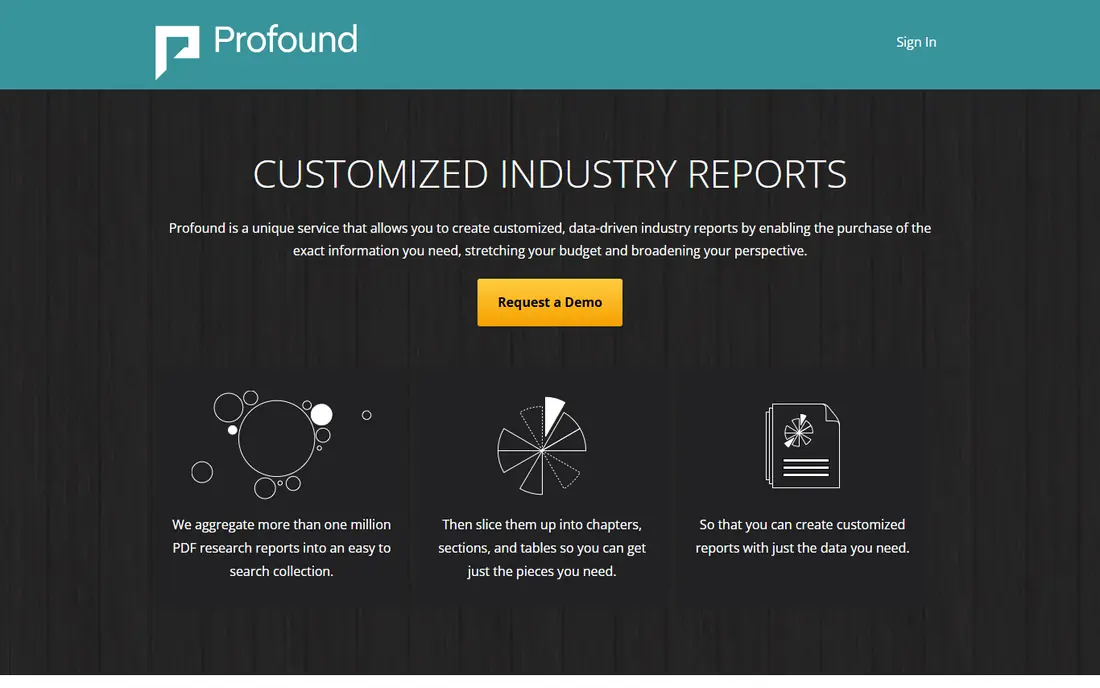
Profound is built for large brands that need to track hundreds of prompts across many AI engines and report results to stakeholders. Its dashboards show citation rates, prompt-level trends, and which sources AI answers cite most often. That depth helps enterprise SEO and content teams find gaps and measure change over time.
The trade-off is access and cost. Profound has moved away from simple self-serve starter plans toward a trial and custom enterprise packages, so small teams should expect a sales conversation. For a large brand with a dedicated AI visibility program, Profound remains a leading choice.
- Large prompt libraries
- Detailed citation analytics
- Enterprise reporting
- Pricing is now trial and quote-based
- Overkill for small sites
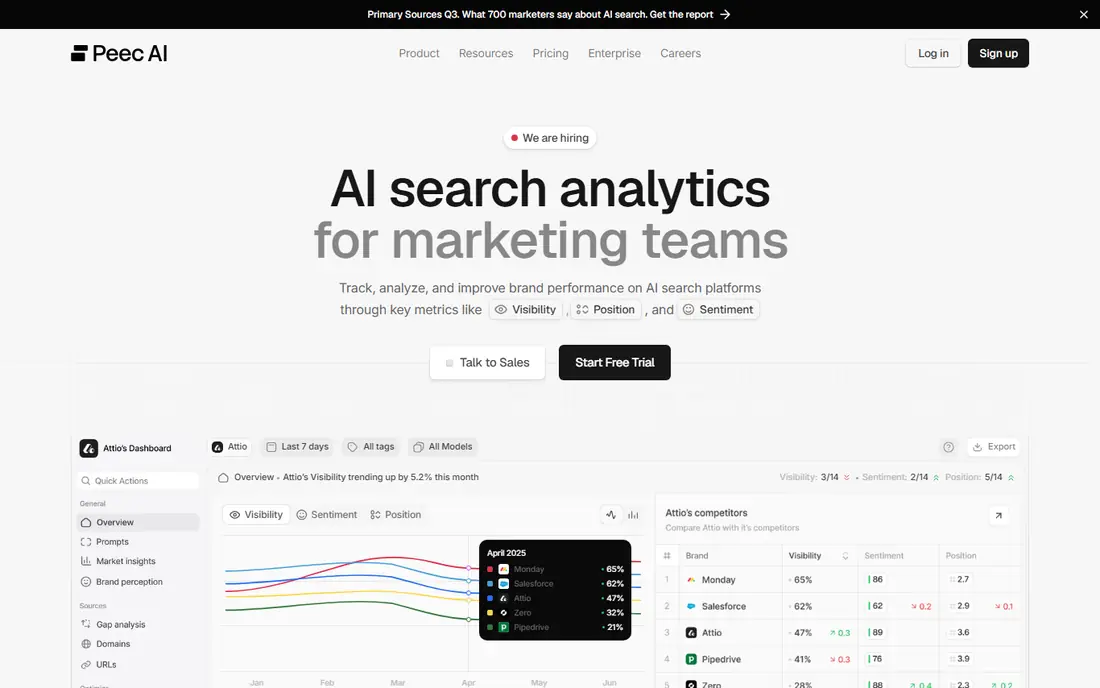
Peec AI tracks how AI engines answer prompts about your brand and your competitors, with citation share and sentiment views that agencies can share with clients. It separates how often a brand is retrieved from how often it is cited, which helps teams see whether content is being found but not used. Multi-country reporting also helps brands that operate in several markets.
Pricing needs a direct check, since Peec AI does not always show rates to visitors without an account. Confirm which engines are included on the plan you buy, since starter plans may cover fewer engines than higher tiers. For agencies, Peec AI offers a clear, client-ready view of AI visibility.
- Clean prompt dashboards
- Competitor citation share
- Sentiment tracking
- Pricing is not always shown to logged-out visitors
- Engine limits vary by plan
Otterly.AI is the budget entry point most small teams should test first. It tracks brand mentions and citations across ChatGPT, Perplexity, Google AI Overviews, and other engines, depending on plan, and presents prompt results in a clean dashboard. For a solo marketer or small brand, it answers the core question: do AI tools know we exist, and for which prompts?
The limits are scope and depth. Otterly.AI does not replace a full SEO suite, and its engine coverage is narrower than Profound or Athena HQ. If you need large prompt libraries or deep content workflows, you will outgrow it, but as a first AI tracker it is hard to beat on price.
- Low entry price
- Simple brand mention tracking
- Covers major AI engines
- Fewer engines than enterprise tools
- Limited SEO audit depth
Semrush AI Visibility Toolkit adds AI tracking to the SEO platform many teams already use for rankings, audits, and keyword research. It tracks AI Overviews and ChatGPT visibility, surfaces real AI search queries, and lets teams compare AI visibility with traditional search results in one place. That shared context helps SEO teams connect AI mentions to pages that need work.
The cost is per domain, so tracking many sites adds up. It also makes most sense for teams already paying for Semrush, since standalone AI trackers may be cheaper. If Semrush is already your SEO home, this toolkit is a natural add-on.
- AI tracking inside a full SEO suite
- Prompt and conversation views
- Familiar workflow
- Price is per domain
- Best value only if you already use Semrush
Ahrefs Brand Radar tracks brand visibility in AI answers and across other platforms, using prompts informed by real search behavior. That grounding matters, because a tracker is only useful if it watches prompts people actually ask. Teams already using Ahrefs for backlinks and keywords will find the workflow familiar.
Pricing needs care. Brand Radar is priced per index in addition to a base Ahrefs plan, so the total is higher than the headline figure alone. Confirm how many indexes you need and what each one covers before you budget for it.
- Prompts grounded in search data
- Brand visibility across platforms
- Strong Ahrefs data
- Price is per index on top of a base plan
- Cost grows with more indexes
Scrunch combines AI visibility tracking with tools that help teams act on what they find. It tracks prompts across several engines, shows where competitors are cited and you are not, and helps turn those gaps into content tasks. That action layer sets it apart from trackers that only report numbers.
The entry price is higher than Otterly.AI or Rankeo, so it fits teams that will actually use the content workflow, not just check a dashboard once a month. If your team has content capacity and wants AI tracking tied to publishing work, Scrunch is worth a trial.
- Tracks seven engines on starter plans
- Content gap views
- Agency-friendly reporting
- Higher entry price than budget trackers
- Still a young, fast-changing product
Athena HQ, also written as Athena, tracks AI visibility across a wide set of engines, including ChatGPT, Perplexity, Gemini, Copilot, and Google AI Mode. That breadth helps teams that do not want to guess which AI tools their buyers use. Its reporting suits agencies that manage many brands and need consistent views across clients.
The price puts it above budget tools, and small teams with one site may not need its full coverage. For agencies and mid-sized brands that want broad engine tracking without an enterprise contract, Athena HQ offers a strong middle option.
- Broad engine coverage
- Agency and enterprise reporting
- Prompt tracking at scale
- Higher price
- May be more than small teams need
Rankeo combines traditional SEO auditing with AI visibility tracking, so small teams can fix technical issues and watch AI mentions in one dashboard. Its free tier lets a solo operator test AI visibility before paying, and paid plans add more sites, prompts, and engines. That combination suits freelancers and small agencies.
The trade-off is scale. Rankeo does not match Profound for very large prompt libraries or enterprise reporting. For a small team that wants SEO and AI tracking together at a low price, it is a practical starting point.
- Combines SEO audit with AI tracking
- Free tier to test
- Agency plans available
- Smaller scale than enterprise tools
- Check engine limits per plan
How we picked these
We compared official pricing pages, feature descriptions, and public reviews, and we favored tools that are live and supported in October 2026 for AI visibility and SEO tracking. We looked for engine coverage, prompt limits, citation reporting, competitor views, and pricing transparency. We did not claim hands-on testing, and we left out tools that only claim AI tracking without a clear, live product.
What to check before you buy
Start with your prompts, not the dashboard. List the questions buyers actually ask about your product, your competitors, and your category, then check whether each tool tracks those prompts across the engines your buyers use. A tool that covers the wrong engines will give you clean reports about the wrong audience.
Next, check limits that affect cost. Prompt counts, engine counts, site counts, and update frequency all change the price, and some vendors charge per domain or per index. Ask how often prompts refresh, whether historical data is kept, and what happens when you exceed a limit mid-month.
Finally, decide what you will do with the data. If you only need a monthly visibility check, a budget tracker is enough. If you plan to rewrite pages, add schema, or publish new content based on citation gaps, choose a tool with content workflows or pair a simple tracker with your existing SEO suite.
Frequently asked questions
What is the best AI tracking tool for SEO?
Profound leads for enterprise teams, Otterly.AI leads for budget tracking, and Semrush or Ahrefs lead for teams already using those SEO suites. The best choice depends on your prompt volume, engine needs, and whether you already pay for a full SEO platform.
What are the best AI SEO tracking tools for small businesses?
Otterly.AI at $29 per month and Rankeo at $39 per month give small businesses affordable entry points, with free tiers or trials to test. Start with one, track your core prompts for a month, and move up only if engine or prompt limits start to matter.
How do AI SEO tracking tools work?
They run a set of prompts through AI engines such as ChatGPT, Perplexity, and Gemini, then record whether your brand is mentioned, cited, or linked, and how that changes over time. They do not control AI answers, but they show which pages and sources AI tools use most often.
What is the best AI SEO tracking software for agencies?
Peec AI, Athena HQ, and Scrunch suit agencies, with multi-client reporting, competitor views, and prompt tracking at scale. Compare engine coverage and per-client pricing, since agency costs grow with each brand you track.
Can AI tracking replace traditional rank tracking?
No. AI tracking shows how AI answers mention your brand, while traditional rank tracking shows where your pages appear in search results. Most teams need both, since AI answers often cite pages that also rank well in classic search.
Sources
See where you really rank - block by block
ProMapRanker scans Google Maps across a grid of your service area. Simple monthly plans from $19, white-label on every plan.
Start freeKeep reading
 zscaler alternatives
Best Zscaler Alternatives in 2026
Looking for zscaler alternatives? We compare 9 SASE and zero trust platforms on architecture, data protection, pricing, and fit for your network and team.
Read → zapier alternatives free
Best Zapier Alternatives Free in 2026
Nine automation tools for zapier alternatives free in 2026, all with genuinely free tiers, plus free plan limits, starting prices and upgrade paths explained.
Read → which platform is best for online reputation
Which Platform Is Best for Online Reputation in 2026
Wondering which platform is best for online reputation? We compare 8 review, listing, and response tools for small and multi-location businesses and agencies.
Read →