 ProMapRanker
Best AI Tools for Sales Prospecting in 2026

Key takeaways
- The best AI sales prospecting tools split into two jobs: finding accurate contacts, and researching accounts with AI before outreach.
- Clay is the strongest workflow tool for teams that want to combine many data sources, while Apollo suits teams that want data plus outreach in one place.
- Credit math decides the real cost, because phone numbers cost far more credits than emails on most platforms.
- Quote-only enterprise tools can be worth it for large teams, but smaller teams should start with a published-price tool and a free plan.
Quick comparison
| Pick | Great for | Pricing starts at | Free tier | |
|---|---|---|---|---|
 Clay | AI research and multi-source enrichment | $167 per month | Yes | Visit |
 Apollo | All-in-one prospecting and outreach | $49 per month | Yes | Visit |
 ZoomInfo | Enterprise data depth and intent | See website | Free trial | Visit |
 Cognism | Compliant prospecting into Europe | See website | No | Visit |
 Lusha | Fast LinkedIn contact lookups | $37.45 per month | Yes | Visit |
 Seamless.AI | Real-time contact search | See website | Yes | Visit |
 Hunter | Email finding and verification | $34 per month | Yes | Visit |
 UpLead | Verified contacts with quality checks | $74 per month | Free trial | Visit |
The best AI tools for sales prospecting
We compared official pricing pages, product descriptions, and public feature lists for tools that help sales teams find, verify, and research prospects. The list mixes AI workflow tools with contact databases, because most teams need both: a source of contacts, and a way to turn that list into useful outreach.
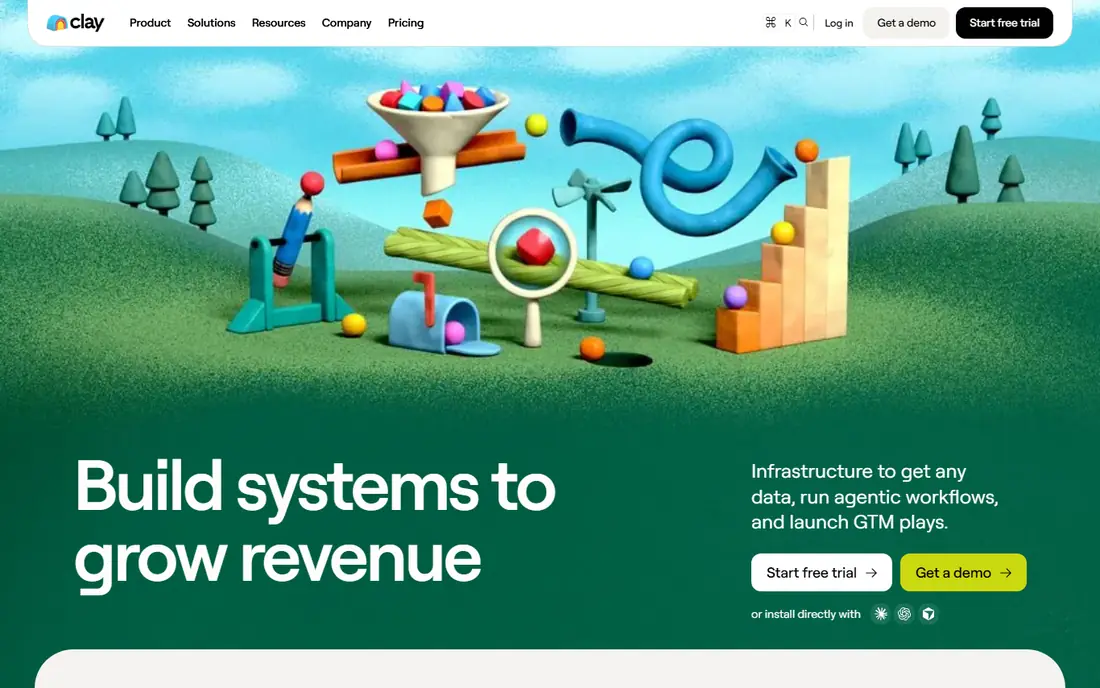
Clay is not a single contact database. It is a workspace that pulls data from many providers, checks one source against another, and uses an AI agent to research accounts and people. That waterfall approach helps when one database has a stale email or a missing phone number, because Clay can try the next source in the chain.
The cost needs care. The Launch plan is listed at $167 per month billed annually, and teams pay for both actions and data credits. That structure suits RevOps and growth teams that build repeatable lists. A solo rep who only needs a few contacts a week may find a simpler lookup tool cheaper and faster.
- Waterfall enrichment across many providers
- AI research agent
- No charge when enrichment finds nothing
- Learning curve for new users
- CRM auto-sync sits on higher plans
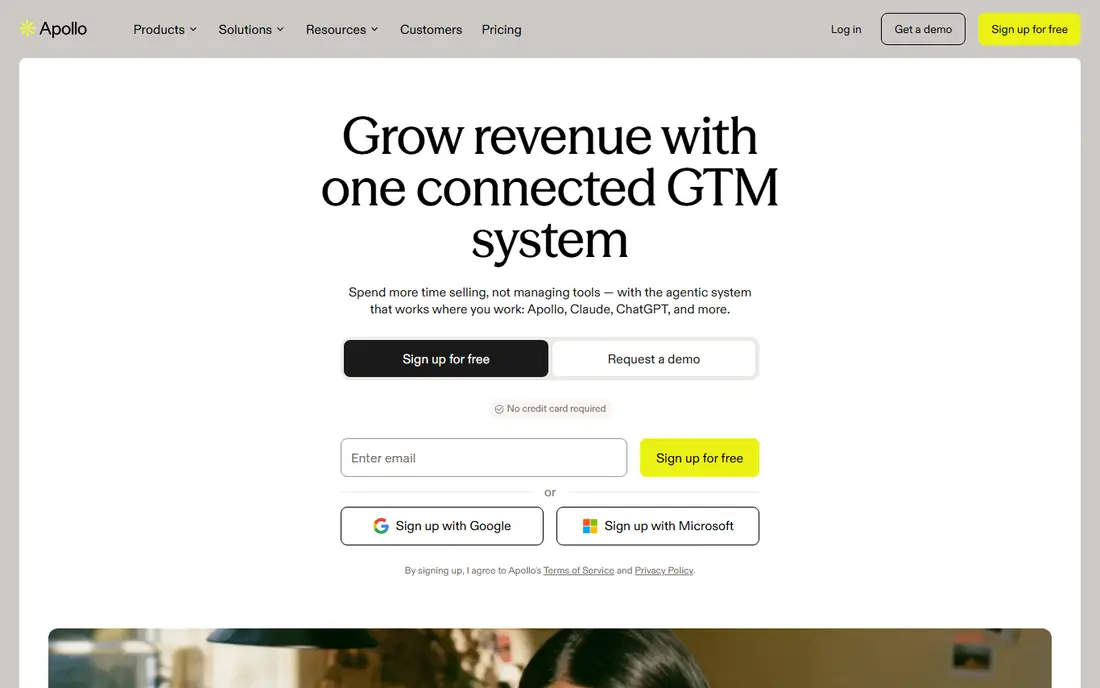
Apollo gives small teams a full prospecting loop in one tool: search for contacts and companies, enrich records, run sequences, and track replies. The Basic plan is listed at $49 per user per month billed annually, with a free plan for testing. That combination is why Apollo is often the default pick for teams that do not want to stitch several tools together.
The catch is credit discipline. A phone number costs more credits than an email, and unused credits do not roll over in the same way on every plan. Plan your list size before you buy, and check how many mobile numbers your team really needs each month.
- Large contact database
- Sequences and dialer included
- Usable free plan
- Unused credits expire each cycle
- Direct dials cost more credits than emails
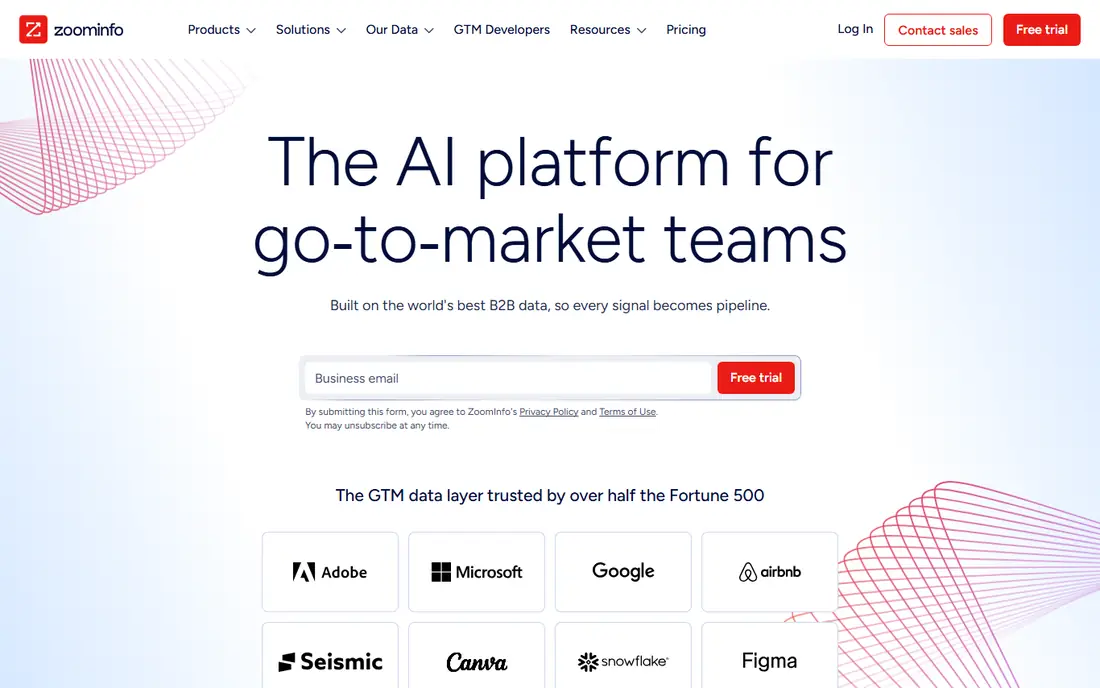
ZoomInfo is the enterprise standard in this group for depth. It covers company hierarchies, technographics, and intent signals that show which accounts are researching a topic. For a large team selling to complex buying groups, that depth can shorten research time and improve targeting.
Pricing is by quote, with feature and licence choices shaping the total. Smaller teams should ask about minimum seats and contract length before a trial, because the platform is priced for scale. If your team is small, Apollo or Lusha may give you enough coverage at a published price.
- Deep company and contact coverage
- Intent and hierarchy data
- Strong CRM integrations
- Quote-only pricing
- Minimum seats and contract terms can suit larger teams only
Cognism focuses on compliant, phone-verified contact data, with particular strength in Europe. That focus matters for teams selling into the UK and EU, where data rules and mobile accuracy shape outreach success. Its packages include several seats, which suits a team rather than a single rep.
The drawback is the same as ZoomInfo: pricing by quote, with no self-serve entry price to compare quickly. Ask about data coverage for your target countries, mobile verification rates, and how intent data is bundled. For US-only prospecting, a US-focused database may offer better value.
- Phone-verified mobile numbers
- Compliance focus for European data
- Intent data options
- Quote-only pricing
- Packages are built for teams, not solo users
Lusha is built for speed. A rep browsing LinkedIn can reveal a contact email or phone number with a browser extension, without building a full workflow first. The Starter plan is listed at $37.45 per user per month billed annually, and a free plan gives a small monthly credit allowance for testing.
That simplicity is also the limit. Lusha is a lookup tool first, not a full outreach platform or a research workspace. Teams that need sequences, intent data, or deep company research will pair it with another tool. For quick, individual lookups, it is hard to beat on price and ease.
- Simple browser extension
- Low entry price
- Quick contact reveals on LinkedIn
- Credit limits shape heavy use
- Depth is narrower than enterprise databases
Seamless.AI works like a live search engine for contacts, rather than a static list you download once. Reps can search by job title, company, and location, then push results toward a CRM. A free tier with a limited credit allowance lets a new user test coverage for their own market before talking to sales.
Paid pricing is by quote, so the total depends on seats and credit volume. Check coverage for your niche before you commit, because real-time search strength varies by sector. For reps who build their own lists daily, the live search model can feel faster than a fixed database.
- Real-time search engine for leads
- Browser extension
- Free tier for testing
- Paid plans priced by quote
- Accuracy varies by industry and region
Hunter does one job well: finding and verifying work emails for a domain or a person. The Starter plan is listed at $34 per month billed annually, and a free plan covers a small monthly allowance. That focus keeps the tool simple, and verification helps reduce bounces before a campaign starts.
Hunter is not the pick if you need mobile numbers, company intent, or sequences in the same tool. Pair it with an outreach platform, or use it as a low-cost way to clean a list you already own. For email-first teams on a budget, it is a practical, focused choice.
- Focused email finder and verifier
- Simple pricing
- Free plan for small use
- No phone data focus
- Not a full outreach or intent platform
UpLead positions itself on data quality, with verification and accuracy checks behind its contact records. The Essentials plan is listed at $74 per month billed annually in recent pricing summaries, with a free trial for testing. Search filters cover job title, location, industry, and technology use, which helps narrow a list before outreach.
The entry price is higher than Hunter or Lusha, so UpLead suits teams that value verified emails over the lowest cost per contact. Test a sample list against your own CRM before you buy, and check how credits work for bad or duplicate records. Quality claims only matter if they hold up in your market.
- Verified contact data
- Quality guarantees described on its site
- Straightforward search filters
- Higher entry price than lookup-only tools
- Trial terms should be checked before signup
How we picked these
We compared official pricing pages, product descriptions, and public feature lists for AI prospecting tools that are live in October 2026. We kept tools that clearly help with contact discovery, enrichment, or AI account research, and we marked pricing as See website where a vendor prices by quote. We avoided tools that only send email without a prospecting or data function, and we noted where free plans are limited by credits.
What to check before you buy
Start with a sample list from your own market. Take 100 target accounts, run them through two shortlisted tools, and count how many good emails and mobile numbers each one returns. That test beats any vendor coverage claim, because coverage varies by industry, country, and company size.
Next, model the credit cost for a full month. Count emails, mobiles, and enrichments separately, then check expiry rules and the cost of a direct dial. A tool that looks cheap per seat can become costly once phone credits are included. Also check CRM sync: if records need manual export each week, the team will stop using the tool.
Finally, check compliance and deliverability. Confirm how the vendor sources data, what consent rules apply in your target regions, and whether outreach features include bounce handling and opt-out management. AI research is only useful if the outreach that follows it is lawful and reaches a real inbox.
Frequently asked questions
What are the best AI sales prospecting tools?
Clay leads for AI research workflows, Apollo leads for all-in-one prospecting and outreach, and ZoomInfo leads for enterprise depth. The best AI tool for sales prospecting depends on team size, target region, and whether you need phone numbers or emails most.
What is the best AI tool for sales prospecting on a budget?
Apollo and Lusha both offer free plans and published entry prices, while Hunter is a low-cost pick for email-only work. Start with a free plan, test coverage in your market, and only move to a paid plan when credit use justifies it.
How does Clay compare with Apollo?
Clay is a workflow layer that combines many data providers and AI research, while Apollo is a database plus outreach tool in one contract. Teams often use Clay to build richer lists and Apollo to send and track outreach, rather than treating them as direct substitutes.
Is Seamless.AI free?
Seamless.AI offers a free tier with a limited credit allowance, while paid plans are priced by quote. Check the current free credit limit before you rely on it for a large list, because credit allowances change.
What are the top AI software options for sales prospecting?
The top options in this list are Clay, Apollo, ZoomInfo, Cognism, Lusha, Seamless.AI, Hunter, and UpLead. Each covers a different mix of data, research, and outreach, so shortlist by your main bottleneck: finding contacts, researching accounts, or sending outreach.
Do AI prospecting tools replace sales reps?
No. These tools find contacts and draft research, but reps still need to judge fit, personalize outreach, and hold conversations. Treat AI output as a starting point, verify contact details before a campaign, and keep human review on every message that goes out.
Sources
See where you really rank - block by block
ProMapRanker scans Google Maps across a grid of your service area. Simple monthly plans from $19, white-label on every plan.
Start freeKeep reading
 zoho inventory alternatives
6 Alternatives to Zoho Inventory, Compared on Price and Fit
Zoho Inventory alternatives: 6 tools compared on price, free plans and fit. Katana leads the list for manufacturers. Fit and flaws are laid out for each entry.
Read → zoho crm alternatives
Best Zoho CRM Alternatives (2026)
Need Zoho CRM alternatives? We compare 7 tools on cost, free access and who each suits. Every pick gets a straight assessment. Built for quick decisions.
Read → zelle alternatives
Best Zelle Alternatives in 2026
Compare the best Zelle alternatives for sending money to friends, paying sellers and moving funds abroad, with honest notes on fees, speed and safety in 2026.
Read →