 ProMapRanker
Best AI Tools for Market Research in 2026

Key takeaways
- No single tool covers desk research, surveys, interviews and competitor tracking well, so pick by the job you repeat most often.
- Perplexity is the cheapest starting point for cited secondary research, while Semrush and Similarweb are stronger for competitor and traffic data.
- SurveyMonkey and Qualtrics suit structured surveys, while Dovetail is built for making sense of interviews and open feedback.
- SparkToro answers a narrower question well: where a defined audience spends time online.
- Check data sources and sample limits before you trust a finding, because AI summaries still need a human check against the original source.
Quick comparison
| Pick | Great for | Pricing starts at | Free tier | |
|---|---|---|---|---|
 Perplexity | Fast cited secondary research | $20 per month | Yes | Visit |
 Semrush | Competitive and search intelligence | $139.95 per month | Free trial | Visit |
 Similarweb | Competitor traffic estimates | $199 per month | Yes | Visit |
 SurveyMonkey | Self-serve surveys | $99 per month | Yes | Visit |
 Qualtrics | Enterprise research programs | See website | No | Visit |
 SparkToro | Audience insight | $50 per month | Yes | Visit |
 Brandwatch | Social listening at scale | See website | No | Visit |
 Dovetail | Interview and feedback analysis | See website | Yes | Visit |
The best ai tools for market research
Market research now spans many jobs, from a quick fact check to a full interview study. The tools below each handle a different part of that work, and we grouped them by the job they do best.
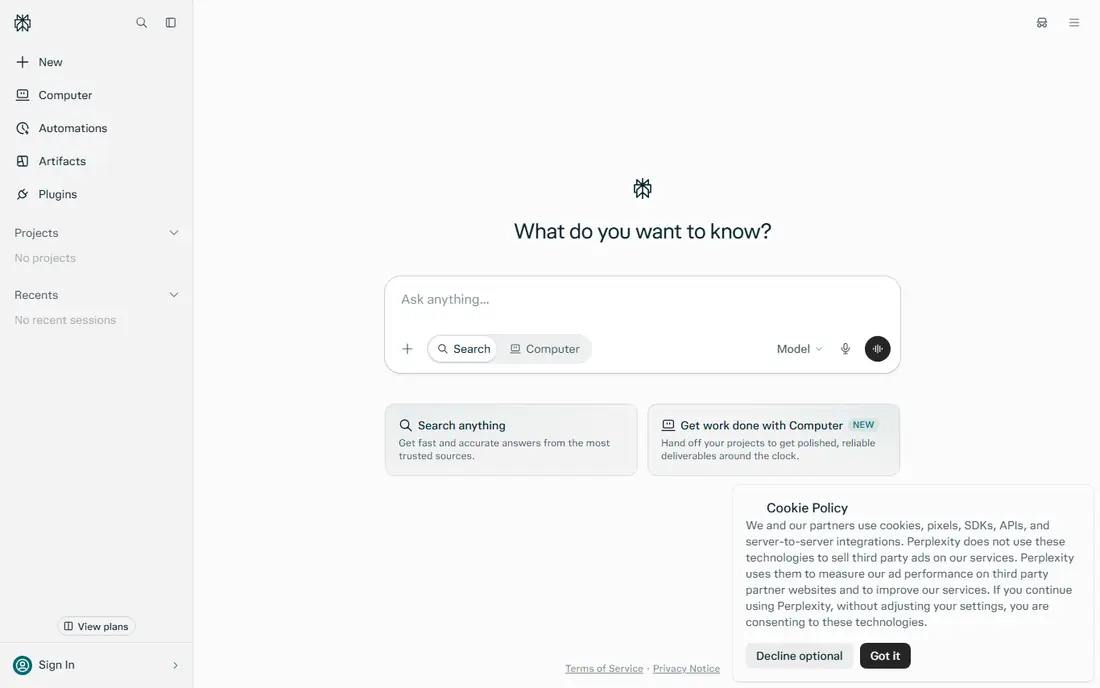
Perplexity suits the first step in most research projects, when you need a grounded answer and a trail back to sources. Ask a specific question, name the market and time period, and follow the citations rather than copying the summary. That habit matters because an AI answer can sound certain even when a source is thin or out of date. For a small team, this is often the tool that saves the most time before any primary research begins.
The paid Pro tier adds model choice and larger Deep Research limits, which helps when a question spans several reports or filings. It does not replace a survey panel, a customer interview or a traffic dataset, and it should not be treated as a primary source on its own. Use it to map what is already known, find gaps, and draft the questions you still need to answer with real customers.
- Answers include sources you can open
- Deep Research handles longer questions
- Free tier covers everyday lookups
- Free tier limits Pro searches
- Answers still need source checks
- Not a survey or interview tool
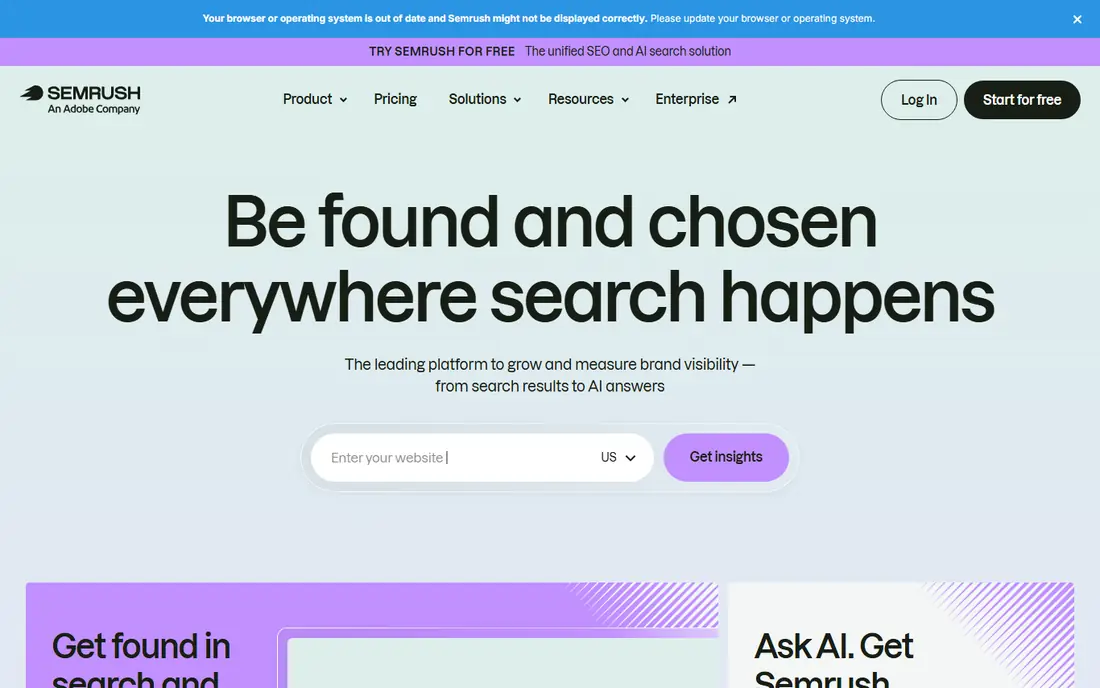
Semrush is best when your research question is about search demand and competitors rather than customer opinion. You can compare domains, see which keywords rivals rank for, and spot topics where demand exists but coverage is weak. That makes it useful for sizing a niche, planning content, and checking how a competitor positions a product. The data is still an estimate in many places, so treat traffic figures as directional rather than exact.
For a team that already does SEO work, Semrush pulls double duty, since the same subscription supports research and ongoing optimization. For a team that only needs one market snapshot, the monthly cost is harder to justify, and a shorter trial or a single month of focused work may be the smarter route. Export the tables you need and write down the date, because keyword and traffic data change often.
- Broad keyword, backlink and traffic data in one place
- Strong for competitor content gaps
- Clear project structure for agencies
- Monthly price is high for occasional use
- Some market data sits in separate toolkits
- Learning curve for new users
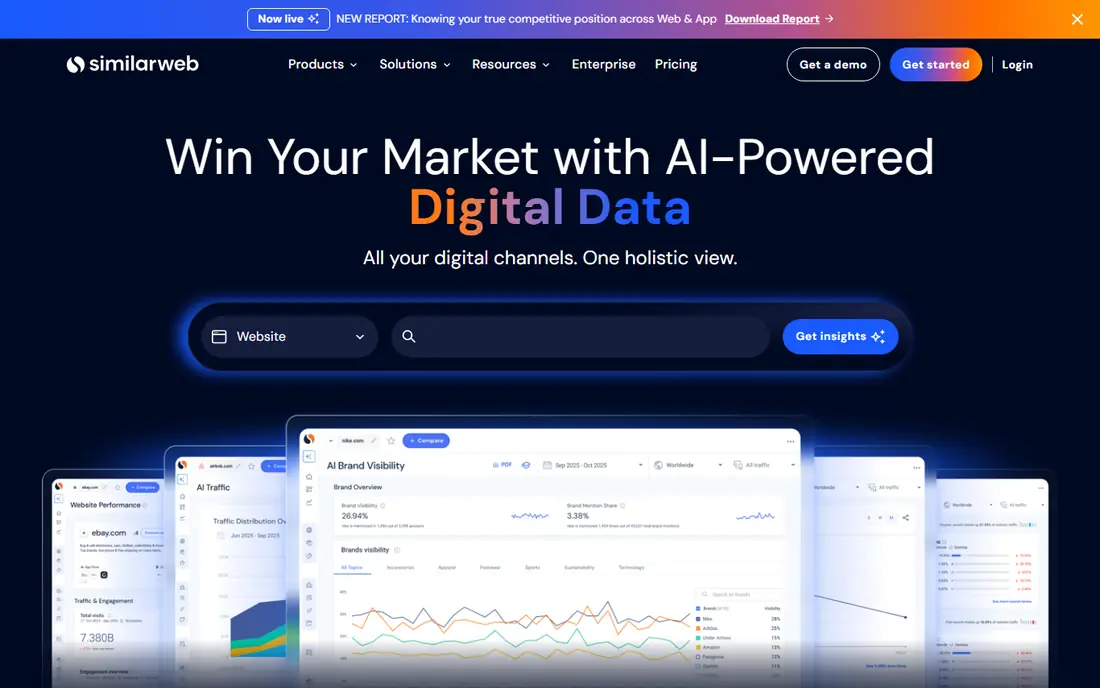
Similarweb answers a question Semrush only partly covers: roughly how much traffic a competitor gets, and where it comes from. Channel mix, top countries and engagement trends help you judge if a rival leans on search, social, paid ads or direct visits. That view is useful before a launch, a pricing change or a channel investment, because it shows the shape of a competitor's demand rather than just its search rankings.
The limits deserve attention. Small sites often show thin or missing data on the free tier, and the self-serve plans cap history and users. Similarweb itself describes its figures as estimates, so pair them with search data, public filings or app data where you can. When the two sources point the same way, your conclusion is on firmer ground.
- Website traffic and channel estimates in one view
- Useful for benchmarking rivals
- Free tier works for large, well-known sites
- Estimates, not exact traffic counts
- Self-serve plans are single user
- Deeper history and teams cost much more
SurveyMonkey remains a practical choice when you need to ask a defined group a set of structured questions and get clean, countable answers. Templates cover satisfaction, concept tests and brand tracking, and the analysis views handle cross-tabulation and filtering without a separate statistics tool. For small teams, the main appeal is speed: a survey can go from draft to field in a day, and results arrive in a form a non-specialist can read.
Pricing needs care. The monthly plan is far more expensive than the annual equivalent, and team plans carry a minimum seat count. If you only run one survey a year, a free plan or a single month may be enough, but check the question and response caps first. When you need respondents you do not already have, budget separately for SurveyMonkey Audience, since that cost is not part of the subscription.
- Familiar to respondents, which can lift completion
- Large template library
- AI help with drafting questions
- Monthly billing is costly compared with annual plans
- Response limits vary by plan
- Audience responses cost extra
Qualtrics fits organizations that run research as an ongoing program rather than a one-off survey. It supports conjoint, MaxDiff, brand tracking and video feedback, and it stores findings in a shared hub so later teams can reuse past work instead of repeating it. For regulated or large companies, controls around access, approvals and data handling are a real part of the value, not just a nice extra.
That scale is also the drawback. Pricing is quoted, setup takes time, and a small business will likely pay for depth it never uses. If your need is a single concept test or a short satisfaction survey, a self-serve tool will get you there faster and cheaper. Choose Qualtrics when research volume, governance and repeat measurement justify a platform rather than a survey form.
- Wide method coverage from surveys to brand tracking
- Governance and reusable insight libraries
- Strong for large, repeat studies
- Sales-led pricing with no public starting price
- More setup than a small team needs
- Some features require higher tiers
SparkToro helps you answer a practical planning question: what does this audience actually read, watch, listen to and follow? Enter a description of the audience, such as job titles or interests, and it returns sites, podcasts, social accounts and search behavior that audience shares. That output is directly useful for choosing channels, finding partners and writing outreach lists.
It is not a substitute for talking to customers, and small or very niche audiences may return thinner data than a broad professional group. Use SparkToro early, to shape where you recruit and promote, then validate the picture with interviews or survey responses. When the audience is large enough, it is one of the fastest ways to move from a vague persona to a concrete media list.
- Shows where an audience spends time online
- Useful for media and partnership planning
- Fast for persona work
- Narrower than a full research platform
- Data quality varies by audience size
- Not a survey or interview tool
Brandwatch is built for teams that need to hear what many people say about a market, a brand or a topic, across social platforms and the wider web. You can track mentions, follow sentiment shifts, and compare how rival brands are discussed over weeks or months. For product launches, crises and campaign measurement, that continuous listening is hard to replicate with manual searches or one-off surveys.
The trade-offs are cost and interpretation. Pricing is quoted, and the platform suits teams with ongoing listening needs rather than a single check. Social conversation also skews toward people who post publicly, so it does not represent all buyers. Pair listening with survey or sales data before you treat a spike in mentions as a change in demand.
- Large social and web listening coverage
- Sentiment and trend tracking over time
- Strong reporting for large brands
- Quote-only pricing
- Overkill for a single small brand
- Social data needs careful interpretation
Dovetail solves the messy middle of qualitative research: turning hours of interviews, support tickets and open survey answers into themes a team can act on. Transcripts, highlights and tags live in one place, so a product manager can trace a claim back to the exact customer words behind it. That traceability is the point, because a theme without evidence is just an opinion dressed up as research.
The tool earns its keep when interview volume is steady. A team that runs two interviews a quarter may find a document and a spreadsheet are enough. A team that runs research weekly will benefit from a shared library, consistent tags and faster synthesis. Keep tags simple and review them often, or the library grows cluttered and the same insight gets filed under three different names.
- Transcription and theme tagging for interviews
- Shared repository for customer insight
- Useful for product and UX teams
- Public pricing is not clear for all plans
- Value depends on interview volume
- Needs disciplined tagging to stay useful
How we picked these
We compared official feature pages, pricing pages, app store listings and public reviews for tools that cover distinct market research jobs, and we favored tools that are available to US buyers and still actively sold in October 2026. We checked that each tool fits its stated job, rather than listing general AI chatbots that only answer questions. Prices shown are the starting figures we could verify from vendor or recent pricing coverage, and we wrote See website where pricing is quoted or unclear, so you can confirm the current figure before you buy.
What to check before you pay
Start with the research question, not the feature list. Write one sentence that states the decision the research must support, the audience it concerns, and the date by which you need an answer. That sentence will tell you if you need desk research, a survey, interviews, competitor data or listening, and it will stop you buying a platform that answers a different question well.
Match the tool to the evidence you need
Desk research tools give you what others have published. Surveys give you countable answers from a defined group. Interviews explain why people act as they do. Traffic and listening tools show behavior at scale but cannot explain motive on their own. Most sound projects use two of these together, such as a survey to measure a pattern and interviews to explain it.
Check sample, source and limits
For any AI output, open at least one source behind a key claim. For surveys, check who was sampled, how many responded, and what the response limits are. For traffic tools, remember the figures are estimates. For listening, remember public posts are not a census of buyers. A short methods note in your own report will make your findings easier to defend later.
Run a small pilot first
Test a tool on one real question before a team rollout. Run one survey, one interview set or one competitor comparison, and judge the output by whether it changed a decision. If the pilot only confirms what you already knew, a cheaper tool or a free tier may be enough. If it surfaces a clear next step, the paid plan has earned its case.
Frequently asked questions
What is the best ai tool for market research for a small business?
Start with Perplexity for desk research and SurveyMonkey for surveys, since both have free tiers and low starting costs. Add Similarweb or Semrush only when competitor traffic or search demand is a repeated need, because those subscriptions cost more each month.
What is the best ai market research tool for interviews?
Dovetail is a strong fit for interview analysis, because it stores transcripts, tags and highlights in a searchable library. If you also need to run the interviews at scale with AI moderation, look at dedicated interview platforms and compare their pricing, since that job is priced separately.
What are the best ai market research platforms for competitor data?
Semrush is stronger for search and content gaps, while Similarweb is stronger for traffic and channel mix. Many teams use both for a quarter, compare the answers on the same rivals, and then keep the one that matches their decisions better.
Is there a best ai tool for market research with a free plan?
Yes. Perplexity, Similarweb, SurveyMonkey, SparkToro and Dovetail all offer a free tier or a free trial, though each caps questions, responses, history or features. Use the free tier for a real pilot, and check the cap that will bind first for your workload.
Can AI market research replace talking to customers?
No. AI tools speed up desk research, survey drafting and theme analysis, but they cannot replace direct customer evidence. Use AI to prepare better questions and to analyze answers faster, then validate the main findings with real respondents before a major decision.
Sources
See where you really rank - block by block
ProMapRanker scans Google Maps across a grid of your service area. Simple monthly plans from $19, white-label on every plan.
Start freeKeep reading
 outreach alternatives
Outreach Alternatives in 2026
Compare outreach alternatives for 2026, from Salesloft and Apollo to HubSpot and Lemlist, with pricing, channels, features, limits, and honest trade-offs.
Read → best web conference tools
Best Web Conference Tools in 2026
Compare the best web conference tools for meetings, webinars and team calls, with current pricing, free plans and honest limits for each option here today.
Read → best voice cloning tools
Best Voice Cloning Tools in 2026
Compare the best voice cloning tools in 2026, from ElevenLabs and Descript to Resemble and Cartesia, with consent rules, pricing, licenses, and limits.
Read →