 ProMapRanker
Best AI Tools for Enhancing Visibility in 2026

Key takeaways
- AI visibility tools show whether AI answers mention and cite your brand, which search rankings alone no longer show.
- Engine coverage, prompt quota, and price vary sharply, so match the tool to the engines your buyers actually use.
- Tracking alone does not improve visibility; citation sources, content gaps, and prompt data must lead to fixes.
- Small teams can start cheap with Otterly or Zerply, while enterprises often need Profound or Scrunch for depth.
Quick comparison
| Pick | Great for | Pricing starts at | Free tier | |
|---|---|---|---|---|
 Profound | Enterprise AI visibility depth | See website | No | Visit |
 Peec AI | Multi-client and competitor tracking | $95 per month | No | Visit |
 Scrunch AI | Crawler and brand presence data | $250 per month | No | Visit |
 Otterly.ai | Budget-friendly monitoring | $29 per month | No | Visit |
 AthenaHQ | Broad engine coverage | $295 per month | Yes | Visit |
 Semrush AI Visibility Toolkit | Teams already using Semrush | $99 per month | No | Visit |
 Ahrefs Brand Radar | SEO teams using Ahrefs | $199 per month | No | Visit |
 ZipTie.dev | Small teams and solo operators | $69 per month | No | Visit |
 Zerply | Actionable tracking on a budget | $41 per month | No | Visit |
The best ai tools for enhancing visibility
These tools track brand mentions, citations, and competitor presence inside AI answers, and several add prompts, content guidance, and crawler data. We compared engine coverage, prompt limits, pricing, and fit for different team sizes.
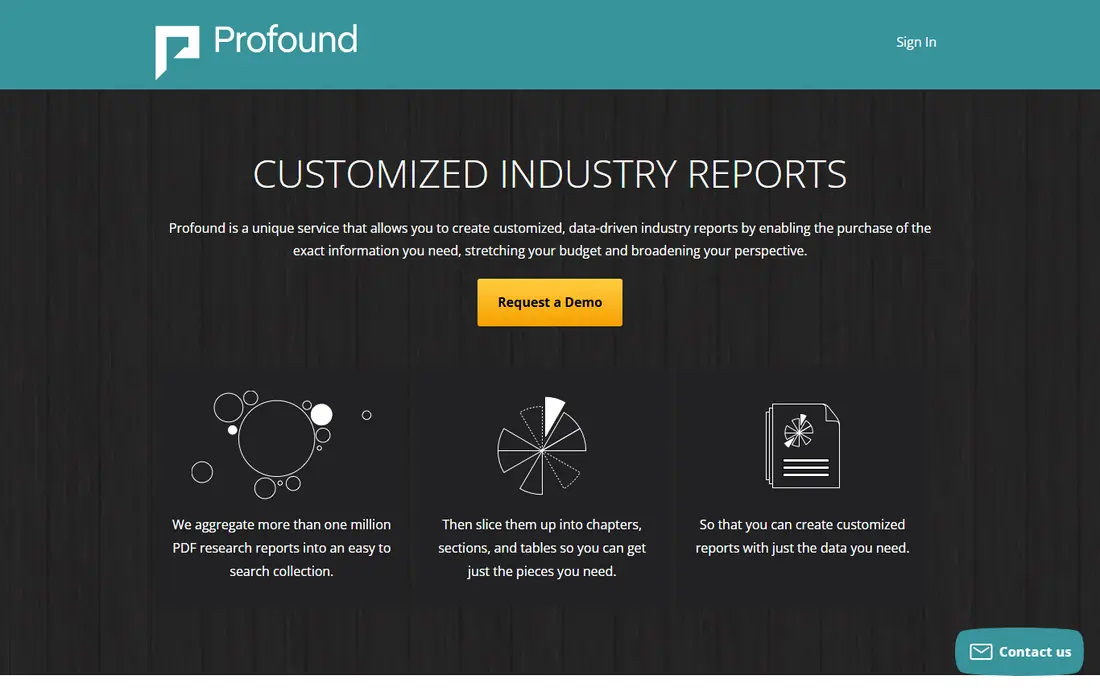
Profound is the deepest enterprise option in this group, with tracking across major AI answer engines at higher tiers, plus prompt volume data that shows what people actually ask. Its links to crawler data and analytics help larger teams connect AI mentions to traffic and content work. For a brand with many products and markets, that depth is hard to match.
The cost and complexity are the trade-offs. Entry pricing covers a narrower set of engines, and full coverage requires an enterprise plan. Small teams should test a cheaper tool first, and move to Profound when prompt volume, markets, or reporting needs justify it.
- Broad engine coverage at higher tiers
- Prompt volume data
- Crawler and analytics links
- Enterprise pricing is custom
- Entry tier is limited
- Can be heavy for a small team
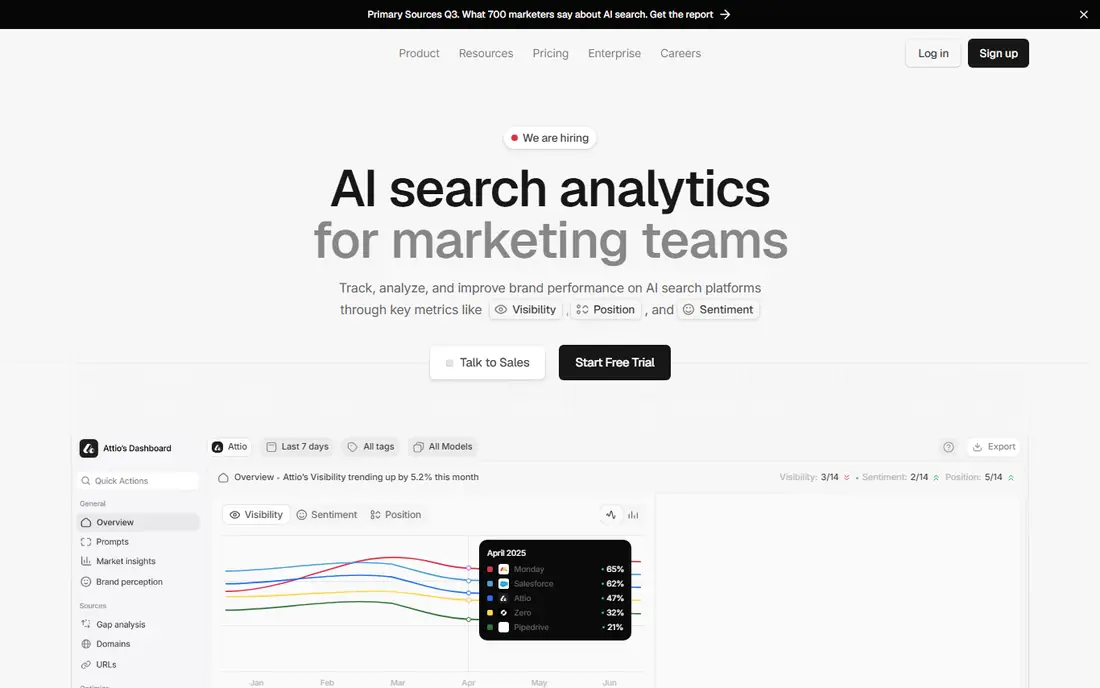
Peec AI suits agencies and brands that track several markets or clients, with clean dashboards for prompts, mentions, and competitor position. Its multi-country tracking helps firms that sell across regions, and the agency workspace model keeps client data separate. For a team that reports to clients, that structure saves time.
Lower tiers limit model choice, so check which engines are included before buying. Claude coverage sits on higher tiers in current comparisons, which matters if your buyers use Claude heavily. Scale the prompt quota to the questions that drive revenue, not to every possible query.
- Clean multi-country tracking
- Competitor comparisons
- Agency-friendly workspaces
- Model choice is limited on lower tiers
- Prompt quota is modest at entry
- Claude needs a higher tier
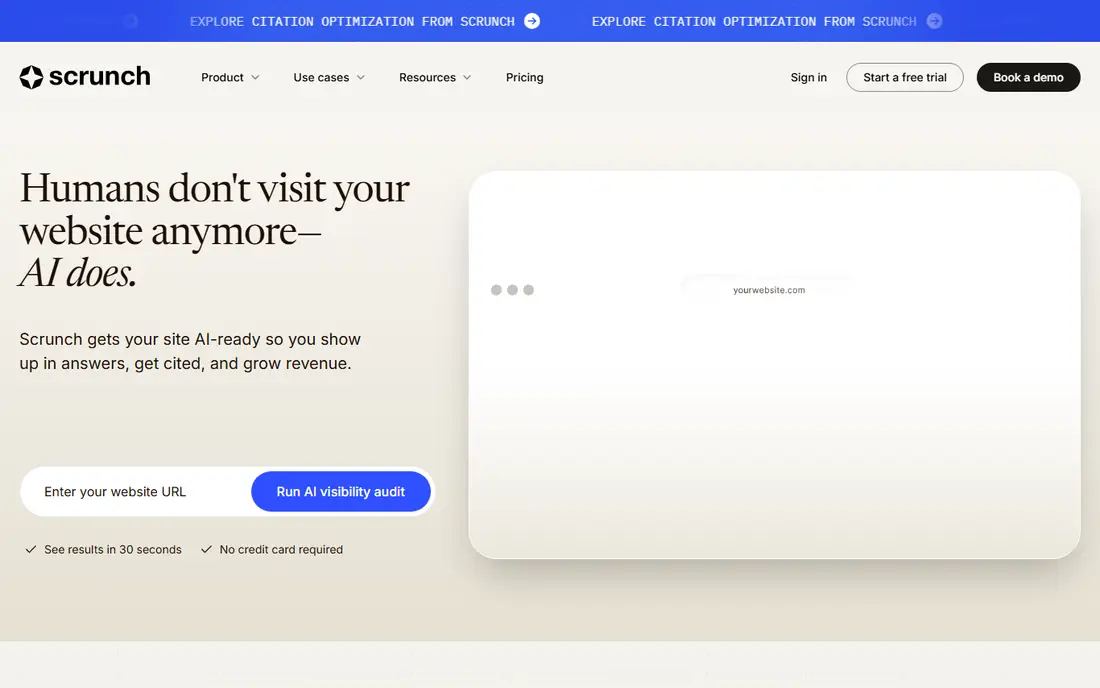
Scrunch AI stands out for crawler data, showing how AI systems visit and use your site, alongside brand mention tracking. That technical view helps teams fix crawl, content, and structure problems that other tools only hint at. Its engine coverage is broad, which suits brands that need a full picture.
Entry pricing is higher than budget tools, and Scrunch was acquired by Sitecore in 2026, which changes its independence for some buyers. It still suits mid-size and enterprise teams that will act on crawler and citation data, not teams that only want a monthly mention chart.
- AI crawler insight
- Broad engine coverage
- Useful for technical and brand teams
- Higher entry price
- Now part of Sitecore, so independence has changed
- Needs a clear prompt set
Otterly.ai is the best starting point for a small team that wants real AI visibility data without a large contract. Its entry plan covers core engines such as ChatGPT, Google AI Overviews, Perplexity, and Copilot, with a modest prompt set that suits one brand and a focused set of questions. Unlimited seats on some plans also help small teams share the data.
The prompt quota will feel small for a brand with many products, and Claude coverage costs extra. Start with your highest-value questions, review the citation sources each month, and upgrade only when the prompt list clearly needs to grow.
- Lowest entry price in this group
- Unlimited seats on some plans
- Simple setup
- Smaller prompt quota at entry
- Claude is an add-on
- Fewer enterprise features
AthenaHQ suits growth-stage teams that want broad engine coverage without an enterprise contract, including Claude on paid plans. Its free essential plan, with a limited credit allowance, lets a team test the data before paying, which is rare in this category. Reports lean toward actions, not just charts, which helps smaller marketing teams.
Credit-based pricing needs attention, since different tasks consume credits at different rates. Track credit use in the first month, and check whether the starter allowance covers your prompt list and reporting rhythm before committing to a yearly plan.
- Broad engine coverage including Claude
- Free essential plan
- Action-oriented reports
- Credit-based pricing needs care
- Higher entry price
- Credit use varies by task
The Semrush AI Visibility Toolkit makes sense for teams already inside Semrush, since AI mention data sits alongside keyword, content, and site data they already use. Per-domain pricing keeps the cost clear for one brand, and prompt tracking helps teams see which questions trigger mentions and citations. That integration saves tool-switching time.
For a team with no Semrush use, the total cost is higher than the toolkit price alone, and a dedicated tracker may offer deeper AI-specific features for less. Multi-domain brands should also total the per-domain cost before choosing Semrush over a dedicated tool.
- Fits an existing Semrush workflow
- Per-domain tracking
- Prompt and citation data
- Needs a Semrush base plan in practice
- Per-domain cost adds up
- Less specialised than dedicated tools
Ahrefs Brand Radar suits SEO teams that already rely on Ahrefs, since AI brand data joins backlink, content, and search data in one workflow. Its coverage in comparisons includes YouTube and Reddit signals, which matter because AI answers often cite those sources. For a team that already pays for Ahrefs, the add-on can be efficient.
Standalone buyers face a higher total, since the add-on price sits on top of an Ahrefs subscription, and costs rise with scale. A dedicated AI tracker may be cheaper for a team that does not need the full Ahrefs suite.
- Strong SEO data alongside AI mentions
- YouTube and Reddit signal in comparisons
- Brand tracking depth
- Add-on pricing on top of Ahrefs
- Cost rises at scale
- Needs an Ahrefs base subscription
ZipTie.dev is a practical mid-budget choice for solo operators and small teams that want steady AI visibility tracking without enterprise complexity. Its focused prompt tracking covers the core need, which is knowing whether your brand appears, how often, and against which competitors. Simple pricing also makes budgeting easier.
It lacks the crawler depth of Scrunch and the prompt volume data of Profound, so technical teams may need a second source for those questions. ZipTie suits teams that will act on mention and citation data each month, not teams that need deep technical diagnostics.
- Affordable for solo and small teams
- Focused prompt tracking
- Simple pricing
- Smaller feature set than enterprise tools
- Less crawler depth
- Prompt limits need checking
Zerply offers AI visibility tracking with workflows that push teams toward fixes, at a price below most dedicated rivals. That action focus helps small marketing teams that know tracking alone will not change results. The entry price also makes it easy to trial alongside a current SEO tool.
As a newer tool, its enterprise track record is thinner than Profound or Semrush, so larger buyers should test reporting, data export, and support before a long contract. Check engine coverage for your buyers, and confirm the prompt quota fits your brand and product range.
- Low entry price
- Actionable workflows
- Good fit for small marketing teams
- Newer and less proven at enterprise scale
- Feature depth varies
- Check engine coverage for your market
How we picked these
We compared tools still operating in October 2026 that track brand mentions or citations inside AI answers, not only classic search rankings. We checked engine coverage, prompt quotas, pricing from vendor and comparison pages, and fit for small, mid-size, and enterprise teams. We left out tools with no clear AI tracking product and tools whose pricing or coverage could not be checked.
How to improve visibility once you can see it
Start with the prompts that matter. List the questions your buyers ask before they choose, such as comparisons, best options, and problem fixes, then track those prompts first. A tool that tracks hundreds of low-value questions will hide the few answers that actually drive revenue.
Next, study the citation sources. When AI answers cite a review site, a forum, a news page, or a competitor page instead of yours, that source is your gap. Fix the underlying page, add clear facts, pricing, and comparisons, and earn coverage on the sources AI already trusts. Content that answers the question directly, with specific details, is more likely to be cited than vague brand copy.
Finally, review monthly and act on one gap at a time. Update the weakest cited page, fix a factual error about your brand, or publish a comparison that answers a prompt your tool shows you losing. Tracking without action wastes the subscription, while steady small fixes build visibility over time. Do not chase tricks that mislead AI systems, since those gains rarely last and can harm trust.
Frequently asked questions
What are the best AI tools for enhancing visibility?
Profound suits enterprise depth, Peec AI suits agencies and competitor tracking, Scrunch suits crawler insight, and Otterly or Zerply suit small teams on a budget. Semrush and Ahrefs suit teams already using those SEO suites for other work.
How do AI visibility tools work?
You add prompts your buyers ask, the tool runs those prompts across AI engines, and it checks whether your brand appears and which sources are cited. Most tools also show competitor mentions, citation sources, and changes over time, so you can see what to fix.
Which AI engines should I track?
Track the engines your buyers use most, usually ChatGPT, Google AI Overviews, Gemini, and Perplexity, plus Claude or Copilot where relevant. A tool that covers many engines you never use is less useful than a cheaper tool that covers your core four well.
Can an AI visibility tool improve my rankings?
A tool alone does not improve visibility; it shows where you appear, where competitors appear, and which sources AI cites. Improvement comes from fixing content gaps, correcting facts, and earning coverage on trusted sources that AI answers already use.
How much do AI visibility tools cost?
Entry prices in this guide range from 29 dollars per month for Otterly to 295 dollars per month for AthenaHQ, with enterprise tools such as Profound priced by quote. Prompt quota, engine coverage, and seats change the real cost, so compare those details before choosing.
Sources
- https://brandclickx.com/top-5-ai-visibility-tools/
- https://backlinkcrm.io/ai-visibility-tools/
- https://tryzene.com/blog/ai-visibility-tracker-tools
- https://www.profound.com
- https://www.peec.ai
- https://www.scrunch.com
- https://www.otterly.ai
- https://www.athenahq.ai
- https://www.semrush.com
- https://www.ahrefs.com
- https://www.ziptie.dev
- https://www.zerply.com
See where you really rank - block by block
ProMapRanker scans Google Maps across a grid of your service area. Simple monthly plans from $19, white-label on every plan.
Start freeKeep reading
 zscaler alternatives
Best Zscaler Alternatives in 2026
Looking for zscaler alternatives? We compare 9 SASE and zero trust platforms on architecture, data protection, pricing, and fit for your network and team.
Read → zapier alternatives free
Best Zapier Alternatives Free in 2026
Nine automation tools for zapier alternatives free in 2026, all with genuinely free tiers, plus free plan limits, starting prices and upgrade paths explained.
Read → which platform is best for online reputation
Which Platform Is Best for Online Reputation in 2026
Wondering which platform is best for online reputation? We compare 8 review, listing, and response tools for small and multi-location businesses and agencies.
Read →