 ProMapRanker
Best AI Tools for English Speaking Practice in 2026

Key takeaways
- ELSA Speak is the strongest pick for pronunciation feedback, with detailed scores on sounds and intonation.
- Speak, TalkPal, and Loora suit learners who want open conversation with an AI tutor.
- Duolingo works well for daily habit building, with speaking tasks inside a broader course.
- Praktika and SmallTalk2Me focus on role play for work, interviews, and daily life.
- Short daily speaking beats long weekly sessions, so pick a tool you will actually open each day.
Quick comparison
| Pick | Great for | Pricing starts at | Free tier | |
|---|---|---|---|---|
 ELSA Speak | Pronunciation feedback | Free | Yes | Visit |
 Speak | Open conversation practice | See website | Free trial | Visit |
 Duolingo | Daily habit and basics | Free | Yes | Visit |
 TalkPal | Chat based speaking practice | See website | Free trial | Visit |
 Praktika | Role play with AI tutors | See website | Free trial | Visit |
 Loora | Live style AI conversation | See website | Free trial | Visit |
 SmallTalk2Me | Interview and work speaking | See website | Free trial | Visit |
 Langua | Conversation with feedback | See website | Free trial | Visit |
 Univerbal | Realistic scenario practice | See website | Free trial | Visit |
The best AI tools for English speaking practice
These are the best AI apps for English speaking practice for learners who want to speak more, not just read and listen. We compared speaking feedback, conversation quality, lesson structure, and price.
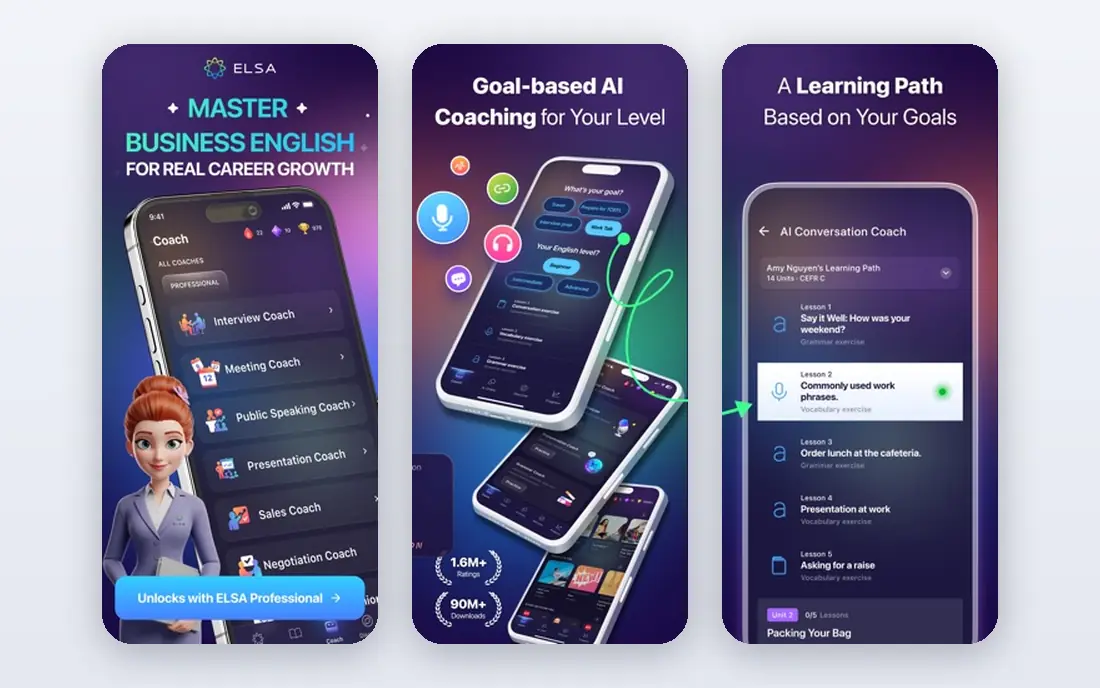
ELSA Speak is our pick for learners whose main problem is pronunciation. Speak a word or sentence, and the app scores sounds, stress, and intonation, then points to the exact sounds to practice. That specific feedback helps more than a simple right or wrong mark, especially for sounds that do not exist in your first language.
The free version covers limited lessons, and Premium pricing varies by plan and promotion, with annual plans commonly shown around 99.99 dollars. Use the free lessons to test whether the feedback is clear to you. If it helps you hear and fix one recurring sound, ELSA is worth paying for.
- Detailed pronunciation scores
- Personalized learning path
- Large lesson library
- Free version is limited
- Paid pricing varies by promotion and platform
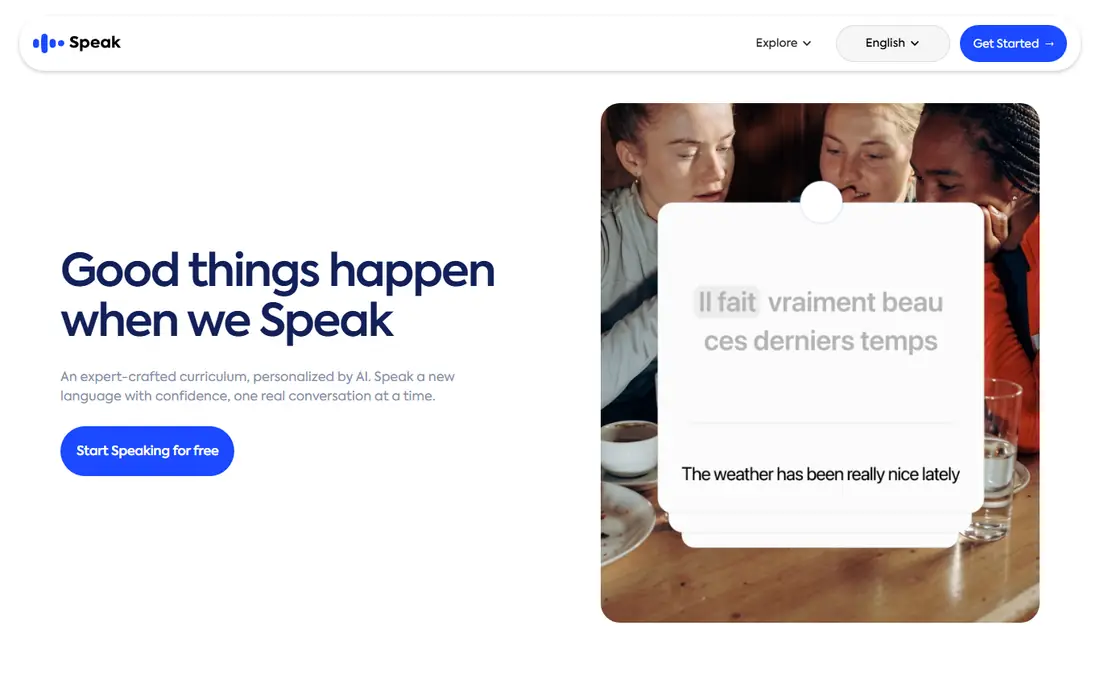
Speak suits learners who want to talk, not just repeat sentences. You can hold a conversation with an AI tutor, get corrections as you speak, and review phrases you missed. Structured lessons cover common topics, while open chat lets you practice the kind of small talk that real life requires.
Pricing is shown during signup and varies by plan and region, so check the total before subscribing. Speak works best for intermediate learners who can already form sentences and want fluency, confidence, and faster recall.
- Natural conversation with an AI tutor
- Instant corrections
- Structured courses plus free talk
- Price is shown in app and varies by region
- Needs a stable connection for voice
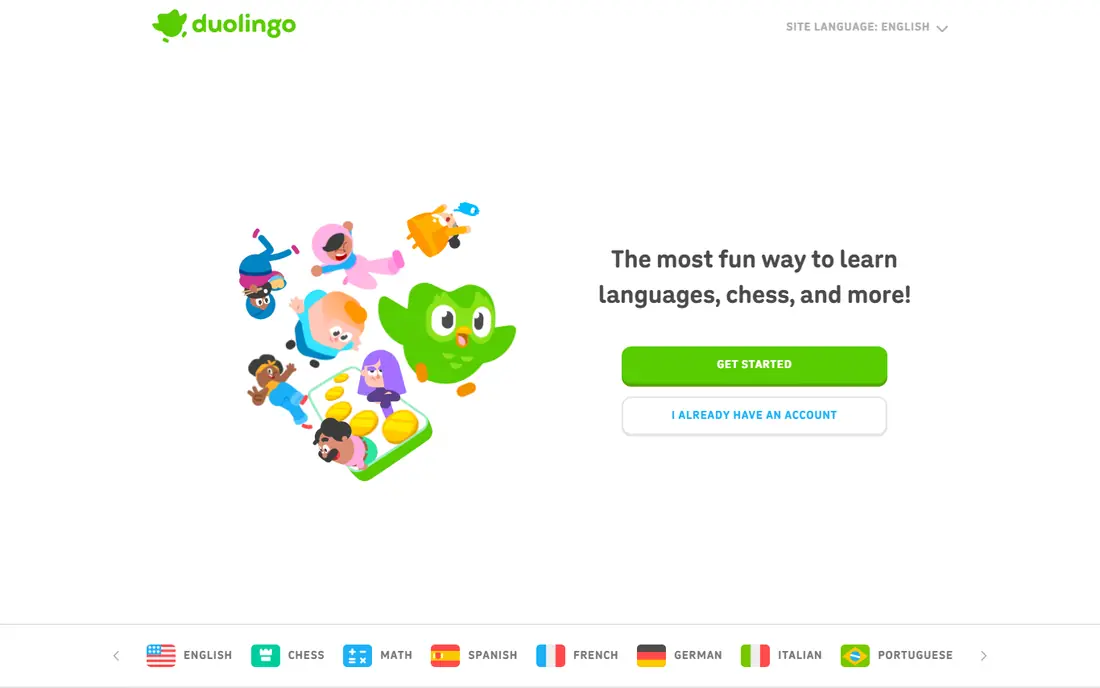
Duolingo is the easiest habit builder in this list. Short lessons, streaks, and reminders help beginners practice a little each day, and speaking tasks ask you to say words and sentences aloud. That low pressure start suits learners who have avoided speaking practice so far.
It is not a replacement for conversation practice. Speaking tasks are short and scripted, and deeper AI conversation sits on paid tiers. Use Duolingo to build vocabulary and a daily habit, then pair it with Speak, TalkPal, or Loora for open conversation.
- Free core course
- Short daily lessons
- Speaking tasks inside lessons
- Speaking practice is less deep than dedicated tutors
- AI features sit on paid plans
TalkPal lets you practice through chat, voice calls, and role plays, which helps learners who freeze in live conversation. You can pick a scenario, such as ordering food or asking for directions, and practice the phrases you would actually use. Feedback covers grammar and word choice, not just pronunciation.
Free use is limited, so test a few scenarios before paying. TalkPal suits learners who want variety: one day a debate, the next day a job interview, and the next day casual chat with a patient tutor that never gets tired.
- Chat, voice, and role play modes
- Many languages and topics
- Feedback on grammar and wording
- Conversation quality varies by topic
- Full features need a paid plan
Praktika uses AI avatar tutors to run role plays for common situations, from meetings to travel to interviews. Each tutor has a distinct voice and style, which makes practice feel less like a drill and more like a conversation. Progress tracking shows which topics you have covered and where you still hesitate.
Full access requires a paid plan, with pricing shown in the app. Praktika is a good fit for learners who want structured practice for a specific goal, such as a presentation, a job interview, or a move to an English speaking workplace.
- Avatar tutors with distinct styles
- Role play for work and daily life
- Progress tracking
- Paid plan needed for full access
- Tutor style may feel less natural than a live chat
Loora focuses on live style conversation with an AI tutor that listens, responds, and corrects in real time. After a session, you get notes on grammar, vocabulary, and fluency, which helps you review mistakes without stopping mid sentence. Topics adapt to your interests and goals, so practice feels personal rather than generic.
Absolute beginners may find open conversation hard at first. If you can already hold a basic conversation, Loora helps you speak longer, with fewer pauses, and with clearer grammar. Check the subscription price in the app, since plans vary by region and billing period.
- Real time conversation feedback
- Grammar and fluency notes
- Personalized topics
- Subscription pricing varies
- Best for intermediate learners, less for absolute beginners
SmallTalk2Me is built for learners who need English for work, especially interviews and presentations. Mock interviews ask common questions, record your answers, and give feedback on fluency, pace, and filler words. That targeted practice helps learners who already know English but struggle to speak under pressure.
It is less suited to casual conversation or beginner vocabulary. If your goal is a job interview, a performance review, or a client meeting, SmallTalk2Me gives practice that general apps do not. Use it alongside a conversation app for everyday fluency.
- Mock interviews and work scenarios
- Instant feedback on fluency and filler words
- Progress reports
- Narrower focus than general tutors
- Full reports need a paid plan
Langua pairs AI conversation with the option to book human tutors, which suits learners who want both daily AI practice and occasional live feedback. AI chats include corrections and vocabulary help, while human sessions can focus on accent, interview prep, or exam speaking tasks.
Check plan pricing on the vendor site, since AI and human options are priced differently. Langua works well for learners who want a single place for daily practice and a human check in when progress stalls.
- AI conversation plus human tutor options
- Corrections during chat
- Varied topics and levels
- Pricing varies by plan
- AI conversation depth varies by topic
Univerbal builds practice around realistic scenarios, such as checking into a hotel, handling a work call, or chatting with a neighbor. You speak with an AI partner, get instant feedback, and repeat the scenario until phrases feel natural. That repetition helps learners who know words on paper but freeze when speaking.
The library is smaller than Duolingo or ELSA, so check that your target scenarios are covered before paying. For learners who want practical, situation based speaking, Univerbal offers focused practice without a steep learning curve.
- Scenario based conversations
- Instant feedback
- Good for travel and daily life
- Smaller lesson library than larger apps
- Paid plan needed for full scenarios
How we picked these
We compared official app pages, pricing notes, and feature lists for AI speaking tools, and we favored tools that let users speak aloud, receive feedback, and practice conversation, not just listen or read. We included pronunciation tools, conversation tutors, and role play apps because speaking practice means different work at different levels. We left out tools with no real speaking mode or unclear availability in 2026.
How to practice speaking English with AI
Start with a small daily target you can keep. Ten minutes of speaking beats an hour once a week, because fluency grows from repetition and recall. Pick one tool for daily practice, set a fixed time, and speak aloud even when it feels awkward. Reading silently does not build speaking skill.
Next, mix feedback types. Use ELSA for pronunciation, a conversation tutor for fluency, and a role play tool for work situations. After each session, write down three phrases you struggled with, and repeat them the next day. That short review loop turns a single session into lasting progress.
Finally, add real human practice when you can. AI tutors are patient and always available, but they do not replace a real conversation with its pauses, interruptions, and surprises. Join a language exchange, a class, or a conversation group once a week, and use AI practice to prepare for those live talks.
Frequently asked questions
What is the best AI app for English speaking practice?
ELSA Speak is best for pronunciation, while Speak and Loora are best for open conversation. Duolingo is best for building a daily habit as a beginner. The best AI English speaking practice app depends on whether your main gap is sounds, fluency, or confidence in specific situations.
Can AI tools really improve my English speaking?
AI tools help by giving frequent, low pressure speaking practice with instant feedback, which is hard to get alone. They work best when you speak daily, review corrections, and also practice with real people. AI feedback on pronunciation and grammar is useful, but human conversation still teaches timing, tone, and listening in a way AI cannot fully match.
Are these AI English speaking apps free?
Most offer a free plan or trial, but full conversation, feedback, and lesson libraries usually need a paid plan. Duolingo has a strong free core course, and ELSA offers free lessons with limited access. Test the free version first, then pay only for the tool you use most often.
How long should I practice speaking each day?
Ten to twenty minutes a day is a realistic target for most learners, with longer sessions on days when you have time. Short daily practice builds recall better than a single long session each week. If you miss a day, resume the next day rather than trying to catch up with a very long session.
Which AI tool is best for IELTS or interview speaking?
SmallTalk2Me and Praktika suit interview practice, with mock questions and feedback on fluency. ELSA helps with pronunciation for exam speaking tasks. For IELTS, pair a speaking tool with official practice materials and, if possible, a human tutor for timed mock tests.
Sources
See where you really rank - block by block
ProMapRanker scans Google Maps across a grid of your service area. Simple monthly plans from $19, white-label on every plan.
Start freeKeep reading
 zscaler alternatives
Best Zscaler Alternatives in 2026
Looking for zscaler alternatives? We compare 9 SASE and zero trust platforms on architecture, data protection, pricing, and fit for your network and team.
Read → zapier alternatives free
Best Zapier Alternatives Free in 2026
Nine automation tools for zapier alternatives free in 2026, all with genuinely free tiers, plus free plan limits, starting prices and upgrade paths explained.
Read → which platform is best for online reputation
Which Platform Is Best for Online Reputation in 2026
Wondering which platform is best for online reputation? We compare 8 review, listing, and response tools for small and multi-location businesses and agencies.
Read →