 ProMapRanker
Best AI Tools for Email Marketing in 2026

Key takeaways
- Mailchimp, Brevo, and MailerLite offer the gentlest start for small lists, with free plans and AI writing help.
- Klaviyo and Omnisend are strongest for stores, because their AI uses purchase and browsing data.
- ActiveCampaign and HubSpot suit teams that need branching automation and CRM handoff, not just newsletters.
- Kit and beehiiv-style newsletter tools suit creators, while Constant Contact suits small businesses that want guided setup.
Quick comparison
| Pick | Great for | Pricing starts at | Free tier | |
|---|---|---|---|---|
 Mailchimp | Small teams and beginners | Free | Yes | Visit |
 Klaviyo | Ecommerce stores | Free | Yes | Visit |
 Brevo | Budget teams and volume sending | Free | Yes | Visit |
 ActiveCampaign | Advanced automation and CRM | $15 per month | No | Visit |
 Omnisend | Small ecommerce stores | Free | Yes | Visit |
 Constant Contact | Guided small-business email | See website | No | Visit |
 MailerLite | Simple newsletters | Free | Yes | Visit |
 Kit | Creator newsletters | Free | Yes | Visit |
 HubSpot | B2B teams on HubSpot CRM | Free | Yes | Visit |
 GetResponse | Email plus funnels | See website | No | Visit |
The best AI tools for email marketing
We compared AI writing, subject line help, send-time optimization, predictive segmentation, automation depth, and pricing. All ten platforms below are live today, and we note where AI features sit on paid plans.
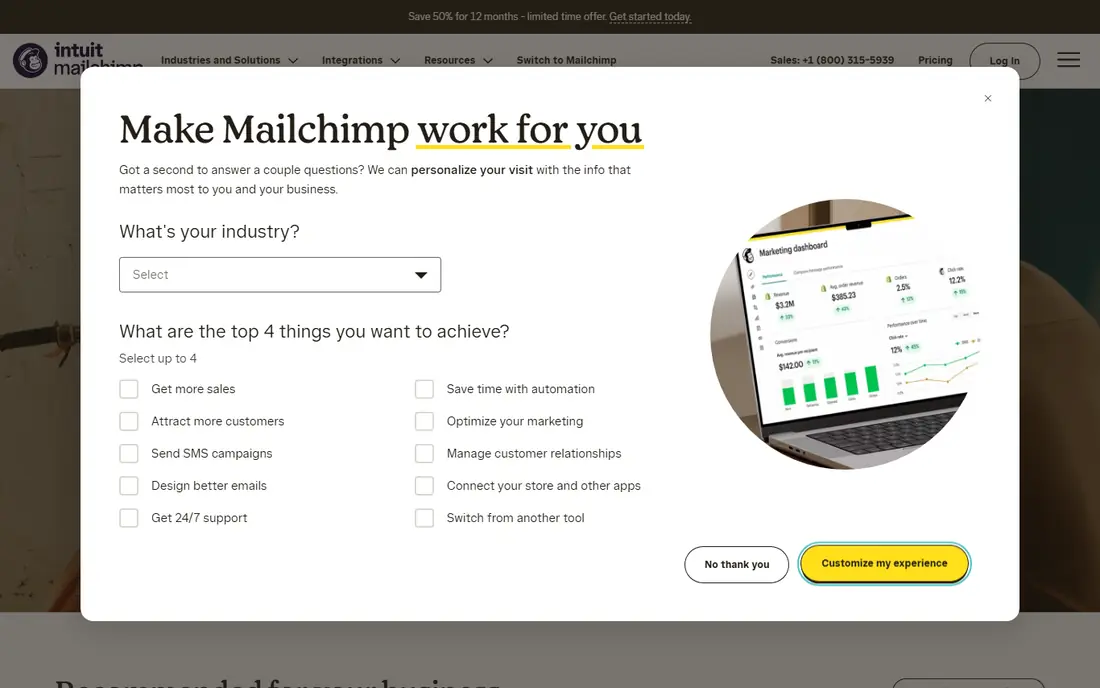
Mailchimp is the easiest on-ramp to AI-assisted email for a small team. Its AI tools can draft email copy from a short prompt, suggest subject lines, and help with send timing, while segmentation uses behavior such as clicks and purchases. The interface walks a new sender through audience setup, campaign design, and reporting without requiring automation knowledge.
The free plan is limited in contacts and monthly sends, and paid tiers rise with list size, so a growing list needs regular price checks. Advanced predictive models are also stronger on rival ecommerce platforms. For a first AI email tool, though, Mailchimp balances guidance and capability well.
- Easy setup
- AI content generator and send-time help
- Wide template library
- Free plan limits contacts and sends
- Costs rise fast as lists grow
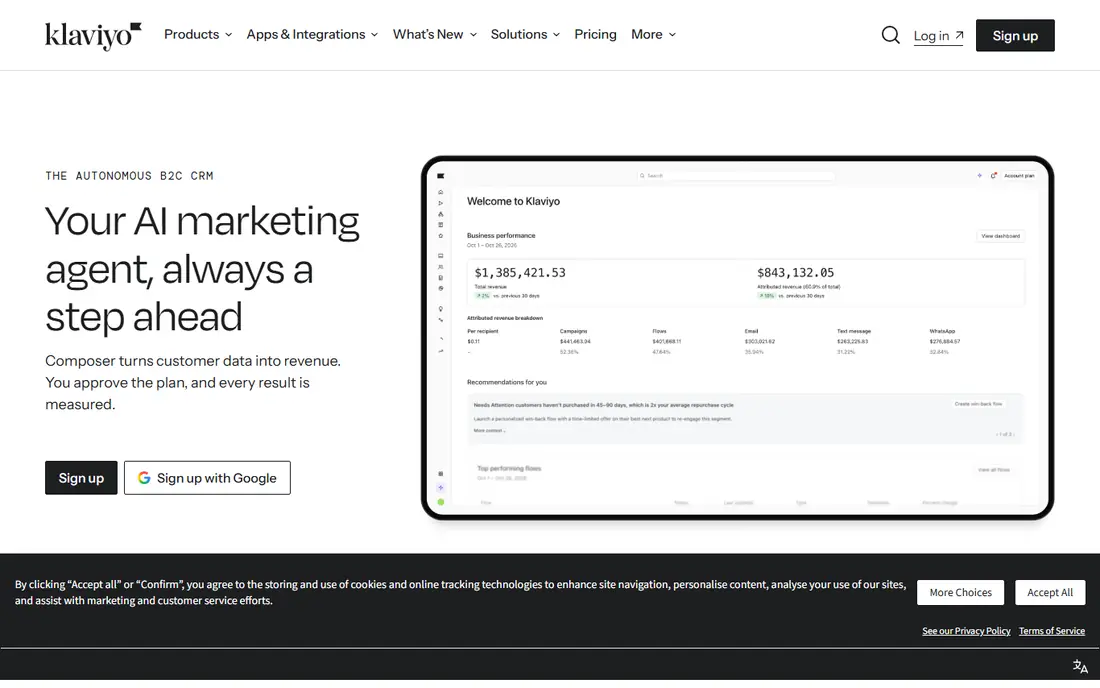
Klaviyo stands out when email revenue depends on store data. Its AI and segmentation tools use purchase history, browsing behavior, and predicted customer value to build audiences and flows for abandoned carts, post-purchase follow-up, and win-back campaigns. That data depth is why many Shopify stores choose it over a general newsletter tool.
The cost model needs care. Pricing grows with the number of profiles, not just active subscribers, and SMS is a separate cost. A store with a large but inactive list should clean profiles before pricing a plan. For active ecommerce lists, the targeting power usually justifies the higher bill.
- Strong purchase-data segmentation
- Predictive analytics
- Deep Shopify integration
- Costs grow with profile count
- SMS adds to the bill if enabled
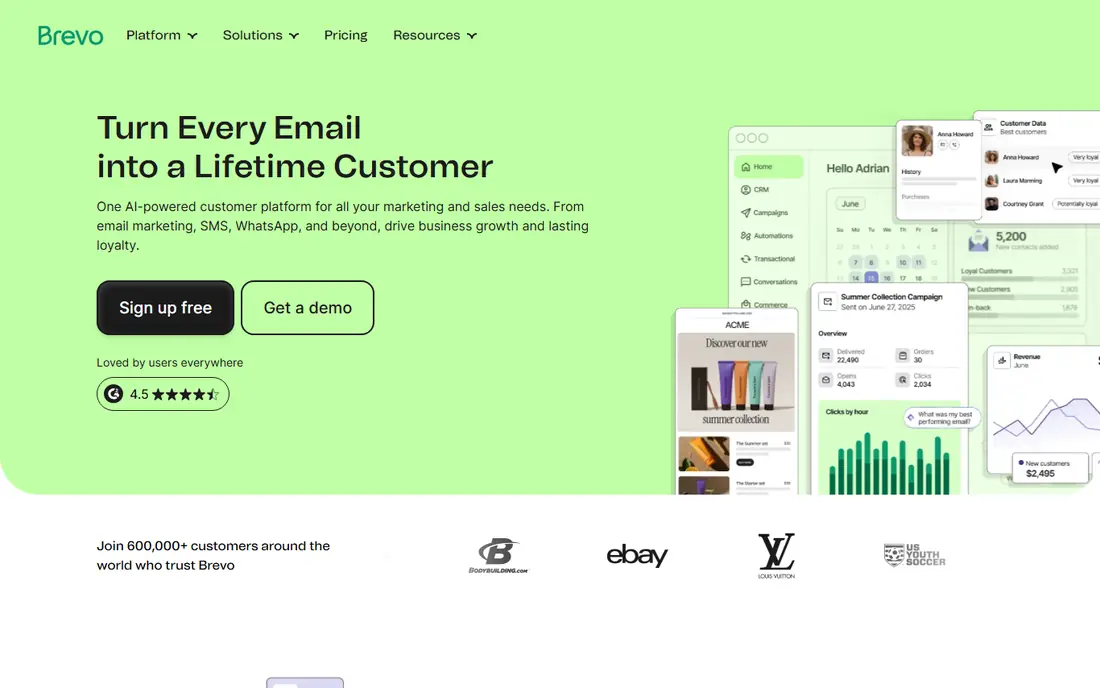
Brevo suits teams that send to a large list on an irregular schedule, because pricing is based on email volume rather than list size alone. The free plan allows a set number of sends per day, and paid plans start low for a set monthly volume. AI tools help with subject lines and send timing, and the platform also covers SMS and transactional email.
The daily cap on the free plan can frustrate a team that sends a large campaign in one day, and SMS is billed separately. For a small business that sends a weekly newsletter to a growing list, though, Brevo is one of the cheapest credible options with real AI help.
- Free plan with daily send allowance
- Volume-based pricing
- AI subject line and send-time tools
- Free plan has a daily send cap
- Contact limits vary by plan
- SMS costs extra
ActiveCampaign is the pick for teams that treat email as part of a sales and customer journey, not just a newsletter. Its automation builder supports branching paths based on behavior, tags, and scores, while predictive sending and AI segmentation help target the right contacts at the right time. The built-in CRM lets sales teams follow up on engaged leads without switching tools.
That power comes with complexity. There is no free plan, only a trial, and building a good automation takes time and planning. Small teams that only send a monthly newsletter may find it more than they need. For B2B and automation-heavy teams, it is one of the strongest platforms here.
- Branching automation
- Predictive sending
- CRM handoff for sales teams
- No free plan, trial only
- Learning curve for complex automations
Omnisend is built for small online stores that want ready-made flows without Klaviyo-level pricing. It covers abandoned cart, welcome, post-purchase, and win-back emails, and it can add SMS to the same flow, which helps stores that sell through text as well as email. AI tools support subject lines and campaign setup, and the free plan covers a small contact list.
The limits are about scale and store fit. Advanced logic and reporting grow with paid plans, and SMS costs must be budgeted separately from email. For a small store that wants ecommerce automation fast, Omnisend is a practical middle ground between a newsletter tool and a full data platform.
- Ecommerce flows for cart and post-purchase
- SMS in the same platform
- Free plan for small lists
- Store-specific logic needs checking
- SMS costs need budgeting
Constant Contact suits small businesses that want a guided path from list to campaign without learning automation theory. Templates, list tools, and event features cover common needs for local businesses, nonprofits, and service firms, and support is a real strength for owners who send email themselves.
It is not the deepest AI platform here. Predictive analytics and store-data segmentation are stronger on Klaviyo and ActiveCampaign, and there is no free plan, only a trial. If you value hand-holding and a simple workflow over advanced AI, Constant Contact is a safe choice.
- Guided setup and templates
- Event and list tools
- Helpful support for beginners
- No free plan
- AI features are less deep than ecommerce rivals
MailerLite is the calmest newsletter tool in this list. The interface is clean, campaigns are quick to build, and the free plan covers a small subscriber list with a monthly send allowance. AI writing help and automation tools are available on paid plans, and the platform handles landing pages and forms for list growth.
The trade-off is depth. Complex event-based logic and data modeling are limited compared with ActiveCampaign or Klaviyo, so a team with intricate customer journeys may outgrow it. For newsletters, announcements, and simple welcome sequences, MailerLite is easy to recommend.
- Clean interface
- Free plan for small lists
- AI writing help on paid plans
- Complex event logic is limited
- Advanced automation needs higher plans
Kit, formerly ConvertKit, is built for creators, writers, and publishers who grow an audience by email. The free plan allows a large subscriber count with one automation, which is generous compared with most rivals, and forms, landing pages, and sequences are designed for newsletter growth. Paid plans add more automations and tools for selling digital products.
The limits show for stores and complex B2B teams. Ecommerce segmentation and CRM features are thinner than Klaviyo or ActiveCampaign, and full automation needs a paid plan. For a creator whose main job is writing and growing a list, Kit is one of the best values here.
- Large free subscriber allowance
- Creator-focused forms and sequences
- Simple automation
- Paid automations need a Creator plan
- Ecommerce features are limited
HubSpot makes sense when email is one part of a wider CRM system. Free tools cover contacts, forms, and basic email, while paid Marketing Hub plans add AI writing, automation, and reporting tied to deals and pipelines. That connection helps B2B teams see which campaigns influence real sales conversations.
The cost curve is the catch. Higher tiers can reach hundreds of dollars per month, so a team that only needs email should not buy HubSpot for email alone. If your team already uses HubSpot CRM, though, adding email there keeps data in one place and avoids syncing problems.
- Free CRM tools
- Email tied to contacts and deals
- AI writing and reporting
- Marketing costs rise sharply on higher tiers
- Email alone is not the cheapest option
GetResponse covers more than email, with funnels, landing pages, and automation in one platform, plus AI tools for campaign setup and content. That breadth suits small businesses and creators who want to build a signup page, a welcome sequence, and a sales funnel without adding three separate tools.
Pricing and plan structure take care to compare, since features vary by tier and there is no free plan. For a team that only sends newsletters, a simpler tool may cost less. For a team that needs funnels alongside email, GetResponse is a credible all-in-one choice.
- Email, funnels, and landing pages in one tool
- AI campaign tools
- Webinar options on some plans
- No free plan
- Plan structure takes time to compare
How we picked these
We compared official pricing pages, feature pages, and free plan limits, and we kept only platforms with named AI features for writing, subject lines, send timing, segmentation, or automation. We used See website where pricing depends on list size, billing period, or plan, and where published figures conflicted. We left out tools that only offer a generic chatbot with no email-specific AI features.
How to choose an AI email tool
Start with your list and your store. If you sell online, prioritize Klaviyo or Omnisend, because purchase data drives their best AI features. If you write a newsletter, prioritize Kit, MailerLite, or Brevo for cost and simplicity. If you need sales handoff, prioritize ActiveCampaign or HubSpot, and test the automation builder before paying.
Test AI output before you trust it
AI drafts save time, but they can sound generic or miss your offer details, so edit every draft for accuracy, tone, and compliance. Check subject line suggestions against your own past results, and test send-time optimization on a small segment first. Also confirm that your list gave permission to receive email, since AI tools do not fix a poor list.
Frequently asked questions
What is the best AI email marketing tool for small businesses?
Mailchimp and Brevo are strong small-business picks, with free plans, templates, and AI writing help. MailerLite is a good alternative if you want a cleaner newsletter workflow. Choose based on list size and send volume, since pricing models differ.
What is the best AI email marketing platform for ecommerce?
Klaviyo is the strongest ecommerce pick for purchase-data segmentation and predictive analytics, with Omnisend as a lower-cost alternative for small stores. Both handle cart recovery and post-purchase flows. Check profile or contact pricing carefully, since costs grow with list size.
What is the best AI email marketing software with a free plan?
Kit offers the largest free subscriber allowance in this list, while Brevo, Mailchimp, Klaviyo, Omnisend, MailerLite, and HubSpot also offer free tiers with different limits. Compare contacts, sends per month, and which AI features are included free, since free plans vary widely.
Can AI write my whole email campaign?
AI can draft copy, subject lines, and outlines, but you should still edit for accuracy, brand voice, and legal claims. AI tools work best as a first draft and a source of variations to test. Human review matters most for pricing, offers, and health or financial claims.
What is the best AI email marketing tool for creators?
Kit is built for creators, with forms, sequences, and a generous free plan. MailerLite is a simpler alternative for newsletters. If you sell courses or digital products, check checkout and automation features on paid plans before choosing.
Sources
See where you really rank - block by block
ProMapRanker scans Google Maps across a grid of your service area. Simple monthly plans from $19, white-label on every plan.
Start freeKeep reading
 outreach alternatives
Outreach Alternatives in 2026
Compare outreach alternatives for 2026, from Salesloft and Apollo to HubSpot and Lemlist, with pricing, channels, features, limits, and honest trade-offs.
Read → best web conference tools
Best Web Conference Tools in 2026
Compare the best web conference tools for meetings, webinars and team calls, with current pricing, free plans and honest limits for each option here today.
Read → best voice cloning tools
Best Voice Cloning Tools in 2026
Compare the best voice cloning tools in 2026, from ElevenLabs and Descript to Resemble and Cartesia, with consent rules, pricing, licenses, and limits.
Read →