 ProMapRanker
8 Best AI Tools for Academic Research Automation Options for 2026


Visual exploration of related papers from a single seed paper · Pricing starts at: See website
Key takeaways
- This list starts with Connected Papers, which is built for visual exploration of related papers from a single seed paper.
- SciSpace fits understanding dense papers rapidly with AI explanations and a writing copilot.
- Free plans are common here: 7 of 8 tools have one, including Connected Papers, Litmaps, Inciteful and Elicit.
- Connected Papers comes with a trade-off: restricted to graph exploration.
Direct answer
If you need visual exploration of related papers from a single seed paper, Connected Papers is the first tool to look at here. Litmaps fits interactive citation maps with alerts on new relevant papers; Inciteful fits free citation-based paper discovery with no account needed. All 8 tools are compared below on price, free plan and limits.
Quick comparison
| Pick | Great for | Pricing starts at | Free tier | |
|---|---|---|---|---|
| Connected Papers | Visual exploration of related papers from a single seed paper | See website | Yes | Visit |
 Litmaps | Interactive citation maps with alerts on new relevant papers | See website | Yes | Visit |
 Inciteful | Free citation-based paper discovery with no account needed | Free | Yes | Visit |
 Elicit | Researchers who want AI-synthesized answers with citations from the literature | See website | Yes | Visit |
 Scite.ai | Seeing how papers have been cited: supported, mentioned or contrasted | See website | No | Visit |
 ResearchRabbit | Free, unlimited visual literature mapping for discovery | Free | Yes | Visit |
 Semantic Scholar | Free access to 200 million papers with an open API | Free | Yes | Visit |
 SciSpace | Understanding dense papers rapidly with AI explanations and a writing copilot | See website | Yes | Visit |
The best AI tools for academic research automation
Choosing AI tools for academic research automation usually comes down to price, fit and limits. This ProMapRanker guide sets 8 tools side by side on those three points, with the facts kept short and checkable.
Connected Papers
Great for: Visual exploration of related papers from a single seed paper
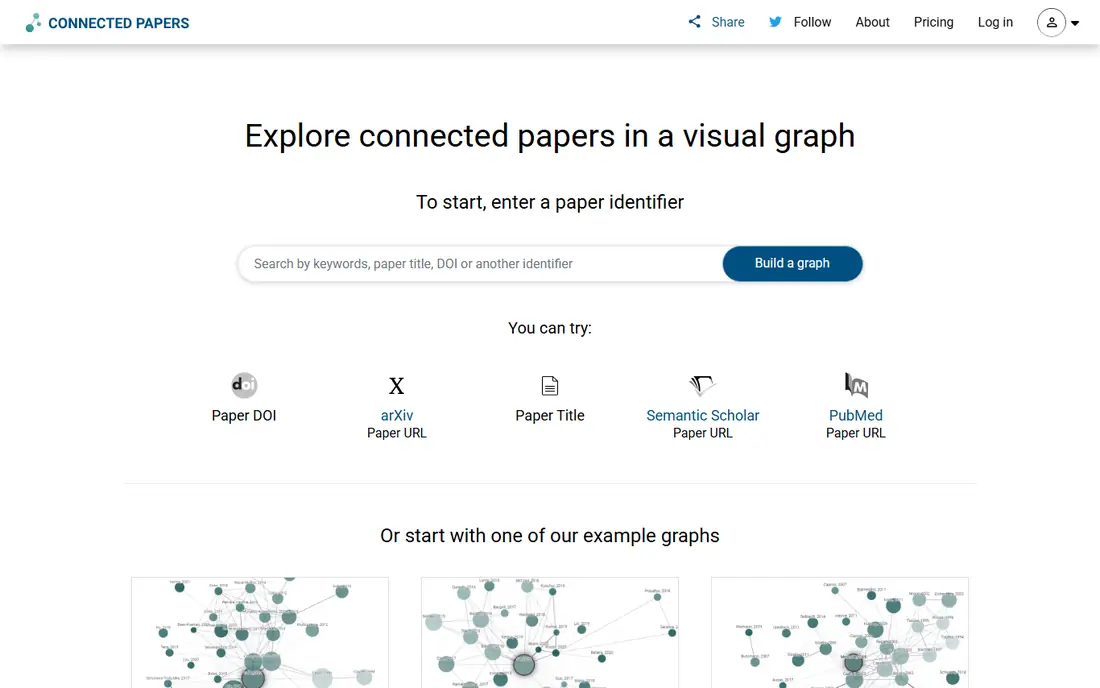
For visual exploration of related papers from a single seed paper, Connected Papers is a natural candidate. Connected Papers builds a visual graph of the papers most related to a seed paper you supply, laying out prior works that influenced it and derivative works that built on it.
Watch-outs: Free level caps the number of graphs.
This comparison lists no price for Connected Papers; ask the vendor. You can start on Connected Papers without paying.
- Beautiful citation graphs reveal a field's structure
- Great for finding prior and derivative work
- Restricted to graph exploration
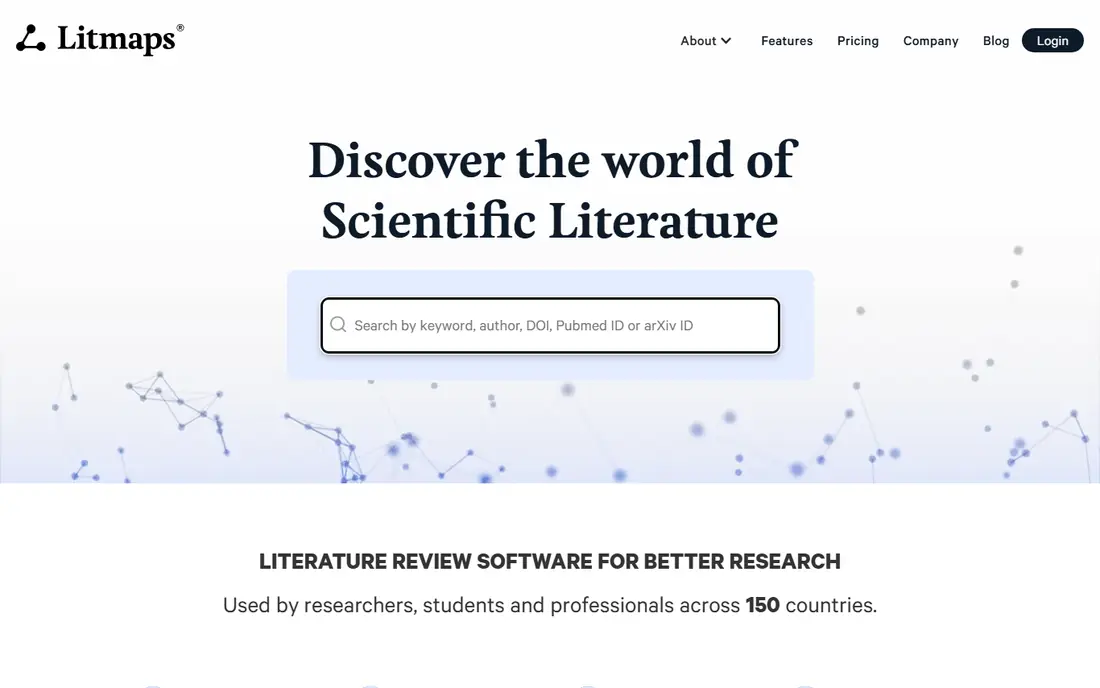
Litmaps makes the most sense for interactive citation maps with alerts on new relevant papers. The alerting is the standout feature: most discovery tools present you the past, whereas Litmaps watches the future.
The free plan spans entry-level mapping, with premium levels for bigger projects. No starting price is listed for Litmaps here; confirm pricing on the vendor site. A free plan is available with Litmaps.
Downsides: Free plan limits map size.
- Dynamic maps update as the literature grows
- Decent collaboration features
- Smaller user base than some rivals

Inciteful is built with free citation-based paper discovery with no account needed in mind. There is no AI synthesis, no PDF chat, no writing help; Inciteful does one thing and does it well.
Where it is weaker: No AI features or synthesis.
It is maintained as a free academic resource, and its recommendations are powered by the same citation-graph logic as fancier tools. Inciteful cost at the entry level: Free. You can start on Inciteful without paying.
- Quick graph-based recommendations
- 100% free with no sign-up
- Minimal interface
Elicit
Great for: Researchers who want AI-synthesized answers with citations from the literature
Elicit is aimed squarely at researchers who want AI-synthesized answers with citations from the literature. Elicit works like a research assistant you can interrogate. Beyond that, the key discipline with Elicit is verification: its summaries are starting points.
The main drawbacks: Synthesis quality relies on the underlying papers.
You should always open the cited papers before quoting a result. Worth adding: used that way, it compresses hours of database searching into minutes. This comparison lists no price for Elicit; ask the vendor. Elicit includes a free tier.
- Free plan with monthly credits
- Solid screening for systematic reviews
- Restricted to what is in its corpus
Scite.ai
Great for: Seeing how papers have been cited: supported, mentioned or contrasted
Scite.ai was built for seeing how papers have been cited: supported, mentioned or contrasted. If your work relies on the reliability of prior findings, it is worth the subscription.
Drawbacks to consider: No free plan.
No starting price is listed for Scite.ai here; confirm pricing on the vendor site. Scite.ai does not include a free plan.
- Reference check tools
- Very good for evaluating paper reliability
- Coverage relies on its citation extraction
ResearchRabbit
Great for: Free, unlimited visual literature mapping for discovery
ResearchRabbit serves free, unlimited visual literature mapping for discovery. Like Connected Papers, it builds visual maps from seed papers, but it is free with no meaningful limits. Its collections feature lets you organize papers into projects that grow as you add more.
In daily use, the interface is refined and the recommendations genuinely useful. It does not answer questions or summarize; it is a discovery engine. On cost, ResearchRabbit starts like this: Free. Free access exists with ResearchRabbit.
The main drawbacks: Discovery only.
- Fully free with no graph limits
- Elegant collections and visualizations
- No AI synthesis or writing help
Semantic Scholar
Great for: Free access to 200 million papers with an open API
Where Semantic Scholar fits: free access to 200 million papers with an open API. As a daily research tool, Semantic Scholar is the free scholarly search engine that respects researchers: no paywall for the search itself, citation graphs, influential citation metrics and alerts.
Where it falls short: Fewer workflow features than commercial tools.
Semantic Scholar pricing: Free. Semantic Scholar offers a free plan.
- Free API for programmatic access
- Massive open corpus
- Search is keyword-based instead of conversational
SciSpace
Great for: Understanding dense papers rapidly with AI explanations and a writing copilot
SciSpace is designed for understanding dense papers rapidly with AI explanations and a writing copilot. It also contains literature discovery, so you can find papers and understand them in the same workflow.
SciSpace shows no starting price here, so confirm the cost on the vendor site. A free plan is available with SciSpace.
Where it shines: Copilot for writing and paraphrasing.
Where it is weaker: Free plan has usage limits.
- Explains papers
- Wide toolset in one place
- The plenty of features can feel scattered
Our selection method
For each of the 8 tools we noted price, free plan or trial, fit for AI tools for academic research automation and the main limit, using vendor pages and documentation. Prices and plan limits come from vendor pages and can change, so confirm them on the vendor site before you buy. Position on the page reflects fit for a typical buyer first, with price clarity and free access breaking ties. Treat it as a guide, not a ruling.
Before you commit
- Ask Connected Papers, Litmaps, Elicit and others for a written quote, since no starting price is shown.
- Look at free plan limits closely: Connected Papers, Litmaps, Inciteful and others have one, and the caps decide whether it is usable for real work.
- Before choosing Connected Papers, weigh its main limit: restricted to graph exploration.
- Find out whether the entry plan of ResearchRabbit covers your must-haves or only a trimmed-down version.
- Test how quickly SciSpace answers a pre-sales question; it hints at how support will feel later.
Frequently asked questions
Which options for AI tools for academic research automation have a free plan?
7 of the 8 tools have a free plan, including Connected Papers, Litmaps, Inciteful and Elicit. Free plans usually cap users, projects or features, so check the limits on the vendor page.
Can these tools find papers outside my field?
Yes, and that is one of their strengths. Citation-graph tools like Connected Papers and ResearchRabbit surface interdisciplinary connections, and conversational tools search across disciplines.
How are the tools for AI tools for academic research automation ordered?
The order follows typical fit for AI tools for academic research automation, with Connected Papers first and SciSpace last, then price clarity and free access. It is editorial judgement, not a score, so another team could rank the tools differently.
Is Connected Papers the right pick for everyone comparing AI tools for academic research automation?
No single tool suits every team. Connected Papers comes first because it fits visual exploration of related papers from a single seed paper, while Litmaps suits interactive citation maps with alerts on new relevant papers and Inciteful suits free citation-based paper discovery with no account needed. Match the tool to your own size, budget and workflow before deciding.
Can I try these tools before paying?
Often, yes. Connected Papers, Litmaps, Inciteful and others have a free plan. Use your own data and a real task during the test, and check what the free tier or trial limits before you rely on it.
Sources
See where you really rank - block by block
ProMapRanker scans Google Maps across a grid of your service area. Simple monthly plans from $19, white-label on every plan.
Start freeKeep reading
 zoho inventory alternatives
6 Alternatives to Zoho Inventory, Compared on Price and Fit
Zoho Inventory alternatives: 6 tools compared on price, free plans and fit. Katana leads the list for manufacturers. Fit and flaws are laid out for each entry.
Read → zoho crm alternatives
Best Zoho CRM Alternatives (2026)
Need Zoho CRM alternatives? We compare 7 tools on cost, free access and who each suits. Every pick gets a straight assessment. Built for quick decisions.
Read → zelle alternatives
Best Zelle Alternatives in 2026
Compare the best Zelle alternatives for sending money to friends, paying sellers and moving funds abroad, with honest notes on fees, speed and safety in 2026.
Read →