 ProMapRanker
Best AI Tool for Proposal Writing in 2026


Proposals with e-signatures · Pricing starts at: $19 per user per month
Key takeaways
- The strongest AI proposal tools combine a content library with AI drafting, so answers stay consistent instead of being invented each time.
- PandaDoc and Proposify suit sales proposals, while Loopio and Responsive suit formal RFP and bid responses.
- AI drafts still need human review, especially for pricing, compliance claims, and technical promises.
- Entry prices run from $13 to $35 per user per month for sales tools, while enterprise RFP platforms are quoted or start in five figures per year.
Quick comparison
| Pick | Great for | Pricing starts at | Free tier | |
|---|---|---|---|---|
| PandaDoc | Proposals with e-signatures | $19 per user per month | Yes | Visit |
 Proposify | Branded sales proposals | $35 per user per month | Free trial (14 days) | Visit |
 Qwilr | Web based interactive proposals | $35 per user per month | Free trial (14 days) | Visit |
 Better Proposals | Fast proposals for small teams | $13 per user per month | Free trial (14 days) | Visit |
 GetAccept | Proposals with buyer engagement | $25 per user per month | Free trial | Visit |
 Nusii | Flat priced proposals for freelancers | $29 per month | Free trial (14 days) | Visit |
 Loopio | AI assisted RFP responses | $20,000 per year | No | Visit |
 Responsive | High volume response management | See website | No | Visit |
 QorusDocs | Proposal automation for Microsoft teams | See website | No | Visit |
The best AI tools for proposal writing
These tools use AI to draft, reuse, and improve proposal content, with templates, tracking, and e-signatures for closing.
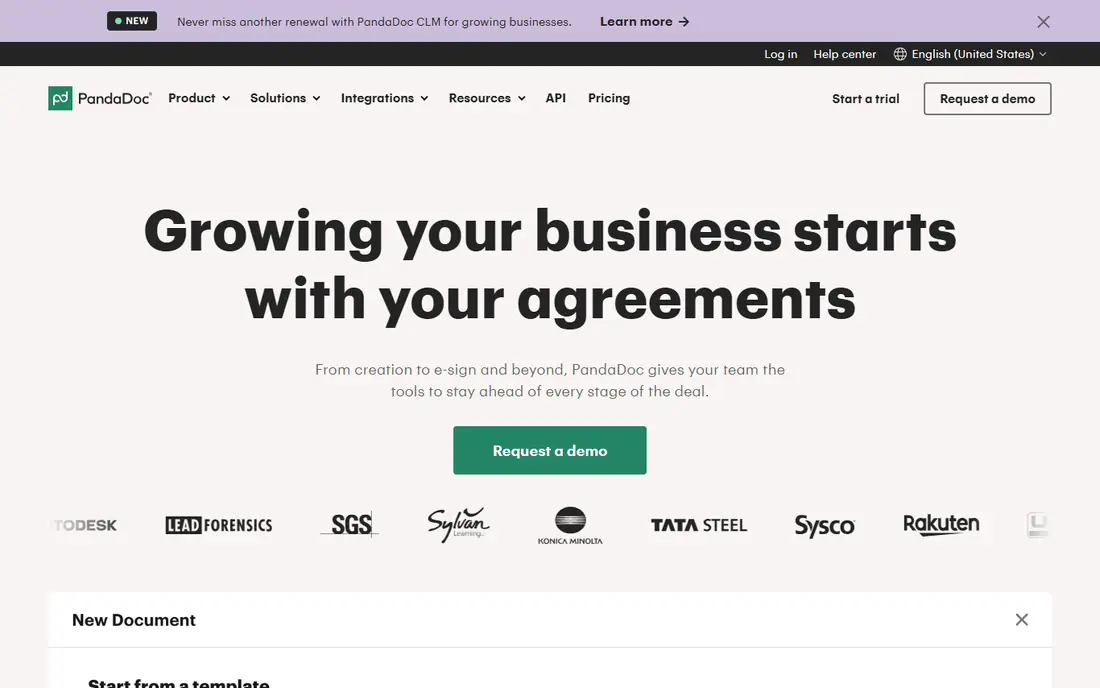
PandaDoc covers the full sales document workflow, from proposal templates and content blocks to approvals, e-signatures, and payment collection. Its AI features help draft and improve proposal text, and its template library gives small teams a fast start without designing each proposal from scratch. CRM integrations pull deal data into documents, which reduces copy and paste errors.
The limit is tiering. The most advanced AI and workflow features sit on higher plans, and the free eSign tier is limited in uploads and features. Teams that only need occasional proposals may find the paid plans more than they need, while teams that send proposals daily will use the full workflow. For growing sales teams that want one document platform, PandaDoc is a strong pick.
- Large template library
- Built in e-signatures
- CRM integrations and payment collection
- AI features vary by plan
- Higher plans needed for advanced workflows
- Per user pricing adds up
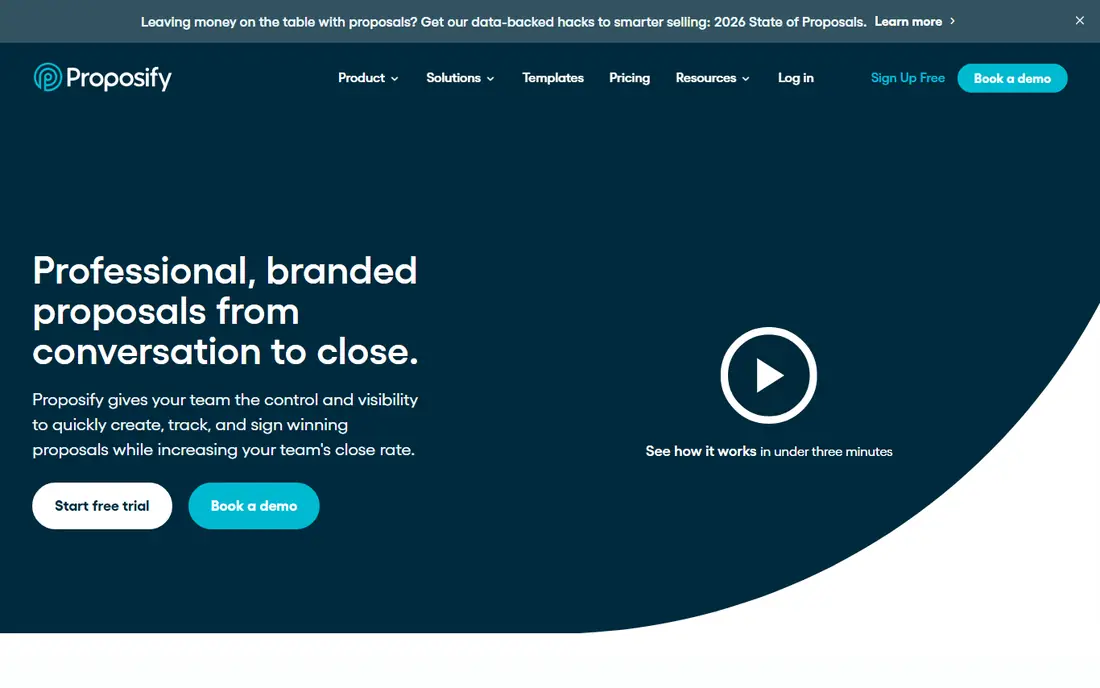
Proposify is built for agencies and sales teams that want consistent, branded proposals with interactive quoting, approval workflows, and engagement tracking. Its AI proposal generator helps draft sections from prompts and past content, and its templates cover common sales and service proposals. Analytics show which sections a prospect reads, which helps follow up at the right time.
The trade off is price. At $35 per user per month on annual billing for the Build plan, Proposify costs more than Better Proposals or PandaDoc entry plans, and larger plans scale by seat count. For a team that values brand control and proposal analytics, that price is justified. For a freelancer sending a few proposals a month, a cheaper tool may be enough.
- Strong branding and templates
- AI proposal generation
- Engagement analytics and e-signatures
- Higher entry price than some rivals
- Advanced plans scale by seats
- Some features need higher tiers
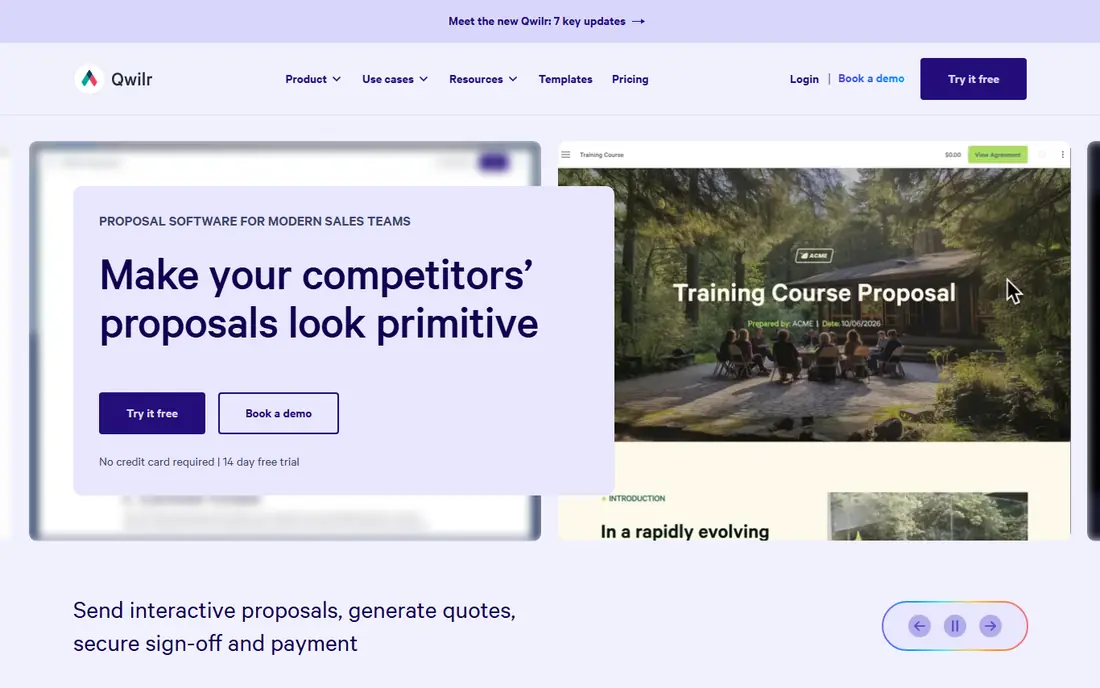
Qwilr turns proposals into interactive web pages, rather than static PDFs, with embedded pricing, payment options, and e-signatures. That format suits sales led teams where the proposal itself is part of the pitch, and where a prospect should accept and pay without downloading a file. Engagement tracking shows when a proposal is opened and which sections get attention.
The limit is document type. Qwilr is excellent for sales proposals, but it is not built for long, formal RFP responses with strict formatting and compliance sections. Teams that need both sales proposals and formal bids may pair Qwilr with a dedicated RFP tool. For modern, web first sales proposals, Qwilr is a distinctive pick.
- Proposals as modern web pages
- In proposal payments
- CRM integrations and engagement tracking
- Higher entry price
- Less suited to formal RFP documents
- Template range is narrower than PandaDoc
Better Proposals helps freelancers, agencies, and small service businesses send polished web proposals fast, with templates, section analytics, live chat, e-signatures, and payment integrations. The $13 per user per month Starter plan on annual billing makes it one of the cheapest paid proposal tools on this list, and the interface is simple enough to learn in a day.
The honest limit is AI depth. Better Proposals offers proposal creation and editing help, but it does not match Loopio or Responsive for AI assisted RFP drafting from a content library. Teams that answer formal tenders should not expect it to replace a bid platform. For small teams that need fast, professional sales proposals at a low price, it is a clear value pick.
- Low entry price
- Many templates
- Live chat and payment collection in proposals
- AI features are lighter than enterprise tools
- Fewer enterprise controls
- CRM depth varies
GetAccept combines proposal creation with digital sales rooms, where buyers and sellers can comment, chat, share files, and sign in one place. Video messaging and engagement tracking help sales teams see how a deal is progressing, and native CRM integrations sync activity back to Salesforce, HubSpot, and other systems. That buyer engagement focus suits mid market B2B teams with multi stakeholder deals.
The entry eSign plan at $25 per user per month covers basic proposal and signing needs, while the Pro plan at $49 per user per month adds deeper deal room and analytics features. Teams should trial the plan they will actually buy, since the experience changes with tier. For teams that want proposals plus buyer engagement, GetAccept is a strong pick.
- Deal rooms and buyer tracking
- Video messaging
- Strong CRM sync with Salesforce and HubSpot
- Entry plan is eSign focused
- Advanced features need higher plans
- Price rises with Pro plan
Nusii is built for freelancers and small creative agencies that want predictable flat pricing, with a Freelancer plan at $29 per month for one user and a set number of active proposals. It covers templates, e-signatures, client notifications, and proposal analytics, without per user pricing that grows with every hire. That simplicity suits solo operators who send proposals regularly.
The limit is scale and AI depth. Nusii is not an enterprise RFP platform, and its integrations and AI drafting are lighter than PandaDoc or Proposify. Teams that grow past a handful of users, or that need deep CRM workflows, will outgrow it. For a freelancer who wants a clean, flat priced proposal tool, Nusii is easy to recommend.
- Flat monthly price, not per user
- Simple proposal workflow
- E-signatures and analytics
- Limited to small team scale
- Fewer integrations than larger rivals
- AI features are basic
Loopio is an enterprise response platform for teams that answer many RFPs, security questionnaires, and due diligence documents. Its content library stores approved answers, and its AI features surface and draft answers from that library, with review and approval workflows to keep responses consistent. That library model is the key difference from a blank AI writer: answers come from approved content, not from a fresh guess each time.
The price point reflects that scope, with a published starting point of $20,000 per year for a Foundations plan with ten seats. Setup also takes time, since the library must be built and reviewed before AI drafting saves real time. For a team answering a few proposals a year, Loopio is overkill. For a bid team drowning in questionnaires, it can pay for itself in consistency and speed.
- Structured content library
- AI assisted answers
- Approval workflows and portal support
- Enterprise price point
- Implementation and library setup take time
- Overkill for occasional proposals
Responsive, formerly RFPIO, is a response management platform for mid to large enterprises handling high volumes of RFPs, RFQs, security questionnaires, and proactive proposals. Its AI features draft answers from a content library and connected knowledge sources, with workflows for review, collaboration, and portal submission. It suits organizations where many teams contribute to responses and where consistency across documents matters.
The trade off is enterprise scope and quoted pricing. Responsive requires a sales conversation, and implementation, governance, and library maintenance need dedicated owners. Smaller teams should start with a sales proposal tool and only move to Responsive when volume, question counts, or compliance requirements overwhelm manual work. For high volume bid operations, it is a leading pick.
- Broad response management
- AI drafting from multiple sources
- Deep automation and integrations
- Quote based pricing
- Enterprise complexity
- Setup and governance take effort
QorusDocs is a proposal automation platform built around Microsoft Word, SharePoint, and Teams, with a content library, AI assisted drafting, and collaboration tools for proposal teams. It suits professional services, legal, and consulting firms that already live in Microsoft 365 and want proposals built in Word, not in a separate editor. That fit reduces friction for teams that refuse to leave Word.
The limit is the Microsoft focus. Teams on Google Workspace or other editors will get less value, and pricing is quoted, so a sales conversation is required. QorusDocs also has a smaller public ecosystem than Loopio or Responsive, so teams should trial it with a real proposal and a real content library. For Microsoft centric proposal teams, it is a natural shortlist pick.
- Deep Microsoft Word and SharePoint fit
- Content library and AI drafting
- Strong for professional services
- Quote based pricing
- Microsoft centric workflow
- Smaller ecosystem than Loopio and Responsive
How we picked these
We compared official pricing pages, product documentation, and public proposal comparisons for tools live in October 2026. We favored tools with real AI drafting or content reuse, not just templates, and we separated sales proposal tools from enterprise RFP platforms, since they solve different problems. Where a vendor did not publish a price, we wrote See website rather than estimating, and we did not claim hands on testing.
How to use AI proposal tools without losing accuracy
Start with approved content. The best AI proposal workflow is not a blank prompt, but a library of approved answers, pricing, case studies, and compliance statements that AI can reuse and adapt. Build that library first, assign owners for each section, and set a review date, since stale content is the fastest way AI drafts go wrong.
Next, set a review rule for every AI draft. A human should check pricing, dates, technical claims, and any promise about service levels, security, or compliance before a proposal goes out. AI can draft fast, but it can also state a capability with confidence when the source is vague or outdated. Finally, track what actually wins. If a tool saves drafting time but proposals still need heavy rewrites, the library, not the AI model, is usually the problem to fix.
Frequently asked questions
What is the best AI tool for proposal writing?
PandaDoc and Proposify suit most sales proposals, Qwilr suits web based sales proposals, and Loopio and Responsive suit formal RFP responses. The best pick depends on whether you write sales proposals, formal bids, or both.
Can AI write a whole proposal by itself?
AI can draft sections and first versions, but a human should review pricing, compliance claims, and technical promises before submission. Treat AI output as a fast first draft, not as a finished proposal, especially for regulated or high value bids.
How much do AI proposal tools cost?
Sales proposal tools on this list start from $13 to $35 per user per month, with some flat priced options for freelancers. Enterprise RFP platforms are quoted, with Loopio publishing a $20,000 per year starting point for its Foundations plan.
What is the difference between proposal software and RFP software?
Proposal software creates branded sales proposals with pricing, e-signatures, and tracking. RFP software manages formal bid responses with content libraries, collaboration, and questionnaire workflows. Many teams need one, not both, and some need both for different document types.
Do AI proposal tools work with CRM systems?
Most tools on this list integrate with common CRMs such as Salesforce and HubSpot, pulling deal data into proposals and syncing signing and engagement activity back. Confirm the specific CRM and the plan tier, since integrations vary by plan.
Is my proposal content used to train AI models?
That depends on the vendor and the plan, so check the privacy and data terms before uploading sensitive pricing or client data. Ask whether customer content is used for model training, how long it is retained, and whether an enterprise or private option is available.
Sources
See where you really rank - block by block
ProMapRanker scans Google Maps across a grid of your service area. Simple monthly plans from $19, white-label on every plan.
Start freeKeep reading
 zscaler alternatives
Best Zscaler Alternatives in 2026
Looking for zscaler alternatives? We compare 9 SASE and zero trust platforms on architecture, data protection, pricing, and fit for your network and team.
Read → zapier alternatives free
Best Zapier Alternatives Free in 2026
Nine automation tools for zapier alternatives free in 2026, all with genuinely free tiers, plus free plan limits, starting prices and upgrade paths explained.
Read → which platform is best for online reputation
Which Platform Is Best for Online Reputation in 2026
Wondering which platform is best for online reputation? We compare 8 review, listing, and response tools for small and multi-location businesses and agencies.
Read →