 ProMapRanker
Best AI Therapy Apps in 2026: 8 Apps Compared

Key takeaways
- Woebot offers the most structured free CBT-style programme, with short guided check-ins rather than open chat.
- Wysa gives the broadest free self-help toolkit, with exercises, meditation and mood tracking.
- Voice-first Lovon suits people who process feelings better by talking than by typing.
- No app here replaces a human therapist, and none should be used as a crisis service.
Quick comparison
| Pick | Great for | Pricing starts at | Free tier | |
|---|---|---|---|---|
 Woebot | structured free CBT exercises | Free | Yes | Visit |
 Wysa | broad self-help toolkit | Free | Yes | Visit |
 Youper | mood tracking with CBT check-ins | Free | Yes | Visit |
 Elomia | reflective AI companion chats | Free | Yes | Visit |
 Lovon | voice-first emotional conversations | Free | Yes | Visit |
 Replika | daily AI companionship | Free | Yes | Visit |
 Ash | low-pressure voice exploration | Free | Yes | Visit |
 Headspace Ebb | meditation plus light AI chat | $12.99 per month | Free trial | Visit |
The best AI Therapy Apps
AI therapy apps promise support at any hour, without a waiting list or an appointment. The reality is narrower: most are guided self-help tools built around cognitive behavioural ideas, mood tracking and coping exercises, not therapy with a licensed professional. The eight apps below differ in how structured they are, how much is free, and how open the conversation feels. This is general information only, not medical advice. AI companions are not replacements for human relationships or professional support. In a crisis, seek a licensed professional or crisis support right away, such as the 988 Suicide and Crisis Lifeline in the US.

Woebot is the most structured app here, built around short daily conversations that teach reframing, mood tracking and coping skills. It is rule-based rather than open-ended, which means replies follow a planned clinical framework instead of free-form generation. That structure is a strength for people who want a clear exercise each day rather than a chat that wanders.
The trade-off is flexibility. Conversations can feel scripted, and there is no open-ended processing of a complex story. The tone also suits younger users more than older adults. For a free, guided routine grounded in published research, Woebot is still our first pick. For free-form talk, Lovon or Ash will feel more natural.
- Short guided daily check-ins
- CBT, DBT and IPT-based content
- Research-backed design
- Free for individual users
- Text only and can feel scripted
- Less open conversation
- Tone suits younger users more
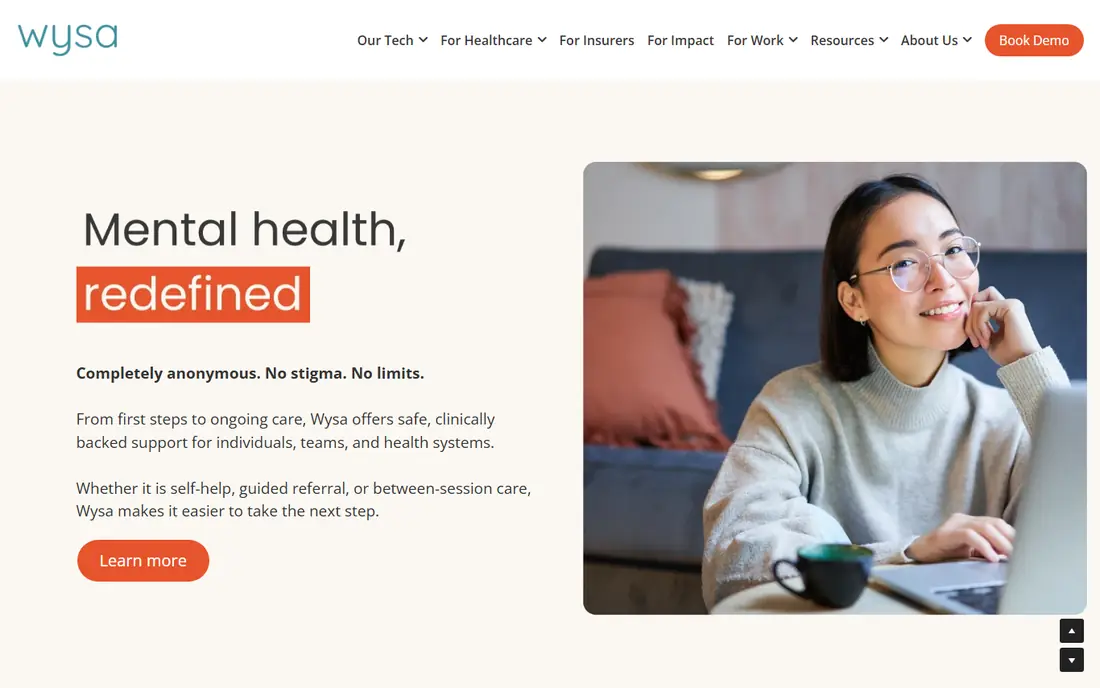
Wysa offers the widest free self-help toolkit in this list, with chat-based exercises, breathing work, meditation, sleep support and mood tracking in one app. The penguin guide and gentle tone lower the barrier for a first session, and the app states plainly that it is not a replacement for therapy. That honesty matters in a category where marketing often overpromises.
The full exercise library and human coaching sit behind Premium, and store pricing varies, so check the current price in your app store before paying. The toolkit can also feel broad rather than deep for users who want one focused programme. If you want many coping tools in one free app, Wysa is a strong starting point.
- CBT and DBT-based exercises
- Guided meditation and sleep tools
- Mood tracking
- Anonymous chat option
- Full tool library and human coaching need Premium
- Premium pricing varies by store and plan
Youper pairs short AI conversations with mood tracking, so you can see patterns over days and weeks rather than just venting once. Check-ins use cognitive behavioural ideas to challenge unhelpful thoughts and suggest coping steps. That data view helps users who like to see whether sleep, stress or social time lines up with mood changes.
The conversation is more structured than a free-form companion, so users who want open talk may find it narrow. Full insights and premium features also need a paid plan. For data-minded users who want to track mood and practise reframing, Youper offers a useful balance of chat and measurement.
- Mood tracking with personal insights
- CBT-based conversations
- Symptom and pattern views over time
- Free core tools
- Deeper insights and full features need a paid tier
- Conversation is more structured than open chat
Elomia is an AI companion that asks thoughtful questions, learns your stated goals and tailors conversations around them. The free version includes mindfulness exercises and short reflective chats, which suit users who want a calm space to think through a day. Sign-up asks about concerns and goals, so early chats feel more personal than a generic bot.
Keep expectations clear: Elomia is a companion for reflection, not a licensed therapist, and paid plans are sold weekly or monthly, which can add up over a year. Users who want structured clinical exercises may prefer Woebot or Wysa. Users who want a reflective daily chat will find Elomia easy to open and use.
- Personalised conversations based on goals
- Mindfulness exercises in the free version
- Reflective questions
- Mood support
- Paid plans are weekly or monthly and can cost more over a year
- Companion framing needs careful expectations
Lovon stands out because it is voice-first: you talk through feelings out loud instead of typing them. That suits people who process emotions better by speaking, and the conversations draw on cognitive behavioural and motivational interviewing ideas. A small number of free sessions lets you test whether voice feels right before paying.
Voice chat needs a private setting, so it is less practical on a bus or in a shared home. Lovon is also newer than Woebot or Wysa, with less published research behind it, and it has no structured exercise library. If typing feels flat and talking feels natural, Lovon is worth trying first.
- Voice conversations grounded in CBT and motivational interviewing
- Free sessions to start
- Available around the clock
- Voice-first design suits private settings only
- Newer app with less published research than Woebot
Replika is an AI companion, not a therapy tool, and it belongs here only because many people use it for loneliness and daily conversation. It remembers details, keeps a diary of your relationship with it, and offers voice calls, activities and mood tracking on paid plans. For a user who wants someone to talk to each day, that persistence is the draw.
Be clear about the limit. Replika offers no structured therapy programme and no clinical oversight, and its relationship framing can encourage dependence if it replaces human contact. Use it, if at all, as a companion alongside real relationships and professional support where needed, not as a substitute for either. Paid plans also add up, so check the store price first.
- Always-available companion chat
- Avatar and memory features
- Mood tracking
- Voice and video options on paid plans
- Companion, not therapy
- No CBT programme or clinical oversight
- Dependency risk if used as a relationship substitute
Ash offers voice and text conversations in a low-pressure style, aimed at users who want to explore feelings without a rigid exercise plan. The free entry tier lets you try the conversational style before paying, and the app is available at any hour. That openness suits people who felt boxed in by scripted CBT check-ins.
The trade-off is evidence and structure. Ash is newer, with less published research than Woebot, and fuller access involves in-app purchases. Users who want a clear daily programme may find it too open. For exploratory talk in a calm tone, Ash is a useful free starting point, with the same safety limits as every app here.
- Voice and text conversations
- Low-pressure exploratory style
- Free entry tier
- Available around the clock
- Newer app with limited published evidence
- In-app purchases for fuller access
- Less structured than Woebot
Headspace Ebb adds an AI companion to the Headspace meditation library, so a chat about stress can lead to a guided meditation that fits the topic. That link between conversation and practice is its main advantage over a standalone chatbot. The wider library covers sleep, focus and stress, which many users already value.
Ebb is light AI support, not a therapy programme, and it needs a Headspace subscription at $12.99 per month or $69.99 per year. Users who want CBT exercises or mood tracking depth will find Woebot or Wysa stronger. If meditation is already your main coping tool, Ebb adds a useful conversational front door to it.
- AI chat linked to meditation content
- Large meditation and sleep library
- Personalised guidance from chat context
- Needs a Headspace subscription
- AI support is light next to dedicated therapy apps
- No free standalone tier
How we picked these
We compared official pricing pages, feature lists, app store listings and privacy policies for each product, and we checked that each product exists and fits the topic in October 2026. We favoured products with a usable free tier or a clear trial, honest pricing, and features that match the main use case, rather than the longest feature list. Where a price could not be verified from a current vendor page, we wrote See website instead of guessing.
We also weighed the honest drawbacks. A tool can be excellent for one user and wrong for another, so each write-up names who it fits and where it falls short. We did not claim hands-on testing we did not do, and we did not invent ratings, user counts or awards. Prices change, so check the vendor site before you buy.
How to choose an AI therapy app safely
Start with what you need from the app. Structured apps such as Woebot and Wysa suit people who want short exercises and a clear routine. Open conversation apps such as Lovon, Ash and Replika suit people who want to talk through feelings, but they offer less clinical structure. Pick the style you will actually return to, since an unused app helps no one.
Check privacy and safety features before sharing personal details. Read how conversations are stored, whether data is used for training, and what happens when crisis language is detected. Prefer apps that state their limits plainly, offer crisis resources, and let you delete or export data. Avoid sharing details you would not want stored, especially in a free companion app.
Use these apps as a supplement, not a substitute. They can support coping skills between sessions, during a wait for care, or as a first step toward support. If low mood, anxiety or other symptoms persist, worsen, or affect daily life, talk to a licensed professional. If you feel you may act on harmful thoughts, contact crisis support or emergency services at once.
Frequently asked questions
What is the best AI therapy app?
Woebot is the best structured pick for free CBT-style exercises, while Wysa offers the broadest free toolkit of exercises and meditation. Lovon is the better pick if you prefer voice conversations. The best app depends on whether you want structure, a toolkit or open conversation, and none replaces professional care.
Can an AI therapy app replace a real therapist?
No. These apps offer guided self-help, coping exercises and conversation, but they cannot diagnose, prescribe, read body language or provide the judgment of a licensed professional. They work best as a supplement between sessions, while waiting for care, or as a first step. If symptoms persist or worsen, seek professional support.
Which AI therapy platform is best for anxiety?
Woebot and Wysa are the strongest starting points for anxiety-related coping work, since both use structured exercises drawn from cognitive behavioural approaches. Headspace Ebb pairs light AI chat with meditation, which some users find calming. If anxiety affects work, sleep or relationships, professional support is the safer next step.
Are AI therapy apps free?
Several offer useful free tiers. Woebot is free for individual users, Wysa and Youper offer free tools with paid upgrades, and Lovon offers free sessions before a subscription. Replika and Ash also start free, while Headspace Ebb needs a Headspace subscription. Check what is free before subscribing, since paid tiers vary widely.
Is my data private in an AI therapy app?
Privacy varies a lot, so read the policy for each app. Some apps state that conversations are encrypted or not sold, while others use data to improve models or show ads in related products. Prefer apps with clear data controls, and avoid sharing highly sensitive details in any app that does not explain storage and deletion plainly.
Sources
See where you really rank - block by block
ProMapRanker scans Google Maps across a grid of your service area. Simple monthly plans from $19, white-label on every plan.
Start freeKeep reading
 zoho inventory alternatives
6 Alternatives to Zoho Inventory, Compared on Price and Fit
Zoho Inventory alternatives: 6 tools compared on price, free plans and fit. Katana leads the list for manufacturers. Fit and flaws are laid out for each entry.
Read → zoho crm alternatives
Best Zoho CRM Alternatives (2026)
Need Zoho CRM alternatives? We compare 7 tools on cost, free access and who each suits. Every pick gets a straight assessment. Built for quick decisions.
Read → zelle alternatives
Best Zelle Alternatives in 2026
Compare the best Zelle alternatives for sending money to friends, paying sellers and moving funds abroad, with honest notes on fees, speed and safety in 2026.
Read →