 ProMapRanker
Best AI Support Agent for a B2B Sales Led Company in 2026

Key takeaways
- In a sales led B2B company, support is part of the deal motion, so the AI agent must read CRM context, protect key accounts, and hand off with full history.
- Fin, formerly Intercom, stands out for transparent per outcome pricing at 99 cents per outcome, plus deployment on top of several help desks.
- Zendesk AI suits teams that want tickets and AI from one vendor, with committed resolution pricing that can beat pay as you go rates at steady volume.
- Decagon, Ada, and Sierra suit larger B2B teams with complex workflows, but they need longer deployments and sales led buying.
- For smaller sales led teams, Freshdesk Freddy and HubSpot tools offer a lower cost start, with less depth for complex enterprise workflows.
Quick comparison
| Pick | Great for | Pricing starts at | Free tier | |
|---|---|---|---|---|
 Fin | Transparent per outcome pricing | $0.99 per outcome | Free trial | Visit |
 Zendesk AI | One vendor for tickets and AI | See website | Free trial | Visit |
 Decagon | Complex B2B workflows | See website | No | Visit |
 Ada | Enterprise automation at scale | See website | No | Visit |
 Sierra | White glove enterprise support | See website | No | Visit |
 Freshdesk Freddy AI | Mid market value | $15 per agent per month | Yes | Visit |
 Salesforce Agentforce | Salesforce native service | See website | Free trial | Visit |
 HubSpot AI | HubSpot based sales teams | See website | Yes | Visit |
 Tidio Lyro AI | Small B2B teams on a budget | $29 per month | Yes | Visit |
The best AI support agent for a B2B sales led company
A sales led B2B company sells through people, not through a self serve checkout, so support failures can cost a renewal or an expansion deal. The best AI support agent for this model does more than answer common questions. It recognizes a key account, pulls contract and deal context, resolves routine issues without breaking the relationship, and hands complex cases to a human with the full thread attached. The nine tools below are judged on that standard, not on consumer chat volume alone.
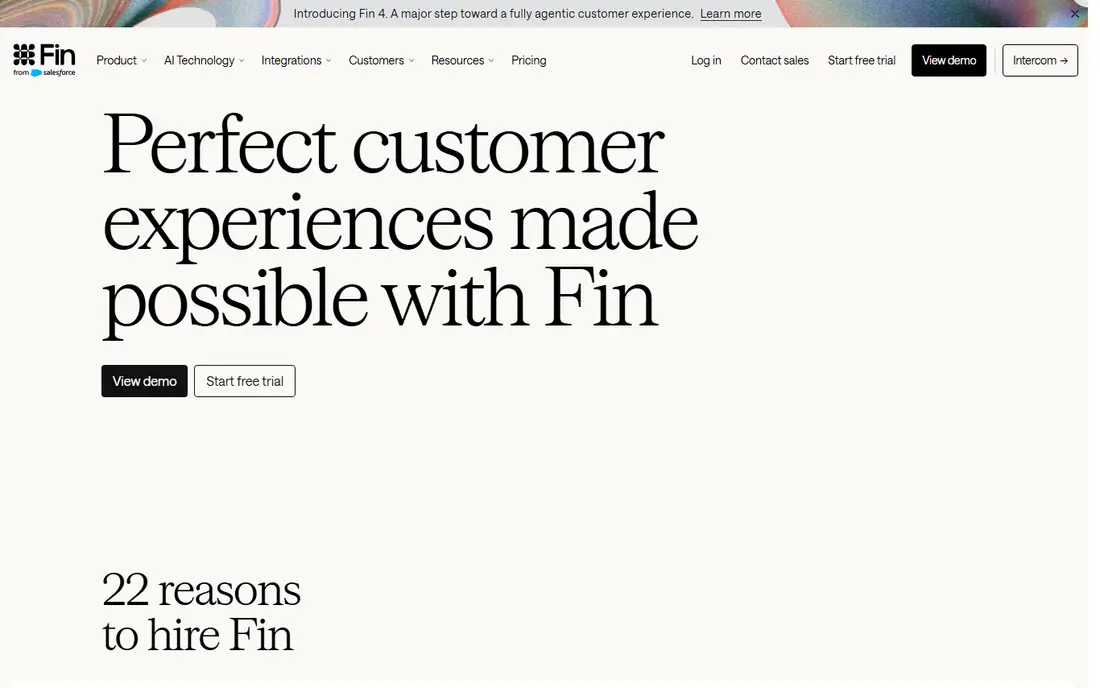
Fin, formerly Intercom, is our pick for sales led teams that want a clear price before they commit. At 99 cents per resolved outcome, with no seats required for the standalone layer, finance teams can model cost against ticket volume instead of guessing at seat counts. Fin also deploys on top of Salesforce, HubSpot, Zendesk, Freshworks, and Zoho, so a team does not have to rip out its help desk to add AI.
The caveat is ownership. In June 2026 Fin signed an agreement to be acquired by Salesforce, which raises fair questions about long term standalone pricing and roadmaps. For a one year commitment, the price and resolution record still make Fin hard to ignore. For a multi year platform bet, weigh that uncertainty alongside the cost saving.
- Published per outcome price
- Works on several help desks
- Fast setup for many teams
- Ownership changed in 2026 with Salesforce acquisition agreement
- Assumed resolutions can bill when a customer leaves a chat
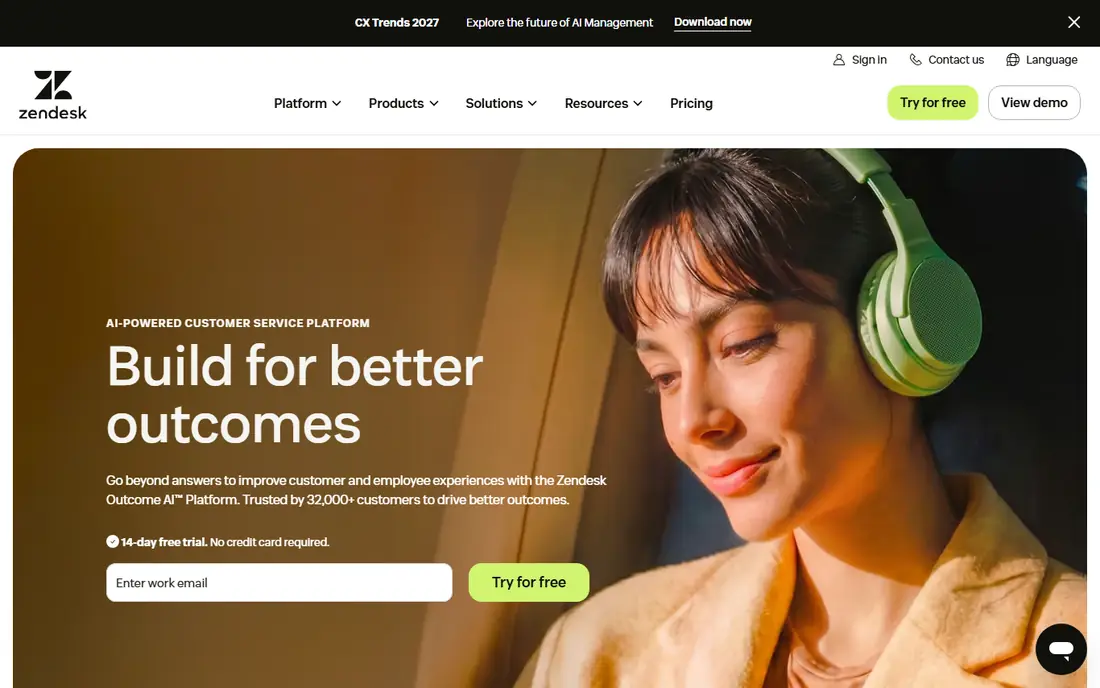
Zendesk AI suits sales led teams that already run Zendesk, or that want one vendor to own both tickets and automation. AI agents can resolve common B2B questions, assist agents with suggested replies, and route complex cases with context intact. At predictable volume, committed resolution tiers can cut the per resolution cost well below pay as you go rates, which matters once monthly volume climbs into the thousands.
The cost is the honest catch. Suite seats start at 55 dollars per agent per month on annual billing, and AI costs sit on top of that. Zendesk earns its place when the team values a single platform, compliance controls, and a deep integration catalog more than the lowest per outcome price.
- Tickets and AI in one suite
- Large integration catalog
- Committed resolution pricing at steady volume
- Suite pricing starts at 55 dollars per agent per month
- Pay as you go resolutions cost more
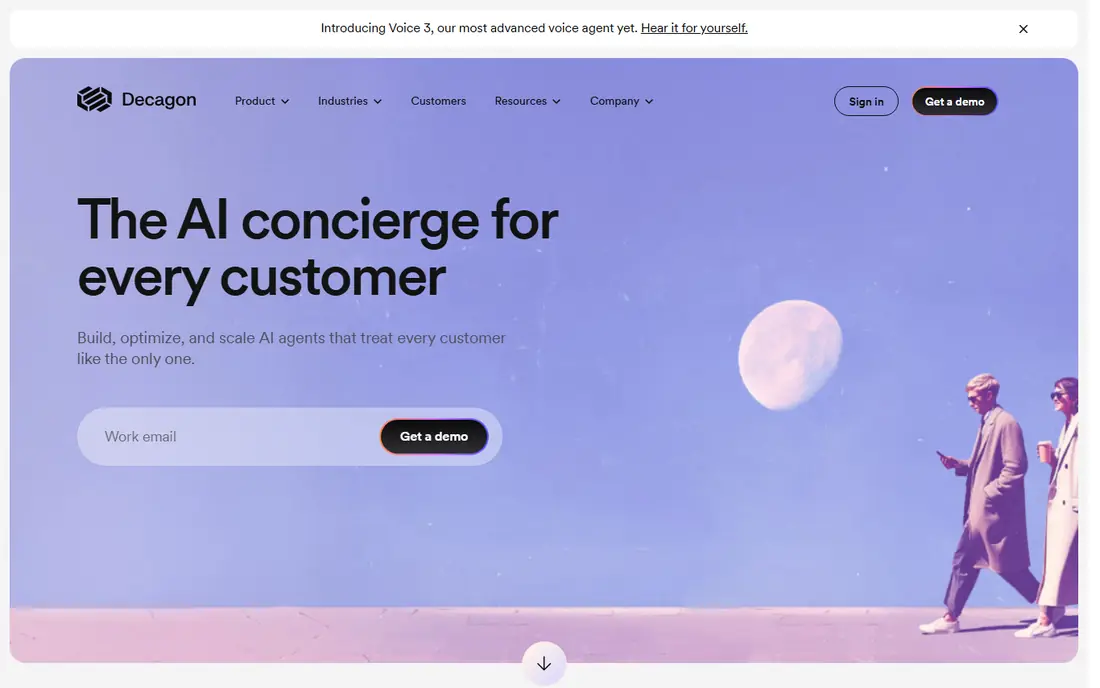
Decagon is built for B2B teams whose support work is not a single answer, but a sequence of steps: check an account, verify a contract term, update a system, and confirm the result. Its QA and simulation tools let teams test an agent against historical tickets before it touches live customers, which matters when a wrong answer can affect a deal. That depth is why larger sales led firms pick Decagon over simpler chat tools.
Deployment is not instant. Teams should expect several weeks with an assigned product manager and implementation help, plus a sales led buying process. Decagon fits companies with the volume and complexity to justify that investment, not a small team that needs an agent live this week.
- Multi step workflow handling
- Strong QA and simulation tools
- Enterprise controls
- Longer deployment, often around six weeks
- Quote based pricing
Ada targets large B2B teams that need automation across channels and languages, with governance that a compliance team can review. Its coaching loop lets support leaders correct agent behavior from real conversations, which helps quality improve after launch rather than freezing at day one performance. For a sales led firm with global accounts, that combination of scale and control is valuable.
The trade off is time. Third party timelines for Ada deployments run from 8 to 16 weeks, so it is a program, not a quick add on. Smaller sales led teams will find faster, cheaper options below, while larger firms with steady high volume can justify the longer runway.
- Coaching feedback loop for agents
- Broad language and channel support
- Enterprise governance
- Deployment can take 8 to 16 weeks
- Pricing is quote based
Sierra is the enterprise end of this list, built for companies that want a closely managed AI agent for high value customer relationships. Its outcome monitoring and supervision tools help teams watch what the agent does, catch problems early, and keep quality high for accounts where a mistake carries real commercial cost. That care is the point of Sierra, and it shows in how deployments are run.
Cost and time rule Sierra out for most mid market teams. Deployments are multi month, white glove engagements, and pricing is enterprise only. Choose Sierra when support quality for key accounts justifies a managed program, not when the goal is a fast, low cost deflection win.
- Outcome monitoring
- Deep enterprise deployments
- Agent supervision tools
- Multi month white glove deployments
- Enterprise pricing only
Freshdesk Freddy AI is the value pick for sales led teams that already use Freshworks, or that want a capable help desk without enterprise pricing. Freddy Copilot helps agents draft replies and find answers, while AI agents handle routine questions. Growth plans start at 15 dollars per agent per month, which keeps the total bill far below Zendesk or enterprise agents for a mid sized team.
The limit is depth. Freddy handles common B2B support well, but it does not match Decagon or Sierra on multi step workflows and QA tooling. For teams with moderate complexity and a tight budget, that trade is often right. For teams with heavy workflow automation needs, look higher up this list.
- Lower seat cost than Zendesk
- Freddy Copilot assists agents
- Predictable billing options
- Less depth than enterprise AI agents
- High AI resolution volume favors other models
Agentforce makes sense for sales led companies already committed to Salesforce. Because it reads CRM data natively, it can tailor answers to account, deal stage, and contract context without a fragile integration project. Actions inside Salesforce, such as updating a case or triggering a workflow, work as part of the agent flow rather than as an afterthought.
Outside Salesforce, Agentforce is harder to justify. Pricing per conversation can reach about 2 dollars at pay as you go rates, which adds up fast at scale, and the platform assumes a Salesforce center of gravity. If your sales team lives in Salesforce, Agentforce is a serious contender. If it does not, Fin or Zendesk will fit better.
- Deep CRM context
- Native Salesforce workflows
- Strong for existing Salesforce customers
- Costly and complex outside Salesforce
- Per conversation pricing adds up at volume
HubSpot AI suits sales led teams that already run sales and service on HubSpot. The AI agent can use contact, company, and deal records to shape answers, and handoffs land in the same system the sales team already uses. Free tools let a small team start without a new contract, which lowers the barrier for a first AI support project.
HubSpot is not a specialist AI agent platform, so teams with complex workflows or very high resolution targets may outgrow it. Treat HubSpot AI as the right choice when CRM unity matters more than maximum automation depth, and when the team already pays for HubSpot.
- CRM context from HubSpot
- Free tools to start
- Unified sales and service data
- AI depth trails specialist agents
- Best value requires HubSpot adoption
Tidio Lyro AI is the budget entry for a small sales led team that needs AI answers without an enterprise contract. Setup is fast, the starting price is low, and a free plan lets a team test Lyro on real questions before paying. For a young B2B firm with modest ticket volume, that is often enough to cut response times and free up a small support team.
The limit is scope. Tidio is built mainly for smaller teams and stores, so it lacks the workflow depth, QA tooling, and enterprise controls of the leaders above. Use Tidio to start, and plan to move to Fin, Zendesk, or Decagon when volume, account complexity, or compliance needs grow.
- Low starting price
- Fast setup
- Free plan for small teams
- Built mainly for smaller stores and teams
- Limited enterprise workflow depth
How we picked these
We compared vendor pricing pages, deployment timelines, and public comparisons of AI support agents in 2026, with a focus on CRM context, handoff quality, and cost at realistic B2B volume. We favored tools with a live product and a clear fit for sales led buying, where support touches deals and renewals. Prices marked See website are quote based, and per outcome figures are taken from published vendor and comparison sources, not estimated.
How to buy an AI agent without harming deals
Start by protecting key accounts. Put a rule in place that high value customers, open deals, and escalation prone topics route to a human, or get human review before the AI acts. Then let the AI handle routine work such as password resets, billing questions, and product how to answers, where a fast correct answer helps the relationship. Measure resolution quality, not just deflection, and read a sample of AI conversations every week during the first months.
Check the billing definition before signing. Some vendors bill a resolution when a customer simply leaves a conversation, while others require a confirmed outcome. Ask for that definition in writing, run a trial on real tickets, and model the bill at your actual monthly volume, not at the demo volume. Finally, confirm data handling: whether customer data trains models, where data is stored, and what compliance certifications the vendor holds, since B2B customers will ask.
Frequently asked questions
What makes an AI support agent right for a sales led company?
It must use CRM context, protect key accounts, and hand off to humans with full history. A consumer chatbot that answers generic questions will not protect a renewal, while a B2B agent that reads deal and contract data can resolve routine issues without putting the relationship at risk.
How is Fin priced?
Fin charges 99 cents per outcome for its standalone AI layer, with no seats required, according to published comparison sources in 2026. Check current vendor terms before buying, since pricing and ownership changed during 2026 with the Salesforce acquisition agreement.
Should a sales led team use one vendor for tickets and AI?
One vendor simplifies handoffs and reporting, which is why Zendesk AI appeals to existing Zendesk teams. A standalone AI layer such as Fin can work well too, especially when the team wants to keep its current help desk. Choose based on handoff quality and total cost, not on vendor tidiness alone.
How long does deployment take?
Small tools can go live in days, Fin and Zendesk AI often deploy in days to weeks inside an existing help desk, Decagon takes around six weeks, Ada takes 8 to 16 weeks, and Sierra takes several months. Match the timeline to your launch date, and do not promise customers an AI launch the vendor cannot meet.
Will an AI agent replace human support staff?
No, in a sales led model it changes their work. AI handles routine questions, while humans handle key accounts, complex cases, and deal sensitive conversations. The best results come from pairing AI speed with human judgment, not from removing humans from the loop.
What should we check about AI billing?
Ask how a billed resolution is defined, whether unconfirmed conversations count, and what dispute process exists. Model the monthly bill at your real volume, compare committed tiers against pay as you go rates, and include seat costs in the total before signing.
Sources
See where you really rank - block by block
ProMapRanker scans Google Maps across a grid of your service area. Simple monthly plans from $19, white-label on every plan.
Start freeKeep reading
 zscaler alternatives
Best Zscaler Alternatives in 2026
Looking for zscaler alternatives? We compare 9 SASE and zero trust platforms on architecture, data protection, pricing, and fit for your network and team.
Read → zapier alternatives free
Best Zapier Alternatives Free in 2026
Nine automation tools for zapier alternatives free in 2026, all with genuinely free tiers, plus free plan limits, starting prices and upgrade paths explained.
Read → which platform is best for online reputation
Which Platform Is Best for Online Reputation in 2026
Wondering which platform is best for online reputation? We compare 8 review, listing, and response tools for small and multi-location businesses and agencies.
Read →