 ProMapRanker
Best AI Search Optimization Platform for Beginners in 2026


A free first check of AI visibility · Pricing starts at: Free
Key takeaways
- Start free with HubSpot AI Search Grader or AthenaHQ before paying for a monthly tracker.
- Otterly AI and Peec AI give beginners low cost tracking across the main AI engines.
- Prompt volume, not just monthly price, decides whether a plan fits your site.
- Content tools like Surfer SEO and Frase help you write pages AI engines can cite.
- Track the same prompts weekly, so changes in visibility are easy to compare.
Quick comparison
| Pick | Great for | Pricing starts at | Free tier | |
|---|---|---|---|---|
| HubSpot AI Search Grader | A free first check of AI visibility | Free | Yes | Visit |
 Otterly AI | Low cost tracking across AI engines | $29 per month | Free trial | Visit |
 Peec AI | Simple prompt tracking for small teams | See website | Free trial | Visit |
 AthenaHQ | Free tier plus broad model coverage | See website | Yes | Visit |
 Scrunch AI | AI search analytics for growing brands | See website | Free trial | Visit |
 Goodie AI | AI visibility with content guidance | See website | Free trial | Visit |
 Surfer SEO | Scoring content so AI engines can cite it | $49 per month | Free trial | Visit |
 Frase | Gentle content optimisation for beginners | $39 per month | Free trial | Visit |
 SE Ranking | SEO plus AI search in one subscription | $52 per month | Free trial | Visit |
The best AI search optimization platform for beginners
AI search optimisation, often called GEO, is about showing up in answers from ChatGPT, Perplexity, Gemini, Claude, and Google AI Overviews, not just in classic search results. These tools track prompts, citations, and mentions, then help you fix the pages AI engines use as sources. The best ai search optimization tools for beginners keep prompts, reports, and pricing simple.
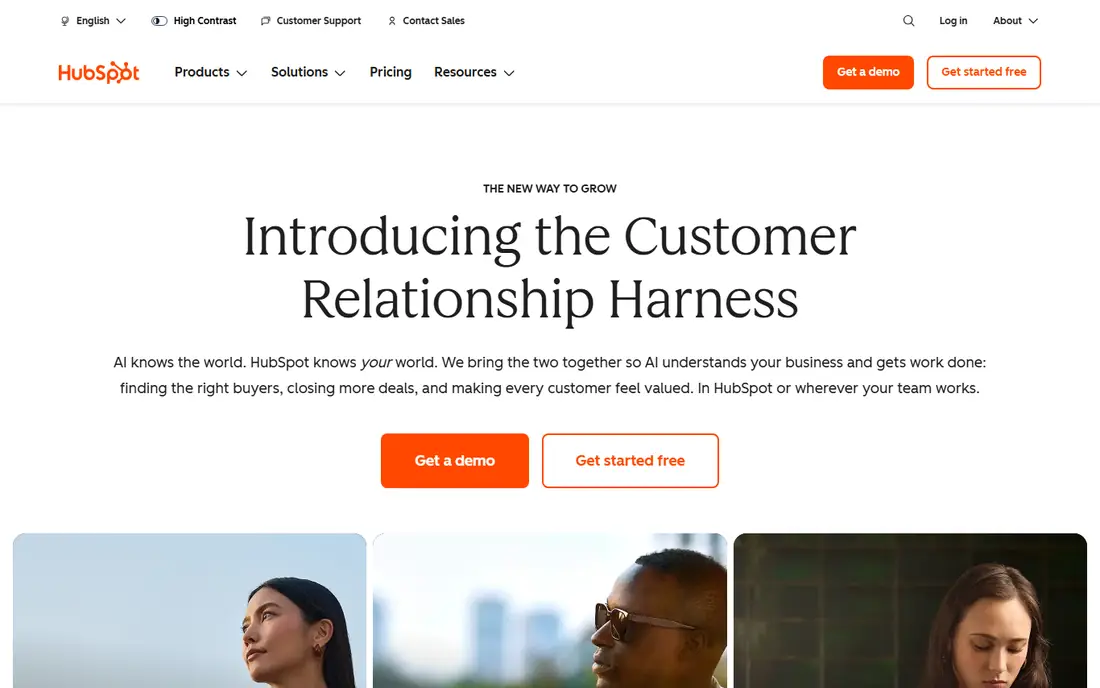
HubSpot AI Search Grader is the best place to start if you have never checked AI visibility. You enter your brand and get a simple report on how AI engines describe you, which competitors appear, and where your content may be weak. That snapshot helps you decide whether a paid tracker is worth it at all.
The limit is depth. It is a grader, not a weekly monitoring platform with a large prompt set and citation history. Use it as a baseline, then move to a tracker like Otterly or Peec if you want regular updates. For a beginner, that free first step avoids paying for a tool before you know what you need to track.
- Free visibility report with no complex setup
- Simple scores that beginners can understand
- Useful benchmark before buying a tracker
- Not a full ongoing tracker
- Limited prompt control compared with paid GEO tools
Otterly AI is often named as a beginner friendly GEO tool because the entry price and the setup are both modest. You choose prompts that match buying questions in your niche, and Otterly checks how AI engines answer them, if your brand is mentioned, and which sources are cited. That prompt based view is easier to act on than a wall of charts.
Lower plans cap prompt numbers, so count your key topics before subscribing. A small business with ten to twenty core questions will fit well. A larger site with many product lines may need a higher tier or a tool with larger prompt allowances.
- Low entry price for prompt tracking
- Covers major AI engines
- Simple reports for small teams
- Prompt limits on lower plans
- Less enterprise depth than Profound or AthenaHQ at scale
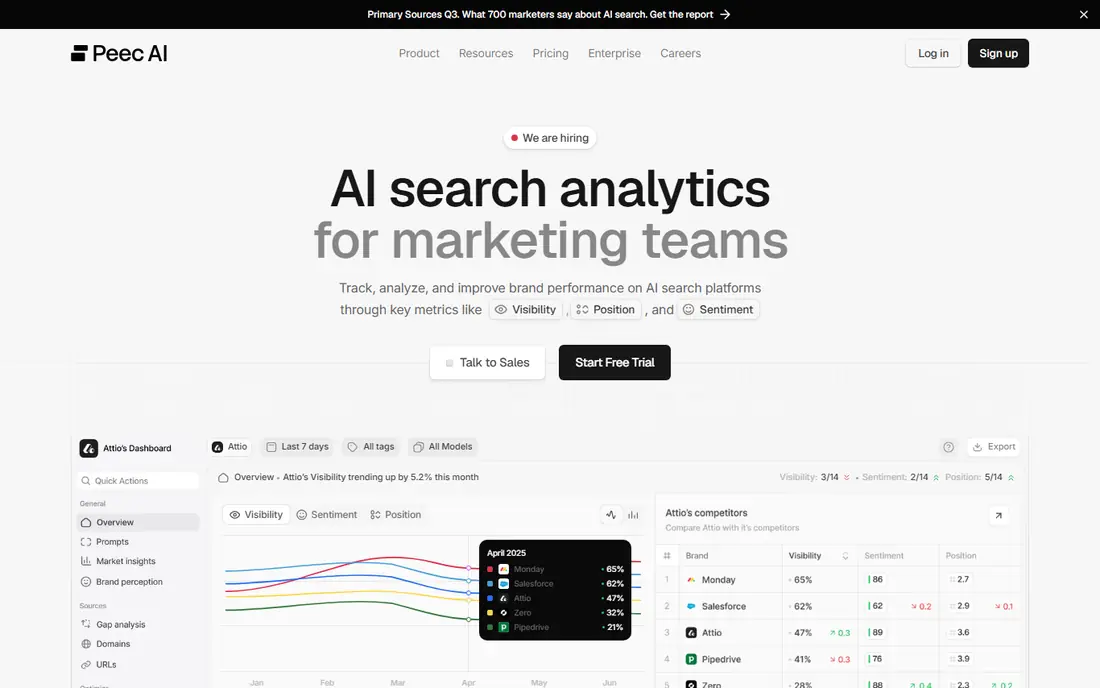
Peec AI focuses on the core GEO job, which is tracking how AI engines answer prompts about your brand and your competitors. You can see presence, position, and citations for each prompt, then compare your share of voice with rivals. That clarity helps a beginner team decide which pages to improve first.
It is less of a content writing tool than Surfer or Frase, so pair it with a content tool if you need help rewriting pages. For tracking alone, Peec keeps the workflow simple and the reports easy to share with a manager or client.
- Clear prompt level tracking
- Competitor comparisons
- Interface that suits non technical users
- Pricing should be confirmed on the vendor site
- Fewer content optimisation features than Surfer or Frase
AthenaHQ stands out for beginners because it offers a free tier alongside broad model coverage on paid plans. That lets you test real AI visibility data before committing to a monthly fee. Paid plans expand model coverage and prompt volume, which suits teams that want to track more engines as they grow.
The free tier will not cover a large site, but it is enough to learn how prompt tracking works. Start with your most important buying questions, check citation sources, and use those findings to fix one or two pages before expanding the prompt set.
- Genuine free tier for testing
- Covers many AI models on paid plans
- Prompt and citation tracking
- Paid pricing should be confirmed on the vendor site
- Setup takes care for large prompt sets
Scrunch AI is a GEO analytics platform that tracks how AI engines talk about your brand across prompts and customer personas. That persona view helps a team see whether AI answers differ for different buyer types, which is useful when you serve more than one audience. Competitor tracking adds context to your own visibility numbers.
Beginners should use the trial to test whether they will act on that depth. If you only need a weekly presence check, a cheaper tracker may be enough. If you plan content around AI visibility each month, Scrunch gives you a stronger analytics base.
- AI search analytics with prompt and persona tracking
- Competitor insights
- Dashboards for marketing teams
- Pricing is not a simple low cost entry plan
- Better suited to growing brands than solo sites
Goodie AI combines tracking with guidance, so it does not just show that you are missing from an answer, it points to content gaps that may explain why. That link between measurement and action is helpful for beginners, who often struggle to turn a visibility score into a concrete edit.
The platform is more than a simple tracker, so pricing and plan limits need checking before you buy. Use the trial with a small set of prompts tied to pages you can actually edit. If the guidance leads to clear page changes, Goodie earns its place. If not, a simpler tracker plus a content tool may cost less.
- Tracks AI visibility and suggests content improvements
- Competitor benchmarking
- Built for marketing teams
- Pricing should be confirmed on the vendor site
- Enterprise features may exceed beginner needs
Surfer SEO started as an SEO content tool, but its scoring is directly useful for AI search. AI engines favour clear structure, entity coverage, and direct answers, and Surfer scores your draft against top ranking pages on those points. That helps a beginner write pages that are easier for both Google and AI engines to use as sources.
Surfer alone does not replace a GEO tracker, since it does not run prompts across ChatGPT or Perplexity in the same way. Pair it with Otterly, Peec, or AthenaHQ: track with one tool, write and score with Surfer, then recheck prompts after publishing.
- Real time content scoring against top pages
- Entity and structure guidance
- Strong for blog and service pages
- Main strength is content, not AI prompt tracking
- Higher plans needed for full features
Frase is often called the gentlest entry point for content optimisation, and that reputation is fair. It builds briefs from top pages, scores your draft, and shows which topics and questions to cover. For a beginner writer, that structure removes much of the guesswork from a first draft.
Like Surfer, Frase is a content tool first, so it works best beside a GEO tracker. Use Frase to draft a clear, well structured page, publish it, then check whether AI engines start citing it. That loop, rather than any single score, is how AI visibility improves.
- Easy content briefs and optimisation scores
- Good entry price for content teams
- Simple workflow for new writers
- Less deep than Surfer for advanced content work
- Not a dedicated AI prompt tracker
SE Ranking suits beginners who also need classic SEO. Its AI Search Toolkit sits inside a wider platform with rank tracking, site audits, keyword research, and backlink checks. That means one subscription can cover both Google rankings and early AI visibility work, which is useful for a small agency or a solo marketer.
The trade off is focus. A dedicated GEO tool may track more prompts or models, while SE Ranking gives you breadth across SEO and AI search. If your budget allows only one tool, SE Ranking is a practical compromise. If AI visibility is your main goal, pair a dedicated tracker with SE Ranking later.
- Full SEO toolkit with an AI Search Toolkit included
- Rank tracking, audits, and backlink data
- Good value for small agencies
- AI toolkit is part of a larger platform, so it takes time to learn
- Prompt depth below dedicated GEO tools
How we picked these
We compared official feature and pricing pages, plus public product descriptions, for AI search and GEO tools live in October 2026. We favoured tools with a free plan, free trial, or low entry price, clear prompt tracking, and reports a beginner can act on. We did not claim hands on testing, and prices that could not be verified are shown as See website.
How to start AI search optimisation in plain steps
First, write down twenty questions your buyers actually ask, including comparison and recommendation questions. Examples are which tool is best for a small team, how much a service costs, and which product suits a beginner. Those prompts are your tracking set, and they should reflect real buying intent, not just brand name searches.
Next, run a free grader and a trial tracker on those prompts. Note where you appear, where competitors appear, and which pages AI engines cite. That citation list is your real to do list, since AI engines trust sources they already cite.
Then fix pages one by one. Add a direct answer near the top, use clear headings, list facts plainly, and add structured data where it fits. Keep pages factual and current, since AI engines favour sources that answer the question without fluff. Republish, wait a few weeks, and rerun the same prompts to see what changed.
Frequently asked questions
What is the best AI search optimization platform for beginners?
HubSpot AI Search Grader is the best free starting point, and Otterly AI is a strong low cost tracker for ongoing checks. The best ai search optimization platform for beginners overall depends on your need for tracking, content help, or both. Many beginners start with a grader, then add Otterly or Peec for weekly tracking.
What are the best AI search optimization tools for beginners?
The best ai search optimization tools for beginners in this list are HubSpot AI Search Grader, Otterly AI, Peec AI, and AthenaHQ for tracking, plus Frase and Surfer SEO for content. SE Ranking covers both SEO and AI search in one subscription, which suits small agencies.
Is GEO the same as SEO?
No, but the two overlap. SEO aims for rankings in classic search results, while GEO aims for mentions and citations inside AI generated answers. Good content, clear structure, and trusted sources help both, but GEO tracking uses prompts and citations rather than keyword positions alone.
How much do GEO tools cost for beginners?
Entry prices in this list range from free for HubSpot AI Search Grader and AthenaHQ free tier, to $29 per month for Otterly AI, $39 for Frase, $49 for Surfer SEO, and $52 for SE Ranking. Other tools are priced by quote or plan, so check the vendor site for your prompt volume.
How long before AI visibility improves?
Expect four to eight weeks for noticeable citation changes after fixing pages, with Perplexity often updating faster than other engines. Google AI Overviews can take longer. Track the same prompts weekly and judge progress over months, not days.
Do I need a GEO tool if I already use SEO software?
A GEO tool helps if AI answers matter in your niche, since SEO software shows rankings and traffic, not whether AI engines mention or cite your brand. If customers in your market ask AI tools for recommendations, a GEO tracker shows a gap that SEO reports miss.
Sources
See where you really rank - block by block
ProMapRanker scans Google Maps across a grid of your service area. Simple monthly plans from $19, white-label on every plan.
Start freeKeep reading
 zoho inventory alternatives
6 Alternatives to Zoho Inventory, Compared on Price and Fit
Zoho Inventory alternatives: 6 tools compared on price, free plans and fit. Katana leads the list for manufacturers. Fit and flaws are laid out for each entry.
Read → zoho crm alternatives
Best Zoho CRM Alternatives (2026)
Need Zoho CRM alternatives? We compare 7 tools on cost, free access and who each suits. Every pick gets a straight assessment. Built for quick decisions.
Read → zelle alternatives
Best Zelle Alternatives in 2026
Compare the best Zelle alternatives for sending money to friends, paying sellers and moving funds abroad, with honest notes on fees, speed and safety in 2026.
Read →