 ProMapRanker
Best AI Sales Tools in 2026: 9 Tools Compared

Key takeaways
- Apollo.io gives small teams the most complete starting stack, with contact data, sequences, and a free plan in one place.
- Gong stands out for call intelligence and deal insight, but its quote-only pricing puts it out of reach for many small teams.
- HubSpot Sales Hub and Salesforce Sales Cloud suit teams that want AI inside a CRM they already use every day.
- Outreach and Salesloft remain the strongest choices for high-volume sequencing, while Clay, Lavender, and Regie.ai solve narrower jobs well.
- Free plans are useful for testing, but the AI features that save the most time usually sit on paid plans.
Quick comparison
| Pick | Great for | Pricing starts at | Free tier | |
|---|---|---|---|---|
 Gong | Call intelligence for larger teams | See website | No | Visit |
 Apollo.io | All-in-one prospecting on a budget | $49 per month | Yes | Visit |
 HubSpot Sales Hub | CRM-native AI for growing teams | $20 per month | Yes | Visit |
 Salesforce Sales Cloud | Enterprise CRM with AI agents | $25 per month | Yes | Visit |
 Outreach | High-volume sales engagement | See website | No | Visit |
 Salesloft | Coaching-led sales engagement | See website | No | Visit |
 Clay | Research and enrichment workflows | $149 per month | Yes | Visit |
 Lavender | Real-time email coaching | $27 per month | Yes | Visit |
 Regie.ai | Personalized outbound content | See website | No | Visit |
The best AI sales tools
We compared tools that help with prospecting, outreach, meetings, and follow-up, and we kept only tools with clear, current product pages and pricing or quote routes in October 2026.
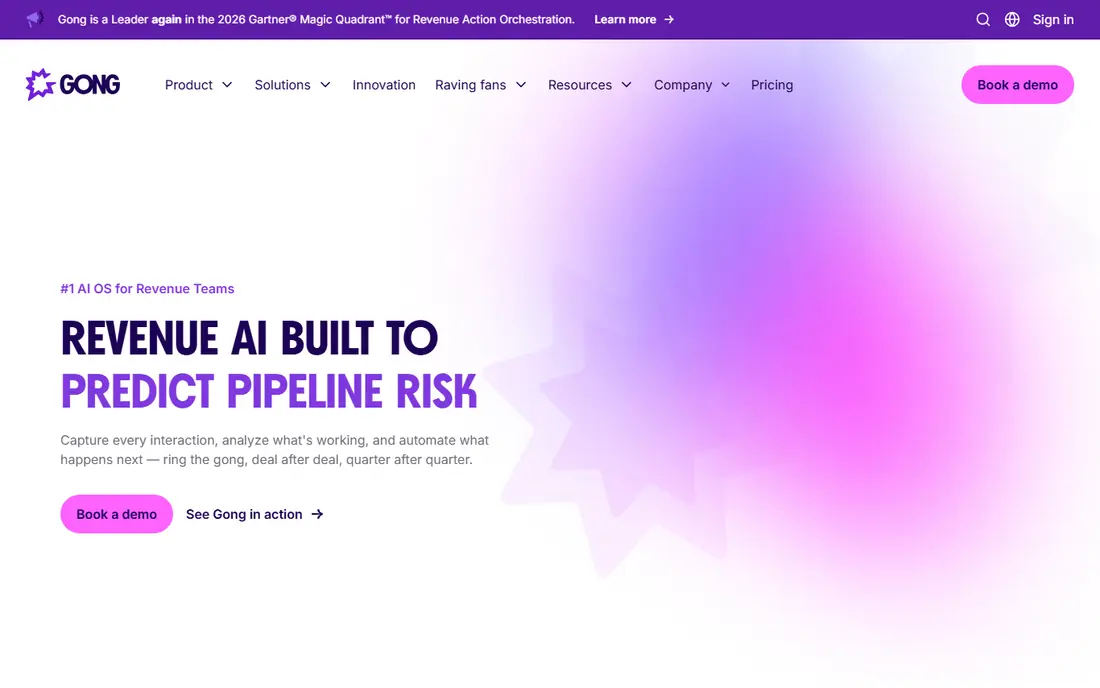
Gong records and analyses sales calls, then turns those conversations into searchable insight about deals, risks, and next steps. Managers can review what was actually said, rather than relying on notes written after the call, and reps get coaching tied to real examples. That depth is why larger revenue teams treat Gong as a system of record for conversations, not just a recording tool. The trade-off is cost and commitment. Gong does not publish a simple starting price, and implementation takes time. Smaller teams may find the value hard to justify when a CRM or a cheaper call tool covers the basics. For a team with many reps, complex deals, and a clear need for forecasting discipline, Gong is often the strongest pick in this list.
- Deep call and deal analysis
- Forecasting and engagement insight in one place
- Strong coaching tools for managers
- Quote-only pricing
- Needs a larger team and budget to justify the cost
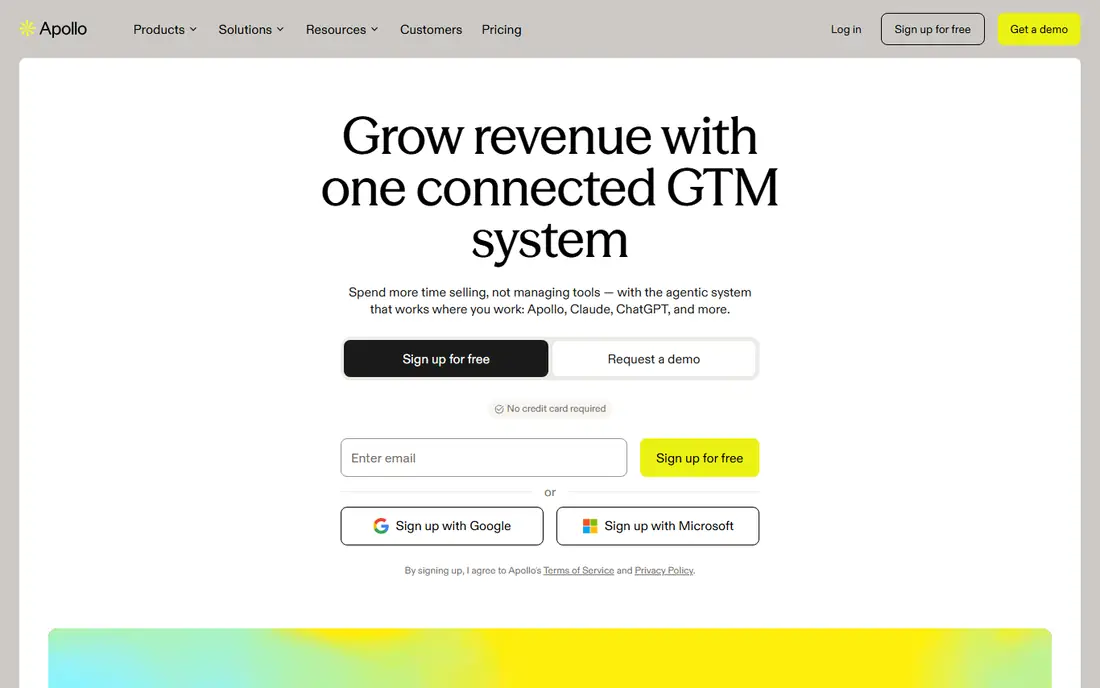
Apollo.io combines contact data, enrichment, sequences, and a dialer, which makes it a practical first AI sales tool for a small team. You can build a list, check contact details, and start a sequence without stitching together three separate tools. Its AI features help with research summaries and first drafts, which cuts the time spent on manual list building. The catch is that no database is perfect, so Apollo works best when reps still check key contacts before outreach. Credits and limits also matter, so teams should watch usage in the first month. Even with those limits, Apollo offers the best balance of price, breadth, and ease of use for teams that need pipeline without an enterprise budget.
- Large contact database with sequences built in
- AI research and writing help
- Free plan for getting started
- Data quality varies by niche
- Advanced features require higher plans
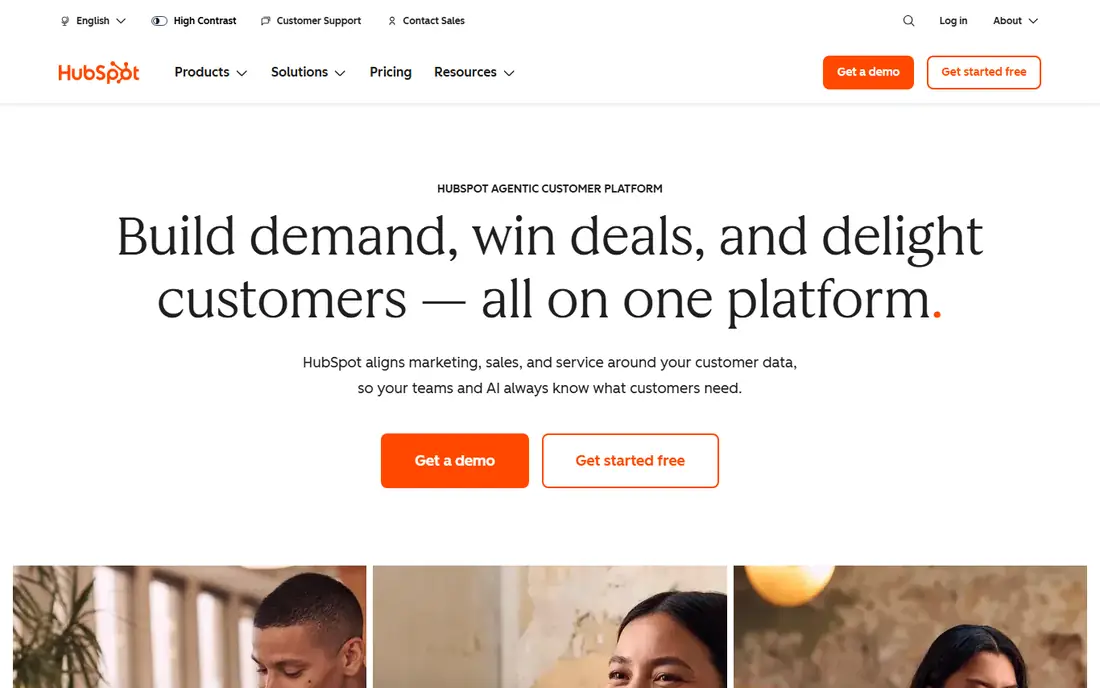
HubSpot Sales Hub suits teams that want AI help without adding another system on top of their CRM. Its Breeze AI features assist with prospecting, drafting, and summarising records, and because the data already lives in HubSpot, the AI has context to work with. For teams already using HubSpot for marketing or service, that shared record is a real advantage. Pricing starts low, but the more useful AI and automation features sit on higher plans, and Professional plans can include onboarding fees. Teams should map which features they actually need before upgrading. If your CRM is already HubSpot, Sales Hub is usually the simplest AI sales upgrade to adopt and to keep consistent across the team.
- AI tools inside a familiar CRM
- Free CRM to start
- Good reporting and automation for growing teams
- Costs rise quickly with higher tiers
- Onboarding can add cost on Professional plans
Salesforce Sales Cloud is the enterprise option in this list, and its AI strength comes from depth rather than simplicity. Einstein and Agentforce features help with lead scoring, forecasting, activity capture, and guided next steps, all inside the CRM where deals are managed. Large teams with complex sales processes, multiple regions, or strict reporting needs get the most from that flexibility. That flexibility has a cost in setup and administration. Small teams without an admin may find Salesforce heavy, and the price of AI add-ons varies by plan. For organisations already standardised on Salesforce, however, adding AI inside Sales Cloud is more practical than buying a separate tool that must be kept in sync. Choose it for scale and control, not for a quick start.
- Deep CRM customisation
- Agentforce AI for scoring and next steps
- Huge integration ecosystem
- Needs admin time to set up well
- Pricing and add-ons can become complex
Outreach is built for teams that run structured outbound at volume. Sequences can span email, calls, and social tasks, and AI features help with drafting, prioritising accounts, and keeping CRM records up to date. Managers get clear reporting on sequence performance, which makes it easier to see which messages and steps actually create meetings. The downside is that Outreach is an enterprise-grade purchase, with pricing available on request and an annual commitment in most cases. Teams with a handful of reps may not use its full depth. For mid-market and enterprise teams that live by sequences and need consistent execution across many reps, Outreach remains one of the most capable engagement platforms available.
- Deep sequencing and automation
- Strong CRM integration
- AI assistance across outreach workflows
- Quote-only pricing
- Can be more than a small team needs
Salesloft takes a similar job to Outreach but puts more weight on coaching and day-to-day usability. Reps work through cadences, calls, and tasks in one place, and managers can review conversations and give feedback tied to real calls. Many teams report quicker adoption here, which matters when a tool only pays off if reps actually use it every day. Pricing is also quote-based, so buyers should request a formal proposal and compare it with Outreach on total cost, not headline features alone. Salesloft fits mid-market teams that want structured outreach plus coaching, without the steeper learning curve that some enterprise platforms carry. It is a strong choice when usability and rep adoption are the deciding factors.
- Usable interface and coaching features
- Strong cadence and conversation tools
- Faster adoption for many teams
- Quote-only pricing
- Depth varies by plan and add-on
Clay is less of a sales tool and more of a research engine for go-to-market teams. It pulls data from many sources, enriches lists, and uses AI to research accounts, find buying signals, and write personalised context for outreach. Teams that already have a CRM and a sequencer often add Clay to improve targeting and message quality, rather than to replace those tools. The learning curve is real, and credit usage needs watching, since enrichment and AI steps consume credits. Once a workflow is built, however, Clay can save hours of manual research each week. It fits revenue operations teams, agencies, and outbound teams that care about list quality and personalisation, and who are willing to invest time in building workflows that run reliably.
- Flexible enrichment from many sources
- AI research agents for account work
- Strong workflow automation
- Learning curve for new users
- Credit-based pricing needs monitoring
Lavender works inside the inbox, scoring each email as a rep writes it and suggesting changes to length, tone, and clarity. That immediate feedback helps reps learn what works, rather than waiting for a manager review after a campaign has already gone out. It also helps with personalisation, by surfacing relevant details that can make an opening line feel specific rather than generic. Lavender does not replace a sequencer, a CRM, or a data tool, so buyers should see it as a writing coach, not a full sales platform. Its free plan covers only a few emails a month, so regular users will need a paid plan. For teams that send a lot of email and want better reply rates without a large new system, Lavender is a low-cost, focused addition.
- Scores emails as you write in Gmail or Outlook
- Practical coaching on tone and length
- Low starting price
- Focused on email only
- Free plan is limited to a small number of emails
Regie.ai focuses on the hardest part of outbound for many teams, which is writing relevant sequences at scale. It generates multi-step campaigns, personalises messages with account research, and helps teams test different angles without writing every email from scratch. That can shorten the time from list to live campaign, especially for teams with limited marketing support. AI output still needs human review, and generic drafts will hurt reply rates if they are sent unchecked. Pricing is also not a simple published starter plan for every use case, so buyers should confirm costs for their team size. Regie.ai fits teams that already have data and sequencing in place, but need better content and faster campaign creation.
- AI-generated sequences and personalisation at scale
- Useful for teams without large content resources
- CRM and sequencer integrations
- Quote-based pricing on many plans
- Output still needs human review
How we picked these
We compared official feature pages, pricing pages, app store listings, privacy policies, and public reviews for tools that were actively sold in October 2026. We favoured tools with clear AI features for prospecting, outreach, or deal work, rather than tools that only mention AI in marketing copy. We also looked for a mix of all-in-one platforms and focused tools, so teams at different sizes could find a realistic starting point. We did not claim hands-on testing, and we treated unpublished pricing as a signal in itself. When a vendor did not publish a starting price, we wrote See website rather than repeating a third-party estimate as fact. That approach keeps the comparison honest, and it also helps buyers plan the next step, which is usually a demo or a formal quote for enterprise tools.
What to check before you buy
Buying an AI sales tool is less about the longest feature list and more about fit with your data, your workflow, and your team size. A tool that looks strong in a demo can fail if reps do not trust its data, if it does not sync cleanly with your CRM, or if its AI drafts need so much editing that they save no time. Start with one clear job, such as better prospect lists or better call insight, and measure that job before adding more tools.
Match the tool to the bottleneck
If pipeline is the problem, start with data and sequencing, such as Apollo.io or Outreach. If deals stall after meetings, call intelligence from Gong or coaching from Salesloft may matter more. If messages feel generic, Clay or Regie.ai can improve research and personalisation. Naming the bottleneck first stops teams from buying overlapping tools that all claim to do everything.
Check data, integrations, and controls
Ask how contact data is sourced and refreshed, how the tool syncs with your CRM, and what controls exist for AI-generated outreach. Check whether admins can set approval steps, block certain phrases, or limit automated sending. Also review privacy terms for call recording and data use, especially for tools that process customer conversations. These checks take time, but they prevent problems after rollout.
Run a small trial with real deals
Use a free plan or trial with a small group of reps and real accounts, not sample data. Track reply rates, meeting rates, time saved on research, and CRM accuracy over two to four weeks. Compare those results with your current baseline, and ask reps what they would keep using if the trial ended. That evidence is a better buying signal than any demo or feature table.
Frequently asked questions
Which AI sales tool is best for a small team?
Apollo.io is usually the best starting point for a small team, because it combines data, sequences, and AI help at a published price with a free plan. HubSpot Sales Hub is a strong alternative if your CRM is already HubSpot. Larger call intelligence tools such as Gong make more sense once the team grows and deal complexity rises.
What is the best AI sales platform for enterprise teams?
Salesforce Sales Cloud suits enterprises already standardised on Salesforce, while Gong suits enterprises that need deep conversation and forecasting insight. Outreach and Salesloft both suit enterprise sequencing, with Outreach leaning toward depth and Salesloft leaning toward usability and coaching. The best choice depends on your CRM, your sales process, and how much admin support you have.
Do AI sales tools replace sales reps?
No, they change where reps spend time. AI tools handle research, drafting, data entry, and call summaries, which frees reps for conversations, objections, and closing. Human review still matters for outreach quality, deal judgement, and relationships. Teams that treat AI as a replacement for judgement tend to see lower reply rates and weaker trust with prospects.
Which AI tool is best for sales emails?
Lavender is the most focused email coaching tool here, because it scores drafts inside Gmail or Outlook. Regie.ai helps more with full sequences and personalisation at scale, while Apollo.io and Outreach cover email as part of a wider outbound workflow. Pick Lavender for writing quality, and a sequencer for campaign management.
Are there free AI sales tools worth using?
Yes, for testing. Apollo.io, HubSpot Sales Hub, Clay, and Lavender all offer free plans, though AI features and limits vary. Free plans are useful for learning the interface and checking data quality, but most teams will need a paid plan for full AI features, higher limits, and team reporting. Start free, then upgrade only for features you actually used.
How much should a team budget for AI sales software?
Budgets vary widely, from about $20 to $50 per user per month for starter CRM and prospecting tools, to quote-based enterprise pricing for Gong, Outreach, and Salesloft. Add time for setup, training, and data cleaning, which are often larger than the subscription in the first quarter. Request formal quotes for enterprise tools and compare total annual cost, not just monthly headlines.
Sources
See where you really rank - block by block
ProMapRanker scans Google Maps across a grid of your service area. Simple monthly plans from $19, white-label on every plan.
Start freeKeep reading
 zendesk alternatives
Best Zendesk Alternatives in 2026
Compare the best Zendesk alternatives in 2026, from budget help desks to AI-first support tools, with current pricing, free plans, and honest trade-offs.
Read → wordpress alternatives
Best WordPress Alternatives in 2026
Looking for the best WordPress alternatives? We compare 8 free and paid options for blogs, business sites, stores, and developer-led projects in 2026.
Read → which real estate company has the best training
Best Real Estate Company Training in 2026
Compare which real estate company has the best training, from Keller Williams and eXp to Compass and Coldwell Banker, by program, mentor, and fit in 2026.
Read →